
 100% FREE ACCESS
11th Standard CBSE Syllabus & Materials
11th Standard CBSE
CBSE 11th Economics PART-A - Presentation of Data - New Sample Question Papers Study Material - QB365 Set A
NEW11th Standard CBSE
CBSE 11th Economics PART-A - Organisation of Data - New Sample Question Papers Study Material - QB365 Set A
NEW11th Standard CBSE
CBSE 11th Economics PART-A - Collection of Data - New Sample Question Papers Study Material - QB365 Set A
NEW11th Standard CBSE
CBSE 11th Economics PART-A - Introduction to Economics and Statistics - New Sample Question Papers Study Material - QB365 Set A
NEW11th Standard CBSE
CBSE 11th Business Studies International Trade Sample Question Papers Study Material - QB365 Set A
NEW11th Standard CBSE
CBSE 11th Business Studies Evolution and Fundamentals of Business Sample Question Papers Study Material - QB365 Set A

Published on: 05/03/2020
11th Standard CBSE Accountancy Annual Exam Model Question 2020
Download CBSE Class 11th Standard CBSE Accountancy question papers, sample papers, important questions, and previous year solved papers in PDF format. Get free study materials, NCERT solutions, and exam preparation resources for Class 11th Standard CBSE Accountancy
Questions + Answers key
Take MCQ Accountancy Test
1.
Give four examples each of 'provisions' and 'Reserves'.
2.
How will you calculate commission payable to manager on profits?
3.
What is the difference between trade discount and cash discount.
4.
Complete the missing figures in the following Statement of Profit or Loss:
| Particulars | Amount (Rs) |
|---|---|
| Capital on 31st March, 2017 | 20,300 |
| ....(1)...Drawings during the year | 2,400 |
| ....(2)..... | |
| ....(3)...Capital on 1st April, 2016 | 12,950 |
| Gross Profit made during the year | .....(4)..... |
5.
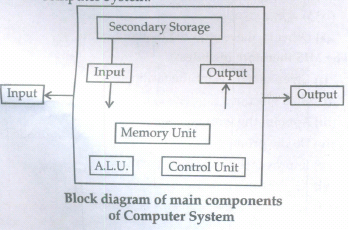
Draw block diagram showing the main components of a Computer.
6.
Name any two types of commonly used negotiable instruments.
7.
What are the items to be shown on the liabilities side of the Balance Sheet?
8.
From the following particulars prepare a bank reconciliation statement showmg the balance as per cash book on December 31, 2014.
(i) Two Cheque of Rs 2,000 and Rs 5,000 were paid into bank in October, 2014 but were not credited by the bank in the month of December.
(ii) A cheque of Rs 800 which was received from a customer was entered in the bank column of the cash book in December 2004,but was omitted to be banked in December 2014.
(iii) Cheque for Rs 10,000 were issued into bank in November 2014,but not entered by the bank on December 31,2014.
(iv) Interest on investment Rs 1,000 collected by bank appeared in the pass book. Balance as per Pass Book was Rs 50,000
9.
(i) What are compound Journal entries? Give an example.
(ii) State whether the following will be debited or credited:
(a) Increase in revenue
(b) Decrease in expense
(c) Drawings
(d) Fresh capital introduced.
10.
State the end product of financial accounting.
11.
Under which side of the Trial Balance the following ledger balances will appear:
(i) Sales
(ii) Bank Overdraft
(iii) Trade Payable
(iv) Goodwill
(v) Outstanding Wages
(vi) Machinery
12.
Rajaram Ltd. purchased goods worth 20 Lakh and sold 3/4th of such goods during year 2008 - 09. The market price of the remaining goods was Rs 3.5 lakh on 31st March, 2009. The Balance Sheet of the company shows the closing stock of goods at Rs 5 lakh. Explain the accounting principle which has been violated.
13.
Operating profit earned by M/s Arora and Sachdeva in 2013-14 was Rs. 17,00,000. Its non-operating incomes were Rs. 1,50,000 and nonoperating expenses were Rs. 3,75,000. Calculate the amount of net profit earned by the firm.
14.
Prepare a Bank reconciliation Statement from the following; particular and shows the balance as per cash book.
(i) Balance as per pass book on December, 31 2014 overdrawn Rs 20,000
(ii) Interest on Bank overdraft not entered,in the cash book Rs 2,000
(iii) Rs 200 Insurance premium paid by bank has not been entered in the cash book
(iv) Cheques drawn in the last week of December 2014, but not cleared till date for Rs 3,000 and Rs 3,500
(v) Cheques deposited into bank on November 2014, but yet to be credited on dated into bank on November 2014, but yet to be credited on dated December, 31 2014 Rs 6,000
(vi) Wrongly debited by bank Rs 500
15.
Name the books of original entry where the following transactions will be recorded with reasons thereof:
(i) Goods purchased form Geeta Rs 50,000 on credit.
(ii) Purchase of furniture on credit for use in shop.
(ill) Provision for doubtful debts created @ 5% on debtors with book value of Rs 10,000.
(iv) Defective goods sold to Bina on credit worth Rs 7,000 were returned by her.
16.
Mention the subsidiary books in which the following transactions are recorded along with reason thereof:
(i) Purchase of furniture on credit for use in shop.
(ii) Sale of goods on credit.
(iii) Goods returned by debtors.
(iv) Purchase of stock on credit
(v) Providing for interest on capital to proprietor.
(vi) Goods returned to creditors.
(vii) Bill accepted by proprietor from creditor.
(viii) Sale of goods for cash
17.
What is the primary reason for the business students and other to familiarise themselves with the accounting discipline?
18.
Explain any two accounting Concepts/Principles :
(i) Dual Aspect, (ii) Accrual, (iii)Conservatism
19.
Write note on following:
(i) Renewal of a Bill
(ii) Noting Charge.
20.
How will you rectify the one-sided errors, which come into notice before preparing the trial balance?
21.
Ganga Ltd. Purchased a machinery on January 01, 2014 for Rs 5,50,000 and spent Rs 50,000 on its installation. On September 01, 2014 it purchased another machine for Rs 3,70,000. On May 01, 2015 it purchased another machinery for Rs 8,40,000 (including installation expenses).
Depreciation was provided on machinery @ 10% p.a. on Original cost Method annually on 31 st December.
Prepare:
(i) Machinery account and depreciation account for the years 2014, 2015, 2016 and 2017
(ii) If depreciation is accumulated in provision for depreciation Account then prepare machine account and provision for depreciation account for the year 2014, 2015, 2016and 2017.
22.
From the following balances prepare a Trading and Profit & Loss account and Balance Sheet for the year ended March 31, 2014
| Particulars | Amount Rs | Particulars | Amount Rs |
|---|---|---|---|
| Carriage on goods Purchased | 8,000 | Cash-in-hand | 2,500 |
| Carriage on goods sold | 3,500 | Bank overdraft | 30,000 |
| Manufacturing expenses | 42,000 | Motor car | 60,000 |
| Advertisement | 7,000 | Drawings | 8,000 |
| Excise duty | 6,000 | Audit fees | 2,700 |
| Factory lighting | 4,400 | Plant | 1,53,900 |
| Debtors | 80,000 | Repairs to plant | 2,200 |
| Creditors | 61,000 | Closing Stock | 76,000 |
| Dock and Clearing charges | 5,200 | Purchases less returns | 1,60,000 |
| Postage and Telegram | 800 | Commission on purchases | 2,000 |
| Fire Insurance Premium | 3,600 | Incidental trade expenses | 3,200 |
| Patents | 12,000 | Investment | 30,000 |
| Income tax | 24,000 | Interest on investment | 4,500 |
| Office expenses | 7,200 | Capital | 1,00,000 |
| Sales tax paid | 12,000 | Sales less return | 5,20,000 |
| Discount allowed | 2,700 | ||
| Discount on purchases | 3,400 |
23.
Journalizing the following transactions:
| 2014 | Rs | |
|---|---|---|
| Dec. 01 | Hema started Business with cash | 1,00,000 |
| Dec. 02 | Open a Batik account with SBI | 30,000 |
| Dec. 04 | Purchase goods from Ashu | 20,000 |
| Dec. 06 | Sold goods to Rahul for Cash | 15,000 |
| Dec. 10 | Bought goods from Tara for cash | 40,000 |
| Dec. 13 | Sold goods to Suman | 20,000 |
| Dec. 16 | Received Cheque from Suman | 19,500 |
| Discount allowed | 500 | |
| Dec. 20. | Cheque given to Ashu on account | 10,000 |
| Dec. 22 | Rent paid by Cheque | 2,000 |
| Dec. 23 | Deposited into Bank | 16,000 |
| Dec. 25 | Machine Purchased from Parigya | 10,000 |
| Dec. 26 | Trade Expenses | 2,000 |
| Dec. 28 | Cheque issued to Parigya | 10,000 |
| Dec. 29 | Paid Telephone Expenses by Cheque | 1,200 |
| Dec. 31 | Paid Salary | 4,500 |
24.
Shyamlal keeps his book under Single Entry System. His assets and liabilities were as under:
| Particulars | 31stMarch 2014 (Rs) | 31stMarch 2015 (Rs) |
|---|---|---|
| Cash-in-hand | 30,000 | 10,800 |
| Sundry Debtors | 60,000 | 80,000 |
| Stock | 20,000 | 60,000 |
| Furniture | 40,000 | 40,000 |
| Sundry Creditors | 80,000 | 80,000 |
| Bank Balance | 90,000 | 70,000 |
During 2014-15,he introduced Rs 40,000 as new capital. He withdrew Rs 5,000 every quarter for his household expenses. Ascertain his profit for the year ended 31stMarch, 2015
25.
What are the main disadvantages of computerized accounting?
26.
What are the different types of errors that are usually committed in recording business transaction?
27.
From the following Trial Balance of Rohit Sharma, prepare Trading and Profit & Loss Account for the year ending 31st March 2016 and a Balance Sheet on the same date after making necessary adjustments :
| Name of Account | L.F. | Debit Amount (Rs.) |
Credit Amount (Rs.) |
|---|---|---|---|
| Stock on 01 April, 2015 | 12,000 | ----- | |
| Capital | ----- | 62,000 | |
| Purchases | 40,000 | ----- | |
| Discount Received | ----- | 400 | |
| Sales | ----- | 86,000 | |
| Sales Returns | 6,000 | ----- | |
| Building | 50,000 | ----- | |
| Debtors | 16,000 | ----- | |
| Salaries | 2,400 | ----- | |
| Office Expenses | 1,200 | ----- | |
| Wages | 10,000 | ----- | |
| Purchases Returns | ----- | 4,000 | |
| Interest | ----- | 800 | |
| Travelling Expenses | 400 | ----- | |
| Fire Insurance | 800 | ----- | |
| Machinery | 20,000 | ----- | |
| Carriage Inward | 700 | ----- | |
| Commission | 500 | ----- | |
| Cash-in-hand | 2,500 | ----- | |
| Rent and Taxes | 1,800 | ----- | |
| Creditors | ----- | 10,800 | |
| 1,64,000 | 1,64,000 |
Adjustments :
1. Closing stock was Rs. 16,000.
2. Wages Rs.2,000 and salaries Rs.1,200 are outstanding.
3. Rent for two months at the rate of Rs.500 per month is outstanding.
4. Depreciation Building by 5% and Machinery by 10%.
5. Prepaid insurance Rs. 200.
28.
Mr. Mohit, the petty cashier of M/s Samaira Traders received Rs 2,000 on May 01, 2014 from the Head Cashier. For the month, details of petty expenses are listed here under:
| 2014 | Particulars | Rs |
|---|---|---|
| May 02 | Auto fare | 55 |
| May 03 | Courier services | 40 |
| May 04 | Postal stamps | 105 |
| May 05 | Stationery Rs 225 plus CGST and SGST @ 6% eacH | |
| May 06 | Speed post charges | 98 |
| May 08 | Taxi fare (105 + 90) | 195 |
| May 08 | Refreshments | 85 |
| May 10 | Auto fare | 60 |
| May 12 | Registered postal charges | 42 |
| May 13 | Telegram | 34 |
| May 14 | Cartage | 25 |
| May 16 | Stationery Rs 165 plus CGST and SGST @ 6% each | |
| May 19 | Bus fare | 24 |
| May 19 | TD call charges | 87 |
| May 20 | Office sanitation including disinfectant (36 + 24) | 60 |
| May 22 | Refreshment | 45 |
| May 23 | Loading charges | 20 |
| May 23 | Photostating charges | 47 |
| May 28 | Courier services | 40 |
| May 29 | Unloading charges | 20 |
| May 30 | Bus fare | 15 |
Prepare the Petty Cash Book of M/s Samaira Traders.
29.
Akash draws on Vikash three Bills of Exchange for Rs 30,000, Rs 24,000 and Rs 18,000 respectively for goods sold to him on 1st February, 2015. These bills were of a month, 2 months and 3 months respectively. First bill was endorsed to his creditor Subhash. Second bill was discounted with bank on 4th February @ 12% p.a. and the third bill was sent to his bank for collection on 30th April. On due date all the three bills were dishonoured and nothing charge of Rs 200, Rs 150 and Rs 100 were respectively paid. On 10th May Vikash requested Akash to draw a new bill on him for 2 months including interest of Rs 500. Akash accepted his request and this bill was duly met on maturity. Pass necessary journal entries in the books of Akash.
30.
Explain the qualitative characteristics of accounting information.
31.
Prepare a Bank Reconciliation Statement from the following:
| Particulars | Amt(Rs.) | |
|---|---|---|
| (i) | Overdraft Balance as per Cash Book | 70,000 |
| (ii) | Cheques deposited into bank for Rs 50,000 but cheques of Rs 10,000 not yet collected by the bank | 10,000 |
| (iii) | Bank charges debited by the bank in the Pass Book but not entered in the Cash Book | 1,000 |
| (iv) | Cheques issued Rs 30,000 but only Rs 24,000 cheques presented for payment | 6,000 |
| (v) | Cheques directly deposited by the customer into our account | 30,000 |
| (vi) | Cheque issued of Rs 8,500 wrongly entered as Rs 10,000 | 1,500 |
32.
If the opening capital is Rs 50,000 as on April 01.2014 and additional capital introduced Rs 10,000 on January 01.2015. Interest charge on capital 10% p.a. The amount of interest on capital shown in profit and loss account as on March 31.2015 will be :
Rs 5,250
Rs 6,000
Rs 4,000
Rs 3,000
33.
If the rent received in advance Rs 2,000. The adjustment entry will be :
Debit profit and loss account and Credit rent account
Debit rent account Credit rent received in advance account
Debit rent received in advance account and Credit rent account
None of these.
34.
Choose the correct chronological order of ascertainment of the following profits from the profit and loss account:
Operating Profit, Net Profit, Gross Profit
Operating Profit, Gross Profit, Net Profit
Gross Profit, Operating Profit, Net Profit
Gross Profit, Net Profit, Operating Profit
35.
The financial statement consist of
Trial balance
Profit and loss account
Balance sheet
(i)& (iii)
(ii) & (iii)
36.
Balancing of account means:
Total of debit side
Total of credit side
Difference in total of debit & credit
None of these
37.
Total of these transactions is posted in purchase account:
Purchase of furniture
Cash and credit purchase
Purchases return
Purchase of stationery
38.
If wages paid for installation of new machinery is debited to wages Account, it is:
An error of commission
An error of principle
A compensating error
An error of omission
39.
Which of following errors will be rectified through suspense account:
Sales return book under cast by Rs 1,000
Sales return by Madhu Rs 1,000 not recorded
Sales return by Madhu Rs 1,000recorded as Rs 10
Sales return by Madhu Rs 1,000 recorded through purchases returns book
40.
The ledger folio column of journal is used to :
Record the date on which amount posted to a ledger account
Record the number of ledger account to which information is posted.
Record the number of amounts posted to the ledger account
Record the page number of the ledger account
41.
Double entry accounting requires that:
All transactions that create debits to asset accounts must create credits to liability or capital accounts;
A transaction that requires a debit to a liability account require a credit to an asset account;
Every transaction must be recorded with equal debits equal total credits.
42.
Favourable bank balance means:
Credit balance in the cash book
Credit balance in passbook
Debit balance in the cash book
Both band c
43.
Passbook is a copy of :
Copy of customer Account
Bank column of cash book
Cash column of cash book
Copy of receipts and payments
44.
During the life-time of an entity accounting produce financial statements in accordance with which basic accounting concept:
Conservation
Matching
Accounting period
None of the above
45.
Deepti wants to buy a building form her business today. Which of the following is the relevant data for his decision?
Similar business acquired the required building in 2000 for Rs 10,00,000
Building cost details of 2003
Building cost details of 1998
Similar building cost in August, 2005 Rs 25,00,000
1.
Examples of provisions are:
(i) Provision for depreciation.
(ii) Provision for bad and doubtful debts.
(iii) Provision for taxation.
(iv) Provision for discount on debtors.
Examples of reserves are:
(i) General Reserve
(ii) Workmen Compensation Fund.
(iii) Investment Fluctuation Fund.
(iv) Capital Reserve.
2.
A manager may be entitled to a commission on profits. It is usually given as a fixed percentage on the net profits earned by the firm. In this case, first of all, net profit before commission is calculated. Then, commission payable is calculated as follows:
(i) When commission is payable on net profit before charging such commission:
Commission = Net Profits Before Commission\(\times\)Rate/ 100
(ii) When commission is payable on net profit after charging such commission:
Commission = Net Profits Before Commission \(\times\) \(\frac { Rate }{ 100+Rate } \)
3.
| Trade Discount | Cash Discount | |
|---|---|---|
| (i) | It is allowed on acertain quantity being purchase | It is allowed on payment being made before a certain date. |
| (ii) | Trade discount is not entered in the ledger accounts | A ledger account has to be maintained for cash discount in the ledger. |
| (iii) | The amount of trade discount is deducted from the invoices. | It is not deducted from the invoice. |
4.
| Particulars | Amount (Rs) |
|---|---|
| Capital on 31st March, 2017 | 20,300 |
| Add :Drawings during the year | 2,400 |
| 22,700. | |
| Less: Capital on 1st April, 2016 | 12,950 |
| Gross Profit made during the year | 9,750 |
5.
The main components of a Computer System are :
(i) Input Unit
(ii) Central Processing System
(iii) Output Unit
These are the essential building blocks of a Computer System.
6.
(i) Bills of exchange,
(ii) Promissory Note.
7.
Liabilities side of the Balance Sheet:
(i) Capital
(ii) Long-term Liabilities
(iii) Current Liabilities
(iv) Secured Loans
(v) Unsecured Loans.
8.
| Particulars | Amount( Rs) |
Amount (Rs) | |
|---|---|---|---|
| Balance as per Pass Book | 50,000 | ||
| Add: | (i) Cheques of Rs 2,000and Rs 5,000were paid into bank but not credited | 7,000 | |
| (ii) Cheque received, entered in cash book but omitted to bebanked | 800 | 7,800 | |
| Less: | (iii) Cheques issued but not entered by bank | 10,000 | 57,800 |
| (iv) Interest collected by bank and entered | 1000 | (11,000) | |
| Balance as per Cash Book | 46,800 |
9.
(i) Compound Journal entries are the entries combining two or more Journal entries. A compound Journal entry contains more than one debit or credit or both.
Following is an example of a compound Journal entry.
Wages A/c Dr.
Salaries A/c Dr.
Rent A/c Dr.
To Cash A/c
(ii) (a) Credited.
(b) Credited.
(c) Debited.
(d) Credited.
10.
Accounting is not an end in itself. However, the ultimate product of accounting may be the balance sheet of any enterprise as it depicts the financial position of the business for which accounting is done.
11.
| Account | Side of Trial Balance |
| Sales | Credit |
| Bank Overdraft | Credit |
| Trade Payable | Credit |
| Goodwill | Debit |
| Outstanding Wages | Credit |
| Machinery | Debit |
12.
There is a violation of prudence concept. "Do not anticipate profits but provide for all losses" is the premise on which conservatism (prudence) concept is based. This concept suggests that if choice is available, the accountant should anticipate all probable losses and should provide for them but he should not anticipate probable gains and revenues. Following are some of the examples of conservatism:
(i) Making the provision for doubtful debts and discount on debtor.
(ii) Valuing the stock in trade at market price or cost price, whichever is less.
(iii) Creating provision against fluctuation in the price of investments.
(iv) Charging of small capital items, like crockery, to revenue.
(v) Adopting written-down-value method of depreciation.
(vi) Amortization of intangible assets like goodwill.
(vii) Showing joint life policy at surrender value as against the amount paid.
(viii)Not providing for discount on creditors.
13.
Net Profit = Operating Profit + Non- operating Income - Non-operating Expenses
= 17,00,000 + 1,50,000 - 3,75,000 = Rs. 14,75,000
Net profit earned by M/S Arora and Sachdeva in 2013-14 was Rs. 14,75,000
14.
| Particulars | Amount (Rs) | Amount (Rs) | |
|---|---|---|---|
| Add: | Overdraft as per Pass Book | 20,000 | |
| (iv) Cheques issued, but not cleared amounted Rs 3,000 and Rs 3,500 respectively. | 6,500 | 6,500 | |
| Less: | 26,500 | ||
| (ii) Interest on bank overdraft not entered in cash book | 2,000 | ||
| (iii) Insurance Premium paid by bank has not been entered in cash book |
200 | ||
| (v) Cheque deposited into bank, but yet to be credited | 6,000 | ||
| (vi) Wrong debit by bank | 500 | ||
| (8,700) | |||
| Overdraft as per Cash Book | 17,800 |
15.
(i) Purchase Book
Reason: Because Goods are purchased on credit
(ii) Journal Proper
Reason: Furniture is purchased on credit
(iii) Journal Proper
Reason: This can not be recorded in subsidiary books.
(iv) Returns Inward/Sales Return Book
Reason: Goods received back due to defect.
16.
(i) Journal Proper:
Reason: Furniture is not goods and credit purchase of goods is recorded in the Purchases Book.
(ii) Sales Book:
Reason: Cash sales is recorded in Cash Book and credit sales is recorded in Sales Book.
(iii) Sales Returns Book:
Reason: Goods returned by debtors is sales returns.
(iv) Purchases Book:
Reason: Purchase of stock on credit means purchase of goods.
(v) Journal Proper:
Reason: Interest on capital is an adjustment entry and cannot be recorded in any other book.
(vi) Purchase Returns Book:
Reason Goods returned to creditors is purchase returns.
(vii) Bills Payable Book:
Reason: Bill accepted by proprietor from creditor is bill payable.
(viii) Cash Book:
Reason: Sale of goods for cash involves receipt of cash.
17.
In all activities whether business activities or nonbusiness activities used by student of business and other interested groups like schools, colleges, hospitals, libraries, clubs, political parties, etc. require accounting knowledge due to monetary transaction involved in these organisations. Accounting serves the basic purpose of information regarding flow of money and finds in the organisation. Following there are the reasons for studying the accounting and familiarise with accounting discipline:
(i) Facilitates to replace memory
(ii) Facilitate to ascertain net result of operations
(iii) Facilitates the Users to take decisions
(iv) Helpful in comparative study
(v) Control over the assets
(vi) Acts as legal evidence.
18.
(i) Dual Aspect: According to Dual Aspect principle every business transaction has two aspects, i.e., debit and credit with same amount. e.g., Rent paid Rs 1,000. So this transaction has two aspect one is debit as rent and other is cash which will be credit. Trial Balance is also prepared as per the Dual Aspect principle.
(ii) Accrual: According to this principle, all anticipated losses and expenses should be recorded in the books of accounts, but all anticipated gains should be ignored.
(iii)Conservatism: It is also called Prudence Principle. Conservatism principle says that provide for all possible anticipated losses but not for profits. But the biggest drawback of this principle is creation of secret reserve. For example: Creation of Provision for doubtful debts.
19.
(i) Renewal of a Bill:
When the acceptor of a bill finds himself in financial difficulty to honour the bill on the due date, he may request the drawer of the bill to cancel the original bill and to draw another bill of the amount plus some interest to extend the time of credit. This process is known as the renewal of a bill.
When a bill is renewed, acceptor will have to pay interest to the drawer for the extended period of credit.
(ii) Noting Charges:
When a bill is dishonoured or not paid on maturity, it is customary for the holder of the bill to get the fact noted on the bill by a notary public. When asked by the holder, the notary public presents the bill before the acceptor for payment and if still the acceptor does not pay, the notary public notes the fact of dishonour and the reason of dishonour of the bill. It is called noting of a bill. For this service, Notary Public charges fee, known as noting charges. At the moment, the charges are paid by the holder and ultimately recoverable from the person who is responsible for dishonour.
20.
If an error comes into notice before preparing the Trial Balance, it should be rectified immediately. One-sided errors include errors of casting and carry forward, errors of posting and errors of balancing. Sometimes one account may not be shown in Trial Balance. At Stage-I, i.e., before the preparation of Trial Balance, such errors are rectified by giving an explanatory note in the same account. In other words, no rectifying journal entry is passed to rectify one-sided errors at Stage-I. Only the amount is written on the debit or credit side of the account which is affected by the error, giving the details of the error in the particulars column. Following table will help in understanding the rectification of one-sided errors:
| Effect of Errors | Rectification is to be made |
| Excess debit in an account | On the credit side |
| Excess credit in an account | On the debit side |
| Less debit in an account | On the debit side |
| Less credit in an account | On the credit side |
| Debit side posting omitted | On the debit side |
| Credit side posting omitted | On the credit side |
21.
Part - A
| Date | Particulars | Amount (Rs) | Date | Particulars | Amount (Rs) |
|---|---|---|---|---|---|
| 2017 | 2017 | By Dep. A/c | |||
| Jan. 01 | To Bank A/c | 6,00,000 | Dee. 31 | I - 60,000 | |
| Sept. 01 | To Bank A/c | 3,70,000 | II - 12,333 | 72,333 | |
| Dec. 31 | By Balance c/d | 8,97,667 | |||
| 9,70,000 | 9,70,000 | ||||
| 2015 | 2015 | ||||
| Jan. 01 | To Balance b/d | 8,97,667 | Dec. 31 | By Dep.A/c | |
| May 01 | To Bank A/c | 8,40,000 | (I) 60,000 | ||
| (II) 37,000 | |||||
| (III) 56,000 | 1,53,000 | ||||
| By Balance c/d | 15,84,667 | ||||
| 17,37,667 | 17,37,667 | ||||
| 2016 | 2016 | ||||
| Jan. 01 | To Balance b/d | 15,84,000 | Dec. 31 | By Dep. A/c | |
| (I) 60,000 | |||||
| (II) 37,000 | |||||
| (III) 84,000 | 1,81,000 | ||||
| By Balance c/d | 14,03,667 | ||||
| 15,84,667 | 15,84,667 | ||||
| 2017 | 2017 | ||||
| Jan. 01 | To Balance b/d | 14,03,667 | Dec. 31 | By Dep. A/c | |
| (I) 60,000 | |||||
| (II) 37,000 | |||||
| (III) 84,000 | 1,81,000 | ||||
| By Balance c/d | 12,22,667 | ||||
| 14,03,667 | 14,03,667 |
| Date | Particulars | Amount (Rs) | Date | Particulars | Amount (Rs) |
|---|---|---|---|---|---|
| 2017 | 2017 | ||||
| Dec. 31 | To Machinery A/c | 72,333 | Dec. 31 | By P&L A/c | 72,333 |
| 72,333 | 72,333 | ||||
| 2015 | 2015 | ||||
| Dee. 31 | To Machinery A/c | 1,53,00 | Dec. 31 | By P&L A/c | 1,53,000 |
| 1,53,000 | 1,53,000 | ||||
| 2016 | 2016 | ||||
| Dee. 31 | To Machinery A/c | 1,81,000 | Dee. 31 | By P&L A/c | 1,81,000 |
| 1,81,000 | 1,81,000 | ||||
| 2017 | 2017 | ||||
| Dee. 31 | To Machinery A/c | 1,81,000 | Dec. 31 | By P&L A/c | 1,81,000 |
| 1,81,000 | 1,81,000 |
Part - B
| Date | Particulars | J.F. | Amount Dr. (Rs) |
Date | Particulars | J.F. | Amount Cr. (Rs) |
|---|---|---|---|---|---|---|---|
| 2017 | 2017 | ||||||
| Jan.I | To Bank A/c | 6,00,000 | Dec.31 | By Balance c/d | 9,70,000 | ||
| Sep.1 | To Bank A/c | 3,70,000 | |||||
| 9,70,000 | 9,70,000 | ||||||
| 2015 | 2015 | ||||||
| Jan. 1 | To Balance b/d | 9,70,000 | Dec.31 | By Balance c/d | 18,10,000 | ||
| May.1 | To Bank A/c | 8,40,000 | |||||
| 18,10,000 | 18,10,000 | ||||||
| 2016 | 2016 | ||||||
| Jan. 1 | To Balance b/d | 18,10,000 | Dec.31 | By Balance c/d | 18,10,000 | ||
| 18,10,000 | 18,10,000 | ||||||
| 2017 | 2017 | ||||||
| Jan.l | To Balance b/d | 18,10,000 | Dec.31 | By Balance c/d | 18,10,000 | ||
| 18,10,000 | 18,10,000 |
| Date | Particulars | J.F. | Amount Dr. (Rs) |
Date | Particulars | J.F. | Amount Cr. (Rs) |
|---|---|---|---|---|---|---|---|
| 2017 | 2017 | ||||||
| Dec.31 | To Balance c/d | 72,333 | Dec.31 | By Dep.A/c | 72,333 | ||
| 72,333 | 72,333 | ||||||
| 2015 | 2015 | ||||||
| Dec.31 | To Balance c/d | 2,25,333 | Jan.31 | By Balance b/d | 72,333 | ||
| Dec.31 | By Dep.A/c | 1,53,000 | |||||
| 2,25,333 | 2,25,333 | ||||||
| 2016 | 2016 | ||||||
| Dec.31 | To Balance c/d | 4,06,333 | Jan.31 | By Balance b/d | 2,25,333 | ||
| Dec.31 | By Dep. A/c | 1,81,000 | |||||
| 4,06,333 | 4,06,333 | ||||||
| 2017 | 2015 | ||||||
| Dec.31 | To Balance c/d | 5,87,333 | Jan.31 | By Balance b/d | 4,04,333 | ||
| Dec.31 | By Dep. A/c | 1,81,000 | |||||
| 5,87,333 | 5,87,333 |
22.
| Particulars | Amount Rs | Particulars | Amount Rs |
|---|---|---|---|
| To Purchases less returns | 1,60,000 | By Sales less returns | 5,20,000 |
| To Commission on purchases | 2,000 | ||
| To Carriage on goods purchased | 8,000 | ||
| To Manufacturing expenses | 42,000 | ||
| To Factory lighting | 4,400 | ||
| To Excise duty | 6,000 | ||
| To Dock and Clearing charges | 5,200 | ||
| To Gross Profit c/d | 2,92,400 | ||
| 5,20,000 | 5,20,000 | ||
| To Carriage on goods sold | 3,500 | By Gross Profit b/d | 2,92,400 |
| To Advertisement | 7,000 | By Interest on investment | 4,500 |
| To Postage and telegram | 800 | By Discount on purchases | 3,400 |
| To Fire Insurance premium | 3,600 | ||
| To Office expenses | 7,200 | ||
| ToAudit fees | 2,700 | ||
| To Repairs to plant | 2,200 | ||
| To Incidental trading expenses | 3,200 | ||
| To Sales tax paid | 12,000 | ||
| To Discount allowed | 2,700 | ||
| To Net Profit | 2,55,400 | ||
| (transferred to capital account) | |||
| 3,03,300 | 3,03,300 |
| Liabilities | Amount Rs | Assets | Amount Rs | |
|---|---|---|---|---|
| Bank Overdraft | 30,000 | Cash- in- hand | 2,500 | |
| Creditors | 61,000 | Debtors | 80,000 | |
| Capital | 1,00,000 | Closing stock | 76,000 | |
| Add: Net Profit | 2,55,400 | Investment | 30,000 | |
| 3,55,400 | Motor Car | 60,000 | ||
| Less: Drawings | 8,000 | Plant | 1,53,900 | |
| 3,47,400 | Patents | 12,000 | ||
| Less : Income tax | 24,000 | 3,23,400 | ||
| 4,14,400 | 4,14,400 | |||
23.
| Date | Particulars | L.F. | Amount Dr(Rs) |
Amount Cr(Rs) |
|
|---|---|---|---|---|---|
| Dec. 01 | Cash A/c | Dr | 1,00,000 | ||
| To Capital A/c | 1,00,000 | ||||
| (Being business started) | |||||
| Dee. 02 | Bank A/c | Dr | 30,000 | ||
| To Cash A/c | 30,000 | ||||
| (Being cash deposited into bank by opening A/c) | |||||
| Dec. 04 | Goods (Purchase) A/c | Dr | 20,000 | ||
| To Ashu | 20,000 | ||||
| (Being goods purchased) | |||||
| Dec. 06 | Cash A/c | Dr | 15,000 | ||
| To Sales A/c | 15,000 | ||||
| (Being goods sold in cash to Rahul) | |||||
| Dec. 10 | Goods (Purchase) A/c | Dr | 40,000 | ||
| To Cash A/c | 40,000 | ||||
| (Being goods purchased in cash) | |||||
| Dec. 13 | Suman | Dr | 20,000 | ||
| To Sales A/c | 20,000 | ||||
| (Being goods sold) | |||||
| Dec. 16 | Cash A/c | Dr | 19,500 | ||
| Discount Allowed A/c | Dr | 500 | |||
| To Suman | 20,000 | ||||
| (Being cheque received and Discount allowed cheque not banked on the same day) | |||||
| Dec. 20 | Ashu | Dr | 10,000 | ||
| To Bank A/c | 10,000 | ||||
| (Being cheque issued to Ashu for goods purchases) | |||||
| Dec. 22 | Rent A/c | Dr | 2,000 | ||
| To Bank A/c | 2,000 | ||||
| (Being rent paid by cheque) | |||||
| Dec. 23 | Bank A/c | Dr | 16,000 | ||
| To Cash A/c | 16,000 | ||||
| (Being cash deposited into Bank) | |||||
| Dec. 25 | Machine A/c | Dr | 10,000 | ||
| To Parigya A/c | 10,000 | ||||
| (Being machine purchased) | |||||
| Dec. 26 | Trade Expenses A/c | Dr | 2,000 | ||
| To Cash A/c | 2,000 | ||||
| (Being Trade Expenses paid) | |||||
| Dec. 28 | Parigya A/c | Dr | 10,000 | ||
| To Bank A/c | 10,000 | ||||
| (Being cheque issued to Parigya) | |||||
| Dec. 29 | Telephone Expenses A/c | Dr | 1,200 | ||
| To Bank A/c | 1,200 | ||||
| (Being Telephone ex.popaid) | |||||
| Dee. 31 | Salary A/c | Dr | 4,500 | ||
| To Cash Nc | 4,500 | ||||
| (Being Salary paid) |
24.
| Liabilities | Amount (Rs) | Assets | Amount (Rs) |
|---|---|---|---|
| Sundry Creditors | 80,000 | Cash-in-hand | 30,000 |
| Capital (Balancing figure) | 1,60,000 | Sundry Debtors | 60,000 |
| Stock | 20,000 | ||
| Furniture | 40,000 | ||
| Bank Balance | 90,000 | ||
| 2,40,000 | 2,40,000 |
| Liabilities | Amount (Rs) | Assets | Amount (Rs) |
|---|---|---|---|
| Sundry Creditors | 80,000 | Cash-in-hand | 10,800 |
| Capital (Balancing figure) | 1,80,800 | Sundry Debtors | 80,800 |
| Stock | 60,000 | ||
| Furniture | 40,000 | ||
| Bank Balance | 70,000 | ||
| 2,60,800 | 2,60,800 |
| Particulars | Amount (Rs) |
|---|---|
| Capital on 31st March, 2015 | 1,80,800 |
| Add: Drawing during the year (5000 x 4) | 20,000 |
| Adjusted capital | 2,00,800 |
| Less: Additional Capital | (40,000) |
| 1,60,800 | |
| Less: Capital at Beginning | (1,60,000) |
| Profit for the year | 800 |
25.
Following are the main disadvantages or limitations of computerized accounting:
(i) High Cost: The computerized accounting system is a very costly system. It includes the cost of computers, peripherals and network devices. It also includes the cost of software that is to be used to automate the system. Computerized accounting also includes the cost of media that has to be used to take regular backups of data. For example, tape drives and compact disks are generally used for backup purpose.
(ii) Problem of Obsolescence: Obsolescence is the major problem of computerized accounting. The hardware and software industry is continuously growing at a rapid rate. It has been found that the size of an average hardware chip reduces to its half after every 18 months, that too without compromising on its processing power. Due to such high speed developments, new hardware devices replace the older ones. The software industry is also growing at a similar rate and newer versions of software are being introduced on routine basis. Newer versions of software require newer hardware devices to run. Therefore, the organization has to spend a considerable amount of money to purchase new hardware and software.
(iii) Dependence on Computer Accountant: Computerized accountancy requires computer accountants to record and analyse the transactions. These are the people who have complete knowledge of accounts and computers. In a computerized accounting system, a computer illiterate person cannot do anything in the system. The company is completely dependent on computer accountant for all their accounting needs. In few companies, the managers also have the knowledge of computerized accounting but most of the companies depend on computer accountants.
(iv) Problem of Security and Secrecy: The computers are not faithful machines. They just obey the commands of the person who is sitting in front of it. If a person manages to get access to the computer, he or she may harm the information stored in the computer. Several types of other problems like virus or failures may lead to data loss. Computer networks also cause security problems as the information of one computer can be accessed from the other. Very strict and careful handling of the
information is needed in computerized accounting system. This security can be implemented by using separate cabins and lock and key mechanisms or by using password mechanisms.
(v)Training Requirements: The computerized accounting system requires the training of accountants as per the software that has been installed to automate the accounting system. The duration and cost of this training varies with the type of accounting software. The customized accounting softwares are generally easy to use and require less training. In most of the cases, the training is provided by the software vendors.
26.
There are four different types of errors that are usually committed in recording business transaction which are as follows:
(i) Errors of Commission: These are the errors which are committed due to wrong posting of transactions wrong totalling or balancing of the accounts, wrong casting of the subsidiary books, or wrong recording of amount in the books of original entry, etc. For example, Rajhans Traders paid Rs 25,000 of Preetpal Traders (a supplier of goods). This transaction was correctly recorded in the cash book. But while posting to the ledger, Preetpals account was debited with Rs 2,500 only. This constitutes in error of commission. Such an error by definition is of clerical nature and most of the errors of commission are reflected in the trial balance.
(H)Errors of Omission: The error of omission may be committed at the time of recording the transaction in the books of original entry or while posting to the ledger. It can be of two types:
(a) Error of complete omission.
(b) Error of partial omission. When a transaction is completely omitted from recording in the books of original record, it is an error of complete omission, for example, credit sales to Mohan Rs 10,000, not entered in the Sales Book. When the recording of transaction is partly omitted from the books, it is an error of partial omission. If in the above example, credit sales had been duly recorded in the sales book but the posting from sales book to Mohan's account was not made, then, it will be the error of partial omission.
(iii) Errors of Principle: A transaction recorded in contravention of accounting principle is known as errors of principle. Such error where committed does not effect the trial balance as amounts are placed on the correct side but in a wrong account. Example of such error is treating the purchase of an asset and/or amount spent such as freight etc. on its acquisition as revenue expense instead of capital expenditure. The effect of such treatment is that financial results get distorted but the trial balance will agree. Continuing with the above example, the above treatment would result in lower profits than actual.
(iv) Compensating Errors: When two or more errors are committed in such a way that the net effect of these error on the debits and credits of accounts is nil, such errors are called compensating errors. Such errors do not affect the tallying of the trial balance.
27.
Dr. Trading and Profit & Loss Account for the year ending on 31st March, 2016 Cr.
| Particulars | Amount (Rs.) | Particulars | Amount(Rs.) | ||
|---|---|---|---|---|---|
| To Opening Stock | 12,000 | By Sales | 86,000 | ||
| To Purchases | 40,000 | Less: Sales Returns | 6,000 | 80,000 | |
| Less: Purchases Returns | 4,000 | 36,000 | By Closing Stock | 16,000 | |
| To Wages | 10,000 | ||||
| Add: Out. Wages | 2,000 | 12,000 | |||
| To Carriage Inward | 700 | ||||
| To Gross Profit c/d | 35,300 | ||||
| 96,000 | 96,000 | ||||
| To Salaries | 2,400 | By Gross Profit bid | 35,300 | ||
| Add: Outstanding Salaries | 1,200 | 3,600 | By Discount Received | 400 | |
| To Rent and Taxes | 1,800 | By Interest | 800 | ||
| Add: Outstanding Rent | 1,000 | 2,800 | |||
| To Dep. on Building | 2,500 | ||||
| To Dep. on Machinery | 2,000 | ||||
| To Insurance | 800 | ||||
| Less: Prepaid Insurance | 200 | 600 | |||
| To Office Expenses | 1,200 | ||||
| To Travelling Expenses | 400 | ||||
| To Commission | 400 | ||||
| To Net Profit | 23,000 | ||||
| 36,500 | 36,500 | ||||
Balance Sheet as at March 31, 2016
| Liabilities | Amount (Rs.) | Assets | Amount (Rs.) | ||
|---|---|---|---|---|---|
| Outstanding Salary | 1,200 | Closing Stock | 16,000 | ||
| Outstanding Wages | 2,000 | Building | 50,000 | ||
| Outstanding Rent | 1,000 | Less: Depreciation 5% | 2,500 | 47,500 | |
| Creditors | 10,800 | Machinery | 20,000 | ||
| Capital | 62,000 | Less: Depreciation 5% | 2,000 | 18,000 | |
| Add: Net Profit | 23,000 | 85,000 | Prepaid Insurance | 200 | |
| Debtors | 16,000 | ||||
| Cash-in-hand | 2,300 | ||||
| 1,00,000 | 1,00,000 | ||||
28.
| Receipts (Rs) 1 |
Date 2014 2 |
Paticulars 3 |
Voucher No. 4 |
Payment (Rs) 5 |
Postage (Rs) 6 |
Telephone & Tlegrams (Rs) 7 |
Conveyance (Rs) 8 |
Stationery (Rs) 9 |
Micellaneous Expenses (Rs) 10 |
Input CGST (Rs) 11 |
Input SGST (Rs) 12 |
|---|---|---|---|---|---|---|---|---|---|---|---|
| 2,000 | 01 May | To Cash | |||||||||
| 02 May | By Auto fare | 55 | 55 | ||||||||
| 03 May | By Courier services | 40 | 40 | ||||||||
| 04 May | By Postal stamps | 105 | 105 | ||||||||
| 05 May | By Stationery | 225 | 225 | ||||||||
| 05 May | By Input CGST | 13.5 | 13.5 | ||||||||
| 05 May | By Input SGST | 13.5 | 13.5 | ||||||||
| 06 May | By Speed post charges | 98 | 98 | ||||||||
| 08 May | By Taxi fare (105+90) | 195 | 195 | ||||||||
| 08 May | By Refreshment | 85 | 85 | ||||||||
| 10 May | By Auto fare | 60 | 60 | ||||||||
| 12 May | By Registered postal charges | 42 | 42 | ||||||||
| 13 May | By Telegram | 34 | 34 | ||||||||
| 14 May | By Cartage | 25 | 25 | ||||||||
| 16 May | By stationery | 165 | 165 | ||||||||
| By Input CGST | 10 | 10 | |||||||||
| 16May | By Input SGST | 10 | 10 | ||||||||
| 16 May | By Bus fare | 24 | 24 | ||||||||
| 19 May | By STD call charges | 87 | 87 | ||||||||
| 19 May | By Office sanitation including | ||||||||||
| 20 May | By Disinfectant (36 + 24) | 60 | 60 | ||||||||
| 22 May | By Refreshment | 45 | 45 | ||||||||
| 23 May | By Loading charges | 20 | 20 | ||||||||
| 23 May | By Photostating charges | 47 | 47 | ||||||||
| 28 May | By Courier services | 40 | 40 | ||||||||
| 29 May | By Unloading charges | 20 | 20 | ||||||||
| 30 May | By Bus fare | 15 | 15 | ||||||||
| 31 May | Total | 1,534 | 325 | 121 | 349 | 390 | 302 | 23.5 | 23.5 | ||
| 31 May | Balance c/d | 466 | |||||||||
| 2,000 | 2,000 | ||||||||||
| 466 | 01 June | To Balance b/d | |||||||||
| 1,534 | 01 June | To cash A/c |
29.
| Date | Particulars | L.F. | Amount Dr. (Rs) | Amount Cr. (Rs) | |
|---|---|---|---|---|---|
| 2015 Feb 1. | Vikash | Dr. | 72,000 | ||
| To Sales A/c | 72,000 | ||||
| (Being goods sold on credit) | |||||
| Feb. 1 | Bills Receivable A/c (1) | Dr. | 30,000 | ||
| Bills Receivable A/c (2) | Dr. | 24,000 | |||
| Bills Receivable A/c (3) | Dr. | 18,000 | |||
| To Vikash | 72,000 | ||||
| (Being three bills drawn for Rs 30,000, Rs 24,000and Rs 18,000 respectively | |||||
| Feb. 1 | Subhash | Dr. | 30,000 | ||
| To Bills Receivable A/c (1) | 30,000 | ||||
| (Beingbill endorsed to Subhash) | |||||
| Feb. 4 | Bank A/c | Dr. | 23,520 | ||
| Discounting charges A/c | Dr. | 480 | |||
| To Bills Receivable A/c (2) | 24,000 | ||||
| (Beingbill discounted with bank @ 12% p.a.) | |||||
| March 4 | Vikash | Dr. | 30,200 | ||
| To Subhash | 30,200 | ||||
| (Beingbill dishonoured and noting charged paid) | |||||
| April 4 | Vikash | Dr. | 24,150 | ||
| To Bank A/c | 24,150 | ||||
| (Beingbilldishonoured and amount paid toBank.with noting charge) | |||||
| April 30 | Bills sent for collection A/c | Dr. | 18,000 | ||
| To Bills Receivable A/c (3) | 18,000 | ||||
| (Beingbill sent for collection) | |||||
| May 4 | Vikash | Dr. | 18,100 | ||
| To Bill sent for Collection A/c | 18,000 | ||||
| ToCash A/c | 100 | ||||
| (Beingbill dishonoured) | |||||
| May 10 | Vikash | Dr. | 500 | ||
| To Interest A/c | 500 | ||||
| (Being the Interest due) | |||||
| May 10 | Bills Receivable A/c | Dr. | 72,950 | ||
| To Vikash | 72,950 | ||||
| (Being Bill Renewed with Interest) | |||||
| July 14 | Cash/Bank A/c | Dr. | 72,950 | ||
| To Bills Receivable A/c | 72,950 | ||||
| (Being bill honoured) |
30.
Qualitative characteristics are the attributes of accounting information which tend to enhance its understandability and usefulness. It must possess the characteristics of reliability, relevance, understandability and comparability
(i) Reliability :
Reliability means the users must be able to rely on the information. The reliability of accounting information is determined by the degree of correspondence between what the information conveys and the transaction or event that have occurred, measured and displayed.
(ii) Relevance :
To be relevant, information must be available in time, must help in prediction and feedback. Information is said to be relevant when it must influence the decision of users by confirming or correcting their past evaluation.
(iii) Understandability:
Understandability means decision makers must interpret accounting information in the same sense it is prepared and conveyed to them.
(iv) Comparability :
It is not sufficient that financial information is relevant and reliable at a particular time in a particular circumstances or for a particular reporting entity.
31.
| Particulars | Details (Rs) | Amount (Rs) | |
|---|---|---|---|
| Overdraft/Credit Balance as per Cash Book | 70,000 | ||
| Add: | Cheques deposited or paid into bank but not yet collected or cleared or credited by the bank | 10,000 | |
| Bank charges debited by the bank in the Pass Book but not entered in the Cash Book | 1,000 | 11,000 | |
| 81,0000 | |||
| Less: | Cheques issued or drawn but not yet presented for payment or cashed by the customers or debited in the Pass Book | 6,000 | |
| Cheques directly deposited by the customer into our account | 30,000 | ||
| Cheque issued of Rs 8,500 wrongly entered as Rs 10,000. | 1,500 | 37,500 | |
| Overdraft/Debit Balance as per Pass Book | 43,500 |
32.
(a)
Rs 5,250
33.
(b)
Debit rent account Credit rent received in advance account
34.
(c)
Gross Profit, Operating Profit, Net Profit
35.
(e)
(ii) & (iii)
36.
(c)
Difference in total of debit & credit
37.
(b)
Cash and credit purchase
38.
(b)
An error of principle
39.
(a)
Sales return book under cast by Rs 1,000
40.
(d)
Record the page number of the ledger account
41.
(c)
Every transaction must be recorded with equal debits equal total credits.
42.
(c)
Debit balance in the cash book
43.
(a)
Copy of customer Account
44.
(c)
Accounting period
45.
(a)
Similar business acquired the required building in 2000 for Rs 10,00,000

11th Standard CBSE Syllabus & Materials
11th Standard CBSE
CBSE 11th Business Studies Forms of Business Organisation Sample Question Papers Study Material - QB365 Set A
NEW11th Standard CBSE
CBSE 11th Business Studies Business, Trade and Commerce Sample Question Papers Study Material - QB365 Set A
NEW11th Standard CBSE
CBSE 11th Physics Waves Sample Question Papers Study Material - QB365 Set A
NEW11th Standard CBSE
CBSE 11th Physics Kinetic Theory Sample Question Papers Study Material - QB365 Set A



CBSE 11th Standard CBSE Subjects
CBSE Standards









