
 100% FREE ACCESS
11th Standard CBSE Syllabus & Materials
11th Standard CBSE
CBSE 11th Economics PART-A - Presentation of Data - New Sample Question Papers Study Material - QB365 Set A
NEW11th Standard CBSE
CBSE 11th Economics PART-A - Organisation of Data - New Sample Question Papers Study Material - QB365 Set A
NEW11th Standard CBSE
CBSE 11th Economics PART-A - Collection of Data - New Sample Question Papers Study Material - QB365 Set A
NEW11th Standard CBSE
CBSE 11th Economics PART-A - Introduction to Economics and Statistics - New Sample Question Papers Study Material - QB365 Set A
NEW11th Standard CBSE
CBSE 11th Business Studies International Trade Sample Question Papers Study Material - QB365 Set A
NEW11th Standard CBSE
CBSE 11th Business Studies Evolution and Fundamentals of Business Sample Question Papers Study Material - QB365 Set A

Published on: 04/10/2019
Biomolecules
Download CBSE Class 11th Standard CBSE Biology question papers, sample papers, important questions, and previous year solved papers in PDF format. Get free study materials, NCERT solutions, and exam preparation resources for Class 11th Standard CBSE Biology
Questions + Answers key
Take MCQ Biology Test
1.
Describe the mechanism of enzymatic action.
2.
Describe the concept of metabolism. What are anabolic and catabolic pathways?
3.
Explain the nature of bonds linking monomers in a polymer.
4.
Give a detail explanation of structure of protein.
5.
Find and write down structures of 10 interesting small molecular weight biomolecules. Find if there is any industry which manufactures the compounds by isolation. Find out who are the buyers.
6.
Illustratea glycosidic, peptide and a phosphodiester bond.
7.
What is the concept of metabolism? What are the metabolic basis for living?
8.
What are the functions of polysaccharides?
1.
Mechanisms of Enzymatic Actions
i) Lowering the activation energy by creating an environment in which the transition state is stabilized (e.g. straining the shape of a substrate by binding the transition-state conformation of the substrate/product molecules, the enzyme distorts the bound substrate(s) into their transition state form, thereby reducing the amount of energy required to complete the transition).
ii) Lowering the energy of the transition state, but without distorting the substrate, by creating an environment with the opposite charge distribution to that of the transition state.
iii) Providing an alternative pathway: For example, temporarily reacting with the substrate to form an intermediate ES complex, which would be impossible in the absence of the enzyme.
iv) Reducing the reaction entropy change by bringing substrates together in the correct orientation to react. Considering \({ \Delta H }_{ \div }^{ \div }\) alone overlooks this effect.
v) Increases in temperatures speed up reactions. Thus, temperature increases help the enzyme function and develop the end product even faster. However, if heated too much, the enzyme's shape deteriorates and only when the temperature comes back to normal does the enzyme regain its shape. Some enzymes like thermolabile enzymes work best at low temperatures.
The catalytic cycle of an enzyme action can be described in the following steps:
1. First, the substrate binds to the active site of the enzyme, fitting into the active site.
2. The binding of the substrate induces the enzyme to alter its shape, fitting more tightly around the substrate.
3. The active site of the enzyme, now in close proximity of the substrate breaks the chemical bonds of the substrate and the new enzyme- product complex is formed.
4. The enzyme releases the products of the reaction and the free enzyme is ready to bind to another molecule of the substrate and run through the catalytic cycle once again.
2.
One of the greatest discoveries ever made was the observation that all these biomolecules have a turnover. This means that they are constantly being changed into some other biomolecules and also made from some other biomolecules. This breaking and making is through chemical reactions constantly occurring in living organisms. Together all these chemical reactions are called metabolism. Each of the metabolic reactions results in the transformation of biomolecules. A few examples for such metabolic transformations are removal of CO2 from amino acids making an amino acid into an amine, removal of amino group in a nucleotide base; hydrolysis of a glycosidic bond in a disaccharide, etc.
Metabolic Pathways.
Majority of these metabolic reactions do not occur in isolation but are always linked to some other reactions. In other words, metabolites are converted into each other in a series of linked reactions called metabolic pathways.
These pathways are either linear or circular. These pathways crisscross each other, i.e., there are traffic junctions. Flow of metabolites through metabolic pathway has a definite rate and direction like automobile traffic. This metabolite flow is called the dynamic state of body constituents. What is most important is that his interlinked metabolic traffic is very smooth and without a single reported mishap for healthy conditions. Another feature of these metabolic reactions is that every chemical reaction is a catalysed reaction. There is no uncatalysed metabolic conversion in living systems.
The catalysts which hasten the rate of a given metabolic conversation are also proteins. These proteins with catalytic power are named enzymes.
Anabolic Pathways.
Anabolic pathways convert simpler structure molecules to complex molecules. Anabolic pathways consume energy to synthesize something.
Catabolic Pathways.
Catabolic pathways convert complex molecules into simple molecules. Catabolic pathways release energy while breaking down molecules. Living organisms have learnt to trap this energy liberated during degradation and store it in the form of chemical bonds. As and when needed, this bond energy is utilized for biosynthetic, osmotic and mechanical work that we perform. The most important form of energy currency in living systems is the bond energy in a chemical called adenosine triphosphate (ATP).
3.
Nature of bond linking monomers in a polymer
Glycosidic Bond.
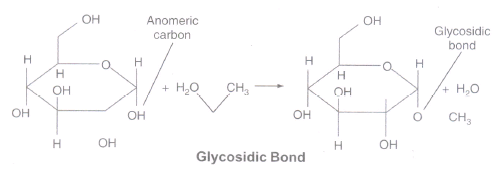
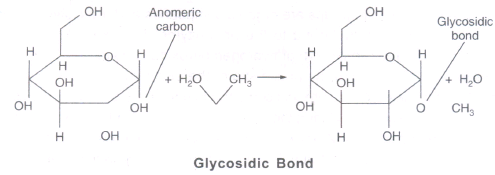
A glycosidic bond is a certain type of functional group that joins a carbohydrate (sugar) molecule to another group, which may or may not be another carbohydrate.
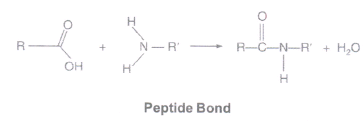
Peptide Bond. A peptide bond (amide bond) is a chemical bond formed between two molecules when the carboxyl group of one molecule reacts with the amine group of the other molecule, thereby releasing a molecule of water (H2O). This is a dehydration synthesis reaction (also known as a condensation reaction) and usually occurs between amino acids. The resulting CO - NH bond is called a peptide bond, and the resulting molecule is an amide. The four-atom functional group - C(=O) NH-is called an amide group or (in the context of proteins) a peptide group. Polypeptides and proteins are chains of amino acids held together by peptide bonds, as is the backbone of PNA. Polyamides, such as nylons and aramids, are synthetic molecules (polymers) that possess peptide bonds.
Phosphodiester Bond.
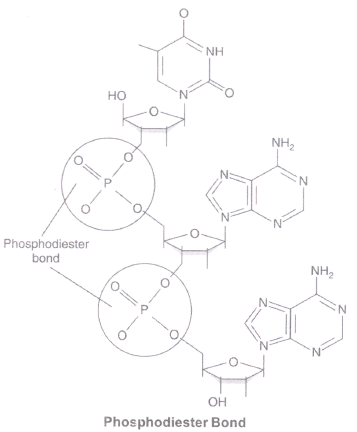
A phosphodiester bond is a group of strong covalent bonds between a phosphate group and two other molecules over two ester bonds. Phosphodiester bonds are central to all life on Earth, as they make up the backbone of the strands of DNA. In DNA and RNA, the phosphodiester bond is the linkage between the 3' carbon atom of one sugar molecule and the 5' carbon of another, deoxyribose in DNA and ribose in RNA.
4.
Primary Structure.
The sequence of amino acids i.e., the positional information in a protein - which is the first amino acid, which is second, and so on - is called the primary structure of a protein. A protein is imagined as a line, the left end represented by the first amino acid and the right end represented by the last amino acid. The first amino acid is also called as N-terminal amino acid. The last amino acid is called the C-terminal amino acid. Aprotein thread does not exist throughout as an extended rigid rod.
Secondary Structure.
Regularly repeating local structures stabilized by hydrogen bonds. The most common examples are the alpha helix, beta sheet and turns. Because secondary structures are local, many regions of different secondary structure can be present in the same protein molecule.
Tertiary structure.
The overall shape of a single protein molecule; the spatial relationship of the secondary structures to one another. 'tertiary structure is generally stabilized by nonlocal interactions, most commonly the formation of a hydrophobic core, but also through salt bridges, hydrogen bonds, disulfide bonds, and even post-translational modifications. The term "tertiary structure" is often used as synonymous with the term fold. The Tertiary structure is what controls the basic function of the protein.
Quaternary Structure.
Some proteins are an assembly of more than one polypeptide or subunits. The manner in which these individual folded polypeptides or subunits are arranged with respect to each other (e.g. linear string of spheres, spheres arranged one upon each other in the form of a cube or plate etc.) is the architecture of a protein otherwise called the quaternary structure of a protein.
5.
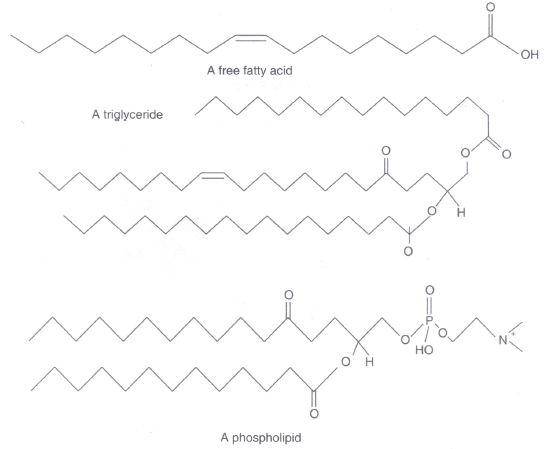
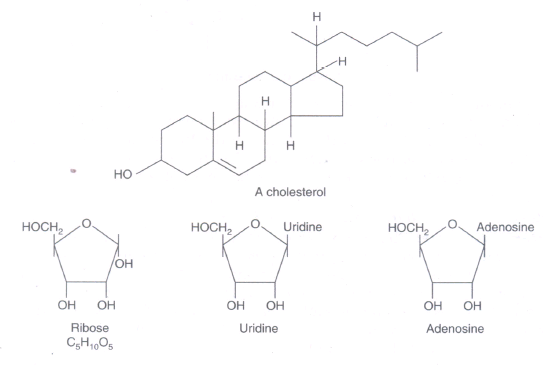
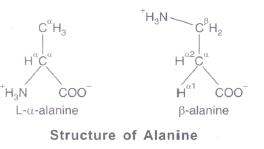
Fat is being manufactured by many companies in pharmaceuticals business as well as in food business. Vitamins come in many combination and are being used as supplementary medicines. Lactose is made by companies manufacturing baby food.
All of us are buyers of fat, protein and lactose.
6.
A glycosidic bond is a certain type of functional group that joins a carbohydrate (sugar) molecule to another group, which mayor may not be another carbohydrate.
A peptide bond (amide bond) is a chemical bond formed between two molecules when the carboxyl group of one molecule reacts with the amine group of the other molecule, thereby releasing a molecule of water (H2O). This is a dehydration 'synthesis reaction (also known as a condensation reaction) and usually occurs between amino acids. The resulting CO-NH bond is called a peptide bond, and the resulting molecule is an amide. The four-atom functional group -C(=O) NH-is called an amide group or (in the context of proteins) a peptide group. Polypeptides and proteins are chains of amino acids held together by peptide bonds, as is the backbone of PNA. Polyamides, such as nylons and aramids, are synthetic molecules (polymers) that possess peptide bonds.
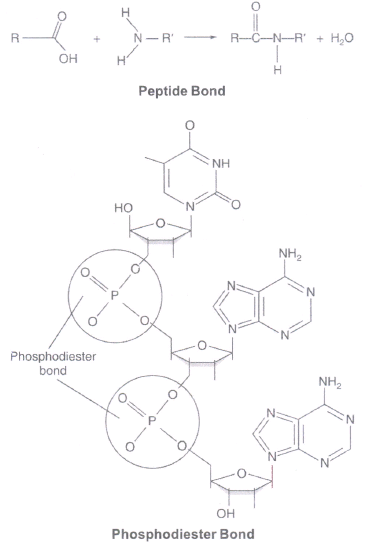
A phosphodiester bond is a group of strong covalent bonds between a phosphate group and two other molecules over two ester bonds. Phosphodiester bonds are central to all life on Earth, as they make up the backbone of the strands of DNA. In DNA and RNA, the phosphodiester bond is the linkage between the 3' carbon atom of one sugar molecule and the 5' carbon of another, deoxyribose in DNAand ribose in RNA.
7.
The continuous process of breakdown and synthesis of biomolecules through chemical reactions occurring in the living cells is called metabolism.
(i) Each of the metabolic reaction results in a transformation of biomolecules.
(ii) Most of these metabolic reactions do not occur in isolation but are always linked with some other reactions.
(iii) In these reactions, the metabolisms are converted into another metabolite in a series of linked reactions called metabolic pathways.
(iv) Each metabolite has a define rate and direction during the flow through a metabolic pathways called the dynamic state.
In living systems, metabolism involves two following types of pathways
(i) The anabolic pathways is called biosynthetic pathway. It leads to a more complex structure from a simpler structure, e.g., the pathway involving the conversion of acetic acid into cholesterol. These pathways consume energy.
(ii) The catabolic pathways leads to simpler structure from a complex structure, e.g., the pathways involving conversion of glucose into lactic acid in our skeletal muscles. This pathway leads to the release of energy, e.g., energy is liberated when glucose is degrated to lactic acid in our skeletal muscles.
8.
The function of polysaccharides are
(i) Starch and glycogen are the major storage food of organic world.
(ii) On hydrolysis, storage carbohydrates provide both energy and carbon chains.
(iii) Chitin is the structural carbohydrate of fungal walls and exoskeleton of arthropods. (insects).
(iv) Cellulose is the structural substance of cell walls in most of the plants.
(v) Cellulose is economically important in the production of furniture, shelter, fuel, paper, textiles, ropes, rayon, cellophane, plastics, etc.

11th Standard CBSE Syllabus & Materials
11th Standard CBSE
CBSE 11th Business Studies Forms of Business Organisation Sample Question Papers Study Material - QB365 Set A
NEW11th Standard CBSE
CBSE 11th Business Studies Business, Trade and Commerce Sample Question Papers Study Material - QB365 Set A
NEW11th Standard CBSE
CBSE 11th Physics Waves Sample Question Papers Study Material - QB365 Set A
NEW11th Standard CBSE
CBSE 11th Physics Kinetic Theory Sample Question Papers Study Material - QB365 Set A



CBSE 11th Standard CBSE Subjects
CBSE Standards









