
 100% FREE ACCESS
11th Standard CBSE Syllabus & Materials
11th Standard CBSE
CBSE 11th Economics PART-A - Presentation of Data - New Sample Question Papers Study Material - QB365 Set A
NEW11th Standard CBSE
CBSE 11th Economics PART-A - Organisation of Data - New Sample Question Papers Study Material - QB365 Set A
NEW11th Standard CBSE
CBSE 11th Economics PART-A - Collection of Data - New Sample Question Papers Study Material - QB365 Set A
NEW11th Standard CBSE
CBSE 11th Economics PART-A - Introduction to Economics and Statistics - New Sample Question Papers Study Material - QB365 Set A
NEW11th Standard CBSE
CBSE 11th Business Studies International Trade Sample Question Papers Study Material - QB365 Set A
NEW11th Standard CBSE
CBSE 11th Business Studies Evolution and Fundamentals of Business Sample Question Papers Study Material - QB365 Set A

Published on: 24/09/2019
Biomolecules
Download CBSE Class 11th Standard CBSE Biology question papers, sample papers, important questions, and previous year solved papers in PDF format. Get free study materials, NCERT solutions, and exam preparation resources for Class 11th Standard CBSE Biology
Questions + Answers key
Take MCQ Biology Test
1.
Explain classification of enzymes.
2.
Define living state.
3.
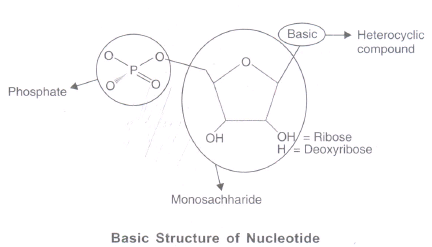
Explain the basic structure of a nucleotide.
4.
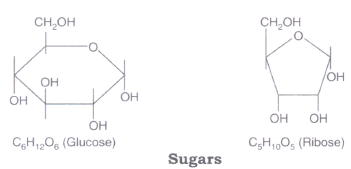
What is the structural formula of sugars?
5.
Give a brief description of nucleic acid.
6.
What is the tertiary structure of protein?
7.
Describe the important properties of enzymes.
8.
Enzymes are proteins. Proteins are long chains of amino acids linked to each other by peptide bonds. Amino acids have many functional groups in their structure.
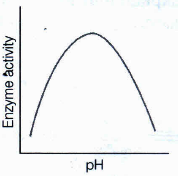
These functional groups are ionizable as they are weak acids and bases in chemical nature. This ionisation is influenced by the pH of the solution. For many enzymes, activity is influenced by surrounding pH. This is depicted in the curve given explain briefly.
9.
Comment on the statement 'living state is a non-equilibrium steady state to be able to perform work'.
10.
Living state and metabolisms are synonyms. Justify.
11.
Differentiate between anabolism and catabolism, along with an example for each.
12.
Is rubber a primary metabolite or a secondary metabolite? Write four sentence about rubber?
13.
Explain the composition of triglyceride.
14.
Find out how much cellulose is made by all the plants in the biosphere and compare it with how much of paper is manufactured by man and hence what is the consumption of plant material by man annually. What a loss of vegetation!
15.
Succinic dehydrogenase is an enzyme that causes the substrate, succinate, to break down into fumarate
Malonate is a substance that resembles succinate and inhibits the activity of succinic dehydrogenase
Explain how this type of inhibition affects the activity of the enzyme
1.
Classification and Nomenclature of Enzymes
Thousands of enzymes have been discovered, isolated and studied. Most of these enzymes have been classified into different groups based on the type of reactions they catalyse. Enzymes are divided into 6 classes each with 4 -13 subclasses and named accordingly by a four-digit number.
Oxidoreductases/ dehydrogenases.
Enzymes which catalyse oxidoreduction between two substrates S and S'.
Transferases.
Enzymes catalysing a transfer of a group, G (other than hydrogen) between a pair of substrate Sand S'.
Hydrolases.
Enzymes catalysing hydrolysis of ester, ether, peptide, glycosidic, C-C, C-halide or P-N bonds.
Lyases.
Enzymes that catalyse removal of groups from substrates by mechanisms other than hydrolysis leaving double bonds.
Isomerases.
Includes all enzymes catalysing inter-conversion of optical, geometric or positional isomers.
Ligases.
Enzymes catalysing the linking together of 2 compounds, e.g., enzymes which catalyse the joining of C-O, C-S, C-N, P-O etc. bonds.
2.
The most important fact of biological systems is that all living organisms exist in a steady-state characterised by concentrations of each of these biomolecules. These biomolecules are in a metabolic flux. Any chemical or physical process moves spontaneously to equilibrium. The steady state is a non-equilibrium state. As living organisms work continuously, they cannot afford to reach equilibrium. Hence the living state is a non-equilibrium steady-state to be able to perform work; living process is a constant effort to prevent falling into equilibrium. This is achieved by energy input. Metabolism provides a mechanism for the production of energy. Hence the living state and metabolism are synonymous. Without metabolism, there cannot be a living state.
3.
A nucleotide is a building block of nucleic acids. A nucleotide has following components:
(a) A heterocyclic compound (base)
(b) A monosaccharide, and
(c) A phosphoric acid or a phosphate.
4.
5.
For nucleic acids, the building block is a nucleotide. A nucleotide has three chemically distinct components. One is a heterocyclic compound, the second is a monosaccharide and the third a phosphoric acid or phosphate.
The heterocyclic compounds in nucleic acids are the nitrogenous bases named adenine, guanine, uracil, cytosine, and thymine. Adenine and Guanine are substituted purines while the rest are substituted pyrimidines.
The skeletal heterocyclic ring is called as purine and pyrimidine respectively. The sugar found in polynucleotides is either ribose (a monosaccharide pentose) or 2' deoxyribose. A nucleic acid containing deoxyribose is called deoxyribonucleic acid (DNA) while that which contains ribose is called ribonucleic acid (RNA).
6.
Tertiary structure of protein.
The overall shape of a single protein molecule; the spatial relationship of the secondary structures to one another. Tertiary structure is generally stabilized by non-local interactions, most commonly the formation of a hydrophobic core, but also through salt bridges, hydrogen bonds, disulfide bonds, and even post-translational modifications. The term "tertiary structure" is often used as synonymous with the term fold. The tertiary structure is what controls the basic function of the protein.
7.
Properties of enzymes are as follows:
i) Lowering the activation energy
ii) Lowering the energy of the transition state
iii) Providing an alternative pathway
iv) Reducing the reaction entropy change
v) Increases in temperatures speed up reactions
vi) Unique enzyme for unique substance
vii) Small quantity is enough to facilitate faster reaction.
8.
Enzymes, generally function in a narrow range of pH.Each enzyme shows its highest activity at a particular optimum pH.Activity declines both below and above the optimum value. The graph shows maximum enzyme activity at optimum pH.The rate of enzyme activity decreases above and below that optimum pH.
9.
The most important fact of biology systems is that all living organisms exist in a steady-state characterised by the concentration of each of the biomolecule. These biomolecules are in a metabolic flux. Any chemical or physical process moves spontaneously to equilibrium. Thus, the steady state is a non-equilibrium state.
As living organisms work continuously, they cannot afford to reach equilibrium. Hence, the living state is a non-equilibrium steady-state to be able to perform work. This is achieved by energy input. Metabolism provides a mechanism for the production of energy.
Hence, the living state and metabolism are synonymous. Without metabolism, there cannot be a living state.
10.
The most important fact of biology systems is that all living organisms exist in a steady-state characterised by the concentration of each of the biomolecule. These biomolecules are in a metabolic flux. Any chemical or physical process moves spontaneously to equilibrium. Thus, the steady state is a non-equilibrium state.
As living organisms work continuously, they cannot afford to reach equilibrium. Hence, the living state is a non-equilibrium steady-state to be able to perform work. This is achieved by energy input. Metabolism provides a mechanism for the production of energy.
Hence, the living state and metabolism are synonymous. Without metabolism, there cannot be a living state.
11.
Difference between anabolism and catabolism are
| Anabolism | Catabolism |
| The metabolic pathways that lead to the synthesis of complex molecules from simpler ones, constitute anabolism. | The metabolic pathways that lead to the formation of simpler molecules from a larger molecule by its breakdown, constitute catabolism |
| These are the biosynthetic pathways. | These are the degradative pathways. |
| Energy is stored in the form of chemical bonds. | Chemical bonds are broken and energy is released. |
| They consume energy, e.g., protein synthesis from amino acids | They release energy e.g., breakdown of glucose into pyruvic acid in glycolysis. |
12.
(i) Yes, it is natural rubber (cis-1, 4-polyisoprene) is a secondary metabolite. It is extracted from the rubber tree (Hevea brasiliensus).
(ii) In the rubber tree, latex is produced in the highly specialised cells, called laticifers in phloem.
(iii) Rubber is a terpenoid and due to its high tensile strength, elasticity and plasticity properties. It is widely used in industries.
(iv) It is a polymeric substance.
13.
Triglycerides are composed of two types of molecules, i.e., glycerol (3 carbon molecules) and fatty acids which is attached to the glycerol at the alchohol unit.
The following is a structural representation of a triglyceride at the molecular level.
Fatty acids are chain of hydrocarbons composed 4-22 (or more) carbons along with a carboxyl group at one end. If each carbon has two hydrogen atoms, the fatty acid is saturated. If two carbon atoms are double- bonded, so, that there is less hydrogen in the fatty acid, it is unsaturated (monounsaturated). If more than two carbon atoms are unsaturated, the fatty acid is polyunsaturated.
14.
Most paper is formedfrom wood pulp. The main component of wood pulp is cellulose. Almost 100 billion stonnes of cellulose is produced by all the plants in the biosphere. About 400 million tonnes of paper is used by man in a year and we consume most of the mnanufacture paper.
Therefore, the loss of vegetation is very high and we need to use the sources wisely.
15.
The inhibitor competes with the substract for the active sites of enzyme molecules as it has a structure similar to the substract that allows it to combine with the active site, preventing any substract molecule from occupying that site.This reduces the rate of the reaction since, the subtract can only use the enzyme molecules that are not occupied by the inhibitor, resulting in the same quantity of product being formed at a slower rate

11th Standard CBSE Syllabus & Materials
11th Standard CBSE
CBSE 11th Business Studies Forms of Business Organisation Sample Question Papers Study Material - QB365 Set A
NEW11th Standard CBSE
CBSE 11th Business Studies Business, Trade and Commerce Sample Question Papers Study Material - QB365 Set A
NEW11th Standard CBSE
CBSE 11th Physics Waves Sample Question Papers Study Material - QB365 Set A
NEW11th Standard CBSE
CBSE 11th Physics Kinetic Theory Sample Question Papers Study Material - QB365 Set A



CBSE 11th Standard CBSE Subjects
CBSE Standards









