
 100% FREE ACCESS
11th Standard CBSE Syllabus & Materials
11th Standard CBSE
CBSE 11th Economics PART-A - Presentation of Data - New Sample Question Papers Study Material - QB365 Set A
NEW11th Standard CBSE
CBSE 11th Economics PART-A - Organisation of Data - New Sample Question Papers Study Material - QB365 Set A
NEW11th Standard CBSE
CBSE 11th Economics PART-A - Collection of Data - New Sample Question Papers Study Material - QB365 Set A
NEW11th Standard CBSE
CBSE 11th Economics PART-A - Introduction to Economics and Statistics - New Sample Question Papers Study Material - QB365 Set A
NEW11th Standard CBSE
CBSE 11th Business Studies International Trade Sample Question Papers Study Material - QB365 Set A
NEW11th Standard CBSE
CBSE 11th Business Studies Evolution and Fundamentals of Business Sample Question Papers Study Material - QB365 Set A

Published on: 04/03/2020
11th Standard CBSE Biology Public Exam Important Question 2019-2020
Download CBSE Class 11th Standard CBSE Biology question papers, sample papers, important questions, and previous year solved papers in PDF format. Get free study materials, NCERT solutions, and exam preparation resources for Class 11th Standard CBSE Biology
Questions + Answers key
Take MCQ Biology Test
1.
Explain parasympathetic neural system.
2.
On the basis of which structure you can say that neem shows a compound leaf?
3.
Explain in brief the nervous system of cockroach.
4.
Cynobacteria plays a major role in our ecology. Discuss.
5.
Cork cambium forms tissues that form the cork. Do you agree with this statement? Explain.
6.
What is the general structure of Bryophytes?
7.
A man is admitted to a hospital. He is suffering from an abnormal low body temperature, loss of apeptite and extreme thirst. The doctor consoled him and also prescribed brain scan as he suspected, there would be a tumour in his brain.
(i) Mention the reason behind the abnormalities of the patient.
(ii) Which part of the brain would probably show a tumour?
(iii) Identify the location of hypothalamus.
(iv) what values of life were reflected by the doctor?
8.
What is the significance of hepatic portal system in the circulatory system?
9.
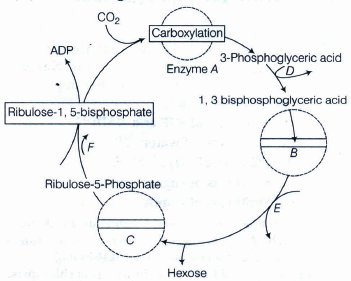
The diagram given below shows stages in the light-independent reactions of photosynthesis.
Answer the following
(i) At which stage NADPH is oxidised?
(ii) What are A, B and C?
(iii) At what stages ATP is converted into ADP?
10.
Nucleic acids exhibits secondary structure, justify with example.
11.
Distinguish between the cell membrane and cell wall.
12.
Write an account on skeleton of sponges.
13.
What is the benefit of metabolism for living organisms? What are its types?
14.
How are plants grown in glass containers to judge essential elements?
15.
What is aerobic muscle?
16.
State the volume of air remaining in the lungs after a normal breathing.
17.
Define the following:
(a) Exocrine gland
(b) Endocrine gland
(c) Hormone
18.
Explain thrombocytes.
19.
Which kind of cells help in osmoregulation and excretion in Platyhelminthes?
20.
Because of increasing CO2 level in the environment there are talks of utilizing the ocean as a possible dumping belt to get rid of excess carbon. Can you give explanation for this?
21.
What is the function of Eustachian tube in ear?
22.
Describe the role of alcohol and caffeine in the concentration of urine.
23.
Comment on the statement,' Respiration is an energy producing process,but ATP is being used in some steps of the process'
24.
How does water stress affect/decrease the rate of photosynthesis
25.
If one wants to find minerals in the form they are mobilised in the plant, how will the analysis of the exudate helps?
26.
Why do the chromosomes become short and thick in prophase?
27.
Name of the product formed by esterification of glycerol with a fatty acid. Also draw its structure.
28.
What is a mesosome in a prokaryotic cell? Mention the functions that it performs.
29.
Write the location of neuroglia cells. List their functions.
30.
Distinguish between Collenchyma and sclerenchyma.
31.
Mango and coconut are drupe type of fruits. In mango, fleshy mesocarp is edible. What is the edible part of coconut? What does milk of tender coconut represent?
32.
List two important features of Gonyaulax.
33.
What are the different steps of C4 pathway?
34.
Compare the following:
(a) Central neural system (CNS) and Peripheral neural system (PNS)
(b) Resting potential and action potential
35.
List the hormones secreted by the following:
(a) Hypothalamus
(b) Pituitary
(c) Thyroid
(d) Parathyroid
(e) Adrenal
(f) Pancreas
(g) Testis
(h) Ovary
(i) Thymus
(j) Atrium
(k) Kidney
(l) G-I Tract
36.
Describe conduction of heartbeat with the help of suitable diagram.
37.
Explain various steps involved in cellular respiration.
38.
How various PGRs were discovered? Describe.
39.
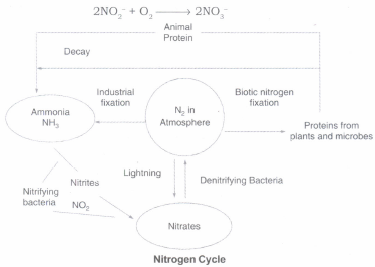
With the help of suitable diagram describe nitrogen cycle
40.
What is a centromere? How does the position of centromere form the basis of classification of chromosomes. Support your answer with a diagram showing the position of centromere on different types of chromosomes.
41.
Evaluate how did the development of plants, from algae to angiosperms may have taken place.
42.
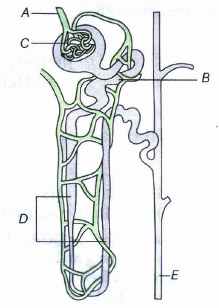
(i) Study the given structure carefully and label the parts given as A, B, C, D and E.
(ii) Give one major function of each of these.
43.
What is the difference between lenticels and stomata
44.
What is the basic body plan of animals?
45.
What is the name of the fusion of two halves of pelvic girdle?
Acetabulum
Pubis
Pubic symphysis
Sacrum
46.
Which of the following is not a neurotransmitter?
Morphine
Epinephrine
Dopamine
Norepinephrine
47.
What is the amount of air inspired by normal human in a minute?
4 to 5 litre
5 to 6 litre
6 to 7 litre
6 to 8 litre
48.
The fact that all biomolecules undergo turnover is known as _____.
Catabolism
Anabolism
Metabolism
All of the above
49.
Which of the following is a characteristic of mass flow movement?
Huge mass is moved
Movement is in bulk
Huge pressure is required
Larger porins helps transport large mass
50.
Deficiency of iodine causes which of the following conditions?
Hyperthyroidism
Hypothyroidism
Goitre
Both (b) and (c)
51.
Plants showing vemalism usually flower during which season?
Autumn
Summer
Winter
Spring
52.
Which is the first product formed during Calvin cycle?
3-PGA
4-PGA
2-PGA
5-PGA
53.
What is the normal leucocyte count in human?
4000-6000 per cubic mm
5000-7000 per cubic mm
6000-8000 per cubic mm
7000-9000 per cubic mm
54.
Which is the excretory product in eagles?
Ammonia
Urea
Uric Acid
None of these
55.
How many molecules of ATP is made during fermentation of one molecule of glucose?
4
3
2
1
56.
What is the name of modified root in turnip?
Prop root
Tap root
Tubour
Pneumatophore
57.
Which of the following tissues is responsible for secondary growth?
Vascular Cambium
Cork Cambium
Secondary Cambium
both (a) and (b)
58.
What is the minimum amount of an element in terms of mmole per kg?
> 10
= 10
> 20
= 20
59.
Squamous epithelium are found in which of the following places?
Lining of small intestine
Lining of Heart
Lining of blood vessels
Skin
60.
Which of the following is part of endomembrane system?
Mitochondria
Chloroplast
Chromosome
Vacuole
61.
Which is the correct sequence of mitotic cell division?
Prophase Anaphase Metaphase Telophase
Prophase Telophase Metaphase Anaphase
Prophase Anaphase Telophase Metaphase
Prophase Metaphase Anaphase Telophase
62.
In which of the following organisms sexes are not separate?
Ascaris
Cockroach
Pheretima
Pila
63.
Which of the following division contains the largest number of plant species?
Gymnosperm
Angiosperm
Pteridophyta
Bryophyta
64.
Which of the following characteristic of living beings, can also be observed in some non-livings?
Respiration
Reproduction
Growth
Stimulation
1.
The parasympathetic neural system is part of autonomic neural system. This system has some sort of inhibitory effect. The inhibitory effect minimizes the over functioning of certain functions. Functions, like salivating, digestion, are under control of parasympathetic neural system.
2.
The number and position of auxillary bud is an indicator if a leaf is a simple one or a compound one. In neem leaves there is a single auxillary bud at the start of the bunch of leaflets. So it is a compound leaf.
3.
Nervous System of Cockroach:
(i) The nervous system of cockroach consists of a series of fused, segmentally arranged ganglia joined by paired longitudinal connectives on the ventral side.
(ii) Three ganglia lie in the thorax, and six in the abdomen. The nervous system of cockroach is spread throughout the body.
(iii) The head holds a bit of a nervous system while the rest is situated along the ventral (belly-side) part of its body.
4.
Cynobacteria, also known as 'blue green algae' help in carbon fixation in a major way on the ocean surface.They are helpful in nitrogen fixation in paddy fields leading to a better harvest.About 80% of photosynthesis on ocean surface is done by cynobacteria.So, it can be said that they playa major role in our ecology.
5.
Cork Cambium. As the stem continues to increase in girth due to the activity of vascular cambium, the outer cortical and epidermis layers get broken and need to be replaced to provide new protective cell layers. Hence, sooner or later, another meristematic tissue called cork cambium or phellogen develops, usually in the cortex region. Phellogen is a couple of layers thick. It is made of narrow, thin-walled and nearly rectangular cells. Phellogen cuts off cells on both sides. The outer cells differentiate into cork or phellem while the inner cells differentiate into secondary cortex or phelloderm. This is clear how cork cambium forms tissues that form the cork.
6.
Structure of Bryophytes. It is thallus-like and prostrate or erect, and attached to the substratum by unicellular or multicellular rhizoids. They lack true roots, stem or leaves. They may possess root-like, leaf-like or stem-like structures
7.
(i) Tumour in hypothalamus.
(ii) Hypothalamus.
(iii) The hypothalamus lies at the base of thalamus in the forebrain.
(iv) Humanity and responsibility towards the patient. He is devoted to his duties and has professional ethics.
8.
A unique vascular connection exists between the digestive tract and liver called hepatic poratal system.The hepatic portal vein carries blood from intestine to the liver before it is delivered to the systemic circulation.This ensures that the liver, which has the metabolic versatility to interconvert various organic molecules has first access to nutrients after the food is digested.
9.
(i) NADPH is oxidised at stage E
(ii) A-RuBP carboxylase oxygenase (RuBisCO), B-Reduction, C-Regeneration
(iii) ATP is converted to ADP at stages D and E.
10.
For nucleic acids, the building block is a nucleotide. A nucleotide has three chemically distinct components. One is a heterocyclic compound, the second is s monosaccharide and the third is a phosphoric acid or phosphate.
The heterocyclic compounds in nucleic acids are the nitrogenous bases named adenine, guanine, uracil, cytosine and thymine. Adenine and guanine are substituted purines while, the rest are substituted pyrimidines.
The skeletal heterocyclic ring is called as purine and pyrimidine, respectively. The sugar found in polynucleotide is either ribose (a monosaccharide pentose) or 2' deoxyribose. A nucleic acid containing deoxyribose is called deoxyribonucleic acid (DNA), while that which contains ribose is called ribonucleic acid (RNA).
11.
| Cell Membrane | Cell Wall |
| It is found in both prokaryotes and eukaryotes | It is found in only plant cells as well as bacteria, fungi, algae and some archaea, i.e., absent in animal cells and Protozoa |
| Its function is to separate the components inside the cell from outside | Its function is to provide barrier to undesirable sustain and attack of pathogen |
| It provides support to the cytoskeleton of the cell, give shape to the cell | It provides strength and rigidity to the cell |
12.
The body of sponges contains a supporting exoskeleton. It is made up of either spicules or spongin fibres or both. Spongin fibres are protein fibres. They are either highly branched or show anastomosis. Spicules are calcareous or siliceous with hard spine-like structures.
Depending on the branching the spicules are
(i) monoaxons (single axis).
(ii) triaxons (three axis forming six rays of hexactinal spicules).
(iii) tetraxons (four rays or tetra actinal).
(iv) polyaxons (several rays)
13.
All the activities like growth, reproduction, movements, responsiveness, development, etc., are due to metabolism.
Metabolism is of two types, i.e., anabolism and catabolism. Anabolism involves the synthesis of complex compounds from simpler ones, e.g., photosynthesis and catabolism involves the breakdown of complex compounds into simpler substances, e.g., respiration.
14.
In the solution culture the plants are grown in pure nutrient media with only required elements. The glass containers are covered with black paper to protect roots from direct light. In other glass containers plant is allowed to grow artificially with same nutritive culture that contains all essential elements except one and its essentiality is to be judged. They are compared with the control plant grown in balanced nutrient medium. When there is any change in morphological features compared with normal plant this may be due to deficiency of specific element.
15.
Certain muscles have high concentration of myoglobin which gives it a red appearance. They also contain plenty of mitochondria which utilize large amounts of oxygen to produce ATP. Because of this they are also called aerobic muscles.
16.
Functional Residual Capacity (FRC). Volume of air that will remain in the lungs after a normal expiration. This includes ERV + RV.
ERV = 1000 to 1100 ml
RV = 1100 to 1200 ml
So, FRC = 2100 to 2300 ml
17.
(a) Exocrine Glands. These glands have ducts. They secrete their secretions through ducts.
(b) Endocrine Glands. Endocrine glands do not have ducts. They directly secrete their secretions.
(c) Hormone. Hormones are non-nutrient chemicals which act as intercellular messengers and are produced in trace amounts
18.
Platelets are also called thrombocytes, are cell fragments produced from megakaryocytes (special cells in the bone marrow). Blood normally contains 1,500,00-3,500,00 platelets mm-3. Platelets can release a variety of substances most of which are involved in the coagulation or clotting of blood. A reduction in their number can lead to clotting disorders which will lead to excessive loss of blood from the body.
19.
Excretion and osmoregulation in platyhelminthes occur with the help of a protonephridial system having flame cells.
20.
The ocean is full of blue green algae and algae. 80% of carbon fixation is achieved by them. Carbon's solubility in water can be utilized to dump excess carbon into ocean where major part of it will be utilized through carbon fixation. This will help reduce the greenhouse effect on earth
21.
A Eustachian tube connects the middle ear cavity with the pharynx. The Eustachian tube helps in equalising the pressures on either sides of the eradrum
22.
Alcohol inhibits the release of ADH and caffeine interferes with ADH action and sodium reabsorption.Thus both of these artifically dilute the urine.Such compounds which dilute urine are called diuretic substances.
23.
Respiration is a complex oxidative process in which there is formation of several intermediate molecules occurs.In the end water molecule is produced and ATP molecules are consumed in the glycolysis and Krebs cycle, there is also production of more molecules of ATP, thus a positive balance of ATP molecules is obtained.
24.
(a) Water stress causes closure of stomata and decreases the availability of CO2 for photosynthesis.
(b) Water stress also causes wilting of leaves, thus reducing the surface area of leaves for metabolic function.
25.
An analysis of the xylem exudates shows that through some of the nitrogen travels as inorganic travels as inorganic ions, much of it is carried in the organic form as amino acids and related compounds. Similarly, small amount of phosphorus and sulphur are carried as organic compunds.In addition, small amount of exchange of materials does take between xylem and phloem.
26.
It happens so because it is physically easier for short and compact chromosomes to move through the cytoplasm than the very long twisted interphase chromosomes.
27.
On esterification, triglyceride is produced.
Fatty acids can be metabolised for energy by tissues or stored as energy in the form of triglycerides. The stored triglycerides are digested in response to energy demands, and the unsaturated fatty acids are released into the circulatory system and delivered to the tissues.

28.
Mesosome is a special membrane structure, formed by the extension of the plasma membrane into the cell in a prokaryotic cell. It helps in cell wall formation, DNA replication and its distribution to daughter cells. It also helps in respiration, secretion process, to increase the surface area of the plasma membrane and enzymatic content.
29.
Neuroglia cells are packed around the neurons in the brain,spinal cord and ganglia.neuroglia cells have various functions like myeline formation, transport of materials to neurons maintenance of ionic balance and phagocytosis.
30.
Collenchyma and sclerenchyma are types of simple permanent tissues.
31.
Mango and coconut are drupe fruits. They develop from monocarpellary superior ovaries and are one seeded. It is differentiated into outer thin epicarp, middle fleshy mesocarp and inner stony endocarp.

The edible part of coconut (Cocos nucifera) is endosperm. The milk of tender coconut represents the oily endosperm in liquid form. Later it gets deposited along the walls of endocarp and forms edible flesh.
32.
Gonyaulax are important because
(i) They have red coloured pigments present in their cells make the sea glow red. They are called red tides.
(ii) They produce toxins such as saxitoxin that kills the fish.
33.
Steps of C4 pathway:
(i) The primary CO2 acceptor is a 3-carbon molecule phosphoenol pyruvate (PEP) and is present in the mesophyll cells. The enzyme responsible for this flxation is PEP carboxylase or PEP case. It is important to register that the mesophyll cells lack RuBisCO enzyme. The C4 acid OAA is formed in the mesophyll cells.
(ii) It then forms other 4-carbon compounds like malic acid or aspartic acid in the mesophyll cells itself, which are transported to the bundle sheath cells. In the bundle sheath cells these C4 acids are broken down to release CO2 and a 3-carbon molecule.
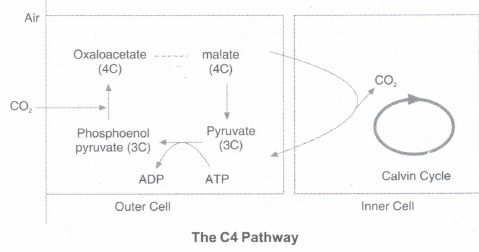
(i) The 3-carbon molecule is transported back to the mesophyll where it is converted to PEP again, thus, completing the cycle.
(ii) The CO2 released in the bundle sheath cells enters the C3 or the Calvin pathway, a pathway common to all plants. The bundle sheath cells are rich in an enzyme Ribulose bisphosphate carboxylase-oxygenase (RuBisCO), but lack PEPcase. Thus, the basic pathway that results in the formation of the sugars, the Calvin pathway, is common to the C3 and C4 plants.
34.
(a) Central neural system (CNS) and Peripheral neural system (PNS)
Central neural system (CNS) :
It is the main coordinating centre of the body.
It lies inside the skull.
This includes brain and spinal cord.
Peripheral neural system (PNS) :
It is not the main coordinating centre of the body.body.
It is present outside the skull in the peripheral areas of the body.
This includes all the nerves of the bodyassociated with the CNS (brain and spinalcord).
(b) Resting potential and action potential
Resting potential :
It is the potential difference across the nerve fibrefibre when there is no conducting of nerve impulse.
The interior of the neuron is electronegative and the exterior is electropositive.
An active sodium pump operates.
Action potential :
It is the potential difference across nerve when there is conduction of nerve impulse.
The interior of the neuron is electropositive and the exterior is electronegative.
No sodium pump operates.
35.
(a) Hypothalamus - Releasing hormone and Inhibiting hormone.
(b) Pituitary - Growth hormone, Prolactin, Thyroid stimulating hormone, Adrenocorticotrophic hormone, Luteinizing hormone, Follicle stimulating hormone, Melatonin.
(c) Thyroid - Tetraiodothyronine, Triiodothyronine.
(d) Parathyroid - Parathyroid hormone.
(e) Adrenal - Adrenalin or Epinephrine, Noradrenaline or norepinephrine Corticoids.
(f) Pancreas - Glucagon, Insulin.
(g) Testis - Testosterone.
(h) Ovary - Estrogen, Progesterone.
(i) Thymus - Thymosin.
(j) Atrium - Atrial Natriuretic Factor
(k) Kidney - Erythropoietin.
(l) GI Tract - Gastrin, Secretin, Cholecystokinin (CCK)Gastric Inhibitory Peptide (GIP)
36.
Conduction of Heart Beat:
The entire heart is made of cardiac muscles. The walls of ventricles are much thicker than that of the atria. A specialised cardiac musculature called the nodal tissue is also distributed in the heart.
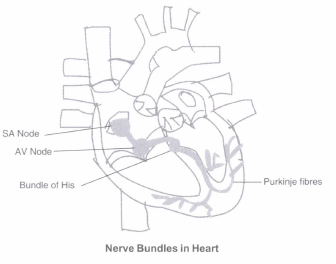
SA Node. A patch of nodal tissue is present in the right upper corner of the right atrium called the sino-atrial node (SAN).
AV Node. Another mass of nodal tissue is seen in the lower left corner of the right atrium close to the atria-ventricular septum called the atria-ventricular node (AVN).
Bundle of His. A bundle of nodal fibres, atrioventricular bundle (AV bundle) continues from the AVN which passes through the atria-ventricular septa to emerge on the top of the interventricular septum and immediately divides into a right and left bundle. These branches give rise to minute fibres throughout the ventricular musculature of the respective sides and are called purkinje fibres. These fibres along with right and left bundles are known as bundle of HIS.
Generation of Heart Beat. The nodal musculature has the ability to generate action potentials without any external stimuli, i.e., it is autoexcitable. However, the number of action potentials that could be generated in a minute vary at different parts of the nodal system. The SA Node can generate the maximum number of action potentials, i.e., 70-75 min-1, and is responsible for initiating and maintaining the rhythmic contractile activity or beating of the heart. Therefore, it is called the pacemaker. Our heart normally beats 70-75 times in a minute (average 72 beats per minute).
37.
Steps of cellular respiration:
(1) Glycolysis: Glycolysis is the first step in cellular respiration. During glycolysis glucose undergoes partial oxidation and makes pyruvic acid. From 1 molecule of glucose 2 molecules of pyruvic acid is formed.
(2) Fermentation: The pyruvic acid undergoes fermentation in anaerobic conditions. There can be lactic acid fermentation or ethanol fermentation. By lactic acid fermentation pyruvic acid is converted into lactic acid, while in another case the pyruvic acid is converted to ethyl alcohol. Fermentation does not ensure complete oxidation of glucose.
(3) Citric Acid Cycle: Under aerobic conditions the pyruvic acid undergoes citric acid cycle. This converts the pyruvic acid into citric acid. ATP is also released which is stored by mitochondria.
\(pyruvic \ acid +CoA+NAD^+\xrightarrow {Mg2^+}Acetyl \ CoA+NADH+H^+\)
38.
The Discovery of Plant Growth Regulators:
Discovery of Auxins. Charles Darwin and his son Francis Darwin when they observed that the coleoptiles of canary grass responded to unilateral illumination by growing towards the light source (phototropism). After a series of experiments, it was concluded that the tip of coleoptile was the site of transmittable influence that caused the bending of the entire coleoptile. Auxin was isolated by F.W. Went from tips of coleoptiles of oat seedlings.
Discovery of Gibberellins. The 'bakane' (foolish seedling) a disease of rice seedlings, was caused by a fungal pathogen Gibberalla fujikuroi. E. Kurosawa reported the appearance of symptoms of the disease in uninfected rice seedlings when they were treated with sterile filtrates of the fungus. The active substances were later identified as gibberellic acid.
Discovery of Cytokinins. F. Skoog and his co-workers observed that from the intermodal segments of tobacco stems the callus (a mass of undifferentiated cells) proliferated only if, in addition to auxins the nutrients medium was supplemented with one of the following: extracts of vascular tissues, yeast extract, coconut milk or DNA. Skoog and Miller, later identified and crystallised the cytokinesis promoting active substance that they termed kinetin.
Discovery of Abscisic Acid. During mid-1960s, three independent researches reported the purification and chemical characterisation of three different kinds of inhibitors: inhibitor-B, abscission II and dormin. Later all the three were proved to be chemically identical. It was named abscisic acid (ABA). Cousins confirmed the release of a volatile substance from ripened oranges that hastened the ripening of stored unripened bananas. Later this volatile substance was identified as ethylene, a gaseous PGR.
39.
Nitrogen Cycle
(i) Plants compete with microbes for the limited nitrogen that is available in soil. Thus, nitrogen is a limiting nutrient for both natural and agricultural ecosystems.
(ii) In nature, lightning and ultraviolet radiation provide enough energy to convert nitrogen to nitrogen oxides (NO, NO2, N2O).
(iii) Industrial combustions, forest fires, automobile exhausts and power-generating stations are also sources of atmospheric nitrogen oxides.
(iv) Decomposition of organic nitrogen of dead plants and animals into ammonia is called ammonification. Some of this ammonia volatilises and re-enters the atmosphere but most of it is converted into nitrate by soil bacteria in the following steps:
2NH3+3O2⟶2NO2+2H++2H2O
2NH3+ 3O2 ⟶ 2NO2
40.
Every chromosome essentially has a primary constriction or the centromere on the sides of which disc-shaped structures called kinetochores are present. Based on the position of the centromere, the chromosomes can be classified into four types.
Metacentric Chromosome : The metacentric chromosome has middle centromere forming two equal arms of the chromosome. Sub-metacentric Chromosome. The sub-metacentric chromosome has centromere nearer to one end of the chromosome resulting into one shorter arm and one longer arm.
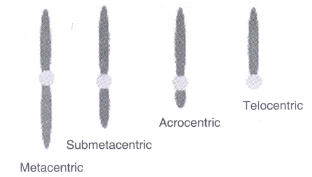
Acrocentric Chromosome : In case of acrocentric chromosome, the centromere is situated close to its end forming one extremely short and one very long arm, Telocentric Chromosome. The telocentric chromosome has a terminal centromere.
41.
Plant kingdom is rich with a large number of species. At every stage of evolutionary development there are interesting examples of new structures coming up to give better tools of survival to the plant
The natural habitat of algae is water, so they can be compared to aquatic animals. As life started in the aquatic environment so algae are the most primitive group of plants. Moreover, their structure is simple with no special organs for special functions.
The way amphibian animals are like a linking point between aquatic and terrestrial life, bryophytes show the same characteristic. Bryophytes need water to facilitate reproduction although they live on soil. In bryophytes we witness some development of leaf-like structures and root like structures. Antheridiopore and Archegoniopore can be compared to flowers of angiosperms
When we analyze Pteridophytes we can see development of vascular tissues for transport of substances. Pteridophytes show true roots as well. While the dominant phase is gametophyte in bryophytes it is sporophyte in Pteridophytes. This is another indication of evolution Gymnosperm look more like a common plant, with well defined roots and stem. Appearance of seeds is another indicator of development. Seeds gave the ability to survive longer durations of adverse conditions. This is a sort of guarantee to continue progeny even after a long spell of adverse environmental conditions.
Angiosperms are more advanced because of many factors. The seed is covered, which means more protection to the embryo. Appearance of flowers was a means to facilitate cross pollination for more variations. Angiosperms can modify almost any part for special purpose. For example, certain plants store excess food in modified leaves or stems or roots.
This essay is an interesting description of how from simple thalloid algae plants have developed into more complicated angiosperms. While algae have a simple thallus to carry out all biological functions, angiosperms have dedicated tissue systems for various functions.
42.
(i) A - Afferent arteriole,
B - Proximal convoluted tubule,
C - Glomerulus,
D - Loop of Henle,
E - Collecting duct
(ii) Following are the functions of each above mentioned part
A - Carry blood to glomerulus for ultrafiltration.
B - Selective reabsorption of useful substances.
C - Ultrafiltration of blood.
D - Maintenance of the high osmolarity of medullary interstitial fluid.
E - Reabsorption of water to form hypertonic urine.
43.
Difference between lenticels and stomata are given below
| Lenticels | Stomata |
| Found in old stem and root | Found in leaves and young stem |
| Present in crok tissues. Contain a number of comlementary cells permanently remain open |
Present in epidremis stomata contain two guard cells Stomata open and close in response to turgidity of guars cells |
44.
Animals hve three basic body plan as given below
(i) Cell aggregate body plan Cells are loosely arranged and do not organise to from tissues, e.g sponges
(ii) Blind sac body plan Body has a cavity that helps in digestion with a single opening, the mouth, e.g, coelenterates.
(iiii) Tube within tube body plan It is found in higher animal groups from nematodes to chordates. The body consists oof two openings, ie, one for ingestion and one for egestion. It is further divided in to two tyoes
(a) Protosmous plan (Proto-first; stoma-mouth) found in non - chodrates like flatworms, roundworms , annelids, molluscs and arthropods. In this, mouth is derived from the blastopore of the embryo and anus is formed later.
(b) deuterostomous plan It is found in the echinoderms, hemichordata and chordates. In this, anus id derived from the blastopore and mouth arises at the opposite end.
45.
(c)
Pubic symphysis
46.
(a)
Morphine
47.
(d)
6 to 8 litre
48.
(c)
Metabolism
49.
(b)
Movement is in bulk
50.
(d)
Both (b) and (c)
51.
(d)
Spring
52.
(a)
3-PGA
53.
(c)
6000-8000 per cubic mm
54.
(c)
Uric Acid
55.
(c)
2
56.
(b)
Tap root
57.
(d)
both (a) and (b)
58.
(a)
> 10
59.
(c)
Lining of blood vessels
60.
(d)
Vacuole
61.
(d)
Prophase Metaphase Anaphase Telophase
62.
(c)
Pheretima
63.
(b)
Angiosperm
64.
(c)
Growth

11th Standard CBSE Syllabus & Materials
11th Standard CBSE
CBSE 11th Business Studies Forms of Business Organisation Sample Question Papers Study Material - QB365 Set A
NEW11th Standard CBSE
CBSE 11th Business Studies Business, Trade and Commerce Sample Question Papers Study Material - QB365 Set A
NEW11th Standard CBSE
CBSE 11th Physics Waves Sample Question Papers Study Material - QB365 Set A
NEW11th Standard CBSE
CBSE 11th Physics Kinetic Theory Sample Question Papers Study Material - QB365 Set A



CBSE 11th Standard CBSE Subjects
CBSE Standards









