
 100% FREE ACCESS
11th Standard CBSE Syllabus & Materials
11th Standard CBSE
CBSE 11th Economics PART-A - Presentation of Data - New Sample Question Papers Study Material - QB365 Set A
NEW11th Standard CBSE
CBSE 11th Economics PART-A - Organisation of Data - New Sample Question Papers Study Material - QB365 Set A
NEW11th Standard CBSE
CBSE 11th Economics PART-A - Collection of Data - New Sample Question Papers Study Material - QB365 Set A
NEW11th Standard CBSE
CBSE 11th Economics PART-A - Introduction to Economics and Statistics - New Sample Question Papers Study Material - QB365 Set A
NEW11th Standard CBSE
CBSE 11th Business Studies International Trade Sample Question Papers Study Material - QB365 Set A
NEW11th Standard CBSE
CBSE 11th Business Studies Evolution and Fundamentals of Business Sample Question Papers Study Material - QB365 Set A

Published on: 04/03/2020
11th Standard CBSE Biology Public Exam Model Question 2020
Download CBSE Class 11th Standard CBSE Biology question papers, sample papers, important questions, and previous year solved papers in PDF format. Get free study materials, NCERT solutions, and exam preparation resources for Class 11th Standard CBSE Biology
Questions + Answers key
Take MCQ Biology Test
1.
Define respiratory quotient and mention the value for the proteins and fats.
2.
Dark reactions are dependent on light but yet are called dark reactions. Justify.
3.
What is aerobic muscle?
4.
Which type of circulatory system is found in Pheretima?
5.
What is the function of root cap?
6.
What are the characteristic features of Euglenoids?
7.
What is the name of pigments present in Chlorophyceae?
8.
Give the name of the endocrine gland that produces calcitonin and also mention the role played by this hormone
9.
Which coronary artery disease is caused due to narrowing of the lumen of arteries?
10.
Name the part of the alimentary canal, where major absorption of digested food takes place.What are the absorbed forms of different kinds of food materials?
11.
State the role of sodium-potassium pump in the maintenance of ionic gradients.
12.
While examining mitotic stage in a tissue. One finds some cells with 16 chromosomes and some with 32 chromosomes. What possible reasons could you assign to this difference in chromosome number? Do you think that cells with 16 chromosomes number could have arisen from cells with 32 chromosomes or vice-versa?
13.
Nucleotides are phosphorylated nucleosides. Justify.
14.
What are the main structures within the cell nucleus?
15.
Tendrils of grapevine are homologous to tensrils of pumpkin, but analogous to those of pea.Justify the above statement
16.
Which organisms can sense and respond to their environment? How do humans sense their environment?
17.
Explain the conducting part of the human respiratory system.
18.
Describe reflex action.
19.
What is the significance of transpiration?
20.
What is photorespiration?
21.
There is no special respiratory organ in plants, yet plants efficiently manage exchange of gases. Justify.
22.
Ginger grows under the ground, yet it is called a modified stem. What is the reason?
23.
Flowers are not of ornamental value for plants, they serve a larger purpose. Discuss
24.
During a college tour; while travelling at a higher altitude of maintains, Vijay complains of dizziness and vomiting sensation. The guide took him to the doctor. The doctor after diagnosing him gave some medicines and explained that it happened due to the change In air pressure, as we go towards the higher altitude,
(i) What is the cause of Vijay's sickness?
(ii) Which of the sensory organ get disturbed during the journey?
(iii) Name the part of the ear that maintains the air pressure.
(iv) What values did the guide possess?
25.
Give full form of ANF.Name the organ that secretes it.Under what condition of the body is it released?What is its role in regulating kidney function?
26.
Mention the difference between passive and active salt absorption.
27.
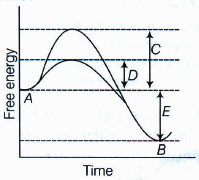
Observe the given figure related to enzyme action and answer the following questions.
(i) What is the figure showing?
(ii) Name the substances marked as (A) and (B).
(iii) What does the arrows marked (C) to (E) indicate?
28.
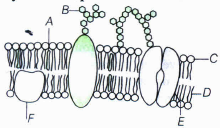
The diagram shows a section of cell membrane.Identify the components labelled A-F.
29.
Which structures form gynoecium? How is placenta related to gynoecium? What are its types?
30.
Why molluscs are considered advanced over annelids?
31.
Why slime moulds are called fungus animals? Name some slime moulds
32.
Why reproduction is necessary? is it essential for survival? If a living organism does not reproduce, in which category it will belong, living or non-living? How is sexual reproduction different from asexual reproduction?
33.
Explain the structure of contractile protein in skeletal muscle.
34.
Give a detail explanation of structure of protein.
35.
List the hormones secreted by the following:
(a) Hypothalamus
(b) Pituitary
(c) Thyroid
(d) Parathyroid
(e) Adrenal
(f) Pancreas
(g) Testis
(h) Ovary
(i) Thymus
(j) Atrium
(k) Kidney
(l) G-I Tract
36.
Describe circulatory pathways in animals.
37.
How various PGRs were discovered? Describe.
38.
Make a list of common fruits, their type and their edible parts.
39.
What is the benefit of classification of living beings?
40.
Explain with suitable examples the different types of phyllotaxy.
41.
During resting stage the axonal membrane is more permeable to which ion?
Potassium
Calcium
Sodium
Magnesium
42.
What is erythropoiesis?
Production of Antibodies
Production of Antigens
Production of Clotting factors
Production of RBCs
43.
Which is the main organ of respiration in amphibians?
Skin
Lungs
Both (a) and (b)
Gills
44.
Which of the following is a fat?
Mustard oil
Ghee
Sunflower oil
Castor oil
45.
What is sarcolemma?
Thin filaments of muscle
Thick filaments of muscle
Lining of muscle fibres
Connective tissue
46.
Which is the longest portion of the alimentary canal?
Oesophagus
Stomach
Small Intestine
Large Intestine
47.
What is the name of long distance transport of materials in plants?
Transduction
Translocation
Transportation
Transpiration pull
48.
Which of the following is a product of lactic acid fermentation?
Beer
Vinegar
Cake
Molasses
49.
In photo system I reaction, chlorophyll can be shown as having P700. What does P700 signify?
Molecular weight of chlorophyll a
Peak concentration of chlorophyll a
Peak of absorption at 700 nm
All of the above
50.
What is the percentage of eosinophils in a healthy human?
1-2 %
2-3 %
3-4 %
4-5 %
51.
Which excretory organ is used by cockroaches?
Protonephridia
Nephridia
Malpighian tubules
Kidneys
52.
Which of the following hormones acts as growth inhibitor?
Gibberellins
Auxins
Cytokinins
Abscisic Acid
53.
What is the function of adventitious roots?
Anchorage
Vegetative Propagation
Food Storage
Oxygen intake
54.
Where do we find areolar tissue?
Air Sacs
Beneath the skin
Prostate
Seminiferous tubules
55.
What is the minimum amount of an element in terms of mmole per kg?
> 10
= 10
> 20
= 20
56.
Which of the following scientists proposed the cell theory?
Robert Brown
Leeuwenhoek
Schleiden and Schwann
Schleiden, Schwann and Virchow
57.
Which is the correct sequence of mitotic cell division?
Prophase Anaphase Metaphase Telophase
Prophase Telophase Metaphase Anaphase
Prophase Anaphase Telophase Metaphase
Prophase Metaphase Anaphase Telophase
58.
What happens when stomata opens?
Water and Potassium exit from the guard cell
Water enters the guard cell and Potassium exits from it
Water exits from guard cell and Potassium enters it
Water and Potassium enter the guard cell
59.
Which of the following is an incorrect statement?
There is a common opening for both digestive system and excretory system in Aves.
Forelimbs are modified for flight in Bats
Bioluminescence is also shown by an insect
Open digestive system is more advanced than the closed digestive system
60.
Which of the following shows no segregation of plant parts?
Algae
Bryophyta
Pteridophyta
Gymnosperm
61.
Which of the following organisms is a good indicator of pollution in an environment?
Bacteria
Fungi
Algae
Lichens
62.
What is the full form of ICBN?
International Council for Botanical Nomenclature
International Code for Botanical Nomenclature
International Code for Biological Nomenclature
Indian Code for Biological Nomenclature
1.
It is ratio of volume of CO2 evolved and volume of O2 consumed.
R.Q. = Volume of CO2 evolved / Volume of O2 consumed
For proteins: R.Q. remains 0.9 and the R.Q. for fat is 0.7
2C51H98O6 + 145O2→ 102CO2 + 98H2O + Energy
R.Q. = 102/ 145 = 0.7
2.
Dark reactions are dependent on light but not directly. Rather it is dependent on products of light reactions, which are ATP and NADPH. Since facilitation of dark reactions does not need light so they are called dark reactions.
3.
Certain muscles have high concentration of myoglobin which gives it a red appearance. They also contain plenty of mitochondria which utilize large amounts of oxygen to produce ATP. Because of this they are also called aerobic muscles.
4.
Earthworms (Pheretima) have closed blood vascular systems, which consists of the heart, blood vessels, and capillaries. The heart pumps blood for circulating it in one direction.
5.
The root cap, a small tissue at the tip of the root, protects the root from environmental stress and functions in gravity perception. To perform its functions, the position and size of the root cap remains stable throughout root growth.
6.
Features of Euglenoids :
i) No cell wall
ii) Protein rich layer, called pellicle, which makes flexible body
iii) Two flagella of different lengths
iv) Autotrophs in sunlight, heterotrophs in the absence of sunlight.
v) Pigmens are identical to that of higher plants.
vi) Example: Euglena
7.
The Chlorophyceae contain chlorophyll a and b, zeaxanthin and lutein, together with a minor proportion of less typical carotenoids.
8.
Calcitonin (Ct) or thyrocalcitonin hormone is produced by thyroid glands.
It is hypocalcaemic and hypophosphatemic peptide hormone, which checks excess plasma Ca2 + and phosphate by decrease mobilisation from bones.
9.
Atherosclerosis affects the vessels that supply blood to the heart muscle. It is caused by the deposits of calcium, fat, cholesterol and fibrous tissues, which make the lumen of arteries narrower.
10.
The maximum absorption of digested food occurs in the small intestine of alimentary canal;.The absorbed form of different food materials are
| Food materials | Absorbed Form |
| Carbohydrate | Glucose |
| Protein | Amino acids |
| Fat | Fatty acids |
11.
The sodium-potassium pump helps in the active transport of ions,3Na+ are transported outwards and 2K inwards through the neurolemma of necrons.
12.
This shows that the cells with 16 chromosomes are parent cells that had undergone mitotic divisions, whereas, cells with 32 chromosomes are the cells that had not undergone the process of segregation.
13.
A nucleoside consists of a nitrogen base and a pentose sugar, but when a phosphate is added to the nucleoside, it is called nucleotide, hence, a nucleotide is a phosphorylated nucleoside.
14.
The main structures within the cell nucleus are
(i) The nucleus which is an optically dense region, spherical shaped, where there are concentrated ribosomal RNA associated to proteins.
(ii) The chromatin made up of DAN molecules dispersed in the nuclear matrix during the cell interphase.
(iii) The nuclear membrane that delimits the nucleus.
15.
Tendrils of grapevine and pumpkin are stem structures while those of pea are foilar in nature. Hence, the tendrils of grapevine and pea are analogous structures.
16.
All organisms from the prokaryotes to the most complex eukaryotes can sense and respond to their environment.
The human have five sense organs, which help them to sense their environment.These are eyes, ears, nose, tongue and skin.
17.
Conducting Part of Respiratory System. The part of respiratory system, starting with the external nostrils up to the terminal bronchioles, constitutes the conducting part. The conducting part transports the atmospheric air to the alveoli, clears it from foreign particles, humidifies and also brings the air to body temperature.
18.
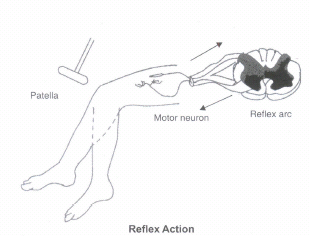
The entire process of response to a peripheral neural stimulation, that occurs involuntarily, i.e., without conscious effort or thought and requires the involvement of a part of the central neural system is called a reflex action.
The reflex pathway comprises at least one afferent neuron (receptor) and one efferent (effector or excitor) neuron appropriately arranged in a series. The afferent neuron receives signal from a sensory organ and transmits the impulse via a dorsal nerve root into the CNS (at the level of spinal cord). The efferent neuron then carries signals from CNS to the effector. The stimulus and response thus forms a reflex arc as shown below in the knee jerk reflex.
19.
Significance of transpiration:
1.Transpiration pull facilitates movement of water from roots.
2.Transpiration supplies water for photosynthesis
3.It pulls minerals from soil.
4.Helps in cooling of plants.
5.Maintains shape of plant cells
20.
In C3 plants some O2 does bind to RuBisCO, and hence CO2 fixation is decreased. Here the RuBP instead of being converted to 2 molecules of PGA binds with O2 to form one molecule and phosphoglycolate in a pathway called photorespiration. In the photo respiratory pathway, there is neither synthesis of sugars, nor of ATP. Rather it results in the release of CO2 with the utilisation of ATP. In the photorespiratory pathway there is no synthesis of ATP or NADPH. Therefore, photorespiration is a wasteful process.
21.
Every part of plant manages its gas exchange need. There is no exchange of gases between different organs. So unlike animals plants do not need special respiratory organs to facilitate exchange of gases. In leaves the exchange of gases takes place through stomata, while in stems it takes place through lenticels.
22.
The presence of nodes and internodes on ginger gives a clue that it is not a root, but a stem.
23.
Flowers are of ornamental value for humans and they serve a larger purpose for plants as well as for humans. Colours in flowers are meant to attract agents of pollination from the animal world. As this facilitates cross pollination so this facilitates variations leading to large diversity among plants. Because of cross pollination higher yielding and disease resistant varieties are produced which serves the food need of human. Amajor byproduct of this plant animal interaction is honey produced by honey bees. Honey has been used since ancient civilization as a food additive and as medicine
24.
(i) The cause of Vijay's sickness is the change of altitude in which there is change in the physiology of the body.
(ii) Internal ear gets affected which control balancing of body
(iii) Eustachian tube maintains the air pressure in the ear.
(iv) The guide is a very sensible person and is caring too.
25.
ANF is commonly known as Atrial Natriuretic Factor.
ANF is a hormone produced by the walls of the atria of the heart in response to an increase in blood volume and pressure.It increases sodium excretion and decreases blood pressure.
ANF inhibits release of renin from Juxta Glomerular Apparatus(JGA) and thereby, inhibits NaCl reabsorption by the collecting duct and reduces aldosterone release from the adrenal gland.
Function The function of counter current mechanism is to concentrate NaCl in the intestitial fluid and thereby cause water to diffuse out of the collecting tubules and ducts and concentrate the urine.
26.
Differences between passive and active salt absorption are
| Passive Salt Absorption |
Active Salt Absorption |
| Does not need energy |
Requires expenditure of energy |
| Occurs along Chemical and electrochemical gradient |
Occurs against chemical and electrochemical gradient |
| Passive salt absorption is a physical process in which accumulation of salts is less. |
Active salt absorption is a biochemical process in which accumulaion of salts is more. |
27.
(i) Figure is showing the activation energy requirement for non-catalysed and enzyme catalysed reactions.
(ii) Substances marked on arrows A and B are A - Substrate B - End products
(iii) Arrows marked shows
C-Energy of activation without enzyme.
D-Energy of activation with enzymes.
E-Free energy difference between the substrate and the end product.
28.
Following are the labelled sections of cell membrane
A - Cholesterol
B - Glycolipid
C - Hydrophilic head of phospholipid
D - Hydrophobic tail of phospholipid
E - Transmembrane protein
F - Intrinsic protein
29.
Gynoecium is the female reproductive whorl of the flower. It is composed of one or more carpels. Each carpel is differentiated into three parts. i.e the ovary, style and stirma.
Placenta is the tissue on which ovule(s) develops in the ovary. The placentation in the ovary may be
(i) marginal
(ii) axile
(iii) parietal
(iv) basal
(v) free-central
30.
The molluscs have advancement over annelids, as they have distinct head, better sense organs and gills or lungs for respiration.
31.
Slime moulds possess the characters of both animal and fungi. Therefore, they are commonly called fungs animals. Modern biologists called them protistan fungi. They are like protozoa in their amoeboid plasmodial stage and similar to true fungi in spore formation.
Examples : Physarum, Physarella, Fuligo, Lycogala and Tubifers.
32.
Reproduction is required for the perpetuation of a population. It is not necessary for the survival of living organism. Many organisms, e.g., mules, sterile worker bees, infertile human couples are not able to reproduce, while they have all other defining properties of life, so they can be called as living.
Sexual reproduction involves the formation and fusion of two kinds of gametes to produce an offspring. In asexual reproduction, new individuals can arise by the specialised parts of body or without the fusion of gametes.
33.
Structure of Contractile Proteins
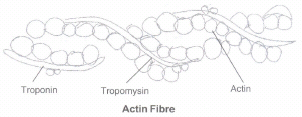
i) Each actin (thin) filament is made of two 'F' (filamentous) actins helically wound to each other. Each 'F' actin is a polymer of monomeric 'G' (Globular) actins.
ii) Two filaments of another protein, tropomyosin also run close to the 'F' actins throughout its length.
iii) A complex protein Troponin is distributed at regular intervals on the tropomyosin. In the resting state a subunit of troponin masks the active binding sites for myosin on the actin filaments.
Each myosin (thick) filament is also a polymerised protein. Many monomeric proteins called Meromyosins constitute one thick filament. Each meromyosin has two important parts, a globular head with a short arm and a tail, the former being called the heavy meromyosin (HMM) and the latter, the light meromyosin (LMM).
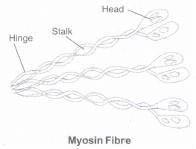
The HMI component, i.e.; the head and short arm projects outwards at regular distance and angle from each other from the surface of a polymerised myosin filament and is known as cross arm. The globular head is an active ATPase enzyme and has binding sites for ATP and active sites for actin.
34.
Primary Structure.
The sequence of amino acids i.e., the positional information in a protein - which is the first amino acid, which is second, and so on - is called the primary structure of a protein. A protein is imagined as a line, the left end represented by the first amino acid and the right end represented by the last amino acid. The first amino acid is also called as N-terminal amino acid. The last amino acid is called the C-terminal amino acid. Aprotein thread does not exist throughout as an extended rigid rod.
Secondary Structure.
Regularly repeating local structures stabilized by hydrogen bonds. The most common examples are the alpha helix, beta sheet and turns. Because secondary structures are local, many regions of different secondary structure can be present in the same protein molecule.
Tertiary structure.
The overall shape of a single protein molecule; the spatial relationship of the secondary structures to one another. 'tertiary structure is generally stabilized by nonlocal interactions, most commonly the formation of a hydrophobic core, but also through salt bridges, hydrogen bonds, disulfide bonds, and even post-translational modifications. The term "tertiary structure" is often used as synonymous with the term fold. The Tertiary structure is what controls the basic function of the protein.
Quaternary Structure.
Some proteins are an assembly of more than one polypeptide or subunits. The manner in which these individual folded polypeptides or subunits are arranged with respect to each other (e.g. linear string of spheres, spheres arranged one upon each other in the form of a cube or plate etc.) is the architecture of a protein otherwise called the quaternary structure of a protein.
35.
(a) Hypothalamus - Releasing hormone and Inhibiting hormone.
(b) Pituitary - Growth hormone, Prolactin, Thyroid stimulating hormone, Adrenocorticotrophic hormone, Luteinizing hormone, Follicle stimulating hormone, Melatonin.
(c) Thyroid - Tetraiodothyronine, Triiodothyronine.
(d) Parathyroid - Parathyroid hormone.
(e) Adrenal - Adrenalin or Epinephrine, Noradrenaline or norepinephrine Corticoids.
(f) Pancreas - Glucagon, Insulin.
(g) Testis - Testosterone.
(h) Ovary - Estrogen, Progesterone.
(i) Thymus - Thymosin.
(j) Atrium - Atrial Natriuretic Factor
(k) Kidney - Erythropoietin.
(l) GI Tract - Gastrin, Secretin, Cholecystokinin (CCK)Gastric Inhibitory Peptide (GIP)
36.
The circulatory patterns are of two types - open or closed.
Open Circulatory System. In open circulatory system blood pumped by the heart passes through large vessels into open spaces or body cavities called sinuses. Arthropodas and Molluscs have this type of circulatory system.
Closed Circulatory System. In closed circulatory system blood pumped by the heart is always circulated through a closed network of blood vessels. This pattern is considered to be more advantageous as the flow of fluid can be more precisely regulated. Annelids and chordates have this type of system.
Single Circulation. In fishes, the heart pumps out deoxygenated blood which is oxygenated by the gills and supplied to the body parts from where deoxygenated blood is returned to the heart.
Incomplete Double Circulation. In amphibians and reptiles, the left atrium receives oxygenated blood from the gills/lungs/ skin and the right atrium gets the deoxygenated blood from other body parts. However, they get mixed up in the single ventricle which pumps out mixed blood.
Complete Double Circulation. In birds and mammals, oxygenated and deoxygenated blood received by the left and right atria respectively passes on to the ventricles of the same sides. The ventricles pump it out without any mixing up, i.e., two separate circulatory pathways are present in these organisms, hence, these animals have double circulation.
37.
The Discovery of Plant Growth Regulators:
Discovery of Auxins. Charles Darwin and his son Francis Darwin when they observed that the coleoptiles of canary grass responded to unilateral illumination by growing towards the light source (phototropism). After a series of experiments, it was concluded that the tip of coleoptile was the site of transmittable influence that caused the bending of the entire coleoptile. Auxin was isolated by F.W. Went from tips of coleoptiles of oat seedlings.
Discovery of Gibberellins. The 'bakane' (foolish seedling) a disease of rice seedlings, was caused by a fungal pathogen Gibberalla fujikuroi. E. Kurosawa reported the appearance of symptoms of the disease in uninfected rice seedlings when they were treated with sterile filtrates of the fungus. The active substances were later identified as gibberellic acid.
Discovery of Cytokinins. F. Skoog and his co-workers observed that from the intermodal segments of tobacco stems the callus (a mass of undifferentiated cells) proliferated only if, in addition to auxins the nutrients medium was supplemented with one of the following: extracts of vascular tissues, yeast extract, coconut milk or DNA. Skoog and Miller, later identified and crystallised the cytokinesis promoting active substance that they termed kinetin.
Discovery of Abscisic Acid. During mid-1960s, three independent researches reported the purification and chemical characterisation of three different kinds of inhibitors: inhibitor-B, abscission II and dormin. Later all the three were proved to be chemically identical. It was named abscisic acid (ABA). Cousins confirmed the release of a volatile substance from ripened oranges that hastened the ripening of stored unripened bananas. Later this volatile substance was identified as ethylene, a gaseous PGR.
38.
| Fruits | Type | Edible Parts |
|---|---|---|
| Apple, Pear | Pome | Fleshy thalamus |
| Banana | Berry | Mesocarp |
| Cashewnut | Nut | Cotyledons, fleshy thalamus |
| Coconut | Drupe | Endosperm |
| Cucumber | Pepo | Mesocarp, endocarp, seeds |
| Date palm | Berry | Pericarp |
| Fig | Synconus | Thalamus |
| Jack fruit | Sorosis | Bracts, perianth & seeds |
| Grapes | Berry | Pericarp and placenta |
| Guava | Berry | Thalamus and pericarp |
| Litchi | Nut | Aril |
| Wheat, maize | Caruopsis | Endosperm |
| Mango | Drupe | Mesocarp |
| Pea, Gram | Legume | Cotyledons |
| Orange | Lemon | Hesperidium Juicy placentae |
| Papaya | Berry | Mesocarp |
| Pineapple | Sorosis | Bracts, receptacle |
| Pomegranate | Balausta | Seed coat |
| Tomato | Berry | Pericarp and placentae |
| Mustard | Siliqua | Seed |
39.
This is a very big world and there is huge diversity of animals and plants in this world. People of different parts of the world speak different languages. Even in a country, like India, a simple bird, like crow is known by hundreds of names. Think of a scientist's difficulty in understanding about crows in different languages. Moreover, there can be thousands of species of birds. It is practically impossible to study each and every species of plants and animals. Classification makes it easy to study living beings, by keeping them under various groups and subgroups.
So, all animals which are capable of flying and have beaks are kept under Aves. Similarly, all animals, having body hair and external ears are kept under mammalia. This makes our task to study them, far easier. An easy way to study helps us in understanding the living world in a better way. It can be said that classification definitely helps in a better and systematic study of living beings.
40.
The mode of arrangement of leaves on the stem and its branches is called phyllotaxy (Phyllon-leaf; taxis arrangement). They are arranged most systematically, regularly and mathematically, so as to get proper sunlight and avoid overcrowding.
Phyllotaxy in leaves is of following three types.
(i) Alternate: A single leaf arises at a node. e.g, China rose, mango, mustard, sunflower, etc.
(ii) Oppposite: Two leaves arise at a node,opposite to each other e.g, guava, Calotropis tulsi, etc.
(iii) Whorled: More than two leaves arise at each node forming a circle or whorl, e.g, Alstonia Scholaris etc.
41.
(a)
Potassium
42.
(d)
Production of RBCs
43.
(b)
Lungs
44.
(b)
Ghee
45.
(c)
Lining of muscle fibres
46.
(c)
Small Intestine
47.
(b)
Translocation
48.
(c)
Cake
49.
(c)
Peak of absorption at 700 nm
50.
(b)
2-3 %
51.
(d)
Kidneys
52.
(d)
Abscisic Acid
53.
(b)
Vegetative Propagation
54.
(b)
Beneath the skin
55.
(a)
> 10
56.
(d)
Schleiden, Schwann and Virchow
57.
(d)
Prophase Metaphase Anaphase Telophase
58.
(a)
Water and Potassium exit from the guard cell
59.
(b)
Forelimbs are modified for flight in Bats
60.
(a)
Algae
61.
(d)
Lichens
62.
(b)
International Code for Botanical Nomenclature

11th Standard CBSE Syllabus & Materials
11th Standard CBSE
CBSE 11th Business Studies Forms of Business Organisation Sample Question Papers Study Material - QB365 Set A
NEW11th Standard CBSE
CBSE 11th Business Studies Business, Trade and Commerce Sample Question Papers Study Material - QB365 Set A
NEW11th Standard CBSE
CBSE 11th Physics Waves Sample Question Papers Study Material - QB365 Set A
NEW11th Standard CBSE
CBSE 11th Physics Kinetic Theory Sample Question Papers Study Material - QB365 Set A



CBSE 11th Standard CBSE Subjects
CBSE Standards









