
 100% FREE ACCESS
11th Standard CBSE Syllabus & Materials
11th Standard CBSE
CBSE 11th Economics PART-A - Presentation of Data - New Sample Question Papers Study Material - QB365 Set A
NEW11th Standard CBSE
CBSE 11th Economics PART-A - Organisation of Data - New Sample Question Papers Study Material - QB365 Set A
NEW11th Standard CBSE
CBSE 11th Economics PART-A - Collection of Data - New Sample Question Papers Study Material - QB365 Set A
NEW11th Standard CBSE
CBSE 11th Economics PART-A - Introduction to Economics and Statistics - New Sample Question Papers Study Material - QB365 Set A
NEW11th Standard CBSE
CBSE 11th Business Studies International Trade Sample Question Papers Study Material - QB365 Set A
NEW11th Standard CBSE
CBSE 11th Business Studies Evolution and Fundamentals of Business Sample Question Papers Study Material - QB365 Set A

Published on: 04/03/2020
11th Standard CBSE Biology Public Exam Sample Question 2020
Download CBSE Class 11th Standard CBSE Biology question papers, sample papers, important questions, and previous year solved papers in PDF format. Get free study materials, NCERT solutions, and exam preparation resources for Class 11th Standard CBSE Biology
Questions + Answers key
Take MCQ Biology Test
1.
Cardiac muscle tissues have both character of skeletal and smooth muscles, how? Explain.
2.
Explain oxidative phosphorylation.
3.
In areas witnessing heavy flood which plant regulator should be used for better yield of rice. Give reasons.
4.
What is the full form of ADH?
5.
What is the function of root cap?
6.
Give the name of the endocrine gland that produces calcitonin and also mention the role played by this hormone
7.
What is the function of Eustachian tube in ear?
8.
Mention the causes of high blood pressure.
9.
What is Adam's apple? Is it more prominent in males or females?
10.
Why does a piece of bread start tasting sweeter after it is chewed for some time?
11.
How does water stress affect/decrease the rate of photosynthesis
12.
If a plant is girdled, which part of the plant dies first- the root or the shoot? Answer the giving reasons.
13.
Every mineral element that is present in a cell is needed by plant, comment
14.
Discuss about the synaptonemal complex?
15.
What is trihydroxy propane commonly called? Write its structural formula.
16.
What are the facts which prove that all cells are autonomous?
17.
How will you differentiate between the heart of an amphibian and a reptile?
18.
What is the cellular nature and body organisation of members of kingdom-Protista ?
19.
List out the features which distinguish living things from non-living things.
20.
What do you understand by olfactory receptors?
21.
Give a brief explanation of the human skeletal system.
22.
Give a brief account of light reaction
23.
What changes in histology makes a stem to produce flowers?
24.
What are two macronutrients which are not obtained through soil as mineral nutrition? What is their importance?
25.
What is the role of methanogens?
26.
Prepare a list of some animals that are found parasitic on human beings.
27.
A man is admitted to a hospital. He is suffering from an abnormal low body temperature, loss of apeptite and extreme thirst. The doctor consoled him and also prescribed brain scan as he suspected, there would be a tumour in his brain.
(i) Mention the reason behind the abnormalities of the patient.
(ii) Which part of the brain would probably show a tumour?
(iii) Identify the location of hypothalamus.
(iv) what values of life were reflected by the doctor?
28.
Would a defoliated plant respond to photoperiodic cycle? Why?
29.
What is the significance of step-wise release of energy in respiration?
30.
Name the two theories which explain water movement in stems.Give the explanation of root pressure theory.
31.
What is the need of meiosis in cell division?
32.
Succinic dehydrogenase is an enzyme that causes the substrate, succinate, to break down into fumarate
Malonate is a substance that resembles succinate and inhibits the activity of succinic dehydrogenase
Explain how this type of inhibition affects the activity of the enzyme
33.
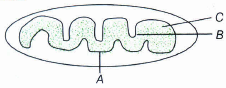
Fill in the blanks at A, B, and C as shown in diagram
34.
Mention the special features of eye in cockroach.
35.
The essential functions of roots are anchorage and absorption of water and minaerals in the terrestrial plants. What functions are associated with the roots of aquatic plants? How are the roots of aquatic plants and terrestrial plants different?
36.
Write any three advantages of scientific names.
37.
How does diaphragm facilitate respiration?
38.
Give a detail explanation of structure of protein.
39.
Write short notes on following:
(a) Diploblastic and Triploblastic Organization
(b) Different types of coelom
(c) Segmentation
(d) Notochord
40.
List the hormones secreted by the following:
(a) Hypothalamus
(b) Pituitary
(c) Thyroid
(d) Parathyroid
(e) Adrenal
(f) Pancreas
(g) Testis
(h) Ovary
(i) Thymus
(j) Atrium
(k) Kidney
(l) G-I Tract
41.
Describe conduction of heartbeat with the help of suitable diagram.
42.
How various PGRs were discovered? Describe.
43.
Explain ETS.
44.
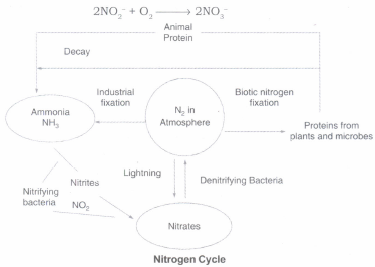
With the help of suitable diagram describe nitrogen cycle
45.
Differentiate between Liverworts and mosses
46.
How do viruses resemble non - living things?
47.
Which is the primary CO2 acceptor in C3 plants?
RuBisCO
PEP
RuBP
NADPH
48.
Which of the following is under control of hypothalamus?
Body temperature
Breathing
Heart Rate
Fight and Flight Response
49.
What is erythropoiesis?
Production of Antibodies
Production of Antigens
Production of Clotting factors
Production of RBCs
50.
Which is the main organ of respiration in amphibians?
Skin
Lungs
Both (a) and (b)
Gills
51.
Primary metabolites are always found in animal cells. Which of the following is not an example of primary metabolite?
Amino acids
Sugar
Carbohydrate
Alkaloids
52.
Which type of movement facilitates the passage of ova in fallopian tubules?
Amoeboid Movement
Ciliary Movement
Muscular Movement
Ovulation
53.
Substances which need facilitated diffusion have which kind of moiety?
Hydrophobic
Hydrophilic
Lipophilic
Lipophobic
54.
Which of the following is a product of lactic acid fermentation?
Beer
Vinegar
Cake
Molasses
55.
Which of the following plants show good example of photoperiodism?
Tomato
Cucumber
Lotus
Sunflower
56.
What is the phenomenon of 'paurometabolous' in cockroach?
Process of external fertilization
Process of internal fertilization
Direct development
Development through nymph stage.
57.
Which of the following organisms has an open circulatory system?
Fish
Frog
Crocodile
Hydra
58.
What is the main role of skin in human?
Excretion
Thermoregulation
Sweat production
Defence
59.
How many chambers are there in the heart of reptiles?
2
3
4
5
60.
Which part is responsible for growth of roots?
Region of meristematic activity
Region of Elongation
Root cap
Both (a) and (b)
61.
Which of the following elements is essential for energy related compounds?
Magnesium and Manganese
Magnesium and Oxygen
Magnesium and Phosphorus
Phosphorus and Oxygen
62.
A ribosome is 80S. In this statement what does the letter 'S' signify?
Size of ribosome
Density of ribosome
Radius of ribosome
Both (a) and (b)
63.
What is the function of meiosis?
Halving the number of chromosomes in daughter cells
Maintaining inheritance in progeny
Segregate gametic cells from somatic cells
None of these
64.
Diploid sporophyte is dominant phase in the life cycle of which plant?
Angiosperm
Bryophyta
Pteridophyta
Algae
65.
Which is the most acceptable system of biological classification?
Two Kingdom Classification
Three Kingdom Classification
Five Kingdom Classification
Six Kingdom Classification
66.
Which of the following scientists started the practice of using biological names?
Carolus Linneaus
Aristotle
Whittaker
Robert Hooke.
1.
Cardiac muscle is a type of involuntary muscle found in heart. Cardiac muscle exhibits striations which is characteristics of striated muscles, while it does not work will of animal so it is involuntary characters
2.
During oxidative phosphorylation ATP is synthesised by the ATP synthase enzyme when the chemiosmotic gradient is used to drive the phosphorylation of ADP. The electrons are finally transferred to exogenous oxygen and, with the addition of two protons, water is formed.
3.
Ethylene should be used on rice saplings. Ethylene promotes internode and petiole elongation so the height of the rice plant will be more. Additionally, ethylene also helps in maintaining aerial parts of a plant above the water.
4.
The full form of ADH is anti-diuretic hormone. ADH is secreted from the hypothalamus and it is released from posterior pituitary gland. This hormone controls the osmolarity inside the body system and regulates the water level in the body through reabsorption or secretion of water during the formation of urine.
5.
The root cap, a small tissue at the tip of the root, protects the root from environmental stress and functions in gravity perception. To perform its functions, the position and size of the root cap remains stable throughout root growth.
6.
Calcitonin (Ct) or thyrocalcitonin hormone is produced by thyroid glands.
It is hypocalcaemic and hypophosphatemic peptide hormone, which checks excess plasma Ca2 + and phosphate by decrease mobilisation from bones.
7.
A Eustachian tube connects the middle ear cavity with the pharynx. The Eustachian tube helps in equalising the pressures on either sides of the eradrum
8.
Causes of high blood pressure are as follows
(i) A diet full of oily and greasy products, incresse cholesterol level, which can cause thickening of the arteries due to which BP many rise.
(ii) Tobacco smoking also speeds up the heart rate and contracys blood vessels.
(iii) Mental tension is also one of the main causes of hypertension.
9.
Larynx is often called as Adam's apple. It is more prominent in males than females.
10.
As bread is full of starch, the enzyme secreted in our mouth for digesting starch starts breaking down carbohydrates present in starch converting into simple sugars.Hence, it tastes sweeter after some time.
11.
(a) Water stress causes closure of stomata and decreases the availability of CO2 for photosynthesis.
(b) Water stress also causes wilting of leaves, thus reducing the surface area of leaves for metabolic function.
12.
Girdling is the removal of a ring of outer up to the depth of the plant of the phloem layer in a woody trunk.Phloem is responsible for downward movement of food, which is stopped bt gridling. The roots will not be able to get food and die first.
13.
No, every mineral present in a cell is not needed by the plant body because all of them are not essential to its survival because they are not directly involved in the composition of their body.
14.
It is a protein complex, visible with the electron microscope, that is the physical basis of the pairing of homologous chromosomes (synapsis) during meiosis.It assembled during xygotene as homologous chromosomes pair up, and it is unpaired during diplotene as homologous chromosomes separate.
15.
Trihydroxy propane is commonly known as glycerol. Its general formula is
\({ CH }_{ 2 }OH-CH(OH)-{ CH }_{ 2 }OH\)
16.
All cells are autonomous because of the following facts
(i) Each and every cell converts non-living materials into components of living matters.
(ii) Each cell builds up its own macromolecular form micromolecules.
(iii) A cell always builds up a new structure to replace the worn out ones.
17.
In both amphibians and reptiles, heart is three-chambered with two auricles and one ventricle.Ventricle is unpartitioned in the amphibians, while it is incompletely partitioned in the reptiles
18.
Cellular nature : These are unicellular eukaryotic organisms. Some of them also form colonies. Here, the individual cells do not lose their independent identity.
Body organisation : Cellular differentiation is absent. Organisation is protoplasmic or acellular.
19.
The living things possess following features, which are not present in non - living things
(i) growth and metabolism
(ii) reproduction
(iii) ability to sense stimuli (consciousness)
(iv) ability to self-replicate and self-organise
20.
The nose contains mucus-coated receptors which are specialised for receiving the sense of smell and are called olfactory receptors. These are made up of olfactory epithelium which consists of three kinds of cells. The neurons of the olfactory epithelium extend from the outside environment directly into a pair of broad bean-sized organs called olfactory bulb. Olfactory bulbs are extensions of the brains limbic system.
21.
Bones and cartilages constitute our skeletal system. The skeletal system is divisible into axial and appendicular. Skull, vertebral column, ribs and sternum constitute the axial skeleton. Limb bones and girdles form the appendicular skeleton. Three types of joints are formed between bones or between bone and cartilage - fibrous, cartilaginous and synovial. Synovial joints allow considerable movements and therefore, playa significant role in locomotion.
22.
Light reactions or the 'Photochemical' phase include following steps:
(i) light absorption,
(ii) water splitting,
(iii) oxygen release, and
(iv) the formation of high-energy chemical intermediates, ATP and NADPH.
Several complexes are involved in the process. The pigments are organised into two discrete photochemical light harvesting complexes (LHC)within the Photosystem I (PS I) and Photosystem II (PS II). These are named in the sequence of their discovery, and not in the sequence in which they function during the light reaction. The LHC are made up of hundreds of pigment molecules bound to proteins. Each photosystem has all the pigments (except one molecule of chlorophyll a) forming a light harvesting system also called antennae. These pigments help to make photosynthesis more efficient by absorbing different wavelengths of light. The single chlorophyll a molecule forms the reaction centre. The reaction centre is different in both the photosystems. In PS I the reaction centre chlorophyll a has an absorption peak at 700 nm, hence is called P700, while in PS II it has absorption maxima at 680 nm, and is called P680.
23.
The shoot apical meristem changes into floral meristem. This finally results in development of flower. Internodes do not elongate and the axis gets condensed. Nodes, in stead of producing leaves, produce different floral parts.
24.
Oxygen and carbon are not obtained through soil as mineral nutrition. Oxygen is necessary for respiration and carbon dioxide is necessary for photosynthesis.
25.
Methanogens are a type of bacteria which live in the gut of ruminating animals.They assist those animals in digestion and the byproduct of that digestive process is methane.More number of livestock population results in increased methane level in the environment leading to global warming.So, indirectly methanogens can be responsible for global warming.
26.
Parasites on Human Body
1. Taenia solium (Tape worm) Platyhelminthes.
2. Fasciola hepatica (Blood worm) Platyhelminthes.
3. Ascaris lumbricoides (Round worm) Aschelminthes.
4. Wuchereria bancrofti (Filarial worm) Aschelminthes.
5. Ancyclostoma (Hook worm) Aschelminthes.
27.
(i) Tumour in hypothalamus.
(ii) Hypothalamus.
(iii) The hypothalamus lies at the base of thalamus in the forebrain.
(iv) Humanity and responsibility towards the patient. He is devoted to his duties and has professional ethics.
28.
No, a defoliated plant would not respond to photoperiodic cycle because the site of perception of light, dark duration are the leaves.
There is a hormonal substance present in leaves which is responsible for flowering. This hormonal substance migrates from leaves to shoot apices for inducing flowering only when the plants are exposed to the necessary photoperiod.
29.
During oxidation within a cell, all the energy contained in respiratory substrates is not released free in a single step. It is release in a series of slow stepwise reaction controlled by enzymes and it is trapped as chemical energy in the form of ATP. This ATP is stored for the later utilistion wherever, required. Hence, ATP acts as the energy currency of cell.
The energy stored in ATP can be utilised following
(i) In various energy requiring processess of organism
(ii) The carbon skelton produced during respiration is used as precursors for the synthesis of other molecules.
30.
There are two main theories that explain the movement of water in stems.These are
(i) root pressure theory and
(ii) adhesion-cohesion theory.
31.
(i) Meiosis is essential for all sexually reproducing organisms.
(ii) It occurs in reproductive cells, so that gametes formed are haploid or have half the number of chromosomes of those cells which are directly derived from zygote.
(iii) Two types of gametes fuse during the zygote formation. As a result, Zygote comes to have double the number of chromosomes contained in the gametes. Meiosis maintains a fixed number of chromosomes of a species by reducing it to number by half.
32.
The inhibitor competes with the substract for the active sites of enzyme molecules as it has a structure similar to the substract that allows it to combine with the active site, preventing any substract molecule from occupying that site.This reduces the rate of the reaction since, the subtract can only use the enzyme molecules that are not occupied by the inhibitor, resulting in the same quantity of product being formed at a slower rate
33.
A - Inner membrane,
B - Crista,
C - Matrix.
34.
In cockroach, there are two types of eyes, i.e., apair of simple eye and a pair of compound eyes. A compound eye has upto 2000 hexagonbal units called ommatidia. These are responsible for producing mosaic vision. The adjacent ommatidia are separated internally by the pigment cells. An ommatidium has two parts
(i) Outer dioptoric or focussing part, which consisits of a corneal lens, two corneagen cells, a crystalline cone and four cone cells or vitrellae.
(ii) Inner receptive part has a spindle-shaped pigment contaning rhadome surrounded by eight retinulae which continue as nerve fibre.
35.
Functions of roots in aquatic plants are
(i) Buoyancy in floating plants.
(ii) Anchorage in submerged fixed plants.
Differences in roots of aquatic and terrestrial plants are
| Roots of Aquatic plants | Roots of Terrestrial Plants |
| Poorly developed | Profusely developed |
| Root hair absent | Roots hair present |
| Xylem atrophied (poorly developed) | Xylem well-developed |
| Aerenchyma occurs | Aerenchyma is absent |
36.
Advantages of scientific names are
(i) These are acceptable in every part of the world.
(ii) These are assigned on agreed principles by scientists.
(iii) These are very specific. It means no two organisms can have the same name.
37.
The diaphragm and a specialised set of muscles - external and internal intercostals between the ribs, help in generation of such gradients. Inspiration is initiated by the contraction of diaphragm which increases the volume of thoracic chamber in the antero-posterior axis. The contraction of external inter-costal muscles lifts up the ribs and the sternum causing an increase in the volume of the thoracic chamber in the dorso-ventral axis. The overall increase in the thoracic volume causes a similar increase in pulmonary volume. An increase in pulmonary volume decreases the intra-pulmonary pressure to less than the atmospheric pressure which forces the air from outside to move into the lungs, i.e., inspiration.
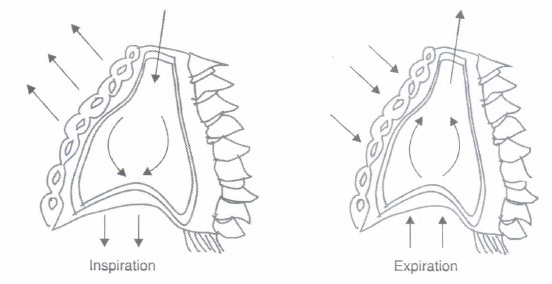
Relaxation of the diaphragm and the intercostal muscles returns the diaphragm and sternum to their normal positions and reduce the thoracic volume and thereby the pulmonary volume. This leads to an increase in intrapulmonary pressure to slightly above the atmospheric pressure causing the expulsion of air from the lungs, i.e., expiration.
38.
Primary Structure.
The sequence of amino acids i.e., the positional information in a protein - which is the first amino acid, which is second, and so on - is called the primary structure of a protein. A protein is imagined as a line, the left end represented by the first amino acid and the right end represented by the last amino acid. The first amino acid is also called as N-terminal amino acid. The last amino acid is called the C-terminal amino acid. Aprotein thread does not exist throughout as an extended rigid rod.
Secondary Structure.
Regularly repeating local structures stabilized by hydrogen bonds. The most common examples are the alpha helix, beta sheet and turns. Because secondary structures are local, many regions of different secondary structure can be present in the same protein molecule.
Tertiary structure.
The overall shape of a single protein molecule; the spatial relationship of the secondary structures to one another. 'tertiary structure is generally stabilized by nonlocal interactions, most commonly the formation of a hydrophobic core, but also through salt bridges, hydrogen bonds, disulfide bonds, and even post-translational modifications. The term "tertiary structure" is often used as synonymous with the term fold. The Tertiary structure is what controls the basic function of the protein.
Quaternary Structure.
Some proteins are an assembly of more than one polypeptide or subunits. The manner in which these individual folded polypeptides or subunits are arranged with respect to each other (e.g. linear string of spheres, spheres arranged one upon each other in the form of a cube or plate etc.) is the architecture of a protein otherwise called the quaternary structure of a protein.
39.
(a) Diploblastic and Triploblastic Organization
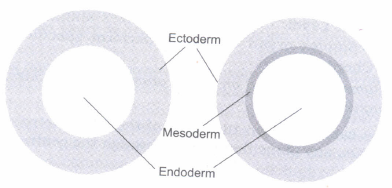
Diploblastic Organization. Animals in which the cells are arranged in two embryonic layers, an external ectoderm and an internal endoderm, are called diploblastic animals, e.g., coelenterates. An undifferentiated layer, mesoglea,
is present in between the ectoderm and the endoderm.
Triploblastic Organization. Those animals in which the developing embryo has a third germinal layer, mesoderm, in between the ectoderm and endoderm, are called triploblastic animals. Example: platyhelminthes to chordates.
(b) Coelom
Presence or absence of a cavity between the body wall and the gut wall is very important in classification. The body cavity, which is lined by mesoderm is called coelom.
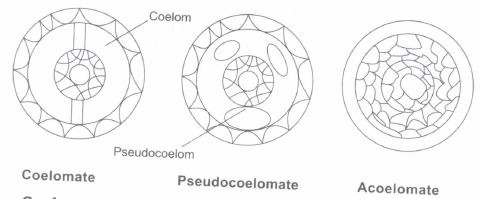
Coelomates. Animals possessing coelom are called coelomates, e.g., annelids, molluscs, arthropods, echinoderms, hemichordates and chordates.
Pseudocoelomates. In some animals, the body cavity is not lined by mesoderm, instead, the mesoderm is present as scattered pouches in between the ectoderm and endoderm. Such a body cavity is called pseudocoelom and the animals possessing them are called pseudocoelomates, e.g., aschelminthes.
Acoelomates. The animals in which the body cavity is absent are called acoelomates, e.g., platyhelminthes.
(c) Segmentation
In some animals, the body is externally and internally divided into segments with a serial repetition of at least some organs. For example, in earthworm, the body shows this pattern called metameric segmentation and the phenomenon is known as metamerism.
(d) Notochord
Notochord is a mesodermally derived rod-like structure formed on the dorsal side during embryonic development in some animals. Animals with notochord are called chordates and those animals which do not form this structure are called non-chordates, e.g., porifera to echinoderms.
40.
(a) Hypothalamus - Releasing hormone and Inhibiting hormone.
(b) Pituitary - Growth hormone, Prolactin, Thyroid stimulating hormone, Adrenocorticotrophic hormone, Luteinizing hormone, Follicle stimulating hormone, Melatonin.
(c) Thyroid - Tetraiodothyronine, Triiodothyronine.
(d) Parathyroid - Parathyroid hormone.
(e) Adrenal - Adrenalin or Epinephrine, Noradrenaline or norepinephrine Corticoids.
(f) Pancreas - Glucagon, Insulin.
(g) Testis - Testosterone.
(h) Ovary - Estrogen, Progesterone.
(i) Thymus - Thymosin.
(j) Atrium - Atrial Natriuretic Factor
(k) Kidney - Erythropoietin.
(l) GI Tract - Gastrin, Secretin, Cholecystokinin (CCK)Gastric Inhibitory Peptide (GIP)
41.
Conduction of Heart Beat:
The entire heart is made of cardiac muscles. The walls of ventricles are much thicker than that of the atria. A specialised cardiac musculature called the nodal tissue is also distributed in the heart.
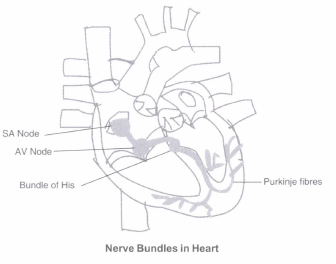
SA Node. A patch of nodal tissue is present in the right upper corner of the right atrium called the sino-atrial node (SAN).
AV Node. Another mass of nodal tissue is seen in the lower left corner of the right atrium close to the atria-ventricular septum called the atria-ventricular node (AVN).
Bundle of His. A bundle of nodal fibres, atrioventricular bundle (AV bundle) continues from the AVN which passes through the atria-ventricular septa to emerge on the top of the interventricular septum and immediately divides into a right and left bundle. These branches give rise to minute fibres throughout the ventricular musculature of the respective sides and are called purkinje fibres. These fibres along with right and left bundles are known as bundle of HIS.
Generation of Heart Beat. The nodal musculature has the ability to generate action potentials without any external stimuli, i.e., it is autoexcitable. However, the number of action potentials that could be generated in a minute vary at different parts of the nodal system. The SA Node can generate the maximum number of action potentials, i.e., 70-75 min-1, and is responsible for initiating and maintaining the rhythmic contractile activity or beating of the heart. Therefore, it is called the pacemaker. Our heart normally beats 70-75 times in a minute (average 72 beats per minute).
42.
The Discovery of Plant Growth Regulators:
Discovery of Auxins. Charles Darwin and his son Francis Darwin when they observed that the coleoptiles of canary grass responded to unilateral illumination by growing towards the light source (phototropism). After a series of experiments, it was concluded that the tip of coleoptile was the site of transmittable influence that caused the bending of the entire coleoptile. Auxin was isolated by F.W. Went from tips of coleoptiles of oat seedlings.
Discovery of Gibberellins. The 'bakane' (foolish seedling) a disease of rice seedlings, was caused by a fungal pathogen Gibberalla fujikuroi. E. Kurosawa reported the appearance of symptoms of the disease in uninfected rice seedlings when they were treated with sterile filtrates of the fungus. The active substances were later identified as gibberellic acid.
Discovery of Cytokinins. F. Skoog and his co-workers observed that from the intermodal segments of tobacco stems the callus (a mass of undifferentiated cells) proliferated only if, in addition to auxins the nutrients medium was supplemented with one of the following: extracts of vascular tissues, yeast extract, coconut milk or DNA. Skoog and Miller, later identified and crystallised the cytokinesis promoting active substance that they termed kinetin.
Discovery of Abscisic Acid. During mid-1960s, three independent researches reported the purification and chemical characterisation of three different kinds of inhibitors: inhibitor-B, abscission II and dormin. Later all the three were proved to be chemically identical. It was named abscisic acid (ABA). Cousins confirmed the release of a volatile substance from ripened oranges that hastened the ripening of stored unripened bananas. Later this volatile substance was identified as ethylene, a gaseous PGR.
43.
The following steps in the respiratory process are to release and utilize the energy stored in NADH+ H+and FADH2. This is accomplished when they are oxidised through the electron transport system and the electrons are passed on to O2 resulting in the formation of H2O. The metabolic pathway through which the electron passes from one carrier to another, is called the electron transport system (ETS) and it is present in the inner mitochondrial membrane.
Electrons from NADH produced in the mitochondrial matrix during citric acid cycle are oxidised by an NADH dehydrogenase (complex I), and electrons are then transferred to ubiquinone located within the inner membrane. Ubiquinone also receives reducing equivalents via FADH2 (complex II) that is generated during oxidation of succinate in the citric acid cycle.
The reduced ubiquinone (ubiquinol) is then oxidised with the transfer of electrons to cytochrome c via cytochrome bc l complex (complex III).
Cytochrome c is a small protein attached to the outer surface of the inner membrane and acts as a mobile carrier for transfer of electrons between complex III and IV. Complex IV refers to cytochrome c oxidase complex containing cytochromes a and a3, and two copper centres.
When the electrons pass from one carrier to another via complex I to IV in the electron transport chain, they are coupled to ATP synthase (complex V) for the production of ATP from ADP and inorganic phosphate. The number of ATP molecules synthesized depends on the nature of the electron donor.
Oxidation of one molecule of NADH gives rise to 3 molecules of ATP, while that of one molecule of FADH2 produces 2 molecules of ATP. Although the aerobic process of respiration takes place only in the presence of oxygen, the role of oxygen is limited to the terminal stage of the process. Yet, the presence of oxygen is vital, since it drives the whole process by removing hydrogen from the system. Oxygen acts as the final hydrogen acceptor.
Unlike photophosphorylation where it is the light energy that is utilised for the production of proton gradient required for phosphorylation, in respiration it is the energy of oxidation-reduction utilised for the same process. It is for this reason that the process is called oxidative phosphorylation.
The energy released during the electron transport system is utilised in synthesising ATP with the help of ATP synthase (complex V). This complex consists of two major components, F1 and F0. The F1 head piece is a peripheral membrane protein complex and contains the site for synthesis of ATP from ADP and inorganic phosphate. F0 is an integral membrane protein complex that forms the channel through which protons cross the inner membrane. The passage of protons through the channel is coupled to the catalytic site of the F1 component for the production of ATP. For each ATP produced, 2H+passes through F0 from the intermembrane space to the matrix down the electrochemical proton gradient.
44.
Nitrogen Cycle
(i) Plants compete with microbes for the limited nitrogen that is available in soil. Thus, nitrogen is a limiting nutrient for both natural and agricultural ecosystems.
(ii) In nature, lightning and ultraviolet radiation provide enough energy to convert nitrogen to nitrogen oxides (NO, NO2, N2O).
(iii) Industrial combustions, forest fires, automobile exhausts and power-generating stations are also sources of atmospheric nitrogen oxides.
(iv) Decomposition of organic nitrogen of dead plants and animals into ammonia is called ammonification. Some of this ammonia volatilises and re-enters the atmosphere but most of it is converted into nitrate by soil bacteria in the following steps:
2NH3+3O2⟶2NO2+2H++2H2O
2NH3+ 3O2 ⟶ 2NO2
45.
| Liverworts | Mosses |
| They are dorsiventral. | They have radial symmetry. |
| Plants are thalloid or foliose. |
Mosses are foliose. |
| Midrib is not present in leaves |
Leaves have unbranched midribs. |
| Rhizoids are unicellular and unbranched. |
Rhizoids are multicellular and branched. |
| Plants bear scales. | Scales are absent in plants. |
| A conducting strand is absent. |
A conducting strand is commonly present. |
| Sporophyte is differentiated into foot, seta and capsule. |
It is not differentiated in foot, seta and capsule. |
| Capsule often possesses elaters. |
Elaters are absent. |
| Dehiscence occurs through elaters. |
Peristome performs this function. |
46.
Viruses are intermediate between living and non - living objects.
They resemble non - living objects in
(i) Lacking protoplast.
(ii) Ability to get crystallised.
(iii) High specific gravity which is found only in non - living objects.
(iv) Absence of respiration and energy storing system.
(v) Absence of growth and division.
(vi) Cannot live independent of a living cell.
They resemble living objects in
(i) Presence of genetic material (DNA or RNA).
(ii) Capable of mutation.
(iii) Irritability.
(iv) Can grow and multiply inside the host cell.
47.
(b)
PEP
48.
(a)
Body temperature
49.
(d)
Production of RBCs
50.
(b)
Lungs
51.
(d)
Alkaloids
52.
(b)
Ciliary Movement
53.
(b)
Hydrophilic
54.
(c)
Cake
55.
(c)
Lotus
56.
(d)
Development through nymph stage.
57.
(d)
Hydra
58.
(d)
Defence
59.
(b)
3
60.
(d)
Both (a) and (b)
61.
(c)
Magnesium and Phosphorus
62.
(d)
Both (a) and (b)
63.
(b)
Maintaining inheritance in progeny
64.
(a)
Angiosperm
65.
(c)
Five Kingdom Classification
66.
(a)
Carolus Linneaus

11th Standard CBSE Syllabus & Materials
11th Standard CBSE
CBSE 11th Business Studies Forms of Business Organisation Sample Question Papers Study Material - QB365 Set A
NEW11th Standard CBSE
CBSE 11th Business Studies Business, Trade and Commerce Sample Question Papers Study Material - QB365 Set A
NEW11th Standard CBSE
CBSE 11th Physics Waves Sample Question Papers Study Material - QB365 Set A
NEW11th Standard CBSE
CBSE 11th Physics Kinetic Theory Sample Question Papers Study Material - QB365 Set A



CBSE 11th Standard CBSE Subjects
CBSE Standards









