
 100% FREE ACCESS
11th Standard CBSE Syllabus & Materials
11th Standard CBSE
CBSE 11th Economics PART-A - Presentation of Data - New Sample Question Papers Study Material - QB365 Set A
NEW11th Standard CBSE
CBSE 11th Economics PART-A - Organisation of Data - New Sample Question Papers Study Material - QB365 Set A
NEW11th Standard CBSE
CBSE 11th Economics PART-A - Collection of Data - New Sample Question Papers Study Material - QB365 Set A
NEW11th Standard CBSE
CBSE 11th Economics PART-A - Introduction to Economics and Statistics - New Sample Question Papers Study Material - QB365 Set A
NEW11th Standard CBSE
CBSE 11th Business Studies International Trade Sample Question Papers Study Material - QB365 Set A
NEW11th Standard CBSE
CBSE 11th Business Studies Evolution and Fundamentals of Business Sample Question Papers Study Material - QB365 Set A

Published on: 05/09/2019
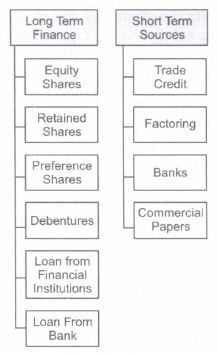
Sources of Business Finance
Download CBSE Class 11th Standard CBSE Business Studies question papers, sample papers, important questions, and previous year solved papers in PDF format. Get free study materials, NCERT solutions, and exam preparation resources for Class 11th Standard CBSE Business Studies
Questions + Answers key
Take MCQ Business Studies Test
1.
Internal sources of capital are those that are
Generated through outsiders such as suppliers
Generated through loans from commercial banks
Generated through issue of shares
Generated within the business
2.
The maturity period of a commercial paper usually ranges from
20 to 40 days
60 to 90 days
120 to 365 days
90 to 364 days
3.
Under the factoring arrangement, the factor
Produces and distributes the goods or services
Makes the payment on behalf of the client
Collects the client's debt or account receivables
Transfer the goods from one place to another
4.
Debentures represent
Fixed capital of the company
Permanent capital of the company
Fluctuating capital of the company
Loan capital of the company
5.
Under the lease agreement, the lessee gets the right to
Share profits earned by the lessor
Participate in the management of the organization
Use the asset for a specified period
Sell the assets
6.
Public deposits are the deposits that are raised directly from
The public
The directors
The auditors
The owners
7.
ADRs are issued in
Canada
China
India
USA
8.
Funds required for purchasing current assets is an example of
Fixed capital requirement
Ploughing back of profits
Working capital requirement
Lease financing
9.
The term 'redeemable' is used for
Preference shares
Commercial paper
Equity shares
Public deposits
10.
Equity shareholders are called:
Owners of the company
Partners of the company
Executives of the company
Guardian of the company
11.
What is the difference between GDR and ADR? Explain.
12.
Name any three special financial institutions and state their objectives.
13.
What preferential rights are enjoyed by preference shareholders? Explain.
14.
What is the difference between internal and external sources of raising funds? Explain.
15.
List sources of raising long-term and short-term finance.
16.
What is a commercial paper? What are its advantages and limitations?
17.
Discuss the financial instruments used in international financing.
18.
State the merits and demerits of public deposits and retained earnings as methods of business finance.
19.
What advantage does issue of debentures provide over the issue of equity shares?
20.
Discuss the sources from which a large industrial enterprise can raise capital for financing modernisation and expansion.
1.
(d)
Generated within the business
2.
(d)
90 to 364 days
3.
(c)
Collects the client's debt or account receivables
4.
(d)
Loan capital of the company
5.
(c)
Use the asset for a specified period
6.
(a)
The public
7.
(d)
USA
8.
(c)
Working capital requirement
9.
(a)
Preference shares
10.
(a)
Owners of the company
11.
Global Depository Receipts (GDRs): GDR is an instrument issued by a company to raise funds in some foreign currency and is listed and traded on a foreign stock exchange.
American Depository Receipts (ADRs): The depository receipts issued by the company in the USA are called American Depository Receipts. GDR and ADR are similar to each other except:
(a) GDR can be issued to anyone but ADRs can be issued only to an American citizen.
(b) GDR can be listed and traded in stock exchange of any country but ADRs can be listed and traded only in the stock exchange of USA.
12.
Given below are three financial institutions along with their objectives:
(a) Industrial Credit and Investment Corporation of India (ICICI): It came into existence in 1955 as a public limited company under the Companies Act, 1956.
Objective: ICICI assists the expansion and modernisation of industrial enterprises exclusively in the private sector. The corporation has also encouraged the participation of foreign capital in the country.
(b) Industrial Development Bank of India (IDBI): It came into existence in 1964 under the Industrial Development Bank of India Act, 1964. Objective: Its objective was to coordinate the activities of other financial institutions including commercial banks. The bank performed three types of functions namely, assistance to other financial institutions, direct assistance to industrial concerns and promotion and coordination of financial technique service.
(c) Life Insurance Corporation of India (LIC): It came into existence in 1956 under the LIC Act 1956 after nationalising 245 existing insurance companies.
Objective: It mobilises the community saving in the form of insurance premia and makes it available to industrial concerns. Both public as well as private, in the form of direct loan and underwriting of an subscription to shares and debentures.
13.
Following preferential rights are enjoyed by the preference shareholders:
(a) They get dividend at a fixed rate and dividend is given on these shares before any dividend on equity shares.
(b) When company winds up, preference shares are paid before equity shares.
(c) Preference shares also have a right to participate in excess profits left after payment being made to equity shares.
(d) They also have a right to participate in the premium at the time of redemption. In lieu of these preferential rights, their voting rights are taken i.e. they are not eligible for voting.
14.
The differences between internal and external sources of raising funds are summarized in the table given as follows:
| Basis | Internal Sources | External Sources |
| Meaning | Internal sources of capital are those sources that are generated within the business. | External sources of raising funds are those which are outside the business. |
| Example | Ploughing back of profits, equity shares | Financial institutions, loans from banks, preference shares, debentures, public deposits, lease financing, commercial papers, trade credit, factoring |
| Reliability | It is more reliable. | It is less reliable. |
15.
Sources of raising long term and short term finance are shown in the chart given below:
16.
Commercial Paper:
1. Commercial paper is an unsecured, short-term debt instrument issued by a corporation, typically for the financing of accounts receivable, inventories and meeting short-term liabilities.
2. Maturities on commercial paper can range up to 365 days. The debt is usually issued at a discount, reflecting prevailing market interest rates.
3. Commercial paper is not usually backed by any form of collateral, so only firms with high-quality debt ratings will easily find buyers without having to offer a substantial discount (higher cost) for the debt issue.
Advantages and Limitations of Commercial Paper
Advantages:
1. For the most part, commercial paper is a very safe investment because the financial situation of a company can easily be predicted over a few months.
2. Typically only companies with high credit ratings and credit worthiness issue commercial paper. Hence the companies issuing them enjoy (a) the prestige associated with such issuance and (b) the ability to issue large quantum without much hassles like other types of financing which requires restrictions from regulatory bodies.
3. Interest rate is generally lower compared to others like bank loans and other types of short term financing
Disadvantage:
1. It does not have any flexibility with regard to repayments.
17.
Following financial instruments are used in international financing:
(a) Global Depository Receipts (GDRs): The local currency shares of a company are delivered to the depository bank. The depository bank issues depository receipts against these shares. When these depository receipts are denominated in US $, they are called GDR. It is a bank certificate issued in more than one country for shares in a foreign company. The shares are held by a foreign branch of an international bank. The shares trade as domestic shares, but are offered for sale globally through the various bank branches. A financial instrument used by private markets to raise capital denominated in either U.S. dollars or Euros. These instruments are called EDRs when private markets are attempting to obtain Euros. It is a negotiable instrument and can be traded freely like any other security. A holder of GDR can convert it into any other security at any time. Holders of GDR are eligible only for capital appreciation and dividend but no voting rights.
(b) American Depository Receipts (ADRs): When a company in the USA issues depository receipts, they are termed as American Depository Receipts (ADRs).These are bought and sold in stock markets of the USA. They are similar to GDR except that these can be issued only to American citizens and these can be listed and traded on a stock exchange of USA.
(c) Foreign Currency Convertible Bonds (FCCBs): Foreign Currency Convertible Bonds are equity linked debt securities that are to be converted into equity or depository receipts after a specific period. Foreign Currency Convertible Bonds are listed and traded in Foreign Stock Exchanges. A holder of Foreign Currency Convertible Bonds has the option of converting them into equity shares at a predetermined price. Foreign Currency Convertible Bonds are issued in foreign currency. Their rate of interest is lower than rate of any other similar non convertible debt instrument.
18.
Public Deposits: Deposits accepted from public directly by the companies are called public deposits. These deposits generally carry a rate of interest higher than the deposits in commercial banks.
Merits of Public Deposits
1. The procedure of obtaining deposits is simple and does not contain restrictive conditions.
2. Cost of public deposits is generally lower than the cost of borrowings from banks and financial institutions.
3. Public company usually does not create a charge on the assets of the company.
4. As the depositors do not have voting rights, it does not dilute control in the company.
Demerits of Public Deposits
1. It is difficult for a newly established company to be able to get funds from public deposits.
2. It is dependent on public response and can't be relied on if financial needs are urgent.
3. It is difficult especially when size of deposits is large.
Retained Earnings: For any company, the amount of earnings retained within the business has a direct impact on the amount of dividends. Profit re-invested as retained earnings is profit that could have been paid as a dividend.
Merits of Retained Earnings:
(a) The management of many companies believes that retained earnings are funds which do not cost anything, although this is not true. However, it is true that the use of retained earnings as a source of funds does not lead to the payment of cash.
(b) The dividend policy of the company is in practice determined by the directors. From their standpoint, retained earnings are an attractive source of finance because investment projects can be undertaken without involving either the shareholders or any outsiders.
(c) The use of retained earnings as opposed to new shares or debentures avoids issue costs.
(d) The use of retained earnings avoids the possibility of a change in control resulting from an issue of new shares.
(e) Another factor that may be of importance is the financial and taxation position of the company's shareholders. For example, because of consideration of taxation, they would rather make a capital profit (which will only be taxed when shares are sold) than receive current income, then finance through retained earnings would be preferred to other methods.
Demerits of Retained Earnings:
(a) A company must restrict its self-financing through retained profits because shareholders should be paid a reasonable dividend, in line with realistic expectations, even if the directors would rather keep the funds for re-investing.
(b) At the same time, a company that is looking for extra funds will not be expected by investors (such as banks) to pay generous dividends, nor over-generous salaries to owner-directors.
(c) Scope of retained earnings is limited by amount of profits. A loss incurring firm has no source called retained earnings.
19.
Debentures provide following advantages over issue of equity shares.
1. Voting Rights: Voting rights are not given to debentures while equity shareholders have voting rights.
2. Dilution of Controlling Power: Since voting power is not given, therefore, if funds are raised by issue of debentures then controlling power does not get diluted.
3. Redeemable: Debentures are redeemable. Therefore, funds become flexible. 'When funds are not required permanently but for 5 or 10 years. debentures are more suitable.
4. Fixed Rate of Interest: Debentures are to be paid at fixed rate of interest. However, we need to share profits with equity shareholders.
5. Creditor versus Owner: Debenture holder is a creditor of the company and cannot take part in the management of the company while a shareholder is the owner of the company. It is the basic distinction between a debenture and a share.
6. Convertibility: Shares cannot be converted into debentures whereas debentures can be converted into shares.
20.
A large industrial enterprise can raise capital from the following sources.
1. Equity Shares: Equity shares are the most important source of raising long term capital by a company. They represent the ownership of a company and therefore, the capital raised by issue of these shares is called owner's funds. These shareholders do not get a fixed dividend. They get according to the earnings of the company. They receive what is left after all other claims on the company's income and assets have been settled. They enjoy the reward and also bear the risk of ownership. They have voting rights. Using their voting rights, they get participation in management of the company.
2. Preference Shares: Preference shareholders are called so because they enjoy some preferential rights over equity shares. They get dividend at a fixed rate and dividend is given on these shares before any dividend on equity shares. When company winds up, preference shares are paid before equity shares. Preference shares also have a right to participate in excess profits left after payment being made to equity shares. They also have a right to participate in the premium at the time of redemption. In lieu of these preferential rights, their voting rights are taken i.e. they are not eligible for voting. Preference shares have some characteristics of equity shares as well as debentures. They are safer investment with stable return from investor's point of view and free from control from owner's point of view.
3. Debentures: Debenture is an acknowledgement by a company that the company has borrowed certain amount from the debenture holder which it promises to pay on a specific date. It is an important source for raising long term debt capital. Debentures bear a fixed rate of interest. In recent times, issue of zero interest debentures has also become popular which do not carry any explicit rate of interest. But they are issued at discount and redeemed at a premium or at par. It is the return on the debenture. Public issue of debentures requires that issue of debentures should be rated by a credit rating agency like CRISIL (Credit Rating and Information Services of India Limited).
4. Loans from Financial Institutions: The government has established many financial institutions like LIC, IDBI, ICICI etc all over the country to provide finance to these organizations. These institutions are established by central and state government both. These institutions provide owned capital as well as borrowed capital for long term and short term requirements. They provide financial and technical advice and consultancy to business firms. Obtaining loan from a financial institution increases good will of a company. These sources are available even during depression. Loans can be repaid in easy instalments.
5. Loans from Commercial Banks: Borrowings from banks are an important source of finance to companies. Bank lending is still mainly short term, although medium term lending is quite common these days. The rate of interest charged on mediumterm bank lending to large companies will be a set margin, with the size of the margin depending on the credit standing and risk of the borrower. A loan may have a fixed rate of interest or a variable interest rate, so that the rate of interest charged will be adjusted every three, six, nine or twelve months in line with recent movements in the Base Lending Rate. Short term lending may be in the form of:
(i) An overdraft, which a company should keep within a limit set by the bank. Interest is charged (at a variable rate) on the amount by which the company is overdrawn from day to day.
(ii) A short-term loan, for up to three years.
(iii) Medium-term loans are loans for a period of three to ten years.
6. Retained Earnings: For any company, the amount of earnings retained within the business has a direct impact on the amount of dividends. Profit re-invested as retained earnings is profit that could have been paid as a dividend. The management of many companies believes that retained earnings are funds which do not cost anything, although this is not true. However, it is true that the use of retained earnings as a source of funds does not lead to a payment of cash. In practice, the dividend policy of the company is determined by the directors. From their standpoint, retained earnings are an attractive source of finance because investment projects can be undertaken without involving either the shareholders or any outsiders. The use of retained earnings as opposed to new shares 01' debentures avoids issue costs. The use of retained earnings avoids the possibilit.y of a change in control resulting from an issue of new shares. Another factor that may be of importance is the financial and taxation position of the company's shareholders. For example, because of consideration of taxation considerations. they would rather make a capital profit (which will only be taxed when shares are sold) than receive current income, then finance through retained earnings would be preferred to other methods.

11th Standard CBSE Syllabus & Materials
11th Standard CBSE
CBSE 11th Business Studies Forms of Business Organisation Sample Question Papers Study Material - QB365 Set A
NEW11th Standard CBSE
CBSE 11th Business Studies Business, Trade and Commerce Sample Question Papers Study Material - QB365 Set A
NEW11th Standard CBSE
CBSE 11th Physics Waves Sample Question Papers Study Material - QB365 Set A
NEW11th Standard CBSE
CBSE 11th Physics Kinetic Theory Sample Question Papers Study Material - QB365 Set A



CBSE 11th Standard CBSE Subjects
CBSE Standards









