
 100% FREE ACCESS
11th Standard CBSE Syllabus & Materials
11th Standard CBSE
CBSE 11th Economics PART-A - Presentation of Data - New Sample Question Papers Study Material - QB365 Set A
NEW11th Standard CBSE
CBSE 11th Economics PART-A - Organisation of Data - New Sample Question Papers Study Material - QB365 Set A
NEW11th Standard CBSE
CBSE 11th Economics PART-A - Collection of Data - New Sample Question Papers Study Material - QB365 Set A
NEW11th Standard CBSE
CBSE 11th Economics PART-A - Introduction to Economics and Statistics - New Sample Question Papers Study Material - QB365 Set A
NEW11th Standard CBSE
CBSE 11th Business Studies International Trade Sample Question Papers Study Material - QB365 Set A
NEW11th Standard CBSE
CBSE 11th Business Studies Evolution and Fundamentals of Business Sample Question Papers Study Material - QB365 Set A

Published on: 18/10/2019
Meaning, Scope and Importance of Statistics
Download CBSE Class 11th Standard CBSE undefined question papers, sample papers, important questions, and previous year solved papers in PDF format. Get free study materials, NCERT solutions, and exam preparation resources for Class 11th Standard CBSE undefined
Questions + Answers key
Take MCQ Biology Test
1.
Discuss the importance of Statistics in Economics.
2.
Explain various functions of statistics.
3.
Discuss some of the limitations of statistics.
4.
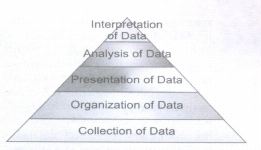
Describe various stages of statistics ad the tools used in it.
5.
Describe the features of statistics in plural sense.
1.
Statistics plays a very important role in the field of Economics. It is very important tool in the hands of economists. Statistics helps in Economics in many ways. Probably this is why it is a part of Economics syllabus and not any other discipline. Statistics has emerged as a lifeline of Economics. It helps an economist in following ways:
(a) It helps to Understand Economic Problems with a Quantitative Expression: No economy can solve the problem of poverty, population or unemployment without knowing their magnitude and causes. We get to know the magnitude of these problems in our economy on the basis of statistical data. Once we know the magnitude of these problems, we can think of their solutions which are called policies.
(b) Helps in Policy formulation: Policy formulation is not possible without having statical details with us. When our finance minister needs to take a decision on fund allocation to different sectors, he needs statistics; when he announces a poverty alleviation programme, he needs statistics, when he thinks of an employment policy, he needs statistics.
(c) Helps in Forecasting: In Economics, we need to forecast demand, supply, prices etc. we make use of historical data and trend analysis to make such forecasts. It is simply not possible to forecast logically without having statistical details.
(d) Helps in Formulation of theories: An Economic theory is established by developing relationship between economic variables using statistical tools. For example, Statisticians collected data on price and quantity demanded. Statisticians studied this data and found strong negative correlation between price and quantity demanded. So, law of demand was formulated. No theory or law in economics can be developed without help of statistical tools.
(e) Inter-sectoral and Inter-temporal Comparison: Statistics helps us to make inter-sectoral and intertemporal comparison. For example, to understand the problem of poverty, we wish to know the rural and urban poverty scenario. We also want to know state wise dimensions of poverty and we also compare poverty in India with other countries of the world. Similarly, we compare price rise in 2012-13 with price rise in other years. Statistics prove to be of great help in these comparisons.
(f) Developing Cause-Effect Relationship: Statistics help us to develop cause and effect relationship amongst different variables. It helps us to diagnose an economic problem. Once an economic problem is diagnosed, it can be rectified easily. What a diagnostic lab is for a doctor, so is statistics for economics.
2.
Statistics as a discipline is considered indispensable in almost all spheres of human knowledge. There is hardly any branch of study which does not use statistics. Scientific, social and economic studies use statistics in one form or another. These disciplines make use of observations, facts and figures, enquiries and experiments etc and thereby use statistics and statistical methods. Statistics studies almost all aspects in an enquiry. It mainly aims at simplifying the complexity of information collected in an enquiry. It presents data in a simplified form as to make them intelligible. It analyses data and facilitates derivation of conclusions. Now let us briefly discuss some of the important furictions of statistics.
1. Presents facts in simple form: Statistics presents facts and figures in a definite form. That makes the statement logical and convincing than mere description. It condenses the whole mass of figures into a single figure. This makes the problem intelligible.
2. Reduces the Complexity of data: Statistics simplifies the complexity of data. The raw data are unintelligible. We make them simple and intelligible by using different statistical measures. Some such commonly used measures are graphs, averages, dispersions, skewness, kurtosis, correlation and regression etc. These measures help in interpretation and drawing inferences. Therefore, statistics enables to enlarge the horizon of one's knowledge.
3. Facilitates comparison: Comparison between different sets of observation is an important function of statistics. Comparison is necessary to draw conclusions as Professor Boddington rightly points out." The object of statistics is to enable comparison between past and present results to ascertain the reasons for changes, which have taken place and the effect of such changes in future. So to determine the efficiency of any measure comparison is necessary. Statistical devices like averages, ratios, coefficients etc. are used for the purpose of comparison.
4. Testing hypothesis: Formulating and testing of hypothesis is an important function of statistics. This helps in developing new theories. So statistics examines the truth and helps in innovating new ideas.
5. Formulation of Policies: Statistics helps in formulating plans and policies in different fields. Statistical analysis of data forms the beginning of policy formulations. Hence, statistics is essential for planners, economists, scientists and administrators to prepare different plans and programmes.
6. Forecasting: The future is uncertain. Statistics helps in forecasting the trend and tendencies. Statistical techniques are used for predicting the future values of a variable. For example a producer forecasts his future production on the basis of the present demand conditions and his past experiences. Similarly, the planners can forecast the future population etc. considering the present population trends.
7. Derives valid inferences: Statistical methods mainly aim at deriving inferences from an enquiry. Statistical techniques are often used by scholars planners and scientists to evaluate different projects. These techniques are also used to draw inferences regarding population parameters on the basis of sample information.
3.
Statistics is indispensable to almost all sciences - social, physical and natural. It is very often used in most of the spheres of human activity. In spite of the wide scope of the subject it has certain limitations. Some important limitations of statistics are the following:
1. Statistics does not study qualitative phenomena: Statistics deals with facts and figures. So the quality aspect of a variable or the subjective phenomenon falls out of the scope of statistics. For example, qualities like beauty, honesty, intelligence etc. cannot be numerically expressed. So these characteristics cannot be examined statistically. This limits the scope of the subject.
2. Statistical laws are not exact: Statistical laws are not as exact as in case of natural sciences. These laws are true only on average. They hold good under certain conditions. They cannot be universally applied. So statistics has less practical utility.
3. Statistics does not study individuals: Statistics deals with aggregate of facts. Single or isolated figures are not statistics. This is considered to be a major handicap of statistics.
4. Statistics can be misused: Statistics is mostly a tool of analysis. Statistical techniques are used to analyze and interpret the collected information in an enquiry. As it is, statistics does not prove or disprove anything. It is just a means to an end. Statements supported by statistics are more appealing and are commonly believed. For this, statistics is often misused. Statistical methods rightly used are beneficial but if misused these become harmful. Statistical methods used by less expert hands will lead to inaccurate results. Here the fault does not lie with the subject of statistics but with the person who makes wrong use of it.
5. Uniformity and Homogeneity of data: Statistics can deal with only homogeneous and uniform data. Heterogeneous data are not comparable and hence statistical tools can't be applied on them. It does not make sense to compare weight of human beings with weight of cows or buffaloes. Sometimes data are available in different units and are collected under different circumstances. It also makes their comparison illogical.
6. Only Experts can make proper use of Statistics: Statistics can be properly used only by experts. A layman can't derive right meaning from statistical statements. According to King, "The science of statistics is most useful servant but only of great value to those who understand its proper use.
4.
It can be presented in the form of a hierarchy.
5.
According to Horace Secrist, "By Statistics we mean aggregate of facts affected to a marked extent by multiplicity of causes numerically expressed, enumerated or estimated according to a reasonable standard of accuracy, collected in a systematic manner for a pre-determined purpose and placed in relation to each other."
(a) Statistics is aggregate of facts: A single figure is not called statistics. Aggregate of facts is called statistics. 1t is for a simple reason that a single figure can neither be compared, nor presented nor analyzed. If Ram says that his height is 6 feet, it is not statistics but if he says average height of his class is 6 feet, it is a statistical statement because it is backed by aggregate of facts.
(b) Statistics are affected to a marked extent by multiplicity of causes: There are many factors which work behind statistical forces operating together. For example, statistics of employment in an economy are affected by demand and supply of labour force, working conditions, production methods used etc. In the above example, if average height of a class is 6 feet, there are many factors responsible for it- geographical, genetic, gender etc.
(c) Statistics are numerically expressed: All Statistics are numerically expressed. If a fact is not numerically expressed, it cannot be called statistics. Statements like good, bad, very large, very small, inadequate etc. cannot be called statistics. For example, following statements are not statistics. My height has increased; India's population has increased; Crime rate is increasing in India etc. Following are statistical statements. My height which had increased by 2 inches last year has increased by 5 inches this year. India's population is increasing @ 2% p.a. which is more than last year which was 1.2%p.a. Crime rate in India has increased by 200% during 1999-2010.
(d) Statistics are enumerated or estimated according to a reasonable standard of accuracy: Statistical data must be reasonably accurate because they serve as the basis of decision making and conclusions drawn. If data are actually collected they need to be accurate if they are estimated (when actual data are not available) they must be accurate to a reasonable standard.
(e) Statistics are collected in a systematic manner: Only systematically collected statistics are reliable. Those statistics which are not systematically collected are inaccurate and unreliable. Such statistics, if used, will lead to misleading conclusfons.
(f) Statistics are collected for a predetermined purpose: Statistics are collected for a pre-determined purpose. Purpose cannot be determined after collection of data. Which sources should be used for collecting data, which method to use, what should be the sample size all depends on purpose of statistics. If it is not collected for a predetermined purpose, it will be purposeless i.e. useless.
(g) Statistics should be placed in relation to each other: Since statistics are collected for comparison, we need to place various items in relation to each other. Data must be uniform and homogeneous to be able to put in relation to each other. For example, if we are comparing price indices, base year should be same. If it is not so, they are not comparable. Therefore, we can say that all numerical facts are not statistics but all statistics are numerical facts.

11th Standard CBSE Syllabus & Materials
11th Standard CBSE
CBSE 11th Business Studies Forms of Business Organisation Sample Question Papers Study Material - QB365 Set A
NEW11th Standard CBSE
CBSE 11th Business Studies Business, Trade and Commerce Sample Question Papers Study Material - QB365 Set A
NEW11th Standard CBSE
CBSE 11th Physics Waves Sample Question Papers Study Material - QB365 Set A
NEW11th Standard CBSE
CBSE 11th Physics Kinetic Theory Sample Question Papers Study Material - QB365 Set A



CBSE 11th Standard CBSE Subjects
CBSE Standards










