
 100% FREE ACCESS
11th Standard Syllabus & Materials
11th Standard
TN 11th Tamil இயற்கை வேளாண்மை,சுற்றுச்சூழல் -செய்யுள் - மனோன்மணீயம் Important Questions And Answers Study Material - QB365 Set A
NEW11th Standard
TN 11th Tamil என்னுயிர் என்பேன் -துணைப்பாடம் - இசைத்தமிழர் இருவர் Important Questions And Answers Study Material - QB365 Set A
NEW11th Standard
TN 11th Tamil மொழி கலை -செய்யுள் - ஒவ்வொரு புல்லையும் Important Questions And Answers Study Material - QB365 Set A
NEW11th Standard
TN 11th Tamil பீடு பெற நில் - இலக்கணம் - பகுபத உறுப்புகள் Important Questions And Answers Study Material - QB365 Set A
NEW11th Standard
TN 11th Tamil பீடு பெற நில் - துணைப்பாடம் - வாடிவாசல் Important Questions And Answers Study Material - QB365 Set A
NEW11th Standard
TN 11th Tamil பீடு பெற நில் - செய்யுள் - குறுந்தொகை Important Questions And Answers Study Material - QB365 Set A

Published on: 25/06/2021
QB365 provides detailed and simple solution for every
Creative Questions in class 11 Chemistry Subject. It will
helps to get more idea about question pattern in every Creative questions with solution.
Download Tamil Nadu 11th Standard Chemistry question papers, model tests, one-mark questions, important questions, and public exam papers in PDF format. Free study materials and answer keys for TN State Board students.
Questions + Answers key
Take MCQ Chemistry Test1.
Explain the molecular orbirtal structure of benzene.
2.
Among anthracene and cyclopentadiene which is aromatic? Give reason for your answer.
3.
State Huckel's rule of aromaticity and explain it interms of cyclopentadiene, cycloxtateraene and cyclopropenylcation.
4.
How many types of polymerisation are possible in alkynes?
5.
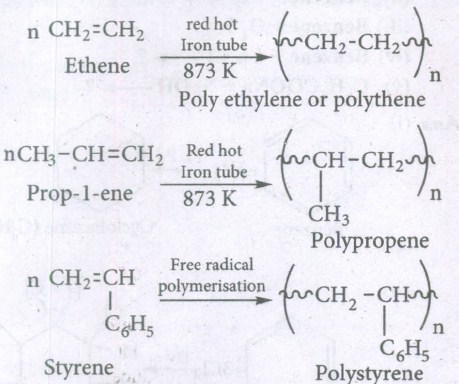
Write a brief note on polymerisation of alkenes.
1.
The structure of benzene is best described in terms of the molecular orbital theory. All the six carbon atoms of benzene are sp2 hybridized. Six sp2 hybrid orbitals of carbon linearly overlap with six one is orbitals of hydrogen atoms to form six C - H sigma bonds. Overlap between the remaining Sp2 hybrid orbitals of carbon forms six C-C sigma bonds
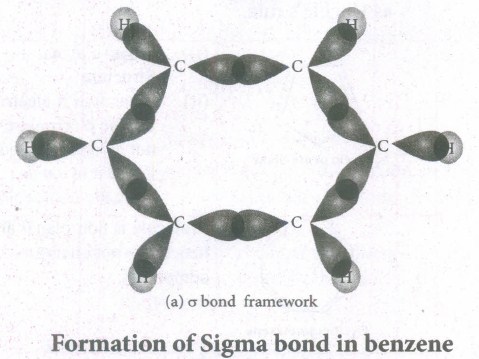
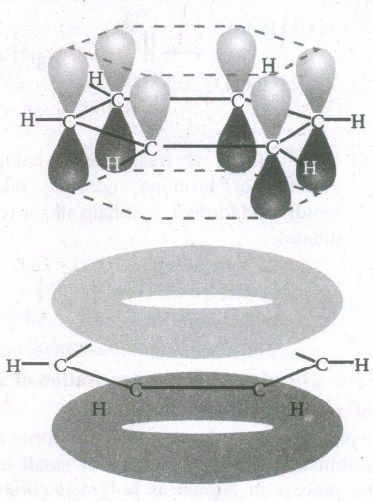
All the bonds in benzene lie in one plane with bond angle 120°. Each carbon atom in benzene possess an un hybridized p-orbital containing one electron. The lateral overlap of their p-orbital produces 3 \(\pi\)-bond The six electrons of the p-orbitals cover all the six carbon atoms and are said to be delocalised. Due to delocalization, strong -bond is formed which makes the molecule stable. Hence unlike alkenes and alkynes benzene undergoes substitution reactions rather addition reactions under normal conditions.
2.
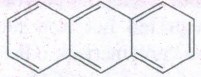
Among anthracene and cyclopentadiene - anthracene is aromatic in nature.
| Anthracene | Cyclopentadiene | |
|---|---|---|
 |
 |
|
| 1. | Planar structure | Planar structure |
| 2. | Contains 14 delocalised \(\pi\) electrons (4n + 2 = 14\(\pi\)e-) | Contains 4 non-delocalised \(\pi\) electrons |
| 3. | Hence aromatic | Hence non-aromatic |
3.
Huckel proposed that aromaticity is a function of electronic structure. A compound may be aromatic, if it obeys the following rules
(i) The molecule must be co-planar
(ii) Complete delocalization of \(\pi\) electron in the ring
(iii) Presence of (4n+2) \(\pi\) electrons in the ring where n is an integer (n=0,1,2 .... ) is known as Huckle's rule.
| 1. | 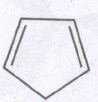 Cyclo penta diene |
(i) It has a planar Structure (ii) It has four \(\pi\) electron but the elecron are not delocalised and hence it is not an aromatic compound. |
| 2. | 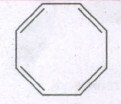 Cyclooctatetraene |
Molecule is non-planar and hence it is not an aromatic compound. |
| 3. | 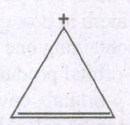 Cyclopropenylcation |
(i) Cyclopropenyl cation has planar structure. (ii) It has 2 delocalised \(\pi\) electron. (iii) 4n + 2 = 2 4n = 0 n = 0 (an interger) and hence it is aromatic compount. |
4.
Alkyne undergoes two types of polymerisation reaction
(i) Linear Polymerisation :
Ethyne forms linear polymer, when passed into a solution of cuprous chloride and ammonium chloride.
\(2CH\equiv CH\overset { { CI }_{ 2 }/{ NE }_{ 4 }CI }{ \longrightarrow } { CH }_{ 2 }=\underset { \overset { | }{ C\equiv CH } }{ CH } \)
Vinyl ethylene
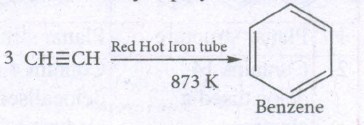
(ii) Cyclic polymerisation:
Ethyne undergoes cyclic polymerization on passing through red hot iron tube. Three molecules of ethyne polymerises to benzene.
5.
Polymerisatlon:
A polymer is a large molecule formed by the combination of larger number of small molecules. The process in known as polymerisation. Alkenes undergo polyrnerisation at high temperature and pressure, in the presence of a catalyst.

11th Standard Syllabus & Materials
11th Standard
TN 11th Tamil பீடு பெற நில் - செய்யுள் - காவடிச்சிந்து Important Questions And Answers Study Material - QB365 Set A
NEW11th Standard
TN 11th Tamil பீடு பெற நில் - உரைநடை - மலை இடப்பெயர்கள் : ஓர் ஆய்வு Important Questions And Answers Study Material - QB365 Set A
NEW11th Standard
TN 11th Tamil மாமழை போற்றுதும் - துணைப்பாடம் - யானை டாக்டர் Important Questions And Answers Study Material - QB365 Set A
NEW11th Standard
TN 11th Tamil மாமழை போற்றுதும் - செய்யுள் - ஐங்குறுநூறு Important Questions And Answers Study Material - QB365 Set A



Tamilnadu Stateboard 11th Standard Subjects

Maths

Commerce

Economics

Biology

Business Maths and Statistics

Accountancy

Computer Science

Physics
Chemistry
Maths
Biology
Economics
Physics
Chemistry

History
Business Maths and Statistics

Computer Science
Accountancy

Computer Applications
History
Computer Technology
Commerce
Computer Applications
Computer Technology

Tamil

English

French
Tamilnadu Stateboard Standards



