
 100% FREE ACCESS
7th Standard CBSE Syllabus & Materials
7th Standard CBSE
CBSE 7th Social Science Theme E - Understanding Market - New Sample Question Papers Study Material - QB365 Set A
NEW7th Standard CBSE
CBSE 7th Social Science Theme E - From Barter to Money - New Sample Question Papers Study Material - QB365 Set A
NEW7th Standard CBSE
CBSE 7th Social Science Theme D - The Constitution of India- An Introduction - New Sample Question Papers Study Material - QB365 Set A
NEW7th Standard CBSE
CBSE 7th Social Science Theme D - From the Rulers to the Ruled : Types of Governments - New Sample Question Papers Study Material - QB365 Set A
NEW7th Standard CBSE
CBSE 7th Social Science Theme B - The Age of Reorganisation - New Sample Question Papers Study Material - QB365 Set A
NEW7th Standard CBSE
CBSE 7th Social Science Theme B - The Rise of Empires - New Sample Question Papers Study Material - QB365 Set A

Published on: 01/11/2019
CIV - Market Around Us
Download CBSE Class 7th Standard CBSE Social Science question papers, sample papers, important questions, and previous year solved papers in PDF format. Get free study materials, NCERT solutions, and exam preparation resources for Class 7th Standard CBSE Social Science
Questions + Answers key
Take MCQ Social Science Test
1.
On the basis of given picture, answer the questions that follows
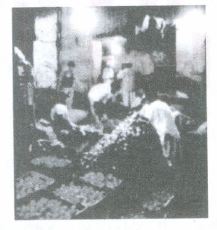
What kind of trader is he?
2.
On the basis of given picture, answer the questions that follows
Who is the person in the above picture?
3.
Markets exist everywhere. Explain.
4.
Discuss in detail about kinds of markets in urban areas.
5.
Write a note on weekly markets.
6.
What are the different ways of buying and selling goods?
7.
Give an account of those things which we do not directly use.
8.
Explain the relationship between markets and equality.
1.
Aftab is one of the wholesale trader of vegetables. He has a shop in the market where he stores the vegetables that he has bought and sells to hawkers and shopkeepers.
2.
The person in the above picture is Aftab.
3.
locality and work with proper procedure and time. Although it is not compulsory for one to every time go to the market to buy goods. Orders can be placed on phone or through internet for variety of things and goods are delivered at our doorsteps. For instance, there are sales representatives waiting for doctors in clinics and nursing homes, the persons are involved in the selling of goods. Hence, buying and selling can be done through various ways and not necessarily through shops in marketplaces.
There are some markets that we don't recognise because there are goods which are traded but we don't use them directly. It means we don't normally see buying and selling but only the final product like the car in showroom.
4.
Urban areas have markets with many shops mainly known as shopping complexes. Also there are large member of multi-storeyed air-conditioned buildings with shops on different floors, referred as malls. Both branded and non-branded goods are available in these markets. Branded goods are expensive and promoted by advertising claiming better quality. The producers of these brands sell them with the help of shops in big urban markets and special showrooms. Only few people can afford these branded goods.
5.
A weekly market is known as weekly for the reason that it is held on a particular day of the week. In India, there are thousands of such markets where people go for their daily requirements.
The weekly market has the following features
(i) It does not have a permanent shops.
(ii) Traders establish their shops for a single day and then close them up in the evening. They establish their shops next day somewhere else.
(iii) The things available in these markets are very cheap because the owners themselves manage the shop with the help of their family members.
(iv) They don't have their shops in permanent buildings where they have to pay rent, electricity, fees to the government and wages to their workers.
(v) These markets face competition as there are many shops of same kind. People buy from the shops which give them things at cheaper rates.
6.
(i) There are different market places where people buy and sell a variety of goods and services.
(ii) All these markets are in a specific locality.
(iii) They work in a particular manner and time.
(iv) These days it is not always necessary to go to market to purchase goods.
(v) Orders can be placed for a variety of things through the phone and through the Internet.
(vi) Goods are delivered at the customer's home.
(vii) In clinics and nursing homes, sales representatives come to take order for supplying medicines.
(viii) Sales representatives are also engaged in the selling of goods. Thus, buying and selling of goods takes place in different ways.
7.
(i) We can recognise markets easily.
(ii) There are also such markets that we do not know.
(iii) A large number of goods are bought and sold that we do not use directly.
Examples
(a) A farmer uses fertilizers to grow crops.
(b) He purchases them from special shops in the city.
(c) These shops get them from factories.
(iv) Likewise a car factory purchases engine, gears, petrol tanks, axles, wheels, etc. from various other factories.
(v) We do not usually see all the buying and selling of these ancillaries but only the final product-the car in the showroom.
(vi) The story is similar for any other good.
8.
There are two types of sellers in the market, one in the weekly market and other in the shopping complex.
Small trader has little money whereas the other has more money to set up their shops. They earn unequal amounts. The weekly market traders earn little as compared of a regular shop owner in a shopping complex.
Even buyers are also differently placed. There are some who can not afford cheapest of goods and some shop in malls.
Therefore these markets depend on money as buyers or sellers.

7th Standard CBSE Syllabus & Materials
7th Standard CBSE
CBSE 7th Social Science Theme B - New Beginnings : Cities and States - New Sample Question Papers Study Material - QB365 Set A
NEW7th Standard CBSE
CBSE 7th Social Science Theme A - Climates of India - New Sample Question Papers Study Material - QB365 Set A
NEW7th Standard CBSE
CBSE 7th Social Science Theme A - Geographical Diversity of India - New Sample Question Papers Study Material - QB365 Set A
NEW7th Standard CBSE
CBSE 7th Science Earth, Moon and the Sun - New Sample Question Papers Study Material - QB365 Set A



CBSE 7th Standard CBSE Subjects
CBSE Standards




