
 100% FREE ACCESS
7th Standard CBSE Syllabus & Materials
7th Standard CBSE
CBSE 7th Social Science Theme E - Understanding Market - New Sample Question Papers Study Material - QB365 Set A
NEW7th Standard CBSE
CBSE 7th Social Science Theme E - From Barter to Money - New Sample Question Papers Study Material - QB365 Set A
NEW7th Standard CBSE
CBSE 7th Social Science Theme D - The Constitution of India- An Introduction - New Sample Question Papers Study Material - QB365 Set A
NEW7th Standard CBSE
CBSE 7th Social Science Theme D - From the Rulers to the Ruled : Types of Governments - New Sample Question Papers Study Material - QB365 Set A
NEW7th Standard CBSE
CBSE 7th Social Science Theme B - The Age of Reorganisation - New Sample Question Papers Study Material - QB365 Set A
NEW7th Standard CBSE
CBSE 7th Social Science Theme B - The Rise of Empires - New Sample Question Papers Study Material - QB365 Set A

Published on: 25/07/2019
Tracing Changes Through a Thousand Years
Download CBSE Class 7th Standard CBSE Social Science question papers, sample papers, important questions, and previous year solved papers in PDF format. Get free study materials, NCERT solutions, and exam preparation resources for Class 7th Standard CBSE Social Science
Questions + Answers key
Take MCQ Social Science Test
1.
What are the differences between the region of Hindustan of 13th century and the modern India?
2.
Can you think of any other words whose meanings change in different context?
3.
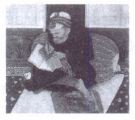
Answer the question based on following picture.
(a) What is the picture all about?
(b) What is he doing?
(c) Why is it called miniature?
(d) What were the two features of miniatures?
4.
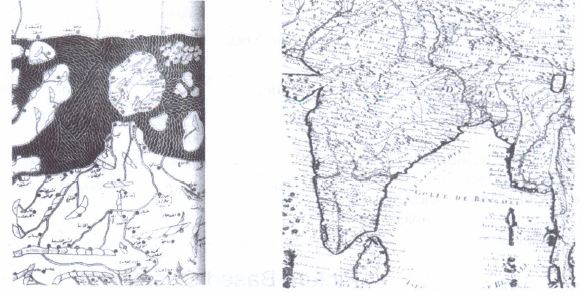
Compare either Map 1 or Map 2 with the present day map of the subcontinent listing as many similarities and differences (page no) as you can find.
5.
Difficulties faced by the historians in using manuscripts are:
Hand writing of manuscripts is not clear.
Lot of information is provided in Manuscripts
Manuscripts were copied by hand.
None of these.
6.
This was the most dominant group in the society
Kshatriyas
Traders
Brahmanas
Muslims
7.
Who collected manuscripts in the past?
Poor people
Wealthy people
Local People
None of these
8.
From which region did AI-Idrisi belong?
Arab
France
Germany
Sri Lanka
9.
Maps are drawn by which of the following?
Painter
Sailors
Cartographer
Historians
10.
In which three periods the British historians divided the history of India?
11.
How did Brahmanas and artists got protection in the medieval period?
12.
What is meant by Caliph or Khalifas?
13.
Which were the areas included in Hindustan by Minhaj-i-Siraj in his writings?
14.
What people did when there was change in habitat?
15.
Bengal
16.
Kayasthars
17.
India
18.
Ali
19.
Kayasthas
20.
Muslims had two schools of law Hanafi and Shafi
21.
Between 8th and 14th century the term Kshatriya was used for group of Brahmanas.
22.
Sultan Ghiyasuddin Balban controlled Assam, Manipur and Kashmir.
23.
Forest-dwellers were sometimes pushed out of their lands with the spread of agricultural settlements.
24.
The Marathas asserted their political importance during this period.
25.
Manuscripts were placed in museum and _________
26.
Minhaj-i-siraj was a chronicler, who wrote in ______
27.
Persian wheel was used in____________.
28.
_____________ were collected by wealthy people.
29.
Term 'Hind' was coined by Amir Khusrau in the ____________
30.
Did you notice that the names by which languages are known have changed with time?
31.
Describe the changes which took place between 700 and 1750.
1.
The Hindustan of the 13th century implied the areas of Punjab, Haryana and the lands between the Ganga and Yamuna. Minhaj-i-Siraj used the term in a political sense for lands consisting of a part of the areas of the Delhi Sultanate modern India included all of South India which was excluded in the 13th century.
2.
Soil - It is the soil where plants are grown.
Soil - To make something dirty.
Example Soil- Fertile soil is required for good crop Soil- I do not want you soiling your hands with this Sort of work.
Copy- A thing that is made to be the same as something else.
Copy- Written material that is to be printed In a newspaper, magazine etc.
Example: I will send you a copy of the report. The subeditor prepares the reporter's copy for the paper.
3.
The picture shows a scribe.
(b) He is making a copy of a manuscript.
(c) This painting is small in size, Because of smaller size, it is called as miniature (10.5 cm by 7.1 ern).
(d) The two features of miniatures are
(i) Miniature is used to illustrate the text of manuscripts
(ii) Miniatures are so beautiful that later collectors of manuscripts took the
manuscripts apart and just sold the miniatures.
4.
Differences Map 1 and Map 2 given in the NCERT text book (Map 2) represent two different times
Map 1 was made in 1154 CE by Al-ldrisi, an Arab geographer, the map given here is the map of Indian subcontinent from his larger map of the world.
Map 2 was made by a French cartographer in 1720. Both maps are quite different from each other in mode of presentation and contexts. However, both traced the outlines of the area of Indian subcontinent in their cartography.
Similarities Map 1, South India was at that place where North India is at present and Sri Lanka is the island the top. Name of place were in Arabic. Today's map of India is far ahead of Map 1 and Map 2. It is made to scale and shows clear-cut boundaries and areas.
5.
(c)
Manuscripts were copied by hand.
6.
(c)
Brahmanas
7.
(b)
Wealthy people
8.
(a)
Arab
9.
(c)
Cartographer
10.
()
British historians divided the history of India in the following three periods : 1. Hindu, 2. Muslim and 3. British.
11.
()
They got protection from patrons, a group of the rulers and rich class of people.
12.
()
It is a title given to the head of the Muslim community. Sunni Muslims accepted the authority of the Khalifas.
13.
()
Minhaj-i-Siraj used 'Hindustan' to refer the areas of Punjab, Haryana and the lands between the Ganga and Yamuna.
14.
()
People usually forest-dwellers were forced to migrate when their habitat changed.
15.
()
Gauda
16.
()
a caste of scribes and secretaries
17.
()
a modern nation-state
18.
()
Prophet Mohammad's son-in-law
19.
()
Sub-castes
20.
(a)
21.
(b)
22.
(b)
23.
(a)
24.
(a)
25.
()
archives
26.
()
Persian
27.
()
irrigation
28.
()
Manuscript
29.
()
14th century
30.
The names of languages which changed over time are as follows
Lahori : Punjabi
Telangani : Telugu
Gujari : Gujarati
Mabari : Tamil
Gauri : Bengali
Hindawi : Hindi
31.
(i) Throughout the period between 700 and 1750, there was a gradual clearing of forests and expansion of agriculture. This was a change, faster and more complete in some areas as compared to others.
(ii) Changes in their habitat forced many forestdwellers to migrate.
(iii) Other people Regional markets, chieftains, priests, monasteries and temples started to influence them.
(i) They became a part of large and complex societies.
(ii)They were required to pay taxes and offer goods and services to local feudal lords. As a result, various major economic and social differences emerged among the peasants.
(i) Some possessed more productive land.
(ii) Other people kept cattle,
(iii) Yet other people combined artisanal work with agricultural activities during the lean season

7th Standard CBSE Syllabus & Materials
7th Standard CBSE
CBSE 7th Social Science Theme B - New Beginnings : Cities and States - New Sample Question Papers Study Material - QB365 Set A
NEW7th Standard CBSE
CBSE 7th Social Science Theme A - Climates of India - New Sample Question Papers Study Material - QB365 Set A
NEW7th Standard CBSE
CBSE 7th Social Science Theme A - Geographical Diversity of India - New Sample Question Papers Study Material - QB365 Set A
NEW7th Standard CBSE
CBSE 7th Science Earth, Moon and the Sun - New Sample Question Papers Study Material - QB365 Set A



CBSE 7th Standard CBSE Subjects
CBSE Standards




