
 100% FREE ACCESS
7th Standard CBSE Syllabus & Materials
7th Standard CBSE
CBSE 7th Social Science Theme E - Understanding Market - New Sample Question Papers Study Material - QB365 Set A
NEW7th Standard CBSE
CBSE 7th Social Science Theme E - From Barter to Money - New Sample Question Papers Study Material - QB365 Set A
NEW7th Standard CBSE
CBSE 7th Social Science Theme D - The Constitution of India- An Introduction - New Sample Question Papers Study Material - QB365 Set A
NEW7th Standard CBSE
CBSE 7th Social Science Theme D - From the Rulers to the Ruled : Types of Governments - New Sample Question Papers Study Material - QB365 Set A
NEW7th Standard CBSE
CBSE 7th Social Science Theme B - The Age of Reorganisation - New Sample Question Papers Study Material - QB365 Set A
NEW7th Standard CBSE
CBSE 7th Social Science Theme B - The Rise of Empires - New Sample Question Papers Study Material - QB365 Set A

Published on: 27/07/2019
The Delhi Sultans
Download CBSE Class 7th Standard CBSE Social Science question papers, sample papers, important questions, and previous year solved papers in PDF format. Get free study materials, NCERT solutions, and exam preparation resources for Class 7th Standard CBSE Social Science
Questions + Answers key
Take MCQ Social Science Test
1.
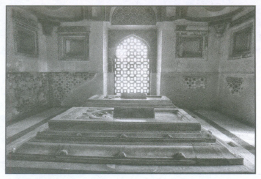
What is shown in this picture? When was it built and where is it located?
2.
Describe the Delhi Sultanate during the 15th and 16th century
3.
What was the impact of the Mongol invasions on the Delhi Sultanate?
4.
What were the steps taken to ensure that muqtis performed their duties? Why do you think they may have wanted to defy the orders of the Sultans?
5.
What is meant by the 'internal' and 'external' frontiers of the Sultanate?
6.
From which country did Ibn Hattuta come?
Iran
Kabul
Morocco
Sind
7.
Fortified settlement of soldiers is known as :
Hinterland
Garrison town
The Masjid
None of this
8.
Which ruler first established his capital at Delhi?
Tamara Rajputs
Chauhans
Lodi
Sayyid
9.
Ritual leader of Namaaz is
Imam
Iqtadar
Ulema
Wazir
10.
When did Raziyya Sultan sat on the throne?
1235
1236
1237
1238
11.
What were the three types of taxes collected by the Delhi Sultans?
12.
What was the duty of the muqtis?
13.
What is Iqta?
14.
The Sultanate collected taxes from whom?
15.
What do you mean by 'external frontier'?
16.
What is called a masjid? Explain the contribution of Delhi Sultans in building different masjids.
17.
During prayers, Muslims stand facing
18.
Raziyya was the daughter of Sultan ________
19.
Chauhans also referred to as _________
20.
Emperor __________ followed the administration model of Sher Shah Suri when he consolidated the Mughal Empire.
21.
Iqtadar was also known as _________
22.
Delhi's authority was challenged by Mongols' invasions
23.
Minhaj-i-Siraj was in favour of Queen's rule in Delhi.
24.
Delhi became an important city under the rule of Tomars and Chauhans
25.
Controlling garrison towns was easier for the Delhi Sultanate.
26.
Delhi first became the capital of a kingdom under the Tomara Rajputs
27.
Early Turkish ruler
28.
Mongol invader
29.
Minhaj-i-Siraj
30.
Tawarikh
31.
Khizr Khan
32.
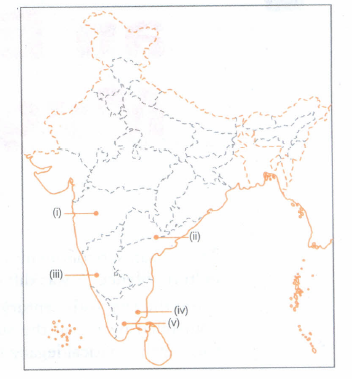
In the given below map, centres of Alauddin Khalji's campaign into South India are marked. Identify and write their names.
1.
Tombs of Shah [ahan and his favourite wife Mumtaz Mahal is shown in the picture. It is located at Taj Mahal built between 1632-1653in Agra, Uttar Pradesh, India
2.
The Delhi Sultanate during the fifteenth and sixteenth century.
(i) After the Tughluqs, the Sayyid and Lodi dynasties ruled from Delhi and Agra until 1526.
(ii) Bythen, [aunpur, Bengal, Malwa, Gujarat, Rajasthan and the entire South India had independent rulers. They had established flourishing states and prosperous capitals.
(iii)This was also the period which saw the emergence of new ruling groups like the Afghans and the Rajputs.
(iv) Some of the states established in this period were small but very powerful and extremely well administered.
3.
Mongol invasion posed a big administrative challenge for the Delhi Sultanate. Accordingly, the Delhi Sultanate mobilised a large standing army in Delhi. Further Alauddin Khalji constructed a new garrison town at Siri for his soldiers. He imposed taxes on land to feed the army at the rate of 50 per cent of peasant's yield. He began to pay the soldiers in cash. Muhammad Tughluq shifted people of Delhi to Daulatabad in South. He also raised a large standing army.
4.
The following steps were taken to ensure that muqtis performed their duties
(i) Accountants were appointed by the state to check the amount of revenue collected by the Muqtis.
(ii) Care was taken that the Muqti collected only the taxes prescribed by the State and that he kept the required number of soldiers. Muqtis may have wanted to defy the orders of the Sultans as there were harsh conditions of service which rigorously imposed on them. Besides this, their office was not inheritable and sometimes they were assigned iqtas for a short time span and shifted regularly.
5.
Internal frontier of the Sultanate The Sultanate aimed at consolidating the hinterland of the garrison town.
External Frontier of the sultanate It aims at the military expeditions of the Sultanate in Southern India which started during the reign of Alauddin Khalji and culminated with Muhammad Tughluq.
6.
(c)
Morocco
7.
(b)
Garrison town
8.
(a)
Tamara Rajputs
9.
(a)
Imam
10.
(b)
1236
11.
()
The three main types of taxes were :
(i) On cultivation-called kharaj amounting about 50 per cent of the peasant's produce.
(ii) On cattle.
(iii) On houses
12.
()
The duty of the muqtis was to lead military campaigns and maintain law and order in their iqtas.
13.
()
Iqta were territories of varying sizes under the control of Mugtis or iqtadars.
14.
()
The Sultanate collected taxes from the peasantry.
15.
()
Military expeditions into Southern India in the reign of Muhammad Tughluq.
16.
A mosque is called a masjid in Arabic, literally, it is a place where a Muslim prostrates in reverence to Allah. In a congregational mosque, Muslim read their prayers. Members of the congregation choose the most respected, learned male as their leader or Imam for the rituals of prayer-Imam delivers the sermon (Khutba) during Friday prayer.
The Delhi Sultans build several mosques in cities all over the subcontinent.
They wanted to claim themselves as protectors of Islam and Muslims. Mosques also helped to create the senses of a community of believers who shared a common code of conduct and belief.
Quwwat al-islam was built by Qutbuddin Aybak and IItutmish. Muhammad Tughluq constructed Begumpuri mosque. Moth ki Masjid built by a minister of Sikandar Lodi, Mosque of Jamali Kamali was also built in the late 1520s.
17.
()
Meca
18.
()
Iltutmish
19.
()
Chahamanas
20.
()
Akbar
21.
()
Muqti
22.
(a)
23.
(b)
24.
(a)
25.
(b)
26.
(a)
27.
()
Shamsuddin lltutmish
28.
()
Genghis khan
29.
()
Chronicler
30.
()
Persian Language
31.
()
Sayyid Dynasty (1414-1451 )
32.
(i) Devagiri
(ii) Warangal
(iii) Dwarasamudra
(iv) Thanjavur
(v) Madurai

7th Standard CBSE Syllabus & Materials
7th Standard CBSE
CBSE 7th Social Science Theme B - New Beginnings : Cities and States - New Sample Question Papers Study Material - QB365 Set A
NEW7th Standard CBSE
CBSE 7th Social Science Theme A - Climates of India - New Sample Question Papers Study Material - QB365 Set A
NEW7th Standard CBSE
CBSE 7th Social Science Theme A - Geographical Diversity of India - New Sample Question Papers Study Material - QB365 Set A
NEW7th Standard CBSE
CBSE 7th Science Earth, Moon and the Sun - New Sample Question Papers Study Material - QB365 Set A



CBSE 7th Standard CBSE Subjects
CBSE Standards




