
 100% FREE ACCESS
7th Standard CBSE Syllabus & Materials
7th Standard CBSE
CBSE 7th Social Science Theme E - Understanding Market - New Sample Question Papers Study Material - QB365 Set A
NEW7th Standard CBSE
CBSE 7th Social Science Theme E - From Barter to Money - New Sample Question Papers Study Material - QB365 Set A
NEW7th Standard CBSE
CBSE 7th Social Science Theme D - The Constitution of India- An Introduction - New Sample Question Papers Study Material - QB365 Set A
NEW7th Standard CBSE
CBSE 7th Social Science Theme D - From the Rulers to the Ruled : Types of Governments - New Sample Question Papers Study Material - QB365 Set A
NEW7th Standard CBSE
CBSE 7th Social Science Theme B - The Age of Reorganisation - New Sample Question Papers Study Material - QB365 Set A
NEW7th Standard CBSE
CBSE 7th Social Science Theme B - The Rise of Empires - New Sample Question Papers Study Material - QB365 Set A

Published on: 31/12/2018
7th Class Monthly Test
Download CBSE Class 7th Standard CBSE Social Science question papers, sample papers, important questions, and previous year solved papers in PDF format. Get free study materials, NCERT solutions, and exam preparation resources for Class 7th Standard CBSE Social Science
Questions + Answers key
Take MCQ Social Science Test
1.
There are thousands of weekly markets in India.
2.
When the water on the surface of the ocean rises and falls alternately, they are called tides
3.
India is the largest producer of medicine in the world.
4.
The Dutch built the fort at Surat.
5.
In the middle of 19th century, history of India was divided into three parts.
6.
____________has enabled us to think of ourselves as members of a larger global world.
7.
Equality is an important principle of our______
8.
Average height of_______________ is 13km.
9.
Abul Fazl explained that the Empire was divided into provinces called as ____________
10.
Some rich landowners of Chola rule were honoured with the titles like _________.
11.
Give an account of the different layers of the atmosphere.
12.
Observe the picture given below and answer the question
What do you know about powerlooms?
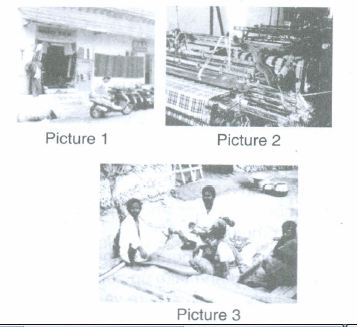
13.
Write an interesting slogan for the poster given below.
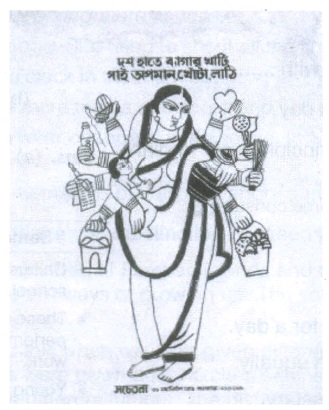
14.
Discuss the main reasons which are responsible for continuance of discrimination.
15.
What led Masulipatnam to populous and prosperous city?
16.
Interpret and compare the two above figures and answer the question Gates are opened and closed during which situation?
17.
What do you mean by Tributaries?
18.
Where do most doctors prefer to settle?
19.
What do you mean by Ioo?
20.
Who used to collect manuscripts in the past?
21.
Name the residence meant for the white rulers in Calcutta.
22.
According to 2011 census percentage of women population is :
43
48
48.5
38
23.
The Gonds practised:
Shifting cultivation
Intensive agriculture
Subsistence cultivation
Plantation agriculture
24.
Excess of CO2 is responsible for
Global warming
Global cooling
Both (a) and (b)
None of these
25.
Cartographer is the person who draws
Paintings
Pictures
Sketches
Maps
26.
People go to weekly markets to buy
branded clothes
cars
goods of everyday requirements
All of the above
27.
Bengal tiger is found in
mountains
delta area
Amazon
28.
Government censored the media during emergency period between
1972 - 1974
1975 - 1978
1975 - 1977
None of these
29.
The oasis in the Sahara and the Nile Valley in Egypt supports
settled population
rainfall
animal vegetation
farming
30.
These forests comprise both hard and soft trees
tropical evergreen forests
tropical deciduous forests
temperate evergreen forests
coniferous forests
31.
Ranthambhor was seized during the reign of
Humayun
Akbar
Jahangir
Shah Jahan
32.
Write a short note on the Kandariya Mahadeva temple.
33.
Read the following extract and answer the question that follow
The "Three Orders", the "Peace of God", Knights and the Crusades
The idea of the 'Three Orders" was first formulated in France in the early 11th century. It divided society into three classes, those who prayed, those who fought and those who tilled the land. This division of society into "Three Orders" was supported by the Church to consolidate its dominant role in society. This helped the emergence of a new warrior group called knights.
The Church patronised this group and used them to propagate their idea of "Peace of God". The attempt was to direct warriors away from conflict amongst themselves and send them instead on a campaign against the Muslims who had captured the city of Jerusalem. This led to a series of campaigns called the crusades. These campaigns in the service of God and the Church completely altered the status of knights. Originally, these knights did not belong to the class of nobles. But by the end of the 11th century in France and a century later in Germany, the humble origins of these warriors were forgotten. By the 12th century, nobles also wanted to be known, as knights.
What is the idea of 'Peace of God'?
34.
Give an account of the Impex garment factory.
35.
Salima was excited about the summer camp she was attending. She had gone to visit Manali in Himachal Pradesh along with her classmates. She recalled how surprised she was to see the changes in the landform and natural vegetation as the bus climbed higher and higher.
The deep jungles of the foothills comprising sal and teak slowly disappeared. She could see tall trees with thin pointed leaves and cone shaped canopies on the mountain slopes. She learnt that those were coniferous tree. She noticed blooms of bright flowers on tall trees. These were the rhododendrons. From Manali as she was travelling up to Rohtang pass she saw that the land was covered with short grass and snow in some places.
Read the above passage and answer the following question.
What is the reason of Salima's excitement?
36.
What were the major teachings of Baba Guru Nanak?
37.
Compare the form of inequality that is casteism in rural and urban India.
38.
Discuss the following terms with your teacher Opposition
39.
On an outline map of the Indian sub-continent, draw the rivers Ganga and Brahmaputra from the source to the mouth. Also show the important tributaries of both rivers.
40.
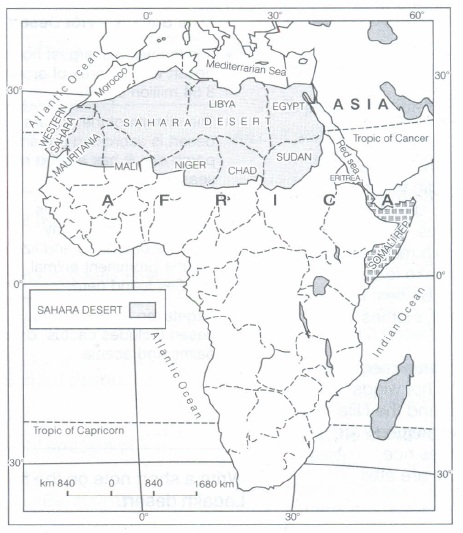
On the outline map of Africa, mark the Sahara desert and any four countries around it.
41.
The rainforests are depleting.
42.
Limestone changes into marble
43.
Did you notice that the names by which languages are known have changed with time?
44.
Enlist the causes why media is not said to be independent?
45.
Describe the Ahom Society in detail.
1.
(a)
2.
(b)
3.
(b)
4.
(b)
5.
(a)
6.
()
Television
7.
()
Constituition
8.
()
Troposphere
9.
()
Subas
10.
()
Muvendavelan, araiyar
11.
Our atmosphere has five different layers. They are:
(i) Troposphere,
(ii) Stratosphere,
(iii) Mesosphere,
(iv) Thermosphere,
(v) Exosphere.
(i) Troposphere : It is most important layer of the atmosphere with average height of 13 km from the earth. The air that we breathe exists here. Almost all the weather phenomena such as rainfall, fog and hailstorm occur here.
(ii) Stratosphere : This layer extends up to a height of 50 km. It presents the most ideal conditions for flying aeroplanes. It contains a layer of ozone gas which protects us from harmful effects of the sun rays.
(iii) Mesosphere : This layer extends up to a height of 80 km. Meteorites burn up in this layer on entering from the space.
(iv) Thermosphere: In this layer temperature rises very rapidly with increasing height. Ionosphere is the part of this layer. This layer extends between 80- 400km. It helps in radio transmission. Radio waves transmitted from the earth are reflected back to the earth by this layer.
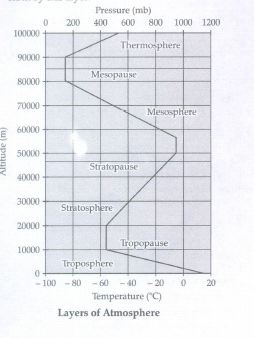
(v) Exosphere: It is the uppermost layer where there is very thin air. Light gases such as helium and hydrogen float into the space from here.
12.
This photograph shows a power loom in one such home. The weavers and their families spend long hours working on these looms.
Most weaving units have about 2-8 powerlooms on which the yarn is woven into cloth. A variety of sarees, towels, shirting, ladies dress material and bedsheets are produced in these looms.
13.
Slogan for the poster is - The Power of Women
14.
One of the significant reasons for continuance of discrimination is that attitudes change very slowly. Even though persons are aware that discrimination is against the law, they continue to treat people unequally on the basis of their caste, religion, disability, economic status and sex.
It is only when people begin to believe that no one is inferior and that every person deserves to be treated with dignity that attitude will change. Establishing equality in a democratic society is a continuous struggle and it is required for individuals and various communities to come together to remove inequality.
15.
The city of Masulipatnam was centre of intense activity during the 17th century. Both the Dutch and the English East India Companies attempted to control this city as it became the most important port on the Andhra coast. Qutb Shahi rulers of Golconda imposed royal monopolies on the sale of textiles, spices and other items in order to prevent the trade passing into the hands of various East India Companies.
This led to a fierce competition among various trading groups like the Golconda nobles, Persian merchants, Telugu, Komati, Chettis and European traders. As a result, the city became populous and prosperous.
16.
Gates were opened to irrigate land and closed to store water for future use.
17.
()
Tributaries are small rivers that join the main river. For example Son, Yamuna are the tributaries of Ganga.
18.
()
Most doctors prefer to settle in urban areas.
19.
()
Loo is the hot and dry wind of northern plains of india
20.
()
Manuscripts were collected by monasteries, temple, rulers, wealthy people, etc.
21.
()
Fort St. William in Calcutta was the residence meant for the white rulers.
22.
(c)
48.5
23.
(a)
Shifting cultivation
24.
25.
(d)
Maps
26.
(c)
goods of everyday requirements
27.
(b)
delta area
28.
(c)
1975 - 1977
29.
(d)
farming
30.
(c)
temperate evergreen forests
31.
(b)
Akbar
32.
King Dhangadeva of the Chandela dynasty in 999 constructed the Kandariya Mahadeva temple dedicated to Shiva. The temple had an ornamented gateway that led to an entrance. There was a main hall known as Mahamandapa where dances are performed. The statue of the main deity was kept in the main shrine known as garbhagriha. This was the place for ritual worship where only the king, his immediate family members and priests gathered before the deity.
33.
It is an attempt by the Catholic Church to limit warfare between feudal lords. Not to fight among themselves was the motto. Knights were used to pacify one against the other.
34.
The Impex garment factory employs 70 workers. Most of them are women, employed as helpers for buttoning, thread cutting, ironing and packaging.
The workers are employed on temporary basis and their wages are fixed according to their skills. Tailor is the highest paid worker.
35.
Salima was excited about the summer camp.
36.
The major teachings of Guru Nanak were
1.Guru Nanak emphasised the importance of the worship of one God. He insisted that caste, creed or gender was irrelevant for attaining liberation.
2.He also used the term nam, dan and isnan for the essence of his teachings, which actually meant right worship, welfare of others and purity of conduct.
3.He gave importance to right belief and worship, honest living and helping others.
4.He promoted the idea of equality.
37.
One of the most common form of inequality in lndia is caste system. In rural India, caste identity is something that one experiences at young age whereas in urban India, one may think that nobody believes in caste system but matrimonial reveal the truth that caste system still continues to be in minds of highly educated urban Indians
38.
Opposition Opposition are the elected members but have not attained majority.
39.
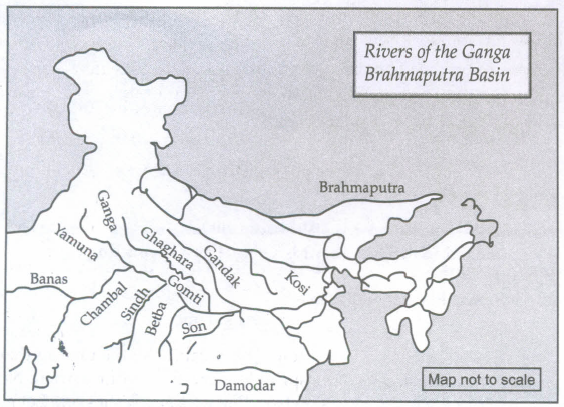
40.
The answer map isgiven below
41.
The rainforests are depleting because of developmental activities which destroy the biological diversity of rainforests through deforestation and hunting.
42.
Limestone is a sedimentary rock. It changes into marble which is a metamorphic rock under great heat and pressure.
43.
The names of languages which changed over time are as follows
Lahori : Punjabi
Telangani : Telugu
Gujari : Gujarati
Mabari : Tamil
Gauri : Bengali
Hindawi : Hindi
44.
The media is far from independent due to certain reasons:
(i) The government has a control over media:
Due to Censorship a news item, scenes from movies or songs are not shared with public.
During the Emergency 1975-1977 government censored the media.
Government censor the films but it really does not censor media coverage of news.
Despite the absence of censorship on news, most newspapers are unable to provide a balanced story.
(ii) This is due to the control of business houses over the media:
News are given based on the interest of the business houses.
Media needs money which it gets from advertisements.
It becomes difficult for them to report against those who give advertisements.
So media is not independent due to its business links.
(iii) Need for support for an issue:
Media tends to focus on particular aspect to make story interesting:
Also if they want public support, they focus on one side of the story.
45.
(i) Almost all adult males served in the army during war.
(ii) They were also engaged in building dams, irrigation systems and other public works.
(iii) The Ahoms also introduced new method of rice cultivation.
(iv) Ahom society was divided into clans or khels.
(v) There were very few castes of artisans, so they came from the adjoining kingdoms.
(vi) A khel often controlled several villages.
(vii) The peasant was given land by his village community.
(viii) Even the king could not take it away without the community's consent.
(ix) In the beginning the Ahoms worshipped their own tribal gods.
(x) During the first half of the seventeenth century, they were influenced by Brahmanas. Temples and Brahmanas were granted land by the king. In the reign of Sib Singh (1714-1744), Hinduism became their major religion.
(xi) The Ahom kings did not completely give up their traditional beliefs after adopting Hinduism.
(xii) Ahom society was very sophisticated. Poets and scholars were given land grants. Theatre was encouraged. Important works of Sanskrit were translated into the local languages. Historical works, known as buranjis, were also written-first in the Ahom language and then in Assamese.

7th Standard CBSE Syllabus & Materials
7th Standard CBSE
CBSE 7th Social Science Theme B - New Beginnings : Cities and States - New Sample Question Papers Study Material - QB365 Set A
NEW7th Standard CBSE
CBSE 7th Social Science Theme A - Climates of India - New Sample Question Papers Study Material - QB365 Set A
NEW7th Standard CBSE
CBSE 7th Social Science Theme A - Geographical Diversity of India - New Sample Question Papers Study Material - QB365 Set A
NEW7th Standard CBSE
CBSE 7th Science Earth, Moon and the Sun - New Sample Question Papers Study Material - QB365 Set A



CBSE 7th Standard CBSE Subjects
CBSE Standards




