
 100% FREE ACCESS
7th Standard CBSE Syllabus & Materials
7th Standard CBSE
CBSE 7th Social Science Theme E - Understanding Market - New Sample Question Papers Study Material - QB365 Set A
NEW7th Standard CBSE
CBSE 7th Social Science Theme E - From Barter to Money - New Sample Question Papers Study Material - QB365 Set A
NEW7th Standard CBSE
CBSE 7th Social Science Theme D - The Constitution of India- An Introduction - New Sample Question Papers Study Material - QB365 Set A
NEW7th Standard CBSE
CBSE 7th Social Science Theme D - From the Rulers to the Ruled : Types of Governments - New Sample Question Papers Study Material - QB365 Set A
NEW7th Standard CBSE
CBSE 7th Social Science Theme B - The Age of Reorganisation - New Sample Question Papers Study Material - QB365 Set A
NEW7th Standard CBSE
CBSE 7th Social Science Theme B - The Rise of Empires - New Sample Question Papers Study Material - QB365 Set A

Published on: 05/12/2018
CBSE Class 7 is a crucial grade in your secondary school education. So learning with effective preparation is a must. Our study materials for CBSE Class 7 follow the latest CBSE syllabus and are prepared by subject experts who have much experience in the academic industry. In this question paper, the questions are cover from the 7th Social Science chapter Market Around Us Important Questions. Questions are prepared as per NCERT guidelines by the help of expert teachers.
By referring to our solutions, students get a clear understanding of each concept in detail. Students who have referred to our solutions have seen a significant increase in overall marks and ease in understanding the subjects. Our study materials are not only used by students but also by educational institutes in India.
In this post, we are providing you with the most important questions of Social Science exam from the chapter Around Us Important Questions. You should know answers to these questions in all likelihood to score good marks in Class 7 Social Science exam.
The latest sample papers have been designed as per the latest blueprints, syllabus and examination trends. Sample papers should be practiced in examination condition at home or school and also show it to your teachers for checking or compare with the answers provided.
Download CBSE Class 7th Standard CBSE Social Science question papers, sample papers, important questions, and previous year solved papers in PDF format. Get free study materials, NCERT solutions, and exam preparation resources for Class 7th Standard CBSE Social Science
Questions + Answers key
Take MCQ Social Science Test
1.
Traders are the link between producers and:
Wholesaler
Customer
Retailer
None of these
2.
What refers to buying and selling in large quantities?
Weekly market
Wholesale
Mall
Cineplex
3.
What do we buy from a doctor or an accountant?
Milk
Vegetables
Services
None of these
4.
The market which is held on a specific day of a week is
daily market
vendor market
weekly market
None of these
5.
Shopkeepers in a weekly market are
large traders
wholesalers
big businessmen
small traders
6.
What do you mean by malls?
7.
What are the benefits of neighbourhood shops?
8.
Give reason why we do not buy goods directly from producers.
9.
What kind of goods do you get in the urban markets?
10.
Define market.
11.
Shops in the neighbourhood are useful in many ways.
12.
Retailers sell different articles to the producer.
13.
There are thousands of weekly markets in India.
14.
Weekly markets sell both branded and non-branded goods.
15.
Wholesaler sells the goods finally to the consumers
16.
The place where we buy and sell different goods are called ______________
17.
Use of credit cards to purchase goods without stepping into the markets known as ______________
18.
Large multi-storeyed air conditioned buildings with shops on different floors are known as ________________
19.
Sameer is a ____________ trader in weekly market.
20.
__________ is used for making online purchases.
21.
What is the importance of neighbourhood shops?
22.
Read the information given below and answer the question that follows
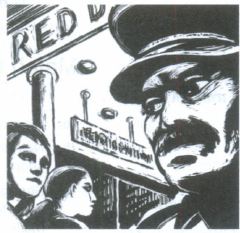
Anzal Mall is a five-floor shopping complex. Kavita and Sujata were enjoying going up and down in the lift. It seemed as if it was made of glass and they were able to see outside as they went up. It was fascinating to see so many different kinds of shops such as the ice-cream, burger, pizza and other food shops; shops full of home appliances; footwear and leather items as well as bookshops.
While wandering about on the third floor they entered a shop that was selling branded ready-made clothes.
The security guard looked at them as if he wanted to stop them but he did not say anything. They looked at some dresses and then looked at the price tag. None of them was less than Rs.2000, almost five times the weekly market price! Sujata whispered to Kavita, "I'll take you to another shop which has good quality ready-made clothes at more reasonable prices".
Why do you think guard wanted to stop Kavita and Sujata from entering the shop? What would you say if someone stops you from entering a shop in a market?
23.
How do you think your neighbourhood shop gets its goods? Find out and explain with some examples.
24.
Why do people go to a weekly market? Give three reasons.
25.
On the basis of given picture, answer the questions that follows
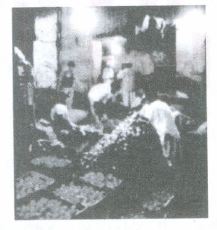
What kind of trader is he?
26.
Write a note on weekly markets.
27.
What are the different ways of buying and selling goods?
28.
Give an account of those things which we do not directly use.
1.
(b)
Customer
2.
(b)
Wholesale
3.
(c)
Services
4.
(c)
weekly market
5.
(d)
small traders
6.
()
Malls are multi-storeyed air-conditioned buildings with shops on different floors.
7.
()
Shops in the neighbourhood are useful in many ways:
(i) They are near our home and we can go there on any day of the week.
(ii) These shops also provide goods on credit.
8.
()
We don't buy goods directly from producers because they are not interested in selling goods in small quantities
9.
()
Both branded and non-branded goods are available in the urban markets.
10.
()
Market is a place where buying and selling occurs.
11.
(a)
12.
(b)
13.
(a)
14.
(b)
15.
(b)
16.
()
markets
17.
()
online purchases
18.
()
malls
19.
()
Small
20.
()
Credit Card
21.
(i) Shops in our neighbourhood are useful for us in many ways.
(ii) They are near our home.
(iii) We can go there on any day of the week and at any time.
(iv) Usually the buyer and seller know each other.
(v) These shops also provide goods on credit.
22.
The guard wanted to stop Kavita and Sujata from entering the shop because he might have thought that they belong to poor family and cannot afford the items kept in shop.
If anyone tries to stop me from entering a shop, I would speak up for my right and will stop that person from violating my dignity.
23.
Our neighbourhood shops get their goods from wholesalers. e.g. nearby departmental store is a retailer who purchases its stock in bulk from the wholesaler.
24.
People go to a weekly market because
Things are available at cheaper rates.
Almost all things are available at one place.
People have a choice while shopping in weekly markets.
25.
Aftab is one of the wholesale trader of vegetables. He has a shop in the market where he stores the vegetables that he has bought and sells to hawkers and shopkeepers.
26.
A weekly market is known as weekly for the reason that it is held on a particular day of the week. In India, there are thousands of such markets where people go for their daily requirements.
The weekly market has the following features
(i) It does not have a permanent shops.
(ii) Traders establish their shops for a single day and then close them up in the evening. They establish their shops next day somewhere else.
(iii) The things available in these markets are very cheap because the owners themselves manage the shop with the help of their family members.
(iv) They don't have their shops in permanent buildings where they have to pay rent, electricity, fees to the government and wages to their workers.
(v) These markets face competition as there are many shops of same kind. People buy from the shops which give them things at cheaper rates.
27.
(i) There are different market places where people buy and sell a variety of goods and services.
(ii) All these markets are in a specific locality.
(iii) They work in a particular manner and time.
(iv) These days it is not always necessary to go to market to purchase goods.
(v) Orders can be placed for a variety of things through the phone and through the Internet.
(vi) Goods are delivered at the customer's home.
(vii) In clinics and nursing homes, sales representatives come to take order for supplying medicines.
(viii) Sales representatives are also engaged in the selling of goods. Thus, buying and selling of goods takes place in different ways.
28.
(i) We can recognise markets easily.
(ii) There are also such markets that we do not know.
(iii) A large number of goods are bought and sold that we do not use directly.
Examples
(a) A farmer uses fertilizers to grow crops.
(b) He purchases them from special shops in the city.
(c) These shops get them from factories.
(iv) Likewise a car factory purchases engine, gears, petrol tanks, axles, wheels, etc. from various other factories.
(v) We do not usually see all the buying and selling of these ancillaries but only the final product-the car in the showroom.
(vi) The story is similar for any other good.

7th Standard CBSE Syllabus & Materials
7th Standard CBSE
CBSE 7th Social Science Theme B - New Beginnings : Cities and States - New Sample Question Papers Study Material - QB365 Set A
NEW7th Standard CBSE
CBSE 7th Social Science Theme A - Climates of India - New Sample Question Papers Study Material - QB365 Set A
NEW7th Standard CBSE
CBSE 7th Social Science Theme A - Geographical Diversity of India - New Sample Question Papers Study Material - QB365 Set A
NEW7th Standard CBSE
CBSE 7th Science Earth, Moon and the Sun - New Sample Question Papers Study Material - QB365 Set A



CBSE 7th Standard CBSE Subjects
CBSE Standards




