
 100% FREE ACCESS
7th Standard CBSE Syllabus & Materials
7th Standard CBSE
CBSE 7th Social Science Theme E - Understanding Market - New Sample Question Papers Study Material - QB365 Set A
NEW7th Standard CBSE
CBSE 7th Social Science Theme E - From Barter to Money - New Sample Question Papers Study Material - QB365 Set A
NEW7th Standard CBSE
CBSE 7th Social Science Theme D - The Constitution of India- An Introduction - New Sample Question Papers Study Material - QB365 Set A
NEW7th Standard CBSE
CBSE 7th Social Science Theme D - From the Rulers to the Ruled : Types of Governments - New Sample Question Papers Study Material - QB365 Set A
NEW7th Standard CBSE
CBSE 7th Social Science Theme B - The Age of Reorganisation - New Sample Question Papers Study Material - QB365 Set A
NEW7th Standard CBSE
CBSE 7th Social Science Theme B - The Rise of Empires - New Sample Question Papers Study Material - QB365 Set A

Published on: 26/09/2019
Reproduction in Plants
Download CBSE Class 7th Standard CBSE Science question papers, sample papers, important questions, and previous year solved papers in PDF format. Get free study materials, NCERT solutions, and exam preparation resources for Class 7th Standard CBSE Science
Questions + Answers key
Take MCQ Science Test
1.
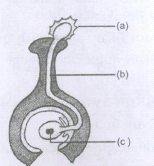
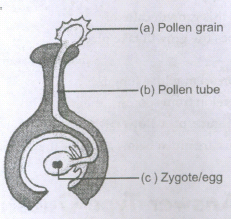
In the diagram, label the parts marked (a), (b) and (c).
2.
Draw a diagram of pistil to show pollen grain, pollen tube, ovary and ovule.
3.
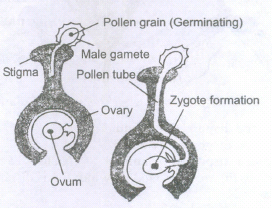
Describe the events taking place in a flower after pollination till fertilization.
4.
Describe the various ways by which the seeds are dispersed.
5.
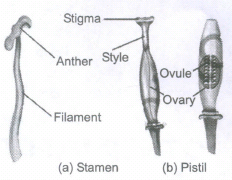
Sketch the reproductive parts of a flower.
6.
What is seed dispersal? What will happen if all the seeds of a plant were to fall at a same place and grow?
7.
Insects are called agents of pollination. How do they aid in process of pollination?
8.
Why is vegetative propagation a preferred method of asexual reproduction?
9.
One morning as Paheli strolled in her garden she noticed many small plants, which were not there a week ago. She wondered, where they had come from as nobody had planted them there. Explain the reason for the growth of these plants.
10.
How do the plants like sugarcane, potato and rose reproduce when they cannot produce seeds?
11.
What is a bud? Which organism reproduces by budding? Given the diagrammatic representation of budding in a plant.
12.
Collect some flower of different plants like papaya, rose, mustard, lady's finger, Petunia, cucumber, corn, pea, etc. Group them under following heads.
(a) Which of these plants have unisexual flowers?
(b) Which of these plants have bisexual flower?
(c) What is the other name of unisexual and bisexual flower?
13.
How does the process of fertilisation take place in flowers?
14.
State the main differences between asexual and sexual reproduction.
15.
Explain what do you understand by sexual reproduction?
1.
2.
3.
As soon as the pollen grain falls on the stigma, it starts germinating and forms a pollen tube. This pollen tube passes through style and reaches the ovary. The pollen tube contains male gamete which are released and one of them fuse with the egg to form zygote.
4.
The dispersal of seeds occurs in different ways:
1. By the wind: Some plants, like drumstick have winged seeds, while other plant like milkweed have tufts of hair which help them ride on the wind.
2. By water: The fibrous covering of coconut, helps it float in water and is carried far away from the parent plant.
3. By animals: Birds, monkeys and other animals eat the fruit of many plants and throw away the seeds. Some plants have fruits or seeds with hooks, bristles or spines. These get attached to the fur of animals or to our clothes. They are carried a long way before they fall off or are brushed off.
4. By exploding fruits: The fruits of the rubber tree, balsam and beans explode when they ripen. The sudden bursting of the fruit scatters the seeds away from the parent plant.
5.
6.
Plant produces large number of seeds. When these seeds fall down they start growing. The process by which the seeds are scattered to different place (far and wide from their parents) is called seed dispersal.
The seeds and fruits are dispersed away through various agencies like air, water and animals. Sometimes dispersal takes place by the explosion or bursting of fruits. If all the seeds of a plant were to fall at the same place and grow, there will be a severe competition for sunlight, water, mineral and space. As a result, the survival for the plants will be difficult and the plants who survive will not grow into a healthy plant.
7.
Flowers have nectars that attract insects. Insects suck these nectars as their food. When insects like bee, butterfly, etc., sit on the flower for sucking nectar, the sticky pollen grains get attached to their legs and wings. When these insects again sit on another flower, these pollen grains are transferred to the stigma of that flower from the body of the insects. In this way, insects help in pollination.
8.
The following advantages of vegetative reproduction makes it a preferred method
(i) It takes less time to grow and bear flower and fruits than those produced from seeds.
(ii) The new plants are the exact copies of parent plant because they are produced from a single parent.
9.
The small plants which were not there in the garden a weak ago have grown up due to seed dispersal. The seeds from the tree may have fallen below or have been dispersed by wind or animals on the ground, which on germination developed into new small plants.
10.
Sugarcane and rose are propagated by stem cutting that is a method of vegetative propagation, in which stem is capable of growing into a mature independent plants that are identical to their parents.
Potato is an underground modified stem having bud called eyes, which sprout and develop into a new identical plant.
Thus, the plants which cannot produce seeds can be propagated vegetatively with the help of vegetative parts such as stem, roots, buds and leaves.
11.
Buds are small bulb-like projections of yeast cell.
These are asexual reproducing bodies of yeast. Diagrammatic representation of budding in yeast
12.
(a) Unisexual flowers are papaya, cucumber, corn.
(b) Bisexual flowers are rose, mustard, lady's finger, Petunia, pea.
(c) Unisexual flowers are also called as incomplete flower while bisexual flowers are called hermaphrodite or complete flowers.
13.
The steps involved in the process of fertilisation are
(i) After pollination, pollen grains start growing into a pollen tube on the stigma passing through pistil.
(ii) The tube extends through the style and reaches to the ovules.
(iii) The pollen tube carries the male gametes called pollen grains.
(iv) Male gametes fuse with the egg (female gamete) present inside ovule and forms a zygote. This process is called fertilisation.
(v) Later zygote develops into an embryo and ovules develop into a seed.
(vi) Thus, seed carries an embryo with stored food and is covered by a hard protective covering called seed coat.
14.
The main differences between asexual and sexual reproduction are
| Asexual reproduction | Sexual reproduction |
| Only one parent is needed | Two parents a male and a female are required. |
| Offsprings are genetically identical to their parents. | Offsprings exhibit variation with respect to their parents. |
| No seed is formed. Fragmentation, budding, spore formation, vegetative propagation are its different types | Seeds are formed due to fusion of male and female gametes. |
| Spirogyra, yeast, moulds and potato exhibit asexual reproduction | Fruit-bearing plants like mango and China rose, reproduce sexually. |
15.
Sexual reproduction is a process of formation of new individuals by involving two parents or gamete formation. In sexually reproducing plants, new plants are produced from seeds.
In this method, gametes fuses to form zygote that gives rise to new individual.

7th Standard CBSE Syllabus & Materials
7th Standard CBSE
CBSE 7th Social Science Theme B - New Beginnings : Cities and States - New Sample Question Papers Study Material - QB365 Set A
NEW7th Standard CBSE
CBSE 7th Social Science Theme A - Climates of India - New Sample Question Papers Study Material - QB365 Set A
NEW7th Standard CBSE
CBSE 7th Social Science Theme A - Geographical Diversity of India - New Sample Question Papers Study Material - QB365 Set A
NEW7th Standard CBSE
CBSE 7th Science Earth, Moon and the Sun - New Sample Question Papers Study Material - QB365 Set A



CBSE 7th Standard CBSE Subjects
CBSE Standards




