
 100% FREE ACCESS
7th Standard CBSE Syllabus & Materials
7th Standard CBSE
CBSE 7th Social Science Theme E - Understanding Market - New Sample Question Papers Study Material - QB365 Set A
NEW7th Standard CBSE
CBSE 7th Social Science Theme E - From Barter to Money - New Sample Question Papers Study Material - QB365 Set A
NEW7th Standard CBSE
CBSE 7th Social Science Theme D - The Constitution of India- An Introduction - New Sample Question Papers Study Material - QB365 Set A
NEW7th Standard CBSE
CBSE 7th Social Science Theme D - From the Rulers to the Ruled : Types of Governments - New Sample Question Papers Study Material - QB365 Set A
NEW7th Standard CBSE
CBSE 7th Social Science Theme B - The Age of Reorganisation - New Sample Question Papers Study Material - QB365 Set A
NEW7th Standard CBSE
CBSE 7th Social Science Theme B - The Rise of Empires - New Sample Question Papers Study Material - QB365 Set A

Published on: 31/10/2019
CIV - Growing Up As Boys And Girls
Download CBSE Class 7th Standard CBSE Social Science question papers, sample papers, important questions, and previous year solved papers in PDF format. Get free study materials, NCERT solutions, and exam preparation resources for Class 7th Standard CBSE Social Science
Questions + Answers key
Take MCQ Social Science Test
1.
Give a detailed account of the life of children in the Samoan Islands is the 1920s
2.
Write a note on the nature and tasks involved in daily household work.
3.
Give a detailed account of growing up in Madhya Pradesh in the 1960s.
4.
Write an interesting slogan for the poster given below.
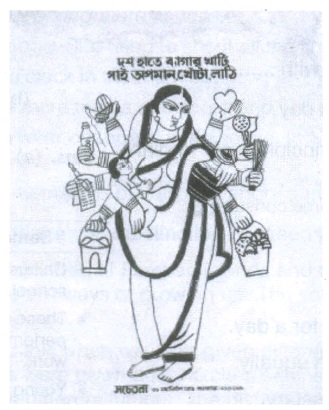
5.
Answer the following questions based on pictures given below
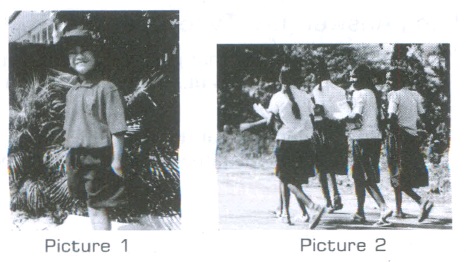
(a) In what ways do the experiences of Samoan children and teenagers differ from your own experiences of growing up? Is there anything in this experience that you wish was part of your growing up?
(b) Why do girls like to go to school together in groups?
6.
Answer the question based on the extracts given below.
The boys' school had no such courtyard and our playground was just a big space attached to the school. Every evening, once school was over, the boys watched as hundreds of school girls crowded the narrow streets. As these girls walked on the streets, they looked so purposeful.
This was unlike the boys who used the streets as a place to stand around idling, to play, to try out tricks with their bicycles. For the girls, the street was simply a place to get straight home. The girls always went in groups, perhaps because they also carried fears of being teased or attacked.
(a) 'The boys' school had no such courtyard". Which courtyard is being talked about?
(b) For what purpose did the boys use the street?
7.
"We also realise that societies make clear distinction between boys and girls". Explain.
8.
Discuss the experience of Melani.
1.
(i) As soon as babies could walk, their mothers or other adults no longer looked after them
(ii) Some children at 5 yearsye<lrs of age, took over this, responsibility.
(iii) Roth boys and girls looked after their younger siblings.
(iv) At the age of nine years boys joined the other boys in learning outdoor jobs like fishing and planting coconuts.
(v) Girls continue looking after small children or do errands for adults till they were teenagers.
(vi) After becoming teenagers girls had much more freedom.
(vii) After the age of fourteen or so, girls also went on fishing trips, worked in the plantations, learnt how to weave baskets.
(viii) Cooking was done in special cooking-houses, where boys did most of the work
(ix) Girls helped with the preparations of the food.
2.
The housework actually involves many different tasks.
A number of these tasks require heavy physical work.
(i) In both Rural and Urban areas women and girls fetch water
(ii) In rural areas women and girls carry heavy headloads of firewood.
(iii) Tasks like washing clothes, cleaning, sweeping and picking up loads require bending, lifting and carrying.
(iv) Many chores like cooking, involve standing for long hours in front of hot stoves.
(v) The women's work is strenuous and physically demanding, words associated with men.
3.
Growing up in Madhya Pradesh in the 1960s:
(i) From class VI onwards boys and girls went to separate schools
(ii) Girls school was designed very differently from the boys school
(a) They had a central courtyard where they played in total seclusion and safety from the outside world.
(b) The boys school had no such courtyard and the playground was a big space attached to the school.
(iii) Every evening after the school, the boys watched as hundreds of school girls crowded the narrow streets as they looked very purposeful.
(iv) The boys used the streets for different things like to stand around idling, to play, to tryout tricks with their bicycles.
(v) The girls always went in groups, perhaps because they also carried fears of being teased or attacked by boys or other bad elements.
(vi) For the girls, the street was simply a place to get straight home.
4.
Slogan for the poster is - The Power of Women
5.
(a) Differences in the experience of Samoan children and Indian children are
| Samoan children | Indian children |
|---|---|
| Children did not go to school. | Most of the children went to school |
| These children performed household work | Indian children never performed household work |
| Young children went for fishing expeditions | Thiswas not prevalent in the case of Indian children. |
I, as an Indian child. want to learn and experience performing household work along with my studies.
(b) The girls in Madhya Pradesh liked to go to school in groups because they
were scared of being teased or attacked, if they walked alone.
6.
(a) The boys' school and the girls' school were designed differently as boys school had no courtyard as the girls school had. Here, the courtyard is the playground or a big space attached to the school where boys and girls used to play.
(b) The boys used the streets as a place to stand around idling, to play, to tryout tricks with their bicycles, etc and not just for walking home, the way girls used it.
7.
The examples of growing up of children of Samoan islands and children of Madhya Pradesh clearly explain that there are many different ways of growing up. The societies start making differences between girls and boys from a very young age.
We ourselves have experienced this when we were given different categories of toys to play with. Boys were given cars, trains and girls were given dolls, kitchen sets, etc. Toys became a method of telling children that the two sexes have different futures. The distinction were made in smallest and everyday things like dressing of girls and boys, games they were allowed to play.
8.
Melani is a domestic worker and she used to work with a rich family that lived in a three-storeyed house.
She had a very bad experience working there as follow
(i) Her memsahib was very strange. She used to shout all the time to get any work done.
(ii) Her day used to begin at 5 o'clock in the morning.
(iii) She was not allowed to have more than a cup of tea and two dry rotis.
(iv) She was also not allowed to wear chappals in the house. In winters, her feet would swell up with the cold.
(v) She was very scared of the memsahib but also felt angry and humiliated.

7th Standard CBSE Syllabus & Materials
7th Standard CBSE
CBSE 7th Social Science Theme B - New Beginnings : Cities and States - New Sample Question Papers Study Material - QB365 Set A
NEW7th Standard CBSE
CBSE 7th Social Science Theme A - Climates of India - New Sample Question Papers Study Material - QB365 Set A
NEW7th Standard CBSE
CBSE 7th Social Science Theme A - Geographical Diversity of India - New Sample Question Papers Study Material - QB365 Set A
NEW7th Standard CBSE
CBSE 7th Science Earth, Moon and the Sun - New Sample Question Papers Study Material - QB365 Set A



CBSE 7th Standard CBSE Subjects
CBSE Standards




