
 100% FREE ACCESS
7th Standard CBSE Syllabus & Materials
7th Standard CBSE
CBSE 7th Social Science Theme E - Understanding Market - New Sample Question Papers Study Material - QB365 Set A
NEW7th Standard CBSE
CBSE 7th Social Science Theme E - From Barter to Money - New Sample Question Papers Study Material - QB365 Set A
NEW7th Standard CBSE
CBSE 7th Social Science Theme D - The Constitution of India- An Introduction - New Sample Question Papers Study Material - QB365 Set A
NEW7th Standard CBSE
CBSE 7th Social Science Theme D - From the Rulers to the Ruled : Types of Governments - New Sample Question Papers Study Material - QB365 Set A
NEW7th Standard CBSE
CBSE 7th Social Science Theme B - The Age of Reorganisation - New Sample Question Papers Study Material - QB365 Set A
NEW7th Standard CBSE
CBSE 7th Social Science Theme B - The Rise of Empires - New Sample Question Papers Study Material - QB365 Set A

Published on: 30/09/2019
A Shirt In The Market
Download CBSE Class 7th Standard CBSE Social Science question papers, sample papers, important questions, and previous year solved papers in PDF format. Get free study materials, NCERT solutions, and exam preparation resources for Class 7th Standard CBSE Social Science
Questions + Answers key
Take MCQ Social Science Test
1.
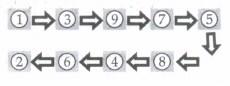
Arrange the statements given below in the correct order and then fill in the numbers in the cotton balls accordingly. The first two have already been done for you.

(i) Swapna sells the cotton to the trader
(ii) Customers buy these shirts in a supermarket.
(iii) Trader sell cotton to the Ginning Mill.
(iv) Garment exporters buy the cloth from merchant for making shirts.
(v) Yarn dealers or merchants give the yarn to the weavers.
(vi) The exporter sells shirts to the businessperson from the USA.
(vii) Spinning mill buys the cotton and sells yarn to the yarn dealers.
(viii) Weavers return with the cloth.
(ix) Ginning mill cleans the cotton and makes it into bales.
2.
State the advantages and disadvantages of the 'Putting-OUT System.
3.
How the Tamil Nadu government helps the cooperatives?
4.
What do you mean by weaver's cooperatives? How weavers will get benefits by this?
5.
Write down the features of Erode's bi-weekly cloth market.
6.
Read the extract and answer the following question.
Weaver's Cooperative We have seen that the weavers are paid very little by the merchant under the putting out system.
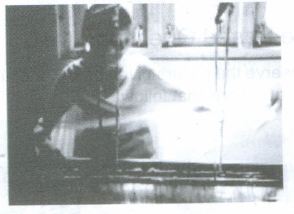
Weaver's cooperatives are one way to reduce the dependence on the merchant and to earn a higher income for the weavers. In a cooperative, people with common interests come together and work for their mutual benefit.
In a weaver's cooperative, the weavers form a group and take up certain activities collectively. They procure yarn from the yarn dealer and distribute it among the weavers. The cooperative also does the marketing. So, the role of the merchant is reduced and weavers get a fair price on the cloth.
At times, the government helps the cooperatives by buying cloth from them at a reasonable price. For instance, the Tamil Nadu Government runs a Free school uniform program in the state.
The government procures the cloth for this programme from the power loom weaver's cooperatives. Similarly, the government buys cloth from the handloom weaver's cooperatives and sells it through stores known as Co-optex. You might have come across one of these stores in your town.
What do you mean by weaver's cooperative?
7.
Give an account of the Impex garment factory.
8.
Why does it take several days to harvest cotton?
9.
What are the two advantages weavers have in putting-out-system?
10.
Discuss about the one of the largest cloth markets in the world discussed in the chapter.
11.
''Though Swapna knows that cotton will sell for at least 1800 per quintal, she doesn't argue further". Discuss.
12.
''The small farmers need to borrow money to meet these expenses". Which expenses is being talked about. Discuss.
13.
You have read the chapter on advertising. Why does the businessperson spend 300 per shirt on advertising? Discuss.
14.
What are the reasons that the a businessperson is able to make a huge profit in the market?
15.
Compare the earnings per shirt of the worker in the garment factory, the garment exporter and the businessperson In the market abroad. What do you find?
1.
2.
For the weaver it has two advantages:
(i) They do not have to spend money for purchasing yarn and know what and how much cloth they have to make
(ii) They do not face the problem of selling the finished cloth. Disadvantages for the weaver:
(i) They are dependent on the merchant for raw material as well as market.
(ii) They get low wages. They do not know from whom they are making the cloth
(iii) They do not the market price of the cloth.
3.
(i) The Tamil Nadu government runs a Free School Uniform programme in the state.
(ii) The government procures the cloth for this programme from the powerloom weaver's cooperatives
(iii) Similarly, the government buys cloth from the handloom weaver's cooperatives and sells it through stores known as Co-optex.
4.
(i) Weaver's cooperatives are one way to reduce the dependence on the merchant and to earn a higher income for the weavers.
(ii) In a weaver's cooperative, the weavers form a group and take up certain activities collectively.
(iii) They get yarn from the yarn dealer and distribute it among the weavers. The cooperative also does the marketing. In this way, the role of the merchant is reduced, and weavers get a fair price on the cloth.
5.
(i) Erode's bi-weekly cloth market in Tamil Nadu is one of the largest cloth markets in the world.
(ii) A large variety of cloth is sold in this market. Cloth that is made by weavers in the villages around is also brought here for sale.
(iii) Other traders from many South Indian towns also come and purchase cloth in this market.
6.
Weaver's cooperative - A cooperative in which people with common interest come together and work for their mutual benefit. In this, weavers take up certain activities collectively.
7.
The Impex garment factory employs 70 workers. Most of them are women, employed as helpers for buttoning, thread cutting, ironing and packaging.
The workers are employed on temporary basis and their wages are fixed according to their skills. Tailor is the highest paid worker.
8.
Swapna grows cotton on her small piece of land. The bolls of cotton are ripe and some have already burst. The bolls which carry the cotton in them do not burst open all at once. Their bursting time is different and this makes cotton harvesting a several days' task.
9.
Two advantages are
(i) The weavers do not have to spend their money on purchase of yarn.
(ii) The problem of selling the finished goods (i.e.) cloth is taken care of by the trader.
10.
Erode's bi-weekly cloth market situated in Tamil Nadu is one of the largest cloth markets in the world.
Large variety of cloth is available in this market. Cloth made by weavers of villages are also brought here for sale merchants and traders from many South Indian towns come to this market to buy cloth.
11.
Swapna sold cotton at a price of 1500 per quintal and didn't argue for a higher price as the trader was a powerful man in the village and the farmers were dependent on him for loans and for money needed for meeting exigencies like illness, school fees, etc.
12.
Swapna is a small farmer and grows cotton on her small piece of land. Cultivation of cotton demands high level of inputs like fertilisers and pesticides for which farmers have to incur heavy expenses. And this is the reason why small farmers need to borrow money in order to meet these expenses.
13.
The businessperson spends 300 per shirt on advertising because
Advertising helps in building brands.
Advertisements influence the lives of people and convince them to buy the product.
It presents the shirt in such a way that people want to buy them instantly.
Branded shirts fetch more profits.
14.
The reasons why businesspersons make huge profit in the market are
The businesspersons advertise their shirts in very attractive manner, which increases its sales.
The consumers are mainly those who belong to high-income goto Up.
The businessperson also tries to meet the latest demands of the customers.
15.
The earnings per shirt of the
Worker in the garment factory is 15 per shirt.
Garment exporter is 100 per shirt.
Foreign businessperson is 600 per shirt.
By looking at the above figures we find that the worker who contributes maximum earns very less whereas exporter and businessmen earns a good amount.

7th Standard CBSE Syllabus & Materials
7th Standard CBSE
CBSE 7th Social Science Theme B - New Beginnings : Cities and States - New Sample Question Papers Study Material - QB365 Set A
NEW7th Standard CBSE
CBSE 7th Social Science Theme A - Climates of India - New Sample Question Papers Study Material - QB365 Set A
NEW7th Standard CBSE
CBSE 7th Social Science Theme A - Geographical Diversity of India - New Sample Question Papers Study Material - QB365 Set A
NEW7th Standard CBSE
CBSE 7th Science Earth, Moon and the Sun - New Sample Question Papers Study Material - QB365 Set A



CBSE 7th Standard CBSE Subjects
CBSE Standards




