
 100% FREE ACCESS
7th Standard CBSE Syllabus & Materials
7th Standard CBSE
CBSE 7th Social Science Theme E - Understanding Market - New Sample Question Papers Study Material - QB365 Set A
NEW7th Standard CBSE
CBSE 7th Social Science Theme E - From Barter to Money - New Sample Question Papers Study Material - QB365 Set A
NEW7th Standard CBSE
CBSE 7th Social Science Theme D - The Constitution of India- An Introduction - New Sample Question Papers Study Material - QB365 Set A
NEW7th Standard CBSE
CBSE 7th Social Science Theme D - From the Rulers to the Ruled : Types of Governments - New Sample Question Papers Study Material - QB365 Set A
NEW7th Standard CBSE
CBSE 7th Social Science Theme B - The Age of Reorganisation - New Sample Question Papers Study Material - QB365 Set A
NEW7th Standard CBSE
CBSE 7th Social Science Theme B - The Rise of Empires - New Sample Question Papers Study Material - QB365 Set A

Published on: 06/03/2020
7th Standard CBSE Social Science Annual Exam Model Question 2020
Download CBSE Class 7th Standard CBSE Social Science question papers, sample papers, important questions, and previous year solved papers in PDF format. Get free study materials, NCERT solutions, and exam preparation resources for Class 7th Standard CBSE Social Science
Questions + Answers key
Take MCQ Social Science Test
1.
What do you mean by an independent media? Why is it important for the media to be independent?
2.
How does the topography of Ganga- Brahamaputra basin affect the distribution of population there?
3.
Write in brief the election procedure of the MLA.
4.
State the advantages and disadvantages of the 'Putting-OUT System.
5.
What are the demerits of airways as a means of transport?
6.
Describe the Delhi Sultanate during the 15th and 16th century
7.
Why did conquerors try to control the temple of Jagannath at Puri?
8.
Give reasons. There is scanty vegetation in the deserts.
9.
Talk to some elderly person in your neighbourhood and collect information about:
10.
Why did the villagers set-up this organisation?
11.
Who are the sellers in a weekly market?Why don't we find big business persons in these markets?
12.
Read the information and answer the following question
From the advertisements, you can now see that the two daals are saying different things. 'TopTaste Daal' is appealing to our social tradition of treating guests extremely well. 'Best Taste Daal' is appealing to our concern for our children's health and that they eat things that are good for them. Values such as treating our guests well and ranking sure our children get nutritious food are used by brands to create brand values. These brand values are conveyed through the use of visuals and words to give us an overall image that appeals to us.
How these values are conveyed?
13.
How are high tides important?
14.
Study the table and answer the questions that follow.
| State | Women paid (work hours per week) |
Women unpaid (housework hours per week) |
Women (Total) |
Men paid (work hours per week) |
Men unpaid (housework hours per week) |
Men (Total) |
| Haryana | 23 | 30 | ? | 38 | 2 | ? |
| Tamil Nadu | 19 | 35 | ? | 40 | 4 | ? |
(a) What are the total number of work hours spent by women in Haryana and Tamil Nadu each week?
(b) How does this compare with the total number of work hours spent by men?
15.
What are the uses of rocks?
16.
How carbon dioxide balance gets disturbed on the Earth?
17.
You can observe this process of local myths and legends receiving wider acceptance even today. Can you find some examples around you?
18.
In India, it is often said that we are unable to provide health services for all because the government does not have enough money and facilities. After reading the above left hand column, do you think this is true? Discuss.
19.
Read the given information and answer the question that follows:
A Poor Fisher Town: by William Methwold
This is the chief port of Golconda, where the Right Worshipful East India Company have their Agent. It is a small town but populous, unwalled, ill built and worse situated; within all the springs are brackish. It was first a poor fisher town afterwards, the convenience of the road (a place where ship can anchor) made it a residence for merchants and so continues since our and the Dutch nation frequented this coast.
Why did the English and the Dutch decide to establish settlements in masulipatnam?
20.
How did the Mughal court suggest that everyone the rich and the poor, the powerful and the weak received justice equally from the Emperor?
21.
What are the provision made in the Constitution for the recognition of equality?
22.
How does your class exercise compare with Rosie Ma'am's class exercise?
Rosie Ma'am's class has 30 children. She did the same exercise in her class and here is the result.
| Category | Male image | Female image |
| Teacher | 5 | 25 |
| Farmer | 30 | 0 |
| Factory worker | 25 | 5 |
| Nurse | 0 | 30 |
| Scientist | 25 | 5 |
| Pilot | 27 | 3 |
23.
Which are the two factors on which the growth of vegetation mostly depends?
24.
Who was the founder of Hyderabad state? How did he gained power?
25.
What are the cattle farms in the North American Grasslands known as?
26.
How were the debates with religious scholars important in the formation of Akbar's ideas on governance?
27.
What are exogenic and endogenic forces?
28.
Find out about the present day government policies towards tribal populations and organise a discussion about these.
29.
Were there any Brahmanas in this hamlet? Describe all the activities that were taking place in the village. Why do you think temple inscriptions ignore these activities?
30.
What does the term 'Pan-regional Empire' mean?
31.
Iist anyone person whom you respect because of his fight for equality and justice. Write the story based on their struggle.
32.
Are the stories in the two newspapers given below similar? And if not, why not? What in your view, are the similarities and the differences?
33.
Write a note on the nature and tasks involved in daily household work.
34.
How does a government function in a state?
35.
Answer the following questions.
(i) What are the two types of deserts found in the world?
(ii) In which continent is the Sahara desert located?
(iii) What are the climatic conditions of the Ladakh desert?
(iv) What mainly attracts tourists to Ladakh?
(v) What type of clothes do the people of the Sahara desert wear?
(vi) Name the trees that grow in Ladakh.
36.
What are the various categories of wind? Explain with diagram.
37.
On the basis of following picture, answer the given questions.
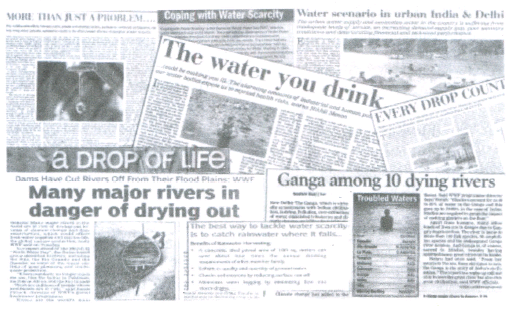
Why is water important for us?
38.
Observe the picture given below and answer the questions that follow
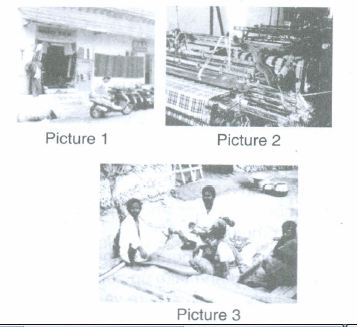
What are the traders doing in the 3rd picture?
39.
On the basis of given picture, answer the questions that follows
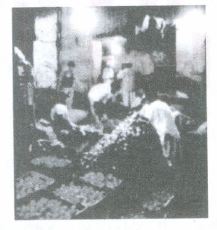
Who is the person in the above picture?
40.
What influence people of the Amazon Basin for their changing pattern of life?
41.
Observe the question given below and answer the questions that follow
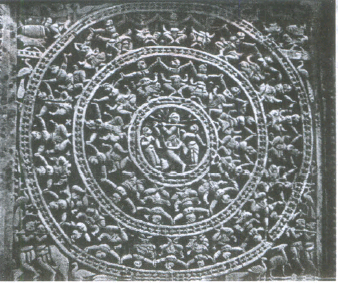
(a) What is depicted in the picture?
(b) In which temple can this picture be found?
42.
Using the following ads answer the following questions.
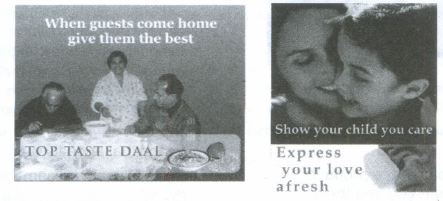
What does this advertisement want me to feel when I use this brand?
43.
Explain basic features of the interior of the earth.
44.
Explain all the major means of transport.
45.
Answer the following questions based on picture given below
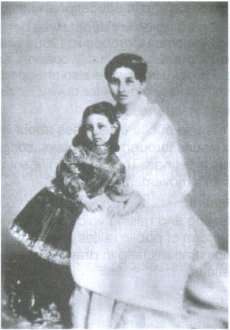
(a) Identify the person in above picture.
(b) Which title was she given and why?
(c) What was the purpose of mission set up by her?
46.
Interpret the picture and answer what does this figure of Bhagvadgita signify?
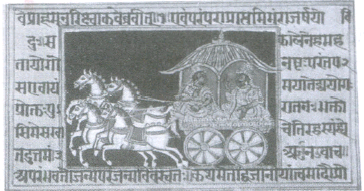
47.
Observe the picture carefully and answer the questions that follow:
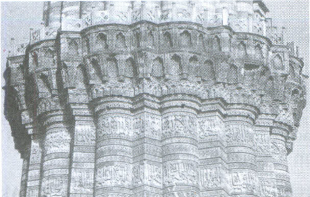
(a) Name the monument whose section is shown in the picture.
(b) Who constructed the monument and when?
(c) What are your observations about the architecture of the monument?
48.
Discuss the changes made by Kerala Government in the state in 1996.
49.
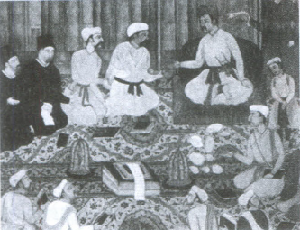
Can you identify the Jesuit priests in the given below picture?
50.
Why did human transform barter system into trade and commerce system?
51.
Observe the picture given below and answer the questions that follow
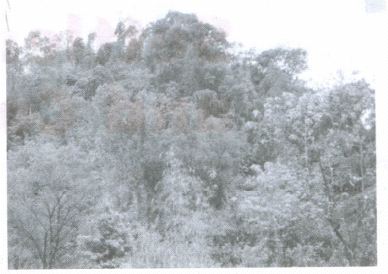
(a) In the above shown picture, what kind of forests is shown?
(b) Why can light of Sun not penetrate through them?
52.
Differentiate between the Prairies grasslands and Velds grasslands.
53.
'As the day goes on, Kanta becomes less certain about what this equality really means'. What makes Kanta unsure?
54.
Give an account of the tribal people found in Indian subcontinent. How they settled in forests, hills, deserts and difficult places to reach?
55.
Give an account of the voyage of Vasco da Gama.
56.
How sea waves gives rise to coastal landforms?
57.
What were the causes of the fall of the Mughal Empire?
58.
What is called a masjid? Explain the contribution of Delhi Sultans in building different masjids.
59.
Interpret and compare the two above figures and answer the question Gates are opened and closed during which situation?
60.
What major changes were noticed between 750 and 1750 AD?
61.
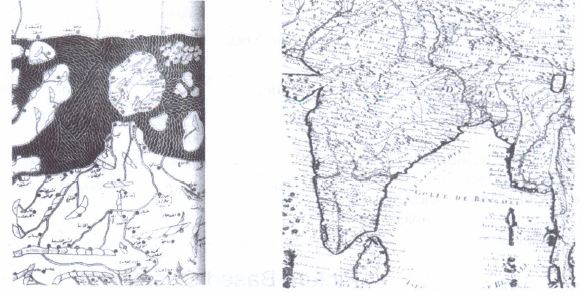
Compare either Map 1 or Map 2 with the present day map of the subcontinent listing as many similarities and differences (page no) as you can find.
62.
Rosa Parks was:
A German Woman
An African American Woman
A white woman teaching the black students
None of these
63.
India's International airlines is:
Go India
Air India
India International
None of these
64.
The full form of MLA is Member of :
Law Authority
Legal Arm
Legislative Assembly
Legislative Arm
65.
Who buys the bales of cotton to convert them into yarn:
Ginning mill
Spinning mill
Cleaning mill
Weaving mill
66.
Name the animal found in tropical grasslands:
Camel
Giraffe
Monkey
Cow
67.
Angel falls is located in :
South Africa
South America
South India
None of these
68.
Which one is not a classical dance?
Bharatnatyam
Odiss
Bhangra
Kathakali
69.
An important festival celebrated at Hampi was:
Holi
Deepawali
Janamashtarni
Mahanavami
70.
Sufis were ............ mystics
Hindu
Muslim
Buddha
None of these
71.
For the first time, the term 'Hindustan' was used by:
Al-Idris
Minhaj-i Siraj
Muhamad Tughluq
Ziyauddin Barani
72.
Major reason for inequality is
poverty
lack of resources
Both 'a' and 'b'
None of the above
73.
Shopkeepers procure their goods from
factories
farms
wholesaler
All of these
74.
Toucans are a type of
birds
animals
crops
75.
The word media includes
Radio
TV
Newspapers
All of these
76.
Generally the warm ocean currents originate near
poles
equator
None of these
77.
Melani was
business woman
teacher
domestic worker
employer
78.
Gold, petroleum and coal are examples of
rocks
minerals
fossils
79.
The cost of bringing out a quarter page colour advertisement in a leading newspaper is
8.46 lakh
8.36 lakh
8.65 lakh
8.86 lakh
80.
Ladakh is a ______ Iying in the great Himalayas.
cold desert
hot desert
sand desert
neither hot nor cold
81.
Good health depends on
clean drinking water
pollution free environment
adequate food to eat
All of the above
82.
Limestone cement was used in construction because it is
easily available
light to carry
cheaper than others
hardened into concrete
83.
Passage of law on domestic violence in 2006 was the result of
raising awareness
protesting
campaigning
showing solidarity
84.
Which is not a component of human environment?
Land
Religion
Community
85.
These wind blow constantly throughout the year in particular direction.
permanent winds
local winds
seasonal winds
both (a) and (b)
86.
Drakensberg Mountains are to the West of
prairies
velds
pampas
87.
The influential tribe of Punjab during the 13th and 14th century was
Singhals
Chahamans
Dhillon
Khokhar
88.
Dalkhalsa was set up in 1699 by
Guru Har Kishan
Guru Gobind Singh
Guru Tegh Bahadur
Guru Nanak Singh
89.
Babur defeated the king of Delhi
Genghis Khan
Safavid
Timur
Ibrahim Lodi
90.
Who was Ibn Battuta?
Irani traveller
African traveller
Afghani traveller
Chinese traveller
91.
Who was the most powerful Chola ruler?
Vijayalaya
Rajaraja I
Rajendra I
Virarajendra
92.
Can you think of one person in your family, community, village, town or city whom you respect because their fight for equality and justice?
93.
Mention the important part of an individual's identity. How do we learn acceptable behaviour?
94.
How many people in your neighbourhood use the Internet?
95.
Describe the Prairies.
96.
What is the importance of chain of markets in the story of the shirt? Elucidate.
97.
Having read about diarrhoea epidemic in the chapter on State Government can you make a social advertisement on what precautionary steps should be taken to prevent diarrhoea?
98.
Mention which mode of communication you will prefer most in the following situations-
(a) Your grandfather has suddenly fallen ill. How will you inform the doctor?
(b) Your mother wants to sell the old house. How will she spread this news?
(c) You are going to attend the marriage of your cousin for which you will be absent from the school for the next two days. How will you inform the teacher?
(d) Your friend has moved out with his/her family to New York. How will you keep in touch on a daily basis?
99.
Look at the photograph and think about the boy who is being carried down the stairs. Do you think the above law is being implemented in his case? What needs to be done to make the building
more accessible for him? How would his being arried down the stairs affect his dignity as well as his safety
100.
Make a collage to show places of attractions in India. You can divide the class in different groups to show attractions based on mountain landscapes, coastal beaches, wildlife sanctuaries and places of historical importance?
101.
Have you ever seen tribal people? Mention some states where tribal people live in India.
102.
What are endogenic forces?
103.
For fun-What are the minerals most commonly used in the following objects?
104.
Find out how many states have been created in the last 10 years. Is each of these states a region?
105.
Make a list of towns in your district and try to classify these as administrative centre or as temple/pilgrim centres.
106.
Why do you think Mirabai left the Rana's palace?
107.
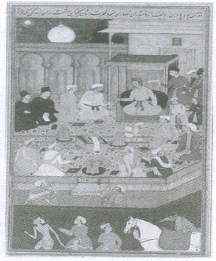
What are the details shown in this miniature? When this picture is prepared?
108.
Did you notice that the names by which languages are known have changed with time?
109.
How TM5 helped the fish workers?
110.
Why are the latest technologies costly?
111.
Give the details of wildlife of Ganga-Brahamaputra basin.
112.
What are the expectations concerning the roles of women and men in our society?
113.
Give an account of those things which we do not directly use.
114.
Discuss the Costa Rican approach about health.
115.
Which occupation is followed by the people in Velds?
116.
Describe the issues of equality in other democracies.
117.
What are the location settings of Ladakh?
118.
How do advertisements play a big role in our lives? Describe.
119.
What changes have been brought in Railways?
120.
Write the common features of Awadh, Bengal and Hyderabad.
121.
Describe two types of grasslands found on the globe.
122.
Describe the Ahom Society in detail.
123.
Explain the rock cycle with the help of a diagram.
124.
What do you know about Rajput tradition of heroism? Write in brief.
125.
How have human beings adapted to the environment to fulfil their needs?
126.
Describe Surat as a gateway to the west.
127.
How was Mughal architecture influenced by regional art?
128.
Describe the works of Baba Guru Nanak
129.
Describe the changes which took place between 700 and 1750.
1.
An independent media means that no one should control and influence its coverage of news. No one should suggest the media what can be included and what cannot be included in a news story. An independent media is important in a democracy. It is on the basis of the information that the media provides that we take action as citizens. Hence, this information must be reliable and not biased at all.
2.
The basin area has varied topography which plays a dominant role in the distribution of the population:
(i) The mountain areas with steep slopes have inhospitable terrain. Therefore less number of people live in the mountain areas of the Ganga- Brahmaputra basin. The plain area provides the most suitable land for human habitation.
(ii) The density of population of the plains is very high.
3.
Every state has a Legislative Assembly. Each state is divided into constituencies. For example, Himachal Pradesh is divided into 68 constituencies.
From each constituency, one representative is elected by the people who then become an MLA. Candidates belong to different political parties or may be independent.
4.
For the weaver it has two advantages:
(i) They do not have to spend money for purchasing yarn and know what and how much cloth they have to make
(ii) They do not face the problem of selling the finished cloth. Disadvantages for the weaver:
(i) They are dependent on the merchant for raw material as well as market.
(ii) They get low wages. They do not know from whom they are making the cloth
(iii) They do not the market price of the cloth.
5.
(i) The most expensive means of transport among all.
(ii) Air traffic is adversely affected by bad weather very often.
(iii) In case of any casualty, the risk of life and materials are almost hundred percent.
6.
The Delhi Sultanate during the fifteenth and sixteenth century.
(i) After the Tughluqs, the Sayyid and Lodi dynasties ruled from Delhi and Agra until 1526.
(ii) Bythen, [aunpur, Bengal, Malwa, Gujarat, Rajasthan and the entire South India had independent rulers. They had established flourishing states and prosperous capitals.
(iii)This was also the period which saw the emergence of new ruling groups like the Afghans and the Rajputs.
(iv) Some of the states established in this period were small but very powerful and extremely well administered.
7.
The temple of Jagannath at Puri gained importance as a centre of pilgrimage. Its authority in social and political matters also increased. Hence conquerors tried to establish control over the temple. They felt that this would make their rule acceptable to the local people.
8.
It is beacause in the deserts there is little rainfall and the temperature is extremely high so lot of evaporation takes place.
9.
(i) The trees in his/her neighbourhood when he/she was your age.
(ii) The indoor games he/she played.
(iii) His/her favourite fruit at your age.
(iv) How did they make themselves comfortable during hot summers and cold winters?
Display your answers on a wall/bulletin board.
(i) Neem, Peepal, Sheesham
(ii) Table Tennis, Chess, Carom Board
(iii) Mango
(iv) In hot summers-sitting under the shadows of trees, fans
(v) In cold winters-sitting in the Sun, charcoal fire in night
10.
The villagers set-up this organisation in order to fight for the right to catch fish in Tawa reservoir.
11.
The sellers in a weekly market are the small traders, who establish their shops for a single day and store things at home. Big business persons are not seen in these markets because the items bought and sold in these markets are not branded.
12.
The brand values are conveyed through the use of visuals and words to give us an overall image that appeals to us.
13.
High tides are important for various reasons
(i) They raise the water level close to the shores. This helps the ships to arrive at the harbour more easily.
(ii) The high tides also help in fishing.
(iii) Many more fish come closer to the shore during the high tide. This enables fishermen to get a plentiful catch.
(iv) The rise and fall of water due to tides is being used to generate electricity in some places.
14.
(a) Total number of work hours spent by women in Haryana is 53 and in Tamil Nadu is 54 in a week.
(b) Total number of work hours spent by men in Haryana is 40 and Tamil Nadu is 44 in a week. Women contribute more than 33% of their work hours in household work and men contribute just 5% of their total work hours in household work.
15.
Rocks are very useful to us. The hard rocks are used for making roads, houses and buildings.
16.
The carbon dioxide balance gets disturbed by burning of fuels such as coal and oil. They add billions of tons of carbon dioxide into the atmosphere each year. As a result the Earth's weather and climate get affected.
17.
India is a land of huge population, illiteracy is still rampant in India. Many local myths and legends have been receiving wider acceptance even today. Some notable amongst them are:
1. India is a place of snake charmers and Black Magic. India have been facing this myth even before there was any temple. But this myth does not dominate or define the identity of India.
2. Indian people are believed ro have bad luck, if any cat crosses their way. This myth is gaining ground even among the literate classes of society.
3. Indian people think of not having milk while leaving for a journey. They instead can take curd. This myth is still much prevalent.
18.
After reading the above column, I don't think it is true.
The reasons for the same are
India has the largest number of medical colleges in the world.
Number of hospitals is increasing constantly.
Foreigners come to India for treatment.
India ranks fourth in production of medicines.
19.
The town of Masulipatnam lay on the delta of the Krishna river. In the 17th century, it was a centre of intense activity. Both the Dutch and the English attempted to control Masulipatnam as it became the most important port on the Andhra coast. The fort of Masulipatnam was built by the Dutch to control the administration and business of this port. Fierce competitions among these trading groups made the city populous and prosperous.
The Dutch came in 1605, the English in 1611 which made it the first trading settlement on the Bay of Bengal coast.
20.
The Diwan-i-am of the Mughal court suggested that justice was made for all in an equal way. The construction of Shah Jahan's audience hall was designed to communicate that the Icing'sjustice was equal for the high and the low. Its aim was to create a world where all could live together in harmony. There was no difference between the rich and poor in the Emperor's court.
21.
There are various provisions made in the Constitution for the recognition of equality.
They are
(i) Every person is equal before the law.
(ii) No person can be discriminated against on the basis of their religion, race, caste, place of birth or whether they are female or male.
(iii) Every person has access to all public places including playgrounds, hotels, shops and markets.
(iv) Untouchability has been abolished.
22.
Our class exercise is comparable to that of Rosie Ma'am's class exercise.
In both the Exercises
(i) Females are more in teaching profession than males.
(ii) Not a single woman is engaged as farmer in Rosie's exercise but in our exercise, a few women are engaged as farmers.
(iii) Very few women work in factories.
(iv) No man works as a nurse in both the exercises.
(v) The number of women is far less as scientists.
(vi) Likewise, very few females are pilots.
23.
Temperature and moisture are the factors on which vegetation mostly depend upon.
24.
Nizam-ul-Mulk Asaf Jah was the founder of Hyderabad state.
Asaf Jah was one of the most powerful members at the court of the Mughal Emperor Farrukh Siyar. He was first given the governorship of Awadh and later the Deccan. He brought skilled soldiers and efficient administrators from northern India. He appointed mansabdars and granted them Jagirs. There was turmoil in the Deccan due to the fierce competition amongst the nobility. Asaf Jah took the advantage of this situation and gathered power in his hands. Gradually he became the actual ruler of that region.
25.
The cattle farms in the North America grasslands are known as ranches.
26.
Akbar interacted with people of different faiths that made him realise that religious scholar who emphasised ritual and dogma were often bigots. Their teachings created divisions and disharmony amongst his subject. This finally led Akbar to the idea of Sulh-i-Kul or universal peace. He inferred that the idea of tolerance was of utmost importance because it did not discriminate between people of different religions in his realm.
Instead, it focussed on a system of ethics i.e. honesty, justice, peace. These were the virtues universally applicable. Finally Akbar, with the help of Abul Fazl, formed a vision of governance around the idea of Sulh-i-Kul,
27.
Endogenic forces are those forces which act in the interior of the Earth; Exogenic forces that work on the surface of the Earth.
28.
The students should attempt on their own.
29.
There were no Brahmanas in the hamlet. Agrarian labourers engaged in menial occupations lived here. Children were prancing about, carrying little puppies. A female labourers put her baby to sleep on a sheet of leather.
Drums were hanging from the branches of the mango trees. Tiny headed bitches laid in hollows on the ground.Cocks crowed before dawn as, if they were calling the men to their daily work. Voice of the women folk could be heard as they were singing when they were husking paddy.
The activities described here are
Agrarian labour
Rearing cocks and chickens
Making of drums
Husking of paddy
These activities did not find place in the inscriptions as these activities were considered menial and without any importance.
30.
By 700 AD, many regions of Indian sub-continent already possessed distinct geographical dimensions and their own language and cultural characteristics. An empire comprises of the areas of many smaller regions or smaller kingdoms.
Pan-regional empire was developed in different dynasties. e.g. the empires of Chola, Tughluqs and Mughals without losing their distinctiveness.
31.
Hailing from an extremely remote village named Ayatapur, in Khurdha district of Odisha, the journey of Manasi Pradhan is a tale of immense struggle and undaunted spirit in the face of mountain-like odds.
Resolute to porve herself, she walked over 15 kms daily by foot, amidst hilly terrain and swamps, to the only school in those times in the entire region, to emerge as the first women matriculate of her school.
But a mountain-like obstacle lay ahead with no college in the entire region and the poverty-stricken family with no resources to fund their daughter to a far off college.
Nevertheless, undeterred both by poverty and immense social ostracisation that women education carried within it in those time, she landed in the Odishan town of Puri, over 200km away from her remote village, with loads of dream and an empty pocket.
Resolute not to let down her dreams at any cost, it was a relentless struggle for a 16-year old girl, both to fund her own higher education as well as sustain . her family that was fast drowning into abject poverty.
But undaunted, it was her never-say-die spirit that was finally to emerge victorious. Against all odds, she was not just able to fund her education and family, working tirelessly throughout the day, but also emerged as one of the tallest student leader of her time, leading the famous 1980 Student Movement in Odisha as its convenor.
32.
News of India Report Crackdown on polluting factories Protestors block roads and disrupt traffic Radhika Malik I INN Violent protests by owners and workers brought the city to a standstill today. People going to work could not do so on time because of huge traffic jams. The owners and workers are protesting (the government's decision to close down polluting factory units. Although the government did take this decision rather hastily, the protestors have known for quite some time that their units are not legal. Moreover, the levels of pollution in the city will be greatly reduced by this closure. Mr Jain a well-known figure in the city said, "With our city gradually becoming India's new business hub, it is important that it be a clean and green city. Polluting factories should be moved. The factory owners and workers should accept the relocation being offered by the government instead of protesting." India Daily Report Closure of factories causes Daily News Service The closure of one lakh factories in the city's residential areas is likely to become a serious issue. On Monday, thousands of factory owners and workers took to the street to strongly protest this closure. They said that their livelihoods would he lost. They say that the fault lies with the municipal corporation because it continued to issue licenses of new factories to be set up in residential areas. They also say that there were no adequate relocation efforts. The owners and workers plan a one-day city bandh to protest against this closure. Mr Sharma, one of the factory owner's? said, "The government says that it has done a lot to relocate us. But the areas they have sent us to have no facilities and have not been developed for the last five years." Ans. Stories in the above two newspapers are similar to a great extent. In my view following are the similarities and dissimilarities between the two: Similarities:
(i) In both the reports, the owners and workers are protesting against the closure of factories done by the government.
(ii) Both the reports say that the protest was violent and strong.
Dissimilarities:
(i) The first report says that the protestors knew well that their units were not legal while the second report says that according to the protestors, it was the fault of the municipal corporation which continued to issue licenses for the set up of new units.
(ii) The first report says that a well-known figure wants that the protestors should not oppose the decision of the government and accept its relocation proposal while the second report says that according to the protestors the relocation proposal made by the government is not viable as the areas where they have been sent to do not have facilities of basic infrastructure.
33.
The housework actually involves many different tasks.
A number of these tasks require heavy physical work.
(i) In both Rural and Urban areas women and girls fetch water
(ii) In rural areas women and girls carry heavy headloads of firewood.
(iii) Tasks like washing clothes, cleaning, sweeping and picking up loads require bending, lifting and carrying.
(iv) Many chores like cooking, involve standing for long hours in front of hot stoves.
(v) The women's work is strenuous and physically demanding, words associated with men.
34.
A government is headed by the Chief Minister. The Chief Minister, in order to manage the functioning of government, appoints ministers at various levels like cabinet ministers, state ministers and deputy ministers. Every government department is headed by a cabinet minister who is directly accountable for the functioning of the particular department and responsible for the handling of the government decisions. The bureaucrate project and get the works completed. The ministers give approval to the works.
35.
(i) The two types of deserts found in the world are hot deserts such as Sahara, and cold deserts such as Ladakh.
(ii) The Sahara desert is located in Africa.
(iii) The climate is extremely cold and dry in the Ladakh desert. The day temperatures in summers are just above zero degree and the night temperatures well below -30°C. It is freezing cold in the winters when the temperatures may remain below -40°C for most of the time. As it lies in the rain shadow of the Himalayas, these is little rainfall, as low as 10 em every year. The area experiences freezing winds and burring hot sunlight.
(iv) Ladakh is a famous tourist place. The tourists from within the country and abroad enjoy visiting Buddhist monasteries that dot the Ladakhi landscape with their traditional 'gompas'. The meadows and glaciers in Ladakh also attract the tourists. The ceremonies and festivities in which the local people keep themselves engaged during winter months are great attractions to the tourists.
(v) The people of the Sahara desert wear heavy robes
(vi) Willows, poplars, and fruit trees such as apples, apricots and walnuts grow in Ladakh.
36.
Winds can be broadly divided into three types:
(i) Permanent winds: Permanent winds blow constantly throughout the year in a particular direction. Example easterlies and westerlies
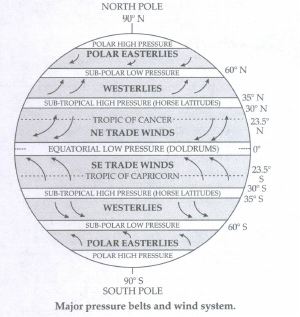
(ii) Seasonal winds: Seasonal winds change their direction in different seasons. For example monsoon winds.
(iii) Local winds: These winds blow only a particular period during the day or year in a small area. For example land or sea breeze or Ioo.
37.
Water is life-line of human. We use water for drinking, cooking, washing and irrigation.
38.
They then bring back the finished cloth to the traders. Here, they can be seen getting ready to go to the merchant in the town. The trader keeps an account of the yarn given and pays them money for weaving this into cloth.
39.
The person in the above picture is Aftab.
40.
Life of the people of the Amazon Basin is slowly changing. In the older days, the heart of the forest could be reached only by navigating the river. In 1970, the Trans Amazon highway made all parts of the rainforest accessible. Aircrafts and helicopters are also used for reaching various places.
The indigenous population was pushed out from the area and forced to settle in new areas where they continued to practice their distinctive way of farming. The developmental activities are leading to the gradual destruction of the biologically diverse rainforests. It is estimated that a large area of the rainforest has been disappearing annually in the Amazon Basin.
41.
(a) In the given picture Lord Krishna is depicted with gopis.
(b) This picture can be found in Shyama raga temple of Vishnupur.
42.
The first ad wants me to feel that I am treating my guests properly whereas second ad wants mothers to feel that using this soap is a sign of how much they love their child.
43.
The earth is made up of several concentric layers with one inside another just like an onion. The basic features of the interior of the earth are
(i) Crust It is the uppermost layer over the earth's surface which is the thinnest of all the layers. It is about 35 km on the continental masses and only 5 km on the ocean floors. The continental mass are made up of silica and alumina. It is thus called SiAl (Si-Silica and AI-Alumina). The oceanic crust mainly consists of Silica and Magnesium; it is therefore called SiMa (Si-Silica and Ma-Magnesium.
(ii) Mantle It is just beneath the crust which extends up to a depth of 2900 km below the crust.
(iii) Core The innermost layer is the core with a radius of about 3500 km. It is mainly made up of Nickel and Iron and is called NiFe (Ni-Nickel and Fe-Ferrous i.e. iron). The central core has very high temperature and pressure.
44.
Transport is the means by which people and goods move. In the early days, it took a great deal of time, to travel long distances. The four major means of transport are
(i) Roadways The most commonly used means of transport especially for short distances are roads. They can be metalled (pucca) and unmetalled (kutcha). The plains have a dense network of roads. Roads have also been built in terrains like deserts, forests and even high mountains.
(ii) Railways The railways carry heavy goods and people over long distances quickly and cheaply. The invention of the steam engine and the Industrial Revolution helped in speedy development of rail transport. Diesel and electric engines have largely replaced the steam engines.
(iii) Waterways They are the cheapest for carrying heavy and bulky goods over long distances. They are mainly of two types - inland waterways and sea routes. Navigable rivers and lakes are used as inland waterways. For example, the Ganga-Brahmaputra river system, the Great Lakes in North America and the river Nile in Africa. Sea routes and oceanic routes are mostly used for transporting merchandise and goods from one country to another. These routes are connected with the ports.
(iv) Airways This is the fastest way of transport developed in the early 20th century. It is also the most expensive due to high cost of fuels. Air traffic is adversely affected by bad weather like fog and storms. It is the only mode of transport to reach the most remote and distant areas especially where there are no roads and railways.
45.
(a) The person in the above picture is Ramabai with her daughter.
(b) Ramada was given the title of 'Pandita' because she was able to read and write Sanskrit.
(c) She set-up a mission in Khedgaon near Pune in 1898, where widows and poor women were motivated to become literate and independent.
46.
The given picture depicts the figure from Gita, the holy text of Hinduism. In the picture, the Lord Krishna is looking back to convince Arjuna, the one of five Pandavas to go ahead, fight for truth. Lord Krishna is explaining the philosophy of 'KARMA' (Duty) to Arjuna that is do your duty, under all circumstances and leave the rest on God.
47.
(a) The section of monument shown in the picture is of the first balcony of the Qutb Minar.
(b) The first floor of the Qutb Minar was constructed by Qutbuddin Aybak, around 1199 AD and the rest by IItumish around 1229. Firoz Shah Tughluq constructed the fifth and last story.
(c) The following observations regarding the architecture of the monument can be made:
(i) The minar is made of red sandstone with intricate carvings and verses from the Quran.
(ii) All the stories are surrounded by a projected balcony encircling the Minar and supported by stone-brackets, which are decorated with honeycomb design, more conspicuously in the first floor.
(iii) The surface of the minor is curved and angular.
(iv) There are inscriptions all around the tower and these are in Arabic.
(v) It is a great masterpiece of Mughal architecture. This most visited monument in India has now become a World Heritage site.
48.
Kerala Government has made efforts to provide adequate healthcare to its people. In 1996, the State Government gave its 40% budget to the Panchayats in order to provide better facilities and check the existing ones. Problems such as water supply schemes, specific problems of village were taken up. Proper planning was done for betterment of people. Safe water, food, women's, development and education were provided health centres were improved. Working of schools and anganwadis was ensured. All other problems were checked though some problems are there which have to be addressed.
49.
The two men in the black dress with black cap are the Jesuit priests; At the time of Akbar Jesuits like Fr. Rudolf Acquaviva, Fr. Antony Monserrate and Francis Henriques and many others came to India.
The Society of Jesus is a Christian male religious congregation of the Catholic Church. The members of this society are called the Jesuits. Jesuits work in education, intellectual research, and cultural pursuits. They also promote social justice. They are sometimes referred to as 'God's soldiers.
The headquarter of the above society, its assembly or council is in Rome. These Jesuit priests came on a regular basis to discuss their religion in the Ibadat Khana of Akbar's palace with Akbar and other notable religions priests.
50.
Human beings interact with the environment and modify natural environment according to their needs. They learn to grow crops, domesticate animals and lead a settled life. Then, they started trade through barter system but after the industrial revolution, they required market for further trade because earlier, before massive production, they only produced for subsistence.
They only exchanged goods which were required for daily life. During course of time, requirements of humans is increasing day-by-day. For this only they developed proper system of trade and commerce, so that they get goods at their door steps.
51.
(a) The given picture is of Tropical Evergreen forests.
(b) The light of Sun do not penetrate through them because the trees of such forests are closely spaced and have thick canopies.
52.
| Prairies grasslands | Velds grasslands |
| i) The temperate grasslands of North America are known as the prairies. |
The temperate grasslands of South Africa are called the velds. They are rolling plateaus with varying heights ranging from 600 m to 1100 m. |
| ii) The word Prairie originated from Latin word priata which means meadow. |
The veld name was given by the Dutch settlers before South Africa was colonised by the British. |
| iii) It lies in the Northern Hemisphere. | It lies in the Southern hemisphere. |
| iv) The tributaries of river Mississippi and Saskatchewan drain the region. |
The tributaries of rivers Orange and Limpopo drain the region |
| v) The prairies are bound by the Rocky Mountains in the West and the Great Lakes in the East. |
It is bound by the Drakensberg mountains on the East and the Kalahari desert on the West. |
53.
Kanta is a domestic worker and lives in a slum which has a drain behind it. Her daughter is sick but she cannot take the day off from work because she has to borrow money from her employer to take her daughter to the doctor. Her job tires her out and she ends her day by again standing in a long line in front of the government hospital. But this line is unlike the one in the morning because most of the people standing in it were poor.
54.
There were several other societies in the subcontinent which did not follow the social rules and rituals prescribed by the Brahmanas. Such societies are called as tribes. Tribal people were found in every region of the subcontinent. In Punjab, the Khokhar tribe was influential during the 13th and 14th centuries. In Multan and Sind, the Langahs and Arghuns dominated extensive regions. The Balochis were large and powerful tribe, Gaddis. The Nagas, Ahoms lived in the North Eastern part of the subcontinent.
Chero, Mundas and Santhals were in Bihar, Jharkhand Orissa and Bengal.
The other tribes were the Kolis, Berads Koragas, Vetars, Maravars, Gonds etc.
The Bhils By the late 16th century many of them had become settled agriculturists and some even zamindars. So, now they considered forests, deserts and difficult places to reach as their home. They do not want to be treated as unequals as it is being practiced in varna system of society.
55.
i) Vasco da Gama, a Portuguese sailor, was one of those who sailed across the Atlantic to the African coast. He went round it, crossing over to the Indian ocean. He first set sail to the voyage and took a year in it.
ii) He reached Calicut in 1498 and returned to Lisbon, the capital of Portugal. He lost two of his four ships and of the 170 men at the beginning of the voyage, only 54 survived.
iii) Inspite of inevitable hazards, the routes proved profitable to the English, Dutch and French sailors who followed his routes.
56.
i) Sea waves continuously strike at the rocks. Thus, cracks develop. Over time they become larger and wider. Thus, hollow like caves are formed on the rocks. They are called sea caves. As these cavities become bigger and bigger only the roof of the caves remain, thus forming sea arches.
ii) Further, erosion breaks the roof and only walls are left. These walls like features are called stacks. The steep rocky coast rising almost vertically above sea water is called sea cliff. The sea waves deposit sediments along the shores forming beaches.
57.
There were various factors that led to the decline of the Mughal Empire.
Notable among those are
(i) Emperor Aurangzeb fought a long war in the Deccan. As a result, the military and financial resources of his empire was depleted.
(ii) The successors of Aurangzeb were not at all efficient. The efficiency of the imperial administration got weakened. Thus, it became difficult for later Mughal Emperors to keep a check on their powerful mansabdars.
(iii) Nobles appointed as governors often controlled the offices of revenue and military administration and became very powerful.
(iv) Under the later Mughals, the peasants and zamindars rebelled in many parts of northern and western India.
(v) Nadir Shah and Ahmad Shah Abdali, plundered and invaded north India.
(vi) The later Mughals became puppets in the hands of Iranis and Turanis nobles.
58.
A mosque is called a masjid in Arabic, literally, it is a place where a Muslim prostrates in reverence to Allah. In a congregational mosque, Muslim read their prayers. Members of the congregation choose the most respected, learned male as their leader or Imam for the rituals of prayer-Imam delivers the sermon (Khutba) during Friday prayer.
The Delhi Sultans build several mosques in cities all over the subcontinent.
They wanted to claim themselves as protectors of Islam and Muslims. Mosques also helped to create the senses of a community of believers who shared a common code of conduct and belief.
Quwwat al-islam was built by Qutbuddin Aybak and IItutmish. Muhammad Tughluq constructed Begumpuri mosque. Moth ki Masjid built by a minister of Sikandar Lodi, Mosque of Jamali Kamali was also built in the late 1520s.
59.
Gates were opened to irrigate land and closed to store water for future use.
60.
Throughout the period there was a gradual clearing of forests and the extension of agriculture. These changes in their 'habitat' forcing the forest-dwellers to migrate into new lands. Many others started tilling the land and became peasants.
Regional markets, chieftains, priests, monasteries and temples began to influence the society. People were made to pay taxes to the ruler of the kingdom.
Significant developments were noticed which created differences among people and groups. Some possessed more productive lands, many others kept cattle.
People were categorised into 'Jatis' or sub-castes based on their occupations and were ranked according to their background. The status of the same Jati could vary from area to area.
61.
Differences Map 1 and Map 2 given in the NCERT text book (Map 2) represent two different times
Map 1 was made in 1154 CE by Al-ldrisi, an Arab geographer, the map given here is the map of Indian subcontinent from his larger map of the world.
Map 2 was made by a French cartographer in 1720. Both maps are quite different from each other in mode of presentation and contexts. However, both traced the outlines of the area of Indian subcontinent in their cartography.
Similarities Map 1, South India was at that place where North India is at present and Sri Lanka is the island the top. Name of place were in Arabic. Today's map of India is far ahead of Map 1 and Map 2. It is made to scale and shows clear-cut boundaries and areas.
62.
(c)
A white woman teaching the black students
63.
(b)
Air India
64.
(c)
Legislative Assembly
65.
(b)
Spinning mill
66.
(b)
Giraffe
67.
(b)
South America
68.
(c)
Bhangra
69.
(d)
Mahanavami
70.
(b)
Muslim
71.
(b)
Minhaj-i Siraj
72.
(c)
Both 'a' and 'b'
73.
(d)
All of these
74.
(a)
birds
75.
(d)
All of these
76.
(b)
equator
77.
(c)
domestic worker
78.
(b)
minerals
79.
(b)
8.36 lakh
80.
(a)
cold desert
81.
(d)
All of the above
82.
(d)
hardened into concrete
83.
(c)
campaigning
84.
(a)
Land
85.
(a)
permanent winds
86.
(b)
velds
87.
(d)
Khokhar
88.
(b)
Guru Gobind Singh
89.
(d)
Ibrahim Lodi
90.
(b)
African traveller
91.
(b)
Rajaraja I
92.
My father who was a famous lawyer never looked upon the people whether they were rich or poor. He used to always fight against injustice and inequality they faced.
93.
(i) To be a boy or girl is an important part of one's identity.
(ii) The society teaches us the kind of behaviour acceptable for girls and boys
(iii) We often .grow lip thinking that these things arc exactly the same everywhere.
94.
Most of the people in my neighbourhood use the Internet.
95.
The prairies are a region of flat, gently sloping or hilly land. For the most part, prairies are treeless, but near the low-lying plains, flanking river valleys and woodlands can be found. Tall grass, upto two metres high, dominates the landscape. The prairies and bound by the Rocky Mountains in the West and the Great Lakes in the East.
96.
(i) A chain of markets links the producer of cotton to the buyer of the shirt in the supermarket.
(ii) Buying and selling takes place at every step in the chain.
(iii) Everyone in the chain does not benefit equally from this. The retailer benefits the most from this chain.
97.
Drink safe live safe :
Avoid drinking impure water and keep your life safe. Safety is in our hands.
98.
(a) Through telephone
(b) By advertising in the newspaper, or on the local TV news channel
(c) Sending a leave application to the teacher by post, or by hand personally.
(d) Through e-mail using the Internet.
99.
In this case, the above law is not implemented. To make the building accessible for him, it should have a plain surface so that he can move in or out easily and on his own. Being carried down the stairs shows his dependence which affects his dignity and also his safety because there is a chance of getting hurt if he slips down.
100.
Students can collect photographs of different mountain landscapes, coastal beaches, wildlife sanctuaries and places of historical importance such as Taj Mahal, Red Fort, Qutub Minar, etc., from different magazines and newspapers.
101.
Yes, I have seen tribal people when I went for a visit to Chhattisgarh last year. Some states where tribal people live in India include Chhattisgarh, Odisha, Jharkhand, Madhya Pradesh and some parts of north-eastern states.
102.
The forces which act in the interior of the earth are called endogenic forces.
They sometimes produce sudden movements and
at the other times produce slow movements.
Sudden movements like earthquake, volcanoes cause mass destruction.
Slow movements like diastrophic forces help in building mountains.
103.
Iron, Brass, Gold, Copper, Zinc, Silver.
104.
Three states have been created in the last 10 years, named Jharkand, Chhattisgarh and Uttarakhand. Yes, each of these states is a region.
105.
The list of the towns in our district as administrative and pilgrim centres are as follows :
Administrative centre -Agra, Fatehpur Sikri.
Pilgrim/temple centre -Mathura, Vrindavan.
106.
Mirabai was the disciple of Ravidas, a saint from a caste considered untouchable, but the Royal family of Mewar did not like this and had enmity against Mirabai, so she left the Rana's palace.
107.
Akbar is holding discussions with learned individuals of different faiths in the Ibadat Khana. This miniature painting is an illustration to the Akbar Nama. This miniature painting was prepared by Nar Singh, CE.1605.
108.
The names of languages which changed over time are as follows
Lahori : Punjabi
Telangani : Telugu
Gujari : Gujarati
Mabari : Tamil
Gauri : Bengali
Hindawi : Hindi
109.
TMS helped the fish workers in following ways:
(i)TMS set up the cooperative.
(ii) These cooperatives would buy the catch from them at a fair price.
(iii)The cooperative would then arrange to transport and sell this in markets where they would get a good price.
(iv) They have now begun to earn three times more than they earned earlier.
(v) The TMS has also began giving the fish workers loans for repairs and for buying of new nets. By managing to earn a higher wage as well as preserving the fish in the reservoir, the TMS has shown that when people's organisation get their rights to livelihood, they can be good managers.
110.
(i) There are different technologies that media use today and these are costly. T.V. studio with cameras, sound recorders, lights, transmission and satellites cost a lot of money.
(ii) News studio or serial production require the services of large number of people like readers, cameraman, actors, production units, etc and their salaries add to the expenses.
(iii) Electronic media also involves money.
(iv) Print media needs offices, machines, people to work on them, people Work related like reporting, getting advertisements, marketing or selling, all this again cost a lot of money.
(v)Moreover, the technology keeps on changing, and the media has to keep pace with that which itself is costly.
111.
There is a variety of wildlife in the Ganga- Brahamaputra basin:
(i) Elephants, tigers, deers and monkeys are common here.
(ii) The one-horned rhinoceros is found in the Brahmaputra plain.
(iii) In the delta area, Bengal tiger, crocodiles and alligator are found.
(iv) Aquatic life abounds in the fresh river waters, the lakes and the Bay of Bengal. The most popular varieties of the fish are the rohu, catla and hilsa.
112.
Societies make clear distinctions between boys and girls. This begins from a very young age.
(i)We are given different toys to play with. Boys are usually given cars to play with and girls dolls.
(ii) Toys become a way of telling children that they will have different futures when they become men and women.
(iii)This difference is created in the smallest and everyday things. Girls need to talk softly and boys need to be tough.
(iv) All these are ways of telling children that they have specific roles to play when they grow up to be men and women.
(v) Later in life this affects the subjects we can study or the careers we can choose.
113.
(i) We can recognise markets easily.
(ii) There are also such markets that we do not know.
(iii) A large number of goods are bought and sold that we do not use directly.
Examples
(a) A farmer uses fertilizers to grow crops.
(b) He purchases them from special shops in the city.
(c) These shops get them from factories.
(iv) Likewise a car factory purchases engine, gears, petrol tanks, axles, wheels, etc. from various other factories.
(v) We do not usually see all the buying and selling of these ancillaries but only the final product-the car in the showroom.
(vi) The story is similar for any other good.
114.
Costa Rican approach about Health :
(i) Costa Rica is one of the healthiest countries in South America. The main reason for this is found in the Costa Rican constitution.
(ii) Costa Rica took a very important decision to not have an army. This helped the Costa Rican government to spend the additional money on health, education and other basic needs of the people.
(iii) The Costa Rican government believes that a country has to be healthy for its development.
(iv) It pays a lot of attention to the health of people.
(v) The Costa Rican government provides basic services and amenities like safe drinking water, sanitation, nutrition, and housing to its entire people. Health education is also considered very important and knowledge about health is an essential part of education it all level.
115.
(i) Sheep rearing is the most important occupation of the people. Sheep is bred to obtain wool which has given rise to the wool industry in the Velds. Merino sheep is a popular species and their wool is very warm.
(ii) Dairy farming is the next important occupation. Cattle are reared in the warmer and wetter regions and the dairy products like butter, cheese are produced for both domestic supply and also for export.
(iii) The Velds have rich reserve of minerals. Iron and steel industry has developed where coal and iron are present. Gold and diamond mining are major occupations of people of this region.
(iv) Johannesburg is known for being the gold capital of the world. Kimberley is famous for its diamond mines.
(v) Mining of diamond and gold in South Africa led to the establishment of trade ties with Britain and gradually South Africa became a British Colony.
(vi) This mineral rich area has a well-developed network of transport.
116.
Issues of Equality in Other Democracies
(i) India is not the only democratic country in which there is inequality and in which the struggle for equality continues to exist.
(ii) In most democratic countries around the world, the issue of equality continues to be the key issue around which communities struggle. In USA the African-American brought as skives from Africa continue to be largely unequal. This is despite a movement in the late 1950s to push for equal rights for African-American. Prior to this, African-American were treated extremely unequally in the United States. They were denied equality through law.
117.
(i) Ladakh is a cold desert situated in the Great Himalayas, on the eastern side of Jammu and Kashmir.
(ii) It is flanked by the Karakoram Range in the north and the Zanskar mountains in the south.
(iii) Several rivers flow through Ladakh, these rivers form deep valleys and gorges.
(iv) Several glaciers including Gangri glacier are found in Ladakh.
(v) The altitude in Ladakh varies from about 3000m in Kargil to more than 8,000m in the Karakoram
118.
Advertisements playa big role in our lives.
(i) We buy products based on them.
(ii) They influence the way we think of ourselves, friends and family.
(iii) It is important that we understand how advertisements work before we choose a product.
(iv) We should critically understand that advertisement uses particular images, emotions to affect thinking
(v) They make vulnerable to how we perceive ourselves with or without that product.
119.
(i) The invention of the steam engine and the Industrial Revolution helped in speedy development of rail transport.
(ii) Diesel and electric engines have largely replaced the steam engines.
(iii) Superfast trains have been introduced to make the journey faster.
(iv) The railway network is well-developed over the plain areas.
(v) Advanced technological skills have enabled laying of railway lines in difficult mountain terrains also.
120.
The three states Awadh, Bengal and Hyderabad had certain common features:
(i) They were all established by the Mughal nobles, They were highly suspicious of some of the administrative system that they had interested in particular, the jagirdari system.
(ii) Their methods of tax collection were different. Rather than relying upon the officers of the state all three regimes contracted with revenue farmers for the collection of revenue.
(iii) All these states had relationship with the bankers and the moneylenders. These people lent money to revenue farmers, received land as security and collected taxes from these lands through their own agents.
121.
(i) Tropical grasslands:
These grasslands occur on either side of the equator and extend till the tropics. This vegetation grows in the areas of moderate to low amount of rainfall. The grass can grow about 3 to 4 metres in height. Savannah grasslands of Africa are of this type. Common animals found in the tropical grasslands are elephants, zebras, giraffes, deer and leopards.
(ii) Temperate grasslands:
These grasslands are found in the mid-latitudinal zones and in the interior parts of the continents. Usually, grass here is short and nutritious. Wild buffaloes, bisons, antilopes are common in the temperate region.
122.
(i) Almost all adult males served in the army during war.
(ii) They were also engaged in building dams, irrigation systems and other public works.
(iii) The Ahoms also introduced new method of rice cultivation.
(iv) Ahom society was divided into clans or khels.
(v) There were very few castes of artisans, so they came from the adjoining kingdoms.
(vi) A khel often controlled several villages.
(vii) The peasant was given land by his village community.
(viii) Even the king could not take it away without the community's consent.
(ix) In the beginning the Ahoms worshipped their own tribal gods.
(x) During the first half of the seventeenth century, they were influenced by Brahmanas. Temples and Brahmanas were granted land by the king. In the reign of Sib Singh (1714-1744), Hinduism became their major religion.
(xi) The Ahom kings did not completely give up their traditional beliefs after adopting Hinduism.
(xii) Ahom society was very sophisticated. Poets and scholars were given land grants. Theatre was encouraged. Important works of Sanskrit were translated into the local languages. Historical works, known as buranjis, were also written-first in the Ahom language and then in Assamese.
123.
Rocks are constantly being formed, worn down and then formed again. It takes thousands and millions of years for rocks to change. This process of transformation of the rock from one form to another is called rock cycles.
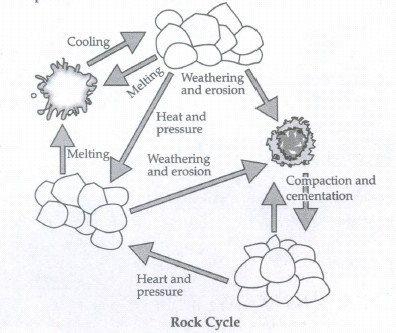
(i) When the molten magma cools down, it solidifies to become igneous rocks.
(ii) These igneous rocks are broken down into small particles, known as sediments.
(iii) These sediments are transported and deposited to form sedimentary rocks.
(iv) When these igneous and sedimentary rocks are subjected to heat and pressure, they change into metamorphic rocks.
(v) The metamorphic rocks which are still under heat and pressure, melt down to form molten magma, which again cools and solidifies into igneous rocks.
124.
Rajputs are closely associated with the culture of Rajasthan.
These cultural traditions were closely linked with the ideals and aspirations of rulers. Rajasthan was ruled by various Rajput families. The name of the Prithviraj is worth mentioned, because he was one of the ablest Rajput ruler.
These rulers cherished the ideal of the hero who fought valiantly, often choosing death on the battlefield rather than face defeat.
Stories about Rajput heroes were recorded in poems and songs, which were recited by specially trained minstrels. These preserved the memories of heroes and were expected to inspire others to follow their example.
Ordinary people were also attracted by these stories which often depicted dramatic situations, and a range of strong emotions -loyalty, friendship, love, valour, and anger.
125.
From the early times human beings have been interacting with the environment and they modified it according to their needs.
Early humans adapted themselves to the natural surroundings. They led a simple life and fulfilled their needs from the nature around them. But their needs kept on increasing. They became varied also. For fulfilling their needs, human beings learnt new ways to change the environment. They learnt to grow crops, domesticate animals and led a settled
life. The wheel was invented. Surplus food was produced. Barter system emerged. Transportation became faster, trade started, commerce developed and information revolution made communication easier and speedy across the world. Industrial revolution made possible and large scale production started.
In the present environment, mind-boggling variety of clothes, games, food items are purchased.
In this way human beings adapted to the environment in order to fulfil their needs
126.
(i) Surat in Gujarat was the emporium of western trade during the Mughal period. Surat was the gateway for trade with West Asia via the Gulf of Ormuz. Surat has also been called the 'Gate to Mecca' because many pilgrim ships set sail from here.
(ii) The city was cosmopolitan and people of all castes and creeds lived there. In the seventeenth century the Portuguese, Dutch and English had their factories and warehouses at Surat.
(iii) There were also several retailers and wholesalers of cotton textiles. The textiles of Surat were famous for their gold lace borders (zari) and had a market in West Asia, Africa and Europe.
(iv) The state built numerous rest-houses to take care of the needs of people from all over the world who carne to the city. There were magnificent buildings and innumerable pleasure parks.
(v) The Kathiawad seths or mahajans (money changers) had huge banking houses at Surat. It is remarkable that the Surat hundis were honoured in the far-off markets of Cairo in Egypt, Basra in Iraq and Antwerp in Belgium.
127.
The creation of large empires that brought different regions under their rule helped in the cross fertilization of artistic forms and architectural styles. Mughal rulers were skilled in adapting regional architectural styles in the construction of their own buildings. For example, in Bengal, rulers had developed a roof that was designed to resemble a thatched hut.
The Mughals liked this "Bangla dome" so much that they used it in their architecture.
In Akbar's capital at Fatehpur Sikri many of the buildings bear the impact of the architectural styles of Gujarat and Malwa.
The authority of the Mughal rulers waned in the eighteenth century; the architectural styles developed under their patronage were constantly used and adapted by other rulers whenever they tried to establish their own kingdoms.
128.
Guru Nanak and (1469-1539) born at Talwandi (Nankana Sahib in Pakistan). He travelled widely before establishing a centre at Kartarpur (Dera Baba Nanak on the river Ravi). A regular worship that consisted of the singing of his own hymns was established there for his followers.
Irrespective of their previous creed, caste or gender, his followers ate together in the common kitchen (langar). The holy space thus created by Guru Nanak was known as dharmsal. It is now known as Gurdwara.
Before his death in 1539, Guru Nanak appointed one of his followers as his successor. His name was Lehna but later he came to be known as Guru Angad, representing that he was a part of Guru Nanak himself.
Guru Angad compiled the compositions of Guru Nanak, to which he added his own new script known as Gurmukhi.
The three successors of Guru Angad also wrote under the name of 'Nanak' and all of their compositions were compiled by Guru Arjan in 1604. In 1706 this compilation was authenticated by his son and successor, Guru Gobind Singh. It is now known as Guru Granth Sahib, the holy scripture of the Sikhs.
129.
(i) Throughout the period between 700 and 1750, there was a gradual clearing of forests and expansion of agriculture. This was a change, faster and more complete in some areas as compared to others.
(ii) Changes in their habitat forced many forestdwellers to migrate.
(iii) Other people Regional markets, chieftains, priests, monasteries and temples started to influence them.
(i) They became a part of large and complex societies.
(ii)They were required to pay taxes and offer goods and services to local feudal lords. As a result, various major economic and social differences emerged among the peasants.
(i) Some possessed more productive land.
(ii) Other people kept cattle,
(iii) Yet other people combined artisanal work with agricultural activities during the lean season

7th Standard CBSE Syllabus & Materials
7th Standard CBSE
CBSE 7th Social Science Theme B - New Beginnings : Cities and States - New Sample Question Papers Study Material - QB365 Set A
NEW7th Standard CBSE
CBSE 7th Social Science Theme A - Climates of India - New Sample Question Papers Study Material - QB365 Set A
NEW7th Standard CBSE
CBSE 7th Social Science Theme A - Geographical Diversity of India - New Sample Question Papers Study Material - QB365 Set A
NEW7th Standard CBSE
CBSE 7th Science Earth, Moon and the Sun - New Sample Question Papers Study Material - QB365 Set A



CBSE 7th Standard CBSE Subjects
CBSE Standards




