
 100% FREE ACCESS
7th Standard CBSE Syllabus & Materials
7th Standard CBSE
CBSE 7th Social Science Theme E - Understanding Market - New Sample Question Papers Study Material - QB365 Set A
NEW7th Standard CBSE
CBSE 7th Social Science Theme E - From Barter to Money - New Sample Question Papers Study Material - QB365 Set A
NEW7th Standard CBSE
CBSE 7th Social Science Theme D - The Constitution of India- An Introduction - New Sample Question Papers Study Material - QB365 Set A
NEW7th Standard CBSE
CBSE 7th Social Science Theme D - From the Rulers to the Ruled : Types of Governments - New Sample Question Papers Study Material - QB365 Set A
NEW7th Standard CBSE
CBSE 7th Social Science Theme B - The Age of Reorganisation - New Sample Question Papers Study Material - QB365 Set A
NEW7th Standard CBSE
CBSE 7th Social Science Theme B - The Rise of Empires - New Sample Question Papers Study Material - QB365 Set A

Published on: 30/10/2019
CIV - How The State Government Works
Download CBSE Class 7th Standard CBSE Social Science question papers, sample papers, important questions, and previous year solved papers in PDF format. Get free study materials, NCERT solutions, and exam preparation resources for Class 7th Standard CBSE Social Science
Questions + Answers key
Take MCQ Social Science Test
1.
How does a government function in a state?
2.
Describe the proceeding of the Legislative Assembly.
3.
How is ruling and opposition party formed?
4.
Observe the following picture as answer the questions that follow
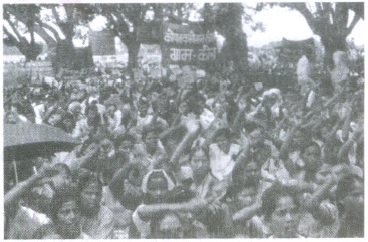
What do you infer from the above picture?
5.
What did the Chief Minister and the Health Minister do in the next week of the assembly session?
6.
Explain with the example of Himachal Pradesh, the working ota State Legislative Assembly.
1.
A government is headed by the Chief Minister. The Chief Minister, in order to manage the functioning of government, appoints ministers at various levels like cabinet ministers, state ministers and deputy ministers. Every government department is headed by a cabinet minister who is directly accountable for the functioning of the particular department and responsible for the handling of the government decisions. The bureaucrate project and get the works completed. The ministers give approval to the works.
2.
The ruling party and the opposition meet in the Legislative Assembly.
They have debate on the current problems. During this time the MLAs can express their opinion and ask relevant questions from the minister concerned. They may even ask supplementary questions while the answers are being given by minister concerned, if they are not satisfied with the reply. They may even give suggestions regarding the issue being discussed.
The ministers reply and try to assure the house about the measures being taken.
3.
Every state in India has a legislative Assembly. From each constituency of state people elect one representative for the Legislative Assembly. He/ she is called the Member of Legislative Assembly i.e., MLA. These MLAs belong to different political parties.
A political party whose MLAs won more than half the number of constituencies in a state can be said to be in a majority. The political party that has the majority is called the ruling party and all the other members are called the opposition. The MLAs belonging to the ruling party elect their leader who is called the Chief Minister. The Chief Minister then selects other people as Ministers.
4.
From the above picture, it is inferred that people have gathered to raise their opinion for
some issue and protest the government. This type of public action is allowed in democratic government.
5.
In the week after the assembly session, the Chief Minister and the Minister for health visited Patalpuram district.
They do the following in the district
6.
Himachal Pradesh is divided into 68 assembly constituencies. From each constituency, people elect one representative who then becomes a member of Legislative Assembly. From 68 constituencies, a party needs more than 34 MLAs in order to gain majority. In 2003, Indian National Congress had majority with 43 MLAs and became the ruling party. The MLAs other than Indian National Congress became opposition and it was Bharatiya Janata Party who had the second largest number of MLAs. Shri Virbhadra Singh was selected as the majority leader and became Chief Minister of Himachal Pradesh.

7th Standard CBSE Syllabus & Materials
7th Standard CBSE
CBSE 7th Social Science Theme B - New Beginnings : Cities and States - New Sample Question Papers Study Material - QB365 Set A
NEW7th Standard CBSE
CBSE 7th Social Science Theme A - Climates of India - New Sample Question Papers Study Material - QB365 Set A
NEW7th Standard CBSE
CBSE 7th Social Science Theme A - Geographical Diversity of India - New Sample Question Papers Study Material - QB365 Set A
NEW7th Standard CBSE
CBSE 7th Science Earth, Moon and the Sun - New Sample Question Papers Study Material - QB365 Set A



CBSE 7th Standard CBSE Subjects
CBSE Standards




