
 100% FREE ACCESS
7th Standard CBSE Syllabus & Materials
7th Standard CBSE
CBSE 7th Social Science Theme E - Understanding Market - New Sample Question Papers Study Material - QB365 Set A
NEW7th Standard CBSE
CBSE 7th Social Science Theme E - From Barter to Money - New Sample Question Papers Study Material - QB365 Set A
NEW7th Standard CBSE
CBSE 7th Social Science Theme D - The Constitution of India- An Introduction - New Sample Question Papers Study Material - QB365 Set A
NEW7th Standard CBSE
CBSE 7th Social Science Theme D - From the Rulers to the Ruled : Types of Governments - New Sample Question Papers Study Material - QB365 Set A
NEW7th Standard CBSE
CBSE 7th Social Science Theme B - The Age of Reorganisation - New Sample Question Papers Study Material - QB365 Set A
NEW7th Standard CBSE
CBSE 7th Social Science Theme B - The Rise of Empires - New Sample Question Papers Study Material - QB365 Set A

Published on: 23/09/2019
HIS - New Kings And Kingdoms
Download CBSE Class 7th Standard CBSE Social Science question papers, sample papers, important questions, and previous year solved papers in PDF format. Get free study materials, NCERT solutions, and exam preparation resources for Class 7th Standard CBSE Social Science
Questions + Answers key
Take MCQ Social Science Test
1.
Describe the lives of ordinary men and women during the Chola empire.
2.
Explain 'Tripartite Struggle'.
3.
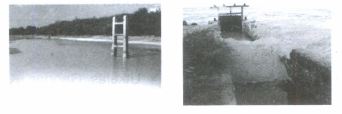
Interpret and compare the two above figures and answer the question Gates are opened and closed during which situation?
4.
Interpret and compare the two above figures and answer the question At which area these sluice gate were made?
5.
Interpret and compare the two above figures and answer the question When was fig. I made?
6.
How did the Cholas rise to power?
7.
Give an account of the emergence of new dynasties by the 7th and 8th century?
8.
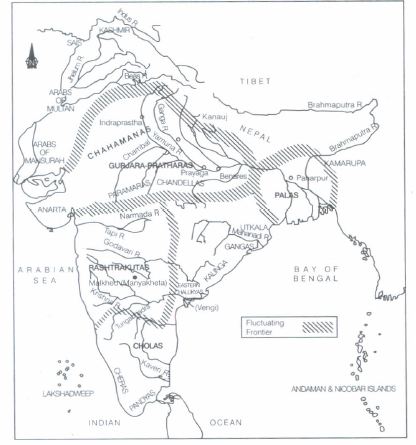
Look at Map and find out whether there were any kingdoms in the state in which you live.
9.
Locate the following
(i) Gurjara - Pratiharas (ii) Rashtrakutas (iii) Palas (iv) Cholas (v) Chahamanas
10.
What was the uses of money collected from taxes?
1.
Chola empire the Periyapuranam, a twelfth-century Tamil work, tells us about the lives of ordinary men and women in the following way:
(i) On the outskirts of Adanur was a small hamlet of Pulaiyas, a name used for a social group considered "outcastes" by Brahmanas and Vellala
(ii) The hamlet was studded with small huts under old thatches and inhabited by agrarian labourers who were engaged in menial occupations.
(iii) The thresholds of the huts were covered with strips of leather, little chickens moved about in groups, dark children who wore bracelets of black iron were playing around were carrying little puppies. In the shade of the marudu (Arjuna) trees, a female labourer put her baby to sleep on a sheet of leather, there were mango trees from whose branches drums were hanging; and under the coconut palms, in little hollows on the ground, tiny-headed bitches lay after whelping. The red-crested cocks crowed before dawn calling the brawny Pulaiyar (plural) to their day's work; and by day, under the shade of the Kanji tree spread the voice of the wavy-haired Pulaiya women singing as they were husking paddy
2.
All the ruling dynasties were based in a specific region. At the same time they tried to control the other areas. One particularly prized area was the city of Kanauj in the Ganga valley. For centuries, rulers belonging to the Curjara-Pratihara, Rashtrakuta and Pala dynasties fought for control over Kanauj. As there were three 'parties' in this long drawn conflict. Historians often describe it as the "tripartite struggle". Rulers also tried to demonstrate their power and resources by building large temples. When they attacked one another's kingdom; they often chose to target temples, which were sometimes extremely rich.
3.
Gates were opened to irrigate land and closed to store water for future use.
4.
They all were made by Cholas in Tamil Nadu.
5.
Fig. I was made during the 9th century.
6.
A family of minor chief known as Muttaraiyar held power in the Kaveri delta. The family was subordinate to the Pallava kings of Kanchipuram. Vijayalaya belonged to the ancient chiefly family of the Cholas from Uraiyur.
He captured the Kaveri delta from the Muttaraiyar in the middle of the 9th century. He also built the town of Thanjavur and a temple for goddess Nishumbhasudini there. The successors of Vijayalaya conquered neighbouring areas. Thus, the empire grew in size and power. The territories of the Pandyan and the Pallava kings were included in this kingdom. Big temples were constructed to show the prosperity and wealth of the kingdom.
7.
By the 7th century, there emerged many kingdoms, big landlords or warrior chiefs in different regions of the subcontinent. The existing kings often acknowledged them as their subordinates. They were given military support by such existing kings.
Now, after some years Samanta became Maha-Samanta and asserted their independence from their overlords. In the mid-8th century, Rashtrakuta chief Dantidurga overthrew his Chalukyas overlord and performed Hiranya-Garbha. Due to which he was believed to get rebirth from other castes to Kshatriya. Many others left their traditional professions and took to arms and established a separate kingdom of their own. The Kadamba Mayurasharman and Gurjara- Pratihara Harichandra established kingdoms in Karnataka and Rajasthan.
8.
Yes, there were Kingdoms in the following states
| STATES | KINGDOMS |
| West Bengal | Palas |
| Orissa | Utkalas, Gangas, Kalinga |
| Tamil Nadu | Cholas and Pandyas |
| Madhya Pradesh | Gurjara - Pratharas, Chandellas, Paramaras |
| Kerala | Cheras |
| Maharastra | Rashtrakutas |
| Karnataka | Rashtrakutas |
| Gujarat | Anartka |
| Rajasthan | Chahamanas |
9.
10.
(i) This money is used to finance the king's establishment.
(ii) For the construction of temples and forts.
(iii) Also used to fight wars, which were in turn expected to lead to the acquisition in the form of plunder and access to land as well as trade route.

7th Standard CBSE Syllabus & Materials
7th Standard CBSE
CBSE 7th Social Science Theme B - New Beginnings : Cities and States - New Sample Question Papers Study Material - QB365 Set A
NEW7th Standard CBSE
CBSE 7th Social Science Theme A - Climates of India - New Sample Question Papers Study Material - QB365 Set A
NEW7th Standard CBSE
CBSE 7th Social Science Theme A - Geographical Diversity of India - New Sample Question Papers Study Material - QB365 Set A
NEW7th Standard CBSE
CBSE 7th Science Earth, Moon and the Sun - New Sample Question Papers Study Material - QB365 Set A



CBSE 7th Standard CBSE Subjects
CBSE Standards




