
 100% FREE ACCESS
7th Standard CBSE Syllabus & Materials
7th Standard CBSE
CBSE 7th Social Science Theme E - Understanding Market - New Sample Question Papers Study Material - QB365 Set A
NEW7th Standard CBSE
CBSE 7th Social Science Theme E - From Barter to Money - New Sample Question Papers Study Material - QB365 Set A
NEW7th Standard CBSE
CBSE 7th Social Science Theme D - The Constitution of India- An Introduction - New Sample Question Papers Study Material - QB365 Set A
NEW7th Standard CBSE
CBSE 7th Social Science Theme D - From the Rulers to the Ruled : Types of Governments - New Sample Question Papers Study Material - QB365 Set A
NEW7th Standard CBSE
CBSE 7th Social Science Theme B - The Age of Reorganisation - New Sample Question Papers Study Material - QB365 Set A
NEW7th Standard CBSE
CBSE 7th Social Science Theme B - The Rise of Empires - New Sample Question Papers Study Material - QB365 Set A

Published on: 06/03/2020
7th Standard CBSE Social Science Public Exam Important Question 2019-2020
Download CBSE Class 7th Standard CBSE Social Science question papers, sample papers, important questions, and previous year solved papers in PDF format. Get free study materials, NCERT solutions, and exam preparation resources for Class 7th Standard CBSE Social Science
Questions + Answers key
Take MCQ Social Science Test
1.
State the advantages and disadvantages of the 'Putting-OUT System.
2.
Collect popular tales about rulers from any one of the following groups of people: the Rajputs, Jats, Sikhs or Marathas?
3.
Describe the life of nomads in brief.
4.
How does nature balance our life? What is the result if this balance is disturbed?
5.
Describe the architecture of the temples in Bengal.
6.
You are a peasant in Alauddin Khalji's or Muhammad Tughluq's reign and you cannot pay the taxes demanded by Sultan. What will you do?
7.
Where does the water you use in your home and school come from? Make a list of different uses of water in our daily life. Have you seen anyone wasting water? How?
8.
List all the possible sources of irrigation mentioned in the inscription, and how these might have been used?
9.
Write a short note on Shahjahanabad at Delhi.
10.
Why did the villagers set-up this organisation?
11.
Why did Sujata carry a notebook? Do you think this system is useful? Can there be problems?
12.
How tourism flourished in the Ganga-Brahmaputra region?
13.
'Writing a balanced report, however, depends on the media is being independent.' Discuss.
14.
Differentiate between rocks and minerals
15.
Is all water on the Earth available to us?
16.
Were Harmeet and Shonali correct in saying that Harmeet's mother did not work?
17.
What do you understand by the term 'settlement'?
18.
Why manufacturers claim certain special values for their products?
19.
What are the climatic conditions of the Ladakh desert?
20.
Describe the beliefs and practices of the Nathpanthis, Siddhas and Yogis.
21.
What problems do we face in private hospitals? Discuss.
22.
See what images your class drew by filling in the table below. Add up the number of male and female images separately for each occupation.
| Category | Male image | Female image |
| Teacher | ||
| Farmer | ||
| Factory worker | ||
| Nurse | ||
| Scientist | ||
| Pilot |
(i) Are there more images of men than women?
(ii) In what kinds of jobs were there more images of men than women?
(iii) Have all the nurses been drawn as females? Why?
(iv) Are there fewer images of female farmers? If so, why?
23.
Discuss the following terms with your teacher Opposition
24.
If you were one of the Ansaris, how would you have responded to the suggestion that you change your name?
25.
What were the problems encountered by merchants? Do you think some of these problems persist today?
26.
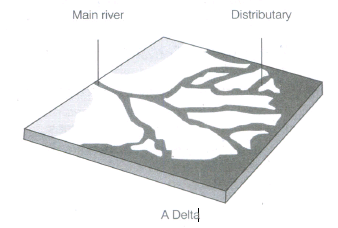
With the help of diagram define delta and distributaries with diagram.
27.
Find out and learn few names of trees of your locality.
28.
Velds lie in the Southern hemisphere. Whenit is summers in velds, what season would it be in the prairies?
29.
What were the relationships between the Mansabdar and the Jagir?
30.
List some of the technological changes associated with this period.
31.
How does a government function in a state?
32.
Give an account of the different layers of the atmosphere.
33.
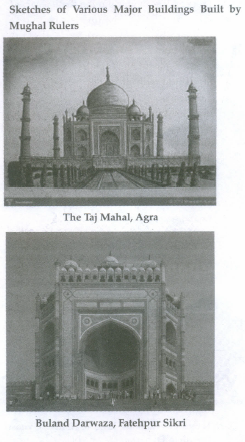
Find out whether there are any buildings built by the Delhi Sultans in your area. Are there any other buildings in your area that were built between the twelfth and fifteenth centuries? Describe some of these buildings and draw sketches of them.
34.
"No person gains equally in the market".Why?
35.
Constitution of India has been described as a 'living document'. Discuss.
36.
Write a note on weekly markets.
37.
Write a note on the people of rainforests.
38.
How did regional cultures grow around religious traditions?
39.
How do we classify ocean movements? Explain.
40.
Discuss the role of technology in media.
41.
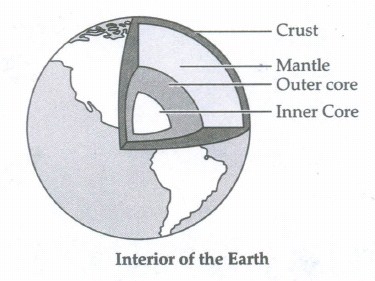
Observe the given picture carefully and answer the questions that follow
(a) What is the uppermost layer of the Earth?
(b) What is the mineral constituent of the oceanic crust?
(c) What is the innermost layer of the Earth?
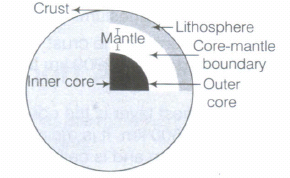
42.
Using the following ads answer the following questions.
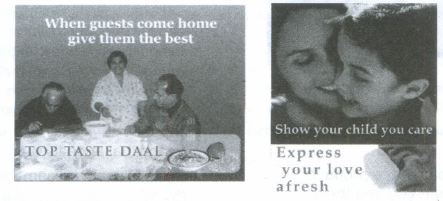
Who is this advertisement talking to and who is it leaving out?
43.
Answer the question based on picture.
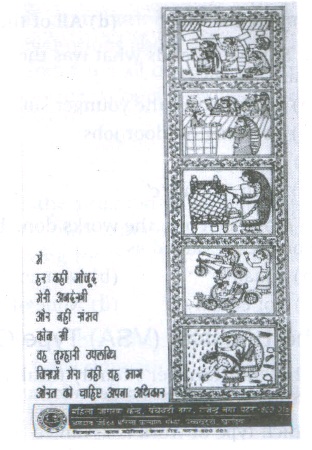
What do you think this poster is trying to say?
44.
Explain the evolution of the communication system.
45.
Observe the picture carefully and answer the questions that follow:
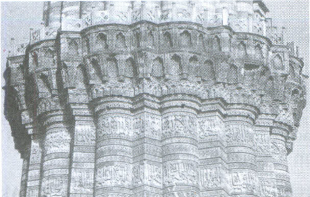
(a) Name the monument whose section is shown in the picture.
(b) Who constructed the monument and when?
(c) What are your observations about the architecture of the monument?
46.
Differentiate between the Sahara-Hot Desert and Ladakh-Cold Desert.
47.
Discuss about the experience of Rashsundari Devi.
48.
Discuss the changes made by Kerala Government in the state in 1996.
49.
Write a brief note on new religious developments in North India.
50.
Write an account of various domains of the environment.
51.
What is vegetation? Discuss various types of vegetation.
52.
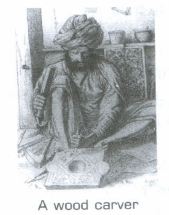
Observe the picture and answer the following questions. What does the picture show?
53.
Differentiate between the Prairies grasslands and Velds grasslands.
54.
What do you know about Civil Rights Movement? Describe the incident that happened with Rosa Parks.
55.
Give an account of the tribal people found in Indian subcontinent. How they settled in forests, hills, deserts and difficult places to reach?
56.
Write an account on earthquake preparedness.
57.
How the Sikhs organised state-building in Punjab?
58.
Write a note on Akbar's administrative policies?
59.
Give an account of the emergence of new dynasties by the 7th and 8th century?
60.
What major changes were noticed between 750 and 1750 AD?
61.
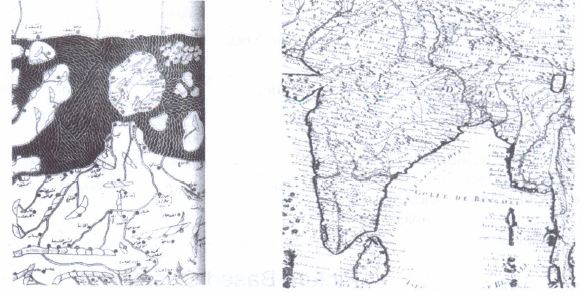
Compare either Map 1 or Map 2 with the present day map of the subcontinent listing as many similarities and differences (page no) as you can find.
62.
Deodars and firs are a type of :
Coniferous trees
Deciduous trees
Shrubs
Herbs
63.
At which age group girls also went on fishing trips:
13 years
14 years
10 years
16 years
64.
What is required to do cashless shopping?
Ration card
Credit card
Driving license
All of these
65.
What percentage of communicable disease is water borne?
21%
30%
15%
None of these
66.
Advertisements draw our attention towards:
Product
Brand values
Brands
All of the above
67.
The head of the state is the :
Governor
MLA
Chief Minister
Ministers
68.
Who buys the bales of cotton to convert them into yarn:
Ginning mill
Spinning mill
Cleaning mill
Weaving mill
69.
Which day of the year is celebrated as water day?
22 January
15 March
15 August
22 March
70.
Radius of the earth is :
2,500 km
367km
7,163km
6,371km
71.
The Cheros were defeated in 1591 by :
Maharana Pratap
Raja Man Singh
Amar Singh
Prithviraj Chauhan
72.
The famous temple of Jagannath is in :
Karnataka
Odisha
Kerala
TamilNadu
73.
Which of the following is an example of a temple town?
Ajmer
Thanjavur
Berar
Delhi
74.
Vitthala is a form of :
Shiva
Vishnu
Krishna
Ganesha
75.
Diwan-i-Khas-o am courts were also described as :
Chahar Bagh
Chihil Sutun
Pistaq
Qibla
76.
Script refers to
Written form of language
Spoken form of language
Both (a) and (b)
None of these
77.
What was the other name of Prince Salim (Akbar's son)?
Shahjahan
Jahangir
Aurangzeb
None of the above
78.
TMS helped in increasing the earning of people by
two times
three times
four times
None of the above
79.
The word media includes
Radio
TV
Newspapers
All of these
80.
Yaks are found in
Tibet
China
Bhutan
Myanmar
81.
Ladakh is also known as Khapa-chan which means
sand land
plain land
desert
snow land
82.
Which of the following domains is held up by the gravitational forces?
Hydrosphere
Lithosphere
Atmosphere
Biosphere
83.
Ramabai was given the title of
Captain
Pandita
Master
None of these
84.
Which one does not happen when air is heated?
It expands
It becomes lighter
It goes up
It comes down
85.
When persons are treated unequally their
status is violated
freedom is violated
dignity is violated
pride is violated
86.
One important variety of coniferous forest is
Rosewood
Pine
Teak
87.
River Mississippi drains
Canada
Africa
USA
88.
The depositional feature of a glacier is
flood plain
beach
moraine
89.
The third battle of Panipat was fought in
1760
1761
1762
1763
90.
After Tughluqs the Sayyid and Lodi dynasties ruled from
Bengal and Jaunpur
Gujarat and Rajasthan
Entire South
Delhi and Agra
91.
The temple of Goddess Nishumbhasudini at Thanjavur was built by
Vijayalaya
Palas of Eastern India
Dantidurga
Rajaraja and Rajendra
92.
How the beginning of Tawa dam affected the forest dwellers of the Satpura forest in Madhya Pradesh?
93.
Mention the important part of an individual's identity. How do we learn acceptable behaviour?
94.
How many people in your neighbourhood use the Internet?
95.
Give reasons:
Rise of wool industry in the Velds.
96.
What is the importance of chain of markets in the story of the shirt? Elucidate.
97.
Having read about diarrhoea epidemic in the chapter on State Government can you make a social advertisement on what precautionary steps should be taken to prevent diarrhoea?
98.
Conduct a survey in your locality and find out how people commute to their respective workplaces using-
(a) more than two modes of transport
(b) more than three modes of transport
(c) stay within walking distance.
99.
Look at the photograph and think about the boy who is being carried down the stairs. Do you think the above law is being implemented in his case? What needs to be done to make the building
more accessible for him? How would his being arried down the stairs affect his dignity as well as his safety
100.
Make a collage to show places of attractions in India. You can divide the class in different groups to show attractions based on mountain landscapes, coastal beaches, wildlife sanctuaries and places of historical importance?
101.
Have you ever seen tribal people? Mention some states where tribal people live in India.
102.
These are various features made by a river. Identify them and also tell whether they are erosional or depositional or landforms formed by both.
103.
For fun-What are the minerals most commonly used in the following objects?
104.
Find out when the language(s) you speak at home were first used for writing?
105.
Make a list of towns in your district and try to classify these as administrative centre or as temple/pilgrim centres.
106.
You can observe this process of local myths and legends receiving wider acceptance even today. Can you find some examples around you?
107.
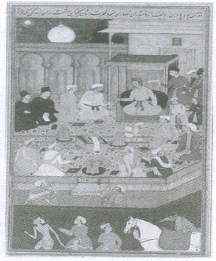
What are the details shown in this miniature? When this picture is prepared?
108.
Did you notice that the names by which languages are known have changed with time?
109.
How TM5 helped the fish workers?
110.
Why are the latest technologies costly?
111.
How is the rainforests of the Amazon Basin rich in fauna?
112.
What are the expectations concerning the roles of women and men in our society?
113.
Explain the relationship between markets and equality.
114.
What changes have been made by government of Kerala to improve healthcare facilities?
115.
Mention the features of Prairies grasslands.
116.
How dignity of Omprakash Valmiki and Ansari's was violated, when they were treated unequally?
117.
What are the location settings of Ladakh?
118.
How have the settlements changed over a period of time?
119.
Choose two of your favourite print advertisements. Now, look at each of them and answer the following questions :
(a) What visuals and text is being used in these advertisements to attract my attention?
(b) What values are being promoted in these advertisements?
(c) Who is this advertisement speaking to and who is it learning out?
(d) If you would not afford the brand that is being advertised how would you feel?
120.
Give a detailed description of watan jagirs of the Rajputs.
121.
Discuss various types of forests.
122.
Describe the Ahom Society in detail.
123.
Describe the interior of the earth
124.
Describe about the Kathak, a popular dance form of North India.
125.
How have human beings adapted to the environment to fulfil their needs?
126.
Give an account of Masulipatnam.
127.
How was Mughal architecture influenced by regional art?
128.
Write a brief note on new religious developments in North India.
129.
What was the result of the decline of the Mughal Empire in the 18th century?
1.
For the weaver it has two advantages:
(i) They do not have to spend money for purchasing yarn and know what and how much cloth they have to make
(ii) They do not face the problem of selling the finished cloth. Disadvantages for the weaver:
(i) They are dependent on the merchant for raw material as well as market.
(ii) They get low wages. They do not know from whom they are making the cloth
(iii) They do not the market price of the cloth.
2.
This tale is about an old Rajput Chief, named Bhamashah, whole ancestors had been a ministers of Chittor. He had quite a large amount of money and valuables lying safely at his home. When he saw the Rana leaving Mewar forever, he felt very sad. There could be no better use of his treasure, he thought that it to be placed at the feet of the Rana. So he brought out the treasure and presented it to the Rana saying. "My Lord, what will do with this wealth when you are gone? It was earned by my ancestors from Chittor. It belongs to you."
It was indeed a glorious example of devotion, self sacrifice and tears of joy appeared in the eyes of Rana as he gathered Bhamashah in a warm embrace. So he turned back and raised another army with the money Bhamashah had brought in. The war with Akbar was resumed. This time the Mughals were taken by surprise and Rana was stronger than they had expected. Fort after fort fell to the Rajputs till the Rana had won back almost the whole of his lost kingdom. He was now again the king of Mewar.
3.
(i) Nomadic pastoralists moved over long distances along with their animals.
(ii) They lived on milk and other pastoral products.
(iii) They also exchanged wool, ghee, etc. with settled agriculturists, for grain, cloth, utensils and other products.
(iv) They bought and sold these goods as they moved from one place to another. They carried them on the back of their animals.
4.
Green plants use Carbon dioxide to make their food and release Oxygen. Humans or animals release Carbon dioxide. The amount of Carbon dioxide released by humans or animals seems to be equal to the amount used by the plants which make a perfect balance. But this balance is disturbed by burning of fuels, which add billions of tons of Carbon dioxide in the atmosphere. As a result, the increased volume of Carbon dioxide is affecting the earth's weather and climate.
5.
The temples began to copy the double roofed (dochala) or four roofed ( Chauchala) structure of
the thatched huts.
In four roofed structure, four triangular roofs were placed on four walls converging on a point.
Temples were built on square platform. The interior was plain. Outer walls had paintings, ornamental
tiles or terracotta tablets, for example Vishnupur in Bankura district.
6.
In the condition when I am unable to pay the tax to the state, I will state my request to him for getting concession in the tax. If he denies, I will further ask him to give some relaxation of time so that I can pay tax in coming years in the form of installments.
7.
The water we use in our home and school comes from different sources like water works department, jet pumps or submersible pumps.
Different uses of water:
(i) Drinking
(ii) Bathing
(iii) Cooking food
(iv) Washing Clothes
(v) Watering plants
We have often seen people leaving the tap open when not in use, or spoiling excessive water while watering the plants.
8.
Possible sources of irrigation listed in inscription are as follows:
(i) Well
(ii) Canals
(iii) Ditches
(iv) Rivers
(v) Silt laden land
(vi) Tanks
(vii) Granaries
(viii) Ponds
(ix) Lakes
These sources still may have been used by giving attention towards their maintenance and reconstruction.
9.
Shahjahanabad was constructed by Mughal emperor Shah Jahan in 1639. It remained capital of the Mughals until the end of the Mughal dynasty.
This city was approximately shaped like a quarter circle with the Red Fort as its focal point and surrounded by a wall with 14 gates (Nighmbodh gate, Kashmiri gate, Mori gate, Lahori Gate, Ajmeri gate) etc.
Garden palaces of the nobles were placed on both banks of the Yamuna. Only specially favoured nobles like Shahjahan's eldest son Dara Shukoh were given access to the river. All others had to construct their homes in the city away from the river Yamuna.
10.
The villagers set-up this organisation in order to fight for the right to catch fish in Tawa reservoir.
11.
Sujata carries a notebook to get the amount written by the trader which she has purchased on credit. This system is useful for those who earn low monthly income. If honesty is there can be no problem.
12.
Tourism is another important activity of the basin. Taj Mahal on the banks of River Yamuna in Agra, Allahabad on the confluence of the Rivers Ganga and Yamuna.
Buddhist stupas in Uttar Pradesh and Bihar, Lucknow with its Imambara, Assam with Kaziranga and Manas with wildlife sanctuaries and Arunachal Pradesh with a distinct tribal culture are some of the places worth a visit.
13.
It is significant for the media to work under no one's control and influence. Coverage of news should not be controlled by any business house, government or by any body's interest. It is only then that balanced report is provided to the citizens. The media house should not be pressurised into covering any particular aspect of the story. It is independent media which provides reliable and unbiased information.
14.
Differences between rocks and minerals are
| Rocks | Minerals |
|---|---|
| They are an aggregate of minerals. | They contain ore and have atomic structure. |
| They do not have a definite chemical composition. | They have a definite chemical composition. |
15.
No, only 3% is fresh water. Its 0.3% is available to us.
16.
No, Harmeet and Shonali were not correct in saying that their mother did not work because their mother used to stay at home and do all the household work for which she was not paid. They developed a notion that she did not work.
17.
Settlement is a place where people build their homes.
18.
When there are two brands of same product, the consumers get confused because they are not able to differentiate. For instance between 'Top Taste Daal' and 'Best Taste Daal'. Hence, the manufacturer has to give the consumer a reason, to prefer their brand. For the same reason, advertisers started claiming certain special values for their brand. In this way, they tried to differentiate it from other similar products.
19.
The Ladakh desert has extremely cold and dry climate.
20.
The Narhpanthis, Siddhas and Yogis believed in the renunciation of the world. For them, the path of salvation lay in meditating on the formless ultimate realiry. They stressed on intense training of the mind and body through yogasanas, breathing exercises and meditation.
21.
In private hospitals, we have to face problems such as
Non-availability of expert doctors
Expensive treatment
Extra tests prescribed by doctors
Extra medicines, which can be avoided still prescribed by doctors.
22.
| Category | Male image | Female image |
| Teacher | 10 | 40 |
| Farmer | 25 | 01 |
| Factory worker | 20 | 03 |
| Nurse | 0 | 35 |
| Scientist | 30 | 03 |
| Pilot | 10 | 01 |
(i) Yes, there are more images of men than women.
(ii) In the following jobs:
(a) Manual works
(b) Military and Defence
(c) Office jobs
(d) Industries and Factories
(e) Farmers
(f) Factory Workers
(g) Scientists
(h) Pilots
(iii) Mostly nurses have been drawn as females because male nurses are very few and far between. Females are generous, kind, compassionate, considerate and enduring. Hence, they are preferred as nurses and not males.
(iv) Yes, because the work of a farmer is very strenuous and arduous. Women cannot do such physical work though there are a few females who are engaged in farming.
23.
Opposition Opposition are the elected members but have not attained majority.
24.
If I was in the place of Ansari. I would have refused to change my name, as changing my identity will hurt my dignity.
25.
The problems encountered by merchants were
i) Merchants had to pass many kingdoms and forests.
ii) They travelled in caravans.
iii) They had to carry goods on the back of camels, donkeys and horses.
iv) Their goods were frequently looted.
v) They competed with European traders.
vi) Harsh climate and routes killed several merchants on the way or in the middle of their travel.
vii) Most of these problems do not exist today. Mode of transport had been improved along with law and order in every nook and corner of the country.
26.
(i) Deltas are form by the deposition of sediment carried by a river as the flow leaves its mouth.
(ii) Distributaries are the streams which distribute the rivers water into different stream.
27.
Mango, neem, jamun, shisham, kikar, peepal, sal.
28.
It would be winters in the prairies.
29.
Mansabdars were the patrons who joined Mughal Services. They received their salaries as revenue assignments. This was called Jagir. Mansabdars did not actually reside in or administer their Jagir.
They only had rights to the revenue of their assignments. The revenue collected for them by their servants, while the mansabdars themselves served in some other part of the country.
30.
The technological changes are
Use of Persian wheel in irrigation.
Use of spinning wheel in weaving.
Use of firearms in a battlefield.
31.
A government is headed by the Chief Minister. The Chief Minister, in order to manage the functioning of government, appoints ministers at various levels like cabinet ministers, state ministers and deputy ministers. Every government department is headed by a cabinet minister who is directly accountable for the functioning of the particular department and responsible for the handling of the government decisions. The bureaucrate project and get the works completed. The ministers give approval to the works.
32.
Our atmosphere has five different layers. They are:
(i) Troposphere,
(ii) Stratosphere,
(iii) Mesosphere,
(iv) Thermosphere,
(v) Exosphere.
(i) Troposphere : It is most important layer of the atmosphere with average height of 13 km from the earth. The air that we breathe exists here. Almost all the weather phenomena such as rainfall, fog and hailstorm occur here.
(ii) Stratosphere : This layer extends up to a height of 50 km. It presents the most ideal conditions for flying aeroplanes. It contains a layer of ozone gas which protects us from harmful effects of the sun rays.
(iii) Mesosphere : This layer extends up to a height of 80 km. Meteorites burn up in this layer on entering from the space.
(iv) Thermosphere: In this layer temperature rises very rapidly with increasing height. Ionosphere is the part of this layer. This layer extends between 80- 400km. It helps in radio transmission. Radio waves transmitted from the earth are reflected back to the earth by this layer.
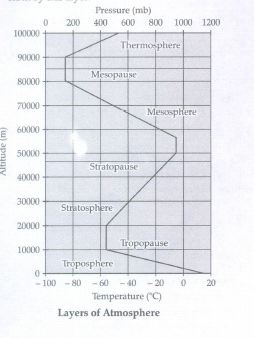
(v) Exosphere: It is the uppermost layer where there is very thin air. Light gases such as helium and hydrogen float into the space from here.
33.
There are very few buildings in our area made by Delhi Sultans. One is [ama 'Masjid in Shaikhon Ka Mohalla at Fatehpur Sikri. Another one is also a mosque in Mohalla Sheikh Chutwa. This mosque was built by Alauddin Khilji. There is also a tomb of Makkdum Shah. Other buildings made by Delhi Sultans in our area were destroyed by Mughal rulers and they made their forts on the remains of these buildings.
The [ama Masjid has three ways, each terminated by an ogival mehrab. The central one is more deeply carved than the others, contains a perforated stone screen with a stylish eight petalled lotus and enclosed within an ogee. The blank spaces are filled by rosettes, above all the Kalirna is inscribed in naksh lettering and on either side, Quranic verses.
34.
No person gains equally in the market. The foreign businessmen earned huge profits followed by garment exporter, merchant and traders. The small cotton farmer, weaver and factory worker earned so little so that they can't even fulfil their day-to-day requirements. Though democracy is all about getting a fair wage in market, this is not the case in reality.
It is important for families to earn enough so that they can think of themselves as equal to others.
35.
The movements, songs and poems recognise all people as equal because these all are based on justice and equality. The Constitution of India recognises all persons as equal. All movements and struggles which occur refer to Indian Constitution to make their point regarding equality and justice.
This is the reason why the fish workers participated in movements organised by Tawa Matsya Sangh. The Constitution of India has been known as a 'living document' because it has real meaning in our lives.
There are people in the democracy who try to broaden the concept of democracy and work towards a greater recognition of equality on existing as well as new issues.
Problems related to equality are central to democracy and we have seen such issues which challenge the idea of equality in a democracy. It is necessary to have enough resources to support and nurture families and to act against any discrimination in order to earn dignity and self-respect.
36.
A weekly market is known as weekly for the reason that it is held on a particular day of the week. In India, there are thousands of such markets where people go for their daily requirements.
The weekly market has the following features
(i) It does not have a permanent shops.
(ii) Traders establish their shops for a single day and then close them up in the evening. They establish their shops next day somewhere else.
(iii) The things available in these markets are very cheap because the owners themselves manage the shop with the help of their family members.
(iv) They don't have their shops in permanent buildings where they have to pay rent, electricity, fees to the government and wages to their workers.
(v) These markets face competition as there are many shops of same kind. People buy from the shops which give them things at cheaper rates.
37.
People grows most of their food in small areas after clearing some trees in the forest. While men hunt and fish along the rivers, women take care of the crops. They mainly grow tapioca, pineapple and sweet potato. As hunting and fishing are uncertain it is the women who keep their families alive by feeding them the vegetables they grow. They practice "slash and burn agriculture".
The staple food is manioc, also known as cassava that grows under the ground, like the potato. They also eat queen ants and egg sacs. Cash crops like coffee, maize and cocoa are also grown.
The rainforests provide a lot of wood for the houses. Some families live in thatched houses shaped like beehives. There are other large apartment like houses called 'Maloca' with a steeply slanting roof.
38.
Each region is associated with distinctive kinds of foods, clothes, poetry, dance, music and paintings. Social attributes contributed to the growth of regional cultures. Religious traditions became the centre of the growth of regional cultures.
The best example of this process is the cult of Jagannatha (a name for Vishnu) at Puri, Orissa. Anantavarman, decided to construct a temple. for Purushottama Jagannatha at Puri. In 1230, king Anangabhima III dedicated his kingdom to the deity. He proclaimed himself as the 'Deputy' of the God. With the temple gaining importance as a centre of pilgrimage, its authority in social and political matters also increased.
Those rulers who conquered Orissa, like the Mughals, the Marathas and the English East India Company, attempted to gpin control over the temple. They felt that this would make their rule acceptable to local people.
39.
The movements that occur in oceans can be broadly categorised as: waves, tides and currents.
(i) When the water on the surface of the ocean rises and falls alternately, they are called waves. During a storm, the winds blowing at very high speed form huge waves. These may cause tremendous destruction. An earthquake, a volcanic eruption or underwater landslides can shift large amounts of ocean water.
(ii) The rhythmic rise and fall of ocean water twice in a day is called a tide. It is high tide when water covers much of the shore by rising to its highest level. It is low tide when water falls to its lowest level and recedes from the shore.
(iii) Ocean currents are streams of water flowing constantly on the ocean surface in definite directions which may be warm or cold. The warm ocean currents originate near the equator and move towards the poles. The cold currents carry water from polar or higher latitudes to tropical or lower latitudes
40.
Technology is the use of science in industry to invent useful things or to solve problems. Cable television and extensive use of the Internet is a recent phenomenon. Technology used by media is dynamic. Print media and electronic media reach a large number of people through the use of certain technologies. Their name is based on type of technology they use.
The dynamic nature of technology helps media to spread its effect to more people with better quality of sound and images. Technology also contributes in changing the way people think.
41.
(a) Crust.
(b) Silica and Magnesium (SiMa).
(c) Core is the innermost layer of the Earth
42.
These advertisements are talking to the people who can afford them and leaving those categories of people who want to buy them but cannot buy because of limited money they have.
43.
This poster is all about the rights of women. The picture above is trying to highlight the significance of women in life. The lines written on the picture states that now, no more ignorance of women is possible and they should be given their place of dignity.
44.
i) With the advent of information technology, the whole world is trapped in web network which makes it a global society. The advancement in the field of communication has brought about an information revolution in the world.
ii) Different modes of communication are used to provide information, to educate as well as to entertain. Through newspapers, radio and television, we can communicate with a large number of people. They are therefore called mass media. The satellites have made communication even faster. Satellites have helped in oil exploration, survey of forest, underground water, mineral wealth, weather forecast and disaster warning. Now, we can send electronic mails or e-mails through Internet. Wireless telephonic communications through cellular phones have become very popular today. Internet not only provides us with worldwide information and interaction but has also made our lives more comfortable. Now, we can reserve tickets for railways, airways and even cinemas and hotels sitting at home.
45.
(a) The section of monument shown in the picture is of the first balcony of the Qutb Minar.
(b) The first floor of the Qutb Minar was constructed by Qutbuddin Aybak, around 1199 AD and the rest by IItumish around 1229. Firoz Shah Tughluq constructed the fifth and last story.
(c) The following observations regarding the architecture of the monument can be made:
(i) The minar is made of red sandstone with intricate carvings and verses from the Quran.
(ii) All the stories are surrounded by a projected balcony encircling the Minar and supported by stone-brackets, which are decorated with honeycomb design, more conspicuously in the first floor.
(iii) The surface of the minor is curved and angular.
(iv) There are inscriptions all around the tower and these are in Arabic.
(v) It is a great masterpiece of Mughal architecture. This most visited monument in India has now become a World Heritage site.
46.
The differences between the Sahara and Ladakh deserts are
| The Sahara- Hot Desert | The Ladakh-Cold Desert |
| (i) It is the world's largest hot desert with an area of around 8.54 million sq km. |
Ladakh is a cold desert lying in the great Himalayas |
| (ii) The climate of the Sahara desert is scorching hot and parch dry. It has a short rainy season. |
Due to its high altitude, the climate is extremely cold and dry. |
| (iii) Camels, hyenas, jackals, foxes, scorpions, many varieties of snakes and lizards are the prominent animal species found here. |
The animals of Ladakh are wild goats, wild sheep, yak and special kinds of dogs. |
| (iv) Vegetation in the Sahara desert includes cactus, date palms and acacia. |
Due to high aridity, the vegetation is sparse. There are scanty patches of grasses and shrubs for animals to graze. Groves of willows and poplars are seen in the valleys. |
47.
Rashsundari Devi was born in West Bengal. When she was 60, she wrote her autobiography Amar Jiban in Bangia. She was a housewife from a rich landlord's family and at that time it was considered bad luck for husbands if women learnt to read and write. Even then, she was determined to read and write. According to her autobiography, she used to work whole day and without taking any rest she learned to read. Though various negative thoughts crossed her mind, still she was still keen on studying. She secretly stole a page from her husband's 'Chaitanya Bhagabat and a page from her eldest son's copy. She matched the letters of manuscript the with her son's copy page and tried to learn. With great care and pains, she learnt how to read. Her writing gave the world an opportunity to know about women's lives in those days and her everyday experiences in detail.
48.
Kerala Government has made efforts to provide adequate healthcare to its people. In 1996, the State Government gave its 40% budget to the Panchayats in order to provide better facilities and check the existing ones. Problems such as water supply schemes, specific problems of village were taken up. Proper planning was done for betterment of people. Safe water, food, women's, development and education were provided health centres were improved. Working of schools and anganwadis was ensured. All other problems were checked though some problems are there which have to be addressed.
49.
A New wave of Bhakti movement erupted during the 13th century. This was an age when Islam, Brahmanical Hinduism, Sufism, various strands of Bhakti, the Nath panthis, Siddhas and yogis influenced one another.
The main reason was that the ordinary strata of the society such as craftspersons, peasants, traders, etc showed their interest in listening to these new saints. The notable saints like Kabir and Baba Guru Nanak did not approve the orthodox religions. Tulsidas and Surdas accepted existing beliefs and practices but wanted to make these accessible to all. Tulsidas conceived of God in theform of Rama who wrote Ramacharitmanas in praise of him.
Surdas was an ordent devotee of Krishna. His compositions compiled in the Sursagara, Sursarawali and Sahitya Lahari, express his devotion. Shankaradeva of Assam emphasised devotion to Vishnu and composed poems and plays in Assamese. Besides, Surdas, Dadu Dayal, Ravidas and Mirabai are worth mentioning about their role in Bhakti movement.
50.
The various domains of the environment are as follow
(i) Lithosphere It is the solid crust or hard top layer of the Earth. It is made up of rocks and minerals and covered by thin layer of soil. It provides forests, grasslands for grazing, land for agriculture and human settlements.
(ii) Atmosphere It is an envelope of gases that surrounds the Earth which protect us from harmful rays and scorching heat of the Sun.
(iii) Hydrosphere It is a domain of water that comprises various sources of water and water bodies like rivers, lakes, seas, oceans, glaciers, etc.
(iv) Biosphere It is a narrow zone of the Earth where land, water and air interact with each other to support life.
51.
Natural vegetation is plants that have not been grown by humans. It doesn't need help from humans and gets whatever it needs from its natural environment. There is a close relationship between height of land and the character of vegetations. With the change in height, the climate changes and that changes natural vegetation. The growth of vegetation depends on temperature and moisture. It also depends on factors like slope and thickness of soil. It is categorised into three broad categories: Forest, grassland and shrubs.
(i) Forest A forest is a large area of land covered with trees or other woody vegetation. It is a place where temperature and rainfall are plentiful to support tree covers.
(ii) Grassland Grasslands are areas where the vegetation is dominated by grasses and bushes.
(iii) Shrubs Thorny shrubs and scrubs grow in the dry region.
52.
The picture shows the woodcarver carving wood for making furniture. Wood carving flourished in the Medieval period. The contribution of Cholas and Vijayanagara empire in the field of wood carving was simply unparalleled.
53.
| Prairies grasslands | Velds grasslands |
| i) The temperate grasslands of North America are known as the prairies. |
The temperate grasslands of South Africa are called the velds. They are rolling plateaus with varying heights ranging from 600 m to 1100 m. |
| ii) The word Prairie originated from Latin word priata which means meadow. |
The veld name was given by the Dutch settlers before South Africa was colonised by the British. |
| iii) It lies in the Northern Hemisphere. | It lies in the Southern hemisphere. |
| iv) The tributaries of river Mississippi and Saskatchewan drain the region. |
The tributaries of rivers Orange and Limpopo drain the region |
| v) The prairies are bound by the Rocky Mountains in the West and the Great Lakes in the East. |
It is bound by the Drakensberg mountains on the East and the Kalahari desert on the West. |
54.
Civil Rights Movement is a movement started in USA in late 1950s to push for equal rights for African- Americans. Rosa Parks was an African-American woman who refused to give up her seat in a bus to a white man. Her refusal started a huge agitation against the unequal ways in which African- Americans were treated and this came to be known as Civil Rights Movement.
The Civil Rights Act 1964, prohibited discrimination on the basis of race, religion or national origin. It also stated that all schools would be open to African-Americans and they would no longer have to attend separate schools.
55.
There were several other societies in the subcontinent which did not follow the social rules and rituals prescribed by the Brahmanas. Such societies are called as tribes. Tribal people were found in every region of the subcontinent. In Punjab, the Khokhar tribe was influential during the 13th and 14th centuries. In Multan and Sind, the Langahs and Arghuns dominated extensive regions. The Balochis were large and powerful tribe, Gaddis. The Nagas, Ahoms lived in the North Eastern part of the subcontinent.
Chero, Mundas and Santhals were in Bihar, Jharkhand Orissa and Bengal.
The other tribes were the Kolis, Berads Koragas, Vetars, Maravars, Gonds etc.
The Bhils By the late 16th century many of them had become settled agriculturists and some even zamindars. So, now they considered forests, deserts and difficult places to reach as their home. They do not want to be treated as unequals as it is being practiced in varna system of society.
56.
Earthquakes cannot be predicted but their impact can be minimised by the preparedness beforehand. Earthquake preparedness also deals with where to take shelter during an earthquake.
It is stated in the following points
(i) Safe Spot Under a kitchen counter, table or desk, against an inside corner or wall.
(ii) Stay Away from Fireplaces, areas around chimneys, windows that shatter including mirrors and picture frames.
(iii) Be Prepared Spread awareness amongst your friends and family members and face any disaster confidently.
57.
i) During the 17th century the Sikhs paid attention into the state-building in the Punjab state. Several battles were fought by Guru Gobind Singh against the Rajput and Mughal rulers, both before and after the institution of the Khalsa in 1699. After his death, 1708, the Khalsa revolted against the Mughal authority under Banda Bahadur's leadership. The Sikhs declared their sovereign rule by striking coins in the name of Guru Nanak and Guru Gobind Singh and established their own administration between the Sutlej and the Jamuna. Under a number of able leaders in the 18th century, the Sikhs organised themselves into a number of bands called Jathas and later on misls. Their combined forces were known as the grand army (Dal Khalsa).
ii) A system called rakhi was introduced. By the late 18th century, the Sikh territories extended from the Indus to the Jamuna. Maharaja Ranjit Singh reunited the different Sikh groups.
58.
Abul Fazl, in his book Akbar Nama, specially in the third volume named Ain-i-Akbari gave a detailed description of Akbar's administration.
In the book, Abul Fazl explained that the empire was divided into provinces known as Subas, governed by a Subedar. The Subedar carried out both political and military functions.
Each provinces also had a financial officer or Diwan. For the maintenance of peace and order in the province, the Subedar was supported by several officers, like Military Paymaster (Bakhshi) Minister-in-charge of Religious and Charitable Patronage (Sadr). Military Commanders (Faujdars) and the town Police Commander (Kotwal). Akbar's nobles commanded huge armies and had access to large amounts of revenue.
Akbar did not want to discriminate people of different religions, so he gave utmost importance to the idea of tolerance. He accepted the concept of universal peace or Sulh-i-Kul.
59.
By the 7th century, there emerged many kingdoms, big landlords or warrior chiefs in different regions of the subcontinent. The existing kings often acknowledged them as their subordinates. They were given military support by such existing kings.
Now, after some years Samanta became Maha-Samanta and asserted their independence from their overlords. In the mid-8th century, Rashtrakuta chief Dantidurga overthrew his Chalukyas overlord and performed Hiranya-Garbha. Due to which he was believed to get rebirth from other castes to Kshatriya. Many others left their traditional professions and took to arms and established a separate kingdom of their own. The Kadamba Mayurasharman and Gurjara- Pratihara Harichandra established kingdoms in Karnataka and Rajasthan.
60.
Throughout the period there was a gradual clearing of forests and the extension of agriculture. These changes in their 'habitat' forcing the forest-dwellers to migrate into new lands. Many others started tilling the land and became peasants.
Regional markets, chieftains, priests, monasteries and temples began to influence the society. People were made to pay taxes to the ruler of the kingdom.
Significant developments were noticed which created differences among people and groups. Some possessed more productive lands, many others kept cattle.
People were categorised into 'Jatis' or sub-castes based on their occupations and were ranked according to their background. The status of the same Jati could vary from area to area.
61.
Differences Map 1 and Map 2 given in the NCERT text book (Map 2) represent two different times
Map 1 was made in 1154 CE by Al-ldrisi, an Arab geographer, the map given here is the map of Indian subcontinent from his larger map of the world.
Map 2 was made by a French cartographer in 1720. Both maps are quite different from each other in mode of presentation and contexts. However, both traced the outlines of the area of Indian subcontinent in their cartography.
Similarities Map 1, South India was at that place where North India is at present and Sri Lanka is the island the top. Name of place were in Arabic. Today's map of India is far ahead of Map 1 and Map 2. It is made to scale and shows clear-cut boundaries and areas.
62.
(a)
Coniferous trees
63.
(d)
16 years
64.
(b)
Credit card
65.
66.
(d)
All of the above
67.
(a)
Governor
68.
(b)
Spinning mill
69.
(d)
22 March
70.
(d)
6,371km
71.
(b)
Raja Man Singh
72.
(b)
Odisha
73.
(b)
Thanjavur
74.
(b)
Vishnu
75.
(b)
Chihil Sutun
76.
77.
(b)
Jahangir
78.
(b)
three times
79.
(d)
All of these
80.
(a)
Tibet
81.
(d)
snow land
82.
(c)
Atmosphere
83.
(b)
Pandita
84.
(d)
It comes down
85.
(c)
dignity is violated
86.
(b)
Pine
87.
(c)
USA
88.
(c)
moraine
89.
(b)
1761
90.
(d)
Delhi and Agra
91.
(a)
Vijayalaya
92.
The Tawa dam began to be built in 1958 and was completed in 1978. It submerged large areas of forest and agricultural land. The forest dwellers were left with nothing. Some of the displaced people settled around the reservoir and apart from their meagre farms, found a livelihood in fishing. They earned very little.
93.
(i) To be a boy or girl is an important part of one's identity.
(ii) The society teaches us the kind of behaviour acceptable for girls and boys
(iii) We often .grow lip thinking that these things arc exactly the same everywhere.
94.
Most of the people in my neighbourhood use the Internet.
95.
Sheep rearing is the most important occupation in the Velds. Marino sheep is a popular species and their wool is very warm. People of this region are mostly engaged in this activity. This has given rise to wool industry there.
96.
(i) A chain of markets links the producer of cotton to the buyer of the shirt in the supermarket.
(ii) Buying and selling takes place at every step in the chain.
(iii) Everyone in the chain does not benefit equally from this. The retailer benefits the most from this chain.
97.
Drink safe live safe :
Avoid drinking impure water and keep your life safe. Safety is in our hands.
98.
(a) Scooter, auto rickshaw, bus
(b) motorcycle, car, bus, Metro.
(c) walking, cycle.
99.
In this case, the above law is not implemented. To make the building accessible for him, it should have a plain surface so that he can move in or out easily and on his own. Being carried down the stairs shows his dependence which affects his dignity and also his safety because there is a chance of getting hurt if he slips down.
100.
Students can collect photographs of different mountain landscapes, coastal beaches, wildlife sanctuaries and places of historical importance such as Taj Mahal, Red Fort, Qutub Minar, etc., from different magazines and newspapers.
101.
Yes, I have seen tribal people when I went for a visit to Chhattisgarh last year. Some states where tribal people live in India include Chhattisgarh, Odisha, Jharkhand, Madhya Pradesh and some parts of north-eastern states.
102.
| Name of the feature | Type (Erosional or Depositional or both) |
| Waterfall | Erosional |
| Meander | Both (Erosional and Depositional) |
| Flood Plain | Depositional |
103.
Iron, Brass, Gold, Copper, Zinc, Silver.
104.
The languages we speak at home, were first used for writing as the ancient rulers introduce those languages in their inscriptions.
105.
The list of the towns in our district as administrative and pilgrim centres are as follows :
Administrative centre -Agra, Fatehpur Sikri.
Pilgrim/temple centre -Mathura, Vrindavan.
106.
Yes, the local myths and legends are receiving wider acceptance today. In last few years, we have heard a rumour that Lord Ganesha is drinking milk or a part of sea water become unsalty due to the blessings of a peer.
107.
Akbar is holding discussions with learned individuals of different faiths in the Ibadat Khana. This miniature painting is an illustration to the Akbar Nama. This miniature painting was prepared by Nar Singh, CE.1605.
108.
The names of languages which changed over time are as follows
Lahori : Punjabi
Telangani : Telugu
Gujari : Gujarati
Mabari : Tamil
Gauri : Bengali
Hindawi : Hindi
109.
TMS helped the fish workers in following ways:
(i)TMS set up the cooperative.
(ii) These cooperatives would buy the catch from them at a fair price.
(iii)The cooperative would then arrange to transport and sell this in markets where they would get a good price.
(iv) They have now begun to earn three times more than they earned earlier.
(v) The TMS has also began giving the fish workers loans for repairs and for buying of new nets. By managing to earn a higher wage as well as preserving the fish in the reservoir, the TMS has shown that when people's organisation get their rights to livelihood, they can be good managers.
110.
(i) There are different technologies that media use today and these are costly. T.V. studio with cameras, sound recorders, lights, transmission and satellites cost a lot of money.
(ii) News studio or serial production require the services of large number of people like readers, cameraman, actors, production units, etc and their salaries add to the expenses.
(iii) Electronic media also involves money.
(iv) Print media needs offices, machines, people to work on them, people Work related like reporting, getting advertisements, marketing or selling, all this again cost a lot of money.
(v)Moreover, the technology keeps on changing, and the media has to keep pace with that which itself is costly.
111.
The rainforests of the Amazon Basin is rich in fauna:
Birds such as toucans, humming birds, bird of paradise with their brilliantly coloured plumage, oversized bills for eating are found here. These birds also make loud sounds in the forests.
Animals like monkeys, sloth and ant-eating tapirs are found here.
Various species of reptiles and snakes also thrive in these jungles. A large number of Crocodiles, snakes, pythons are found here. Anaconda and boa constrictor are some of the species.
Besides, the basin is home to thousands of species of insects.
Several species of fishes including the flesh eating Piranha fish is also found in the river. This basin is thus extraordinarily rich in the variety of life found there.
112.
Societies make clear distinctions between boys and girls. This begins from a very young age.
(i)We are given different toys to play with. Boys are usually given cars to play with and girls dolls.
(ii) Toys become a way of telling children that they will have different futures when they become men and women.
(iii)This difference is created in the smallest and everyday things. Girls need to talk softly and boys need to be tough.
(iv) All these are ways of telling children that they have specific roles to play when they grow up to be men and women.
(v) Later in life this affects the subjects we can study or the careers we can choose.
113.
There are two types of sellers in the market, one in the weekly market and other in the shopping complex.
Small trader has little money whereas the other has more money to set up their shops. They earn unequal amounts. The weekly market traders earn little as compared of a regular shop owner in a shopping complex.
Even buyers are also differently placed. There are some who can not afford cheapest of goods and some shop in malls.
Therefore these markets depend on money as buyers or sellers.
114.
(i) In 1996, Kerala government brought some changes in its health care system.
(ii) 40% of the state budget has been given to the panchayats. This made possible for a village to plan for safe drinking water, food, healthcare for women and education.
(iii) Water supplies, working of schools, and anganwadis were all ensured and specific problems of the village could be taken care off.
(iv) All this helped to improve the sanitation.
(v) Some problems like shortage of doctors, medicines, beds etc. are still there but the situation has improved in terms of health of people
115.
(i) Prairies is a region of flat, gently sloping or hilly land. Mostly, prairies are treeless but, near the low lying plains, flanking river valleys, woodlands can be found.
(ii) Tall grass, upto two metres high, dominates the landscape. It is actually a "Sea of grass."
(iii) The prairies are bound by the Rocky Mountains in the West and the Great Lakes in the East.
(iv) In the USA, the area is drained by the tributaries of Mississippi and the Canadian prairies are drained by the tributaries of Saskatchewan rivers.
116.
When they both were treated unequally, their dignity was violated and they felt humiliated. (i)Omprakash Valmiki's schoolmates and teachers badly hurt his dignity, by making him sweep the school, because of his caste. He felt that he was less than equal to all other students in the school. (ii) Valmiki's father felt angry by this unequal treatment. He confronted the teachers.
(iii)The Ansari's dignity was also hurt when people refused to lease their apartments to them.
(iv) Their dignity was also violated, when the property dealer suggested them to change their name.
(v) They both did not deserved to be treated like this. They deserve the same respect and dignity as others.
117.
(i) Ladakh is a cold desert situated in the Great Himalayas, on the eastern side of Jammu and Kashmir.
(ii) It is flanked by the Karakoram Range in the north and the Zanskar mountains in the south.
(iii) Several rivers flow through Ladakh, these rivers form deep valleys and gorges.
(iv) Several glaciers including Gangri glacier are found in Ladakh.
(v) The altitude in Ladakh varies from about 3000m in Kargil to more than 8,000m in the Karakoram
118.
(i) In the early times, human beings lived on trees and in caves.
(ii) When they started to grow crops it became necessary to have a permanent home.
(iii) The settlements grew near the river valleys as water was available and land was fertile.
(iv) Human settlements became larger with the development of trade, commerce and manufacturing. (v) Settlement flourished and civilisations developed near river valleys
119.
Coffee Bite
(i) Dancing and playing of kids and irritating the adults.
(ii) No values but entertainment.
(iii) Kids, and leaving the adults.
(iv) obviously bad.
Maaza
(i) kid keen to have mangoes from tree when he is unable to, he finds Maaza good alternative.
(ii) Mangoes are easily available as the Maaza.
(iii) People who can afford it and leave out who don't
(iv) Feels neglected.
120.
The watan jagirs of the Rajputs:
(i) Many Rajput kings mostly of Amber and Jodhpur, had served under the Mughals with distinction.
(ii) In exchange, they were permitted to enjoy considerable autonomy in their watan jagirs.
(iii) In the eighteenth century, these rulers attempted to extend their control over adjacent regions.
(iv) Ajit Singh, the ruler of Jodhpur, was also involved in the factional politics at the Mughal court.
(v) These Rajput families claimed the subedari of the rich provinces of Gujarat and Malwa.
Raja Ajit Singh of Jodhpur held the governorship of Gujarat.
Sawai Raja [ai Singh of Amber was governor of Malwa.
(vi) These offices were renewed by Emperor Jahandar Shah in 1713.
(vii) They also tried to extend their territories by seizing portions of imperial territories adjacent to their watans.
Nagaur was conquered and annexed to the house of Jodhpur.
Amber seized large portions of Bundi. Sawai Raja [ai Singh founded his new capital at Jaipur.
He was given the subedari of Agra in 1722.
(viii) Maratha campaigns into Rajasthan from the 1740s put severe pressure on these principalities and checked their further expansion.
121.
Types of forests:
(i) Tropical Evergreen Forests
(ii) Tropical Deciduous Forests
(iii) Temperate Evergreen Forests
(iv) Temperate Deciduous Forests
(v) Mediterranean Vegetation
(vi) Coniferous Forests.
(i) Tropical Evergreen Forests:
These forests are very dense and occur in the regions near the equator and close to the tropics. These regions receive heavy rainfall throughout the year. The trees of these forests do not shed their leaves altogether and thus they remain evergreen. The thick canopies of the closely-spaced trees do not allow the sunlight to penetrate inside the forest even in the day time. Hardwood trees like rosewood, ebony and mahogany are common here.
(ii) Tropical Deciduous Forests:
Tropical deciduous are the monsoon forests found in regions experiencing seasonal changes. Trees shed their leaves in the dry season to conserve water. The hardwood trees found in these forests are sal, teak, neem and shisham. Tigers, lions, elephants, langoors and monkeys are the common animals of these regions.
(iii) Temperate Evergreen Forests:
The temperate evergreen forests are found in the eastern margin of the continents. They comprise both hard and soft wood trees like oak, pine, eucalyptus, etc.
(iv) Temperate Deciduous Forests:
These trees are found in the northeastern part of the USA, China, New Zealand and Chile. They are also found in the coastal regions of Western Europe. They shed their leaves in the dry season. The common trees are oak, ash, beech, etc. Deer, foxes, wolves are common animals found in this region.
(v) Mediterranean Vegetation:
These are mostly found in the areas around the South-West Margins of the continents. Citrus fruits such as oranges, figs, olives and grapes are commonly cultivated here. There is not much wildlife here.
(vi) Coniferous Forests:
These forests are also called Taiga. They are also seen in the higher altitudes. They are tall, softwood evergreen trees. Chir, pine, cedar are the important varieties of trees in these forests. Silver fox, mink, polar bear are the common animals found here.
122.
(i) Almost all adult males served in the army during war.
(ii) They were also engaged in building dams, irrigation systems and other public works.
(iii) The Ahoms also introduced new method of rice cultivation.
(iv) Ahom society was divided into clans or khels.
(v) There were very few castes of artisans, so they came from the adjoining kingdoms.
(vi) A khel often controlled several villages.
(vii) The peasant was given land by his village community.
(viii) Even the king could not take it away without the community's consent.
(ix) In the beginning the Ahoms worshipped their own tribal gods.
(x) During the first half of the seventeenth century, they were influenced by Brahmanas. Temples and Brahmanas were granted land by the king. In the reign of Sib Singh (1714-1744), Hinduism became their major religion.
(xi) The Ahom kings did not completely give up their traditional beliefs after adopting Hinduism.
(xii) Ahom society was very sophisticated. Poets and scholars were given land grants. Theatre was encouraged. Important works of Sanskrit were translated into the local languages. Historical works, known as buranjis, were also written-first in the Ahom language and then in Assamese.
123.
The earth is made up of several concentric layers with one inside another.
There are three main layers are Crust, Mantle, and Core
(i) Crust: It is the uppermost layer over the earth's surface and thinnest among all layer The continental mass of the crust consisting of silica and alumina, thus it is called sial (si- silica and al-alumina). The oceanic crust consist of silica and magnesium, thus called sima (si-silica, ma-magnesium). It is about 35 km thick on the continental masses and only 5 km thick on the oceans floors.
(ii) Mantle: It is just beneath the crust, with a depth of 2,900kms.
(iii)Core: It is the innermost layer of the earth, mainly made up of nickel and ferrous. The central core has very high temperature and pressure.
124.
The term Kathak is derived from 'katha', a word used in Sanskrit and other languages for story. The Kathaks were originally a caste of story-tellers in temples of North India, who beautified their performances with gestures and songs.
Kathak began evolving into a distinct mode of dance in the fifteenth and sixteenth centuries with the spread of the bhakti movement.
Kathak was performed in the Mughal court. Here it acquired its present features and developed into a form of dance with a distinctive style. Afterwards, it developed in two traditions or gharanas : one in the courts of Rajasthan (Iaipur) and the other in Lucknow.
Kathak grew into a major art form, under the patronage of Wajid Ali Shah, the last Nawab of Awadh. By the third quarter of the nineteenth century it was firmly entrenched as a dance form not only in these two regions, but also in adjoining areas of present-day Punjab, Haryana, Jammu and Kashmir, Bihar and Madhya Pradesh.
British administrators disfavoured Kathak. However, it survived and continued to be performed by courtesans, and was recognised as one of six "classical" forms of dance in the country after independence.
125.
From the early times human beings have been interacting with the environment and they modified it according to their needs.
Early humans adapted themselves to the natural surroundings. They led a simple life and fulfilled their needs from the nature around them. But their needs kept on increasing. They became varied also. For fulfilling their needs, human beings learnt new ways to change the environment. They learnt to grow crops, domesticate animals and led a settled
life. The wheel was invented. Surplus food was produced. Barter system emerged. Transportation became faster, trade started, commerce developed and information revolution made communication easier and speedy across the world. Industrial revolution made possible and large scale production started.
In the present environment, mind-boggling variety of clothes, games, food items are purchased.
In this way human beings adapted to the environment in order to fulfil their needs
126.
The town of Masulipatnam or Masulipatnam (literally, fish port town) lay on the delta of the Krishna river. As Masulipatnam became the most important port on the Andhra coast so both the Dutch and English East India Companies attempted to control it. The fort at Masulipatnam was built by the Dutch.
To prevent the trade passing completely into the hands of the various East India Companies, the Qutb Shahi ruler of Golconda imposed royal monopolies on the sale of textiles, spices and other items.
Fierce competition among various trading groupsthe Golconda nobles, Persian merchants, Telugu Komati Chettis, and European traders made the city popular and prosperous.
In 1686-1687 Mughal Emperor Aurangzeb annexed Golconda. This caused the European Companies to look for alternatives.
As the Company traders moved to Bombay, Calcutta (present-day Kolkata) and Madras (present-day Chennai), Masulipatnam lost both its merchants and prosperity and finally declined in the eighteenth century. Now it is not more than a dilapidated little town.
127.
The creation of large empires that brought different regions under their rule helped in the cross fertilization of artistic forms and architectural styles. Mughal rulers were skilled in adapting regional architectural styles in the construction of their own buildings. For example, in Bengal, rulers had developed a roof that was designed to resemble a thatched hut.
The Mughals liked this "Bangla dome" so much that they used it in their architecture.
In Akbar's capital at Fatehpur Sikri many of the buildings bear the impact of the architectural styles of Gujarat and Malwa.
The authority of the Mughal rulers waned in the eighteenth century; the architectural styles developed under their patronage were constantly used and adapted by other rulers whenever they tried to establish their own kingdoms.
128.
(i) During the thirteenth century a new wave of the bhakti movement began in North India. This was an age when Islam, Brahmanical Hinduism, Sufism, various strands of bhakti, and the Nathpanths, Siddhas and Yogis influenced one another. Ordinary people like craftspersons, peasants, traders and labourers spread their ideas.
(ii) Kabir and Baba Guru Nanak rejected all orthodox religions. Others like Tulsidas and Surdas accepted existing beliefs and practices but wanted to make these accessible to all. Tulsidas conceived God in the form of Rama. His unique creation Ramcharitmanas, written in Awadhi is an example.
(iii) Surdas was an ardent devotee of Krishna. His compositions, compiled in the Sursagara, Surasaravali and Sahitya Lahari, express his devotion.
(iv) Saints like Dadu Dayal, Ravidas and Mirabai are worth mentioning here. Mirabai was a Rajput princess who married into the royal family of Mewar in the sixteenth century. She became a disciple of Ravidas, a saint from a caste considered "untouchable". She was devoted to Krishna and composed innumerable bhajans expressing her intense devotion.
(v)A unique feature of most of the saints is that their works were composed in regional languages and could be sung.
129.
(i) When the Mughal Empire declined in the eighteenth century, it resulted into the reemergence of regional states.
(ii) Years of imperial, pan-regional rule had transformed the character of the regions.
(iii) Across most of the subcontinent, the regions were left with the legacies of the big and small states that ruled over them.
(iv) This was clear in the emergence of various distinct and shared traditions: in the style of governance, the management of the economy, elite cultures and language.
(v) Through the thousand years between 700 and 1750 A.D, the character of the different regions did not grow in isolation.
They felt the impact of larger pan-regional forces of integration, without losing their own character.

7th Standard CBSE Syllabus & Materials
7th Standard CBSE
CBSE 7th Social Science Theme B - New Beginnings : Cities and States - New Sample Question Papers Study Material - QB365 Set A
NEW7th Standard CBSE
CBSE 7th Social Science Theme A - Climates of India - New Sample Question Papers Study Material - QB365 Set A
NEW7th Standard CBSE
CBSE 7th Social Science Theme A - Geographical Diversity of India - New Sample Question Papers Study Material - QB365 Set A
NEW7th Standard CBSE
CBSE 7th Science Earth, Moon and the Sun - New Sample Question Papers Study Material - QB365 Set A



CBSE 7th Standard CBSE Subjects
CBSE Standards




