
 100% FREE ACCESS
7th Standard CBSE Syllabus & Materials
7th Standard CBSE
CBSE 7th Social Science Theme E - Understanding Market - New Sample Question Papers Study Material - QB365 Set A
NEW7th Standard CBSE
CBSE 7th Social Science Theme E - From Barter to Money - New Sample Question Papers Study Material - QB365 Set A
NEW7th Standard CBSE
CBSE 7th Social Science Theme D - The Constitution of India- An Introduction - New Sample Question Papers Study Material - QB365 Set A
NEW7th Standard CBSE
CBSE 7th Social Science Theme D - From the Rulers to the Ruled : Types of Governments - New Sample Question Papers Study Material - QB365 Set A
NEW7th Standard CBSE
CBSE 7th Social Science Theme B - The Age of Reorganisation - New Sample Question Papers Study Material - QB365 Set A
NEW7th Standard CBSE
CBSE 7th Social Science Theme B - The Rise of Empires - New Sample Question Papers Study Material - QB365 Set A

Published on: 06/03/2020
7th Standard CBSE Social Science Public Exam Sample Question 2020
Download CBSE Class 7th Standard CBSE Social Science question papers, sample papers, important questions, and previous year solved papers in PDF format. Get free study materials, NCERT solutions, and exam preparation resources for Class 7th Standard CBSE Social Science
Questions + Answers key
Take MCQ Social Science Test
1.
Suggest some ways in which water can be conserved
(a) in your home,
(b) in our school.
2.
What was the importance of the royal temples?
3.
Explain the social changes emerging among the tribal people.
4.
What are the people doing at the Erode cloth market merchants
5.
What issue is the Tawa Matsya Sangh (TMS) fighting for?
6.
Buying and selling can take place without going to a marketplace'. Explain this statement with the help of examples.
7.
How tourism flourished in the Ganga-Brahmaputra region?
8.
Why do we know much more about the cultural practices of rulers than about those of ordinary people?
9.
You have read about the ways in which the media ' set the agenda'.What kind of effect does this have in a democracy? Provide two examples to support your point of view.
10.
Write a short note on waterways.
11.
Read the extract and answer the questions given below:
Rokeya Sakhawat Hossain knew how to read and write Urdu, she was stopped from learning Bangla and English. In those days, English was seen as a language that would expose girls to new ideas, which people thought were not correct for them. Rokeya learnt to read and write Bangla and English with the support of her elder brother and an elder sister. She went on to become a writer. She wrote a remarkable story titled Sultana's Dream in 1905 to practice her English skills when she was merely 25 years old. This story imagined a woman called Sultana who reaches a place called Ladyland. Ladyland is a place where women had the freedom to study, work and create inventions like controlling rain from the clouds and flying air cars.
What are values of the Rokeya's character highlighted in the passage?
12.
Why do you think that men and boys generally do not do housework? Do you think they should?
13.
What are metamorphic rocks?
14.
"Just naming the product may not make us by it." Explain.
15.
Salima's father showed her some photographs of thick forests. In some of the photographs, Salima observed that people were cutting trees and clearing the forests. Her father explained that the local people wanted their land for agriculture and settlements, so they cleared up the forests.
Answer to the following querries of Salima.
If all forests are cleared, then where the wildlife will go?
16.
What are the two types of deserts found in the world?
17.
You can observe this process of local myths and legends receiving wider acceptance even today. Can you find some examples around you?
18.
In what ways is the public health system for everyone?
19.
What do you mean by natural environment?
20.
What are the provision made in the Constitution for the recognition of equality?
21.
Name three types of rainfall
22.
Discuss the following terms with your teacher States in India
23.
Write a short note on the system of taxes in the 10th century.
24.
Some type of grass grows on almost everysurface of the Earth. List names of places where you have observed grass growing. e.g., lawns, cricket field, between cracks of a side walk, etc.
25.
Why did the Mughals emphasise their Timurid and not their Mongol descent?
26.
How were the Sikhs organised in the 18th century?
27.
What is erosion?
28.
What were the steps taken to ensure that muqtis performed their duties? Why do you think they may have wanted to defy the orders of the Sultans?
29.
Do you think being born as a Kshatriya was important in order to become a ruler during this period?
30.
How were the affairs of Jati regulated?
31.
How does a government function in a state?
32.
What is a chain of market? Do you think that everyone gains equally in the market?
33.
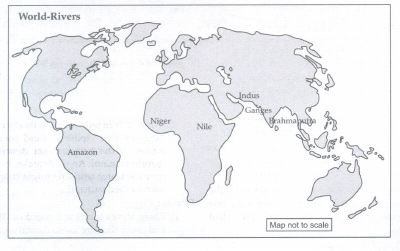
(i) The name of one river is hidden in each of the sentences below. Spot it. Example : Mandira, Vijayalakshmi and Surinder are my best friends Answer: Ravi
(a) The snake charmer's bustee, stables where horses are housed, and the piles of wood, all caught fire accidentally. (Hint: Another name for River Brahmaputra)
(b) The conference manager put pad, material for reading and a pencil for each participant. (Hint: a distributary on the. Ganga-Brahmaputra delta)
(c) Either jealousy or anger cause a person's fall (Hint: Name of a juicy fruit!)
(d) Bhavani germinated the seeds in a pot (Hint: Look for her in West Africa)
(e) "I am a zonal champion now" declared the excited athlete. (Hint: The river that has the biggest basin in the world)
(f) The tiffin box rolled down and all the food fell in dusty potholes. (Hint: Rises in India and journeys through Pakistan)
(g) Malini leaned against the pole when she felt that she was going to faint. (Hint: Her delta in Egypt is famous)
(h) Samantha mesmerised everybody with her magic tricks. (Hint: London is situated on her estuary)
(i) "In. this neighbourhood, please don't yell! Owners of these houses like to have peace". Warned my father when we moved into our new flat". (Hint: Colour!)
(j) 'Write the following words, Marc!" "On", "go", "in" , said the teacher to the little boy in KG Class. (Hint: Rhymes with "bongo') Now make some more on your own and ask your classmates to spot the hidden name. You can do this with any name: that of a lake, mountains, trees, fruits, school items, etc.
(ii) With the help of an atlas, draw each river which you discovered in For Fun (i), on an outline map of the world.
34.
Answer the following questions.
(i) What are the two types of deserts found in the world?
(ii) In which continent is the Sahara desert located?
(iii) What are the climatic conditions of the Ladakh desert?
(iv) What mainly attracts tourists to Ladakh?
(v) What type of clothes do the people of the Sahara desert wear?
(vi) Name the trees that grow in Ladakh.
35.
The 'Earthquake-A case study' given in the form of headlines that appeared in the newspapers after the quake. Arrange the events in the right sequence of their happening.
36.
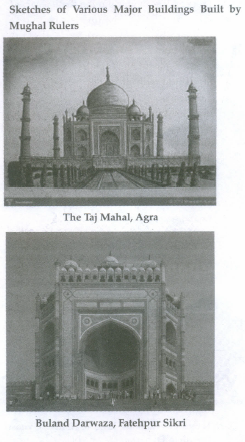
Find out whether there are any buildings built by the Delhi Sultans in your area. Are there any other buildings in your area that were built between the twelfth and fifteenth centuries? Describe some of these buildings and draw sketches of them.
37.
Explain 'Tripartite Struggle'.
38.
What were the results of formation of TMS?
39.
On the basis of given picture, answer the questions that follows
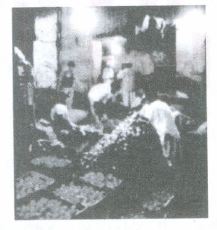
Who is the person in the above picture?
40.
What influence people of the Amazon Basin for their changing pattern of life?
41.
Write elaborately on the Miniature paintings in the Himalayan foothills.
42.
Why does the media require huge amount of money?
43.

Look at the two advertisements above and fill the table.
| Top Taste Daal | Care soap | |
| What are the advertisements selling? | ||
| How do they describe the product? | ||
| What is the text trying to say? | Guests should be served this | |
| What do the pictures convey? | Love of mother | |
| Would you want to buy these products after seeing the advertisement? |
44.
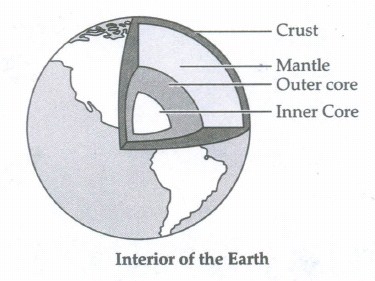
Explain basic features of the interior of the earth.
45.
Explain the importance of settlement. What is the different types of settlement?
46.
Answer the question based on the extracts given below.
The boys' school had no such courtyard and our playground was just a big space attached to the school. Every evening, once school was over, the boys watched as hundreds of school girls crowded the narrow streets. As these girls walked on the streets, they looked so purposeful.
This was unlike the boys who used the streets as a place to stand around idling, to play, to try out tricks with their bicycles. For the girls, the street was simply a place to get straight home. The girls always went in groups, perhaps because they also carried fears of being teased or attacked.
(a) 'The boys' school had no such courtyard". Which courtyard is being talked about?
(b) For what purpose did the boys use the street?
47.
Interpret the picture and answer what does this figure of Bhagvadgita signify?
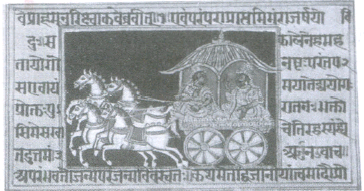
48.
Observe the picture carefully and answer the questions that follow:
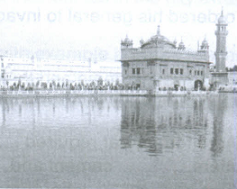
(a) Suggest the other name of the Golden Temple. What does it mean?
(b) Write a short note on the history of the Golden Temple.
49.
Discuss wind and its types briefly.
50.
Discuss about the experience of Rashsundari Devi.
51.
Explain the Costa Rican approach.
52.
Can you identify the Jesuit priests in the given below picture?
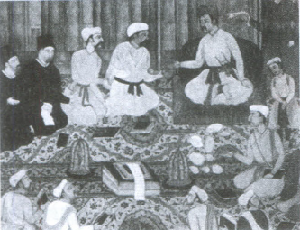
53.
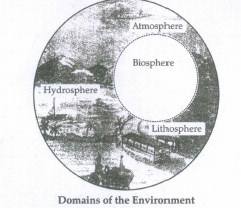
Write an account of various domains of the environment.
54.
Observe the picture given below and answer the questions that follow
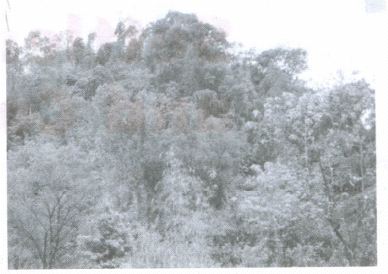
(a) In the above shown picture, what kind of forests is shown?
(b) Why can light of Sun not penetrate through them?
55.
Discuss the major occupations of the people and factors contributed to the industrialisation in the prairies.
56.
'As the day goes on, Kanta becomes less certain about what this equality really means'. What makes Kanta unsure?
57.
How Nomads and mobile people lived?
58.
How did the Indian craftspersons lose their independence?
59.
How the Sikhs organised state-building in Punjab?
60.
Describe the major developments in the religious traditions during 750 AD to 1750 AD.
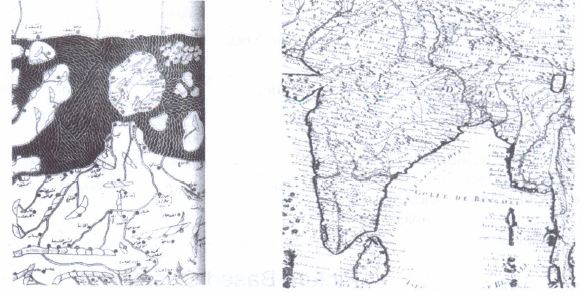
61.
Compare either Map 1 or Map 2 with the present day map of the subcontinent listing as many similarities and differences (page no) as you can find.
62.
Tehri dam is across river:
Narmada
Ganga
Subernlekha
Yamuna
63.
What is required to do cashless shopping?
Ration card
Credit card
Driving license
All of these
64.
How many people die by tuberculosis every year:
2 lakh
3 lakh
5 lakh
1 lakh
65.
What does democracy mean?
Unequal right to vote
Equal right to vote
Discrimination
None of these
66.
Who buys the bales of cotton to convert them into yarn:
Ginning mill
Spinning mill
Cleaning mill
Weaving mill
67.
Deodars and firs are a type of
Coniferous trees
delta area
Amazon
68.
Who introduced token currency?
Muhammad-bin-Tughluq
Alauddin Khalji
Raziyya
Khizr Khan
69.
Whose songs become popular in Rajasthan and Gujarat?
Surdas
Tulsidas
Guru Nanak
Mira Bai
70.
The Qutb Minar was constructed by :
Shahjahan
Jahangir
Humayun
Qutbuddin Aybak
71.
The Medieval period began in India in:
9th century AD
8th century AD
10th century AD
10th century AD
72.
What was the capital of Mirza Hakim Akbar's half brother?
Kabul
Moracco
Sind
Afghan
73.
Stories about Rajput heroes were recorded in
manuscripts
poems and songs
texts
songs and theatres
74.
Print media includes
Magazines
TV
Radio
None of the above
75.
These are the best fishing grounds of the world.
Seas around Japan
Seas around the Eastern coast of North America
Both (a) and (b)
None of the above
76.
Yaks are found in
Tibet
China
Bhutan
Myanmar
77.
In society, men and women do not have the same
status
height
weight
None of these
78.
The thinnest layer of the Earth is
crust
mantle
core
79.
The cost of bringing out a quarter page colour advertisement in a leading newspaper is
8.46 lakh
8.36 lakh
8.65 lakh
8.86 lakh
80.
Deserts are characterised by
scanty vegetation
heavy precipitation
low evaporation
81.
Which one of these made communication easier and speedy across the world?
Glorious revolution
Green revolution
French revolution
Information revolution
82.
Rokeya Sakhawat Hossain knew how to read and write
Hindi
English
Urdu
Bangia
83.
This instrument measures temperature.
barometer
wind vane
thermometer
rain gauge
84.
Laws for the entire country are made by
Legislative Assembly
Parliament
Governor
Chief Minister
85.
Grasslands grow in the regions of
moderate rain
heavy rain
poor rain
None of these
86.
Grasslands are found in only two regions
Equatorial region and Arctic region
Temperate region and Tropical region
Temperate region and Equatorial region
Arctic region and temperate region
87.
The Ahoms also introduced new methods of
wheat cultivation
rice cultivation
barley cultivation
maize cultivation
88.
The depositional feature of a glacier is
flood plain
beach
moraine
89.
Nadir Shah, sacked and plundered the city of Delhi in
1735
1738
1739
1737
90.
The name of the holy lake near Ajmer is
Shivganga
Bhaskar
Pushkar
Rajeshvari
91.
Nagabhatta was a
Chola ruler
Pratihara king
Malava king
Rashtrakuta ruler
92.
How the beginning of Tawa dam affected the forest dwellers of the Satpura forest in Madhya Pradesh?
93.
How do societies differentiate between boys and girls?
94.
How many people in your neighbourhood use the Internet?
95.
Give reasons:
Rise of wool industry in the Velds.
96.
What is the importance of chain of markets in the story of the shirt? Elucidate.
97.
Having read about diarrhoea epidemic in the chapter on State Government can you make a social advertisement on what precautionary steps should be taken to prevent diarrhoea?
98.
Conduct a survey in your locality and find out how people commute to their respective workplaces using-
(a) more than two modes of transport
(b) more than three modes of transport
(c) stay within walking distance.
99.
Look at the photograph and think about the boy who is being carried down the stairs. Do you think the above law is being implemented in his case? What needs to be done to make the building
more accessible for him? How would his being arried down the stairs affect his dignity as well as his safety
100.
Make a collage to show places of attractions in India. You can divide the class in different groups to show attractions based on mountain landscapes, coastal beaches, wildlife sanctuaries and places of historical importance?
101.
Have you ever seen tribal people? Mention some states where tribal people live in India.
102.
What are endogenic forces?
103.
For fun-Identify some more objects made up of different materials
104.
Find out how many states have been created in the last 10 years. Is each of these states a region?
105.
Enlist any three teachings of Islam.
106.
Make a list of towns in your district and try to classify these as administrative centre or as temple/pilgrim centres.
107.
What are the details shown in this miniature? When this picture is prepared?
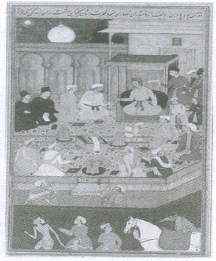
108.
Did you notice that the names by which languages are known have changed with time?
109.
How TM5 helped the fish workers?
110.
Describe the ways by which mass media makes money.
111.
Give the details of wildlife of Ganga-Brahamaputra basin.
112.
What are the various ways women's apply to fight discrimination and seek justice?
113.
What are the different ways of buying and selling goods?
114.
What changes have been made by government of Kerala to improve healthcare facilities?
115.
Mention the features of Prairies grasslands.
116.
How dignity of Omprakash Valmiki and Ansari's was violated, when they were treated unequally?
117.
What are the location settings of Ladakh?
118.
How have the settlements changed over a period of time?
119.
Choose two of your favourite print advertisements. Now, look at each of them and answer the following questions :
(a) What visuals and text is being used in these advertisements to attract my attention?
(b) What values are being promoted in these advertisements?
(c) Who is this advertisement speaking to and who is it learning out?
(d) If you would not afford the brand that is being advertised how would you feel?
120.
Write the common features of Awadh, Bengal and Hyderabad.
121.
Describe two types of grasslands found on the globe.
122.
Enlist the major features of the tribal societies.
123.
Describe the interior of the earth
124.
Describe about the Kathak, a popular dance form of North India.
125.
Explain the various domains of the environment
126.
Describe Surat as a gateway to the west.
127.
Write an account of the regional influence on art.
128.
Describe the works of Baba Guru Nanak
129.
Explain the problem of dearth of original manuscripts.
1.
(a) Ways to conserve water in home:
(i) Turn off the tap while brushing your teeths.
(ii) Turn off the tap while washing your hands.
(iii) Fix leaky faucets.
(iv)Water your home garden with a watering can.
(v) Always use full loads in washing machine for cutting out unnecessary washes in between. (b)Ways to conserve water in school:
(i) Carry out a leak test.
(ii) Use rainwater harvesting.
(iii) Check overflows in all cisterns regularly, and repair if necessary.
(iv) Select plants that need little water.
(v) Involve all staff and pupils, and make everyone aware of water conservation
2.
The Massive temples were constructed by the kings. In a temple made by Rajarajadeva, worship of one God Rajarajeshvaram honoured another- Rajarajadeva,
The other lesser known deities were the gods and goddesses of the allies and subordinates of the ruler. The temples were the miniature model of the world rules by the king and his allies. As they worshipped the deities together in the temple, it seemed as if the rule of the gods is present on Earth.
3.
i) By the 11th and 12th centuries Rajput clans became powerful amongst some tribes. The Rajput became the rulers in different parts of India which inspired the tribal people.
ii) Gradually with the support of the Brahmans, many tribes included in the caste system.
iii) Only the leading tribal families could join the ruling class. A large majority of tribes joined the lower jatis of caste society.
vi) Many dominant tribes of Punjab, Sind and North-West Frontier adapted Islam to reject the orthodox Hindu casteism.
4.
Merchants are selling/supplying the woven cloth on order to garment manufacturers and exporters round the country.
5.
TMS is fighting for the rights of the displaced forest dwellers of the Satpura forest in Madhya Pradesh.
6.
'Buying and selling can take place without going to a marketplace' as it is not always compulsory for one to go to the marketplace to purchase goods. This is an era of internet. We can place orders of a variety of things through internet or phone. The goods are delivered at our doorsteps. For example, in clinics and nursing homes, there are sales representatives waiting for doctors. These persons are also involved in selling of goods.
7.
Tourism is another important activity of the basin. Taj Mahal on the banks of River Yamuna in Agra, Allahabad on the confluence of the Rivers Ganga and Yamuna.
Buddhist stupas in Uttar Pradesh and Bihar, Lucknow with its Imambara, Assam with Kaziranga and Manas with wildlife sanctuaries and Arunachal Pradesh with a distinct tribal culture are some of the places worth a visit.
8.
A subject follows the cultural traits of a ruler or king. The cultural practices of rulers are more circulated due to its recognition by the people at large. People have faith upon their rulers. They could not adapt other cultural practices which their ruler did not patronised.
9.
Media 'setting the agenda' has following effect in democracy
(i) It is through the media that people come to know about working of the government.
(ii) People form opinion based on the agenda set by the media.
(iii) Sometimes government prevents the media from publishing particular things and is known as censorship.
(iv) On the other hand, media is also under the influence of big business houses.
(v) Big business houses make media work for their own interests and hence balanced report is not prepared.
Two such examples are
(a) Clean drinking water is a major issue but media is never seen discussing this issue.
(b) News of fashion week formed the headlines of front page which largely benefitted the media houses.
10.
Waterways are the cheapest for carrying heavy and bulky goods over long distances. They are mainly of two types - inland waterways and sea routes. Navigable rivers and lakes are used as inland waterways. For example, the Ganga-Brahmaputra river system, the Great Lakes in North America and the river Nile in Africa. Sea routes and oceanic routes are mostly used for transporting merchandise and goods from one country to another. These routes are connected with the ports.
11.
The passage highlights that Rokeya was of independent ideas, creative and had the ability and eagerness to learn.
12.
Men and boys generally do not participate in the housework because they believe that household work is the responsibility of women and they are not taught to do such work from the beginning.
Yes, from my point of view, they should participate in the household work as housework is a joint responsibility of all the members who live in the house. If women can work both outside and inside the home, then men should also work in the house.
13.
When igneous and sedimentary rocks undergo great heat and pressure, they form another type of rocks. So, that newly formed rocks is known as metamorphic rocks.
14.
Naming the product is not the single task of producers.
After naming i.e. branding producers have to convince the consumers why their product is much better than the product of competitors. Producers have to differentiate their product with competitors, product.
15.
If all forests will be cleared then all natural species will extinct.
16.
The two types of deserts found in the world are
(i) Hot desert
(ii) Cold desert
17.
India is a land of huge population, illiteracy is still rampant in India. Many local myths and legends have been receiving wider acceptance even today. Some notable amongst them are:
1. India is a place of snake charmers and Black Magic. India have been facing this myth even before there was any temple. But this myth does not dominate or define the identity of India.
2. Indian people are believed ro have bad luck, if any cat crosses their way. This myth is gaining ground even among the literate classes of society.
3. Indian people think of not having milk while leaving for a journey. They instead can take curd. This myth is still much prevalent.
18.
Public health system is meant for everyone as there are a number of hospitals, healthcare centres, dispensaries available for general public. They treat people free of cost or at low cost.
19.
The natural environment is encircled by the world of living organisms (e.g. plants and animals) and world of non-living things (e.g. land).
20.
There are various provisions made in the Constitution for the recognition of equality.
They are
(i) Every person is equal before the law.
(ii) No person can be discriminated against on the basis of their religion, race, caste, place of birth or whether they are female or male.
(iii) Every person has access to all public places including playgrounds, hotels, shops and markets.
(iv) Untouchability has been abolished.
21.
The convectional rainfall, the orographic rainfall and the cyclonic rainfall are three types of rainfall.
22.
States in India Our country has been divided into several units with properly defined boundaries. These units with specified boundaries are defined as states.
23.
In an inscription, in Rajasthan, the tax system of 10th century was elaborated in this way
(i) There were taxes in kind on sugar and jaggery, dyes, thread, cotton, coconuts, salt, areca nuts, butter, sesame oil, cloth, etc.
(ii) There were taxes on traders on those who sold metal goods, on distillers, on oil, on cattle fodder and on loads of grain.
(iii) Some of these taxes were collected in kind while others were collected in cash.
24.
(i) Lawns
(ii) Along footbath
(iii) Cricket field
(iv) On the bunds of agriculture fields
(v) Between cracks
(vi) On open patches
(vii) Near channels of wate
25.
The Mughal rulers were descendants of two great lineages of rulers. From their mother's side, they were descendants of Genghis Khan, ruler of the Mongol tribes. From their father's side, they were the successors of Timur, the ruler of Iran, Iraq and modern day Turkey.
However, the Mughals did not like to be called Mongol because Mongol's especially Genghis Khan's, memory was associated with the massacre of innumerable people. It was also linked with the Uzbegs, their Mongols competitors. On the other hand, the Mughals were proud of their Timurid ancestry, because Timur captured Delhi in 1398.
26.
i) During the 17th century, the Sikhs got organised into a political community. This led to the regional state-building in Punjab.
ii) Guru Gobind Singh fought many battles against the Rajputs as well as Mughal rulers, both before and after the institution of the Khalsa in 1699. After the death of Guru Gobind Singh in 1708, the Khalsa revolted against the Mughal authority under the leadership of Banda Bahadur and declared their sovereign rule. Banda Bahadur was captured in 1715 and executed in 1716. In the 18th century, the Sikhs organised themselves into a number of bands called Jathas and later on misls.
iii) The Sikh under the Khalsa declared their sovereign rule and their territories in the late 17th century extended from the Indus to the Jamuna. Maharaja Ranjit Singh reunited the divided groups of Sikhs and established his capital at Lahore in 1799.
27.
Erosion is the wearing away of the landscape by different agents like water, wind and ice.
28.
The following steps were taken to ensure that muqtis performed their duties
(i) Accountants were appointed by the state to check the amount of revenue collected by the Muqtis.
(ii) Care was taken that the Muqti collected only the taxes prescribed by the State and that he kept the required number of soldiers. Muqtis may have wanted to defy the orders of the Sultans as there were harsh conditions of service which rigorously imposed on them. Besides this, their office was not inheritable and sometimes they were assigned iqtas for a short time span and shifted regularly.
29.
Kshatriya was known for the courage, valour and willpower. Dantidurga became ruler by setting aside his overlord and became a Kshatriya through performing Hiranya-Garbha ritual. Hence, we can say people not born as a Kshatriya also tried to gain power by designating themselves as Kshatriya.
30.
The affairs of jatti were regulated in the following ways
Jatis were grouped or divided as per their family backgrounds and occupations that their family carried on. People had to accept these rules.
Jatis were the sub-castes as per the power, influence and resources controlled by members of the Jati.
An assembly or group of elders was responsible for enforcing these regulations and were Called as Jati Panchayat.
However, the Jati or caste of one area varies from that of other areas in many aspects.
31.
A government is headed by the Chief Minister. The Chief Minister, in order to manage the functioning of government, appoints ministers at various levels like cabinet ministers, state ministers and deputy ministers. Every government department is headed by a cabinet minister who is directly accountable for the functioning of the particular department and responsible for the handling of the government decisions. The bureaucrate project and get the works completed. The ministers give approval to the works.
32.
There is a chain of market which links the producer to the buyer, but everyone does not benefit equally in the market.
The foreign business persons made huge profits. Compared to this, the garment exporters made moderate profits. Some people like small farmers (like Swapna), weavers, workers earn little. The profits made by the merchants or traders are somewhere in between. So everyone does not gain equally in the market. In democracy everybody has right to earn a fair wage for his work.
If people don't earn enough then they cannot think themselves as equal to others and cannot live with dignity.
The market offers people opportunities to work and earn fairly. But it is the people, who are rich powerful and have large establishments take away the maximum benefit. And the poor people, because of their dependence on the rich, are exploited in the market.
33.
(a) Teesta
(b) Padma
(c) Orange
(d) Niger (River)
(e) Amazon (River)
(f) Indus
(g) Nile
(h) Thames
(i) Yellow
(j) Mango
Students do themselves (Some of them are given below).
34.
(i) The two types of deserts found in the world are hot deserts such as Sahara, and cold deserts such as Ladakh.
(ii) The Sahara desert is located in Africa.
(iii) The climate is extremely cold and dry in the Ladakh desert. The day temperatures in summers are just above zero degree and the night temperatures well below -30°C. It is freezing cold in the winters when the temperatures may remain below -40°C for most of the time. As it lies in the rain shadow of the Himalayas, these is little rainfall, as low as 10 em every year. The area experiences freezing winds and burring hot sunlight.
(iv) Ladakh is a famous tourist place. The tourists from within the country and abroad enjoy visiting Buddhist monasteries that dot the Ladakhi landscape with their traditional 'gompas'. The meadows and glaciers in Ladakh also attract the tourists. The ceremonies and festivities in which the local people keep themselves engaged during winter months are great attractions to the tourists.
(v) The people of the Sahara desert wear heavy robes
(vi) Willows, poplars, and fruit trees such as apples, apricots and walnuts grow in Ladakh.
35.
Earthquake- A case study
(i) Earthquake hits Bhuj: A massive earthquake measuring (6.9 on Richter scale hilts Bhuj Town on 26th January 2001.
(ii) School worst affected: At least 971 students and 31 teachers are feared to have lost their lives following the collapse of school buildings
(iii) Bhuj relief effort blighted: Three days after the quake, concern rose about food, blankets; and medical supplies not reaching everyone.
(iv) Destruction of Bhuj: Phone lines, water pipelines and power stations transmissions lines were knocked out.
(v) Fire in the city: Hundreds of fires started as charcoal, cookers overturned
(vi) Emergency declared in quake zone: The president declares a state of emergency.
(vii) CM's appeal to the Centre: Gujarat Chief Minister appeals for financial help. The Chief Minister of Gujarat has launched an appeal for the Centre to deal with the disaster.
36.
There are very few buildings in our area made by Delhi Sultans. One is [ama 'Masjid in Shaikhon Ka Mohalla at Fatehpur Sikri. Another one is also a mosque in Mohalla Sheikh Chutwa. This mosque was built by Alauddin Khilji. There is also a tomb of Makkdum Shah. Other buildings made by Delhi Sultans in our area were destroyed by Mughal rulers and they made their forts on the remains of these buildings.
The [ama Masjid has three ways, each terminated by an ogival mehrab. The central one is more deeply carved than the others, contains a perforated stone screen with a stylish eight petalled lotus and enclosed within an ogee. The blank spaces are filled by rosettes, above all the Kalirna is inscribed in naksh lettering and on either side, Quranic verses.
37.
All the ruling dynasties were based in a specific region. At the same time they tried to control the other areas. One particularly prized area was the city of Kanauj in the Ganga valley. For centuries, rulers belonging to the Curjara-Pratihara, Rashtrakuta and Pala dynasties fought for control over Kanauj. As there were three 'parties' in this long drawn conflict. Historians often describe it as the "tripartite struggle". Rulers also tried to demonstrate their power and resources by building large temples. When they attacked one another's kingdom; they often chose to target temples, which were sometimes extremely rich.
38.
The fish workers increased their earnings after the TMS took over as
(i) They formed cooperatives which would buy the catch from them at good prices.
(ii) Cooperatives would then arrange transport and sell this catch in markets at fair prices.
(iii) This all led to increases in their earnings by three times.
(iv) The TMS also provided loans for repair and purchasing new nets to fish workers.
TMS has proved that when people's organisations get their rights they become good managers and this has been proved as they managed to earn higher wages and preserved fishes in the reservoir.
39.
The person in the above picture is Aftab.
40.
Life of the people of the Amazon Basin is slowly changing. In the older days, the heart of the forest could be reached only by navigating the river. In 1970, the Trans Amazon highway made all parts of the rainforest accessible. Aircrafts and helicopters are also used for reaching various places.
The indigenous population was pushed out from the area and forced to settle in new areas where they continued to practice their distinctive way of farming. The developmental activities are leading to the gradual destruction of the biologically diverse rainforests. It is estimated that a large area of the rainforest has been disappearing annually in the Amazon Basin.
41.
Miniatures are painted in brilliant colours and has an important place in historical informations.
(i) A region that attracted miniature paintings was the Himalayan foothills around the modern day state of Himachal Pradesh.
(ii) By the late 17th century, the Himalayan region had developed a bold and intense style of miniature painting called basohli.
(iii) Due to the invasion of Nadir Shah the artists migrated to the hills where they found patrons and thus developed Kangra school of painting in the mid 1Sth century.
(iv) Following the Vaishnavite traditions it used soft colours including cool blues and greens, and a lyrical treatment of themes distinguished Kangra painting from other paintings.
(v) Miniature paintings were carefully preserved in palaces.
42.
The various technologies used in mass media are very costly. If we take an example of TV studio, we see, it has lights, cameras, sound- recorders, transmission satellites, etc which are too expensive. It's not just these things but number of other people are also paid who helps in broadcasting. A lot of money is spent in using these changing technologies and hence a big amount of money is required for the same. This makes television channels and newspapers part of big business houses.
Mass media earns money by advertising various items like cars, phones, electronics, etc.
43.
| Top taste deal | Care soap | |
| What are the advertisements selling? | Daal | Soap |
| How do they describe the product? | Top Taste Daal | Express your love a fresh |
| What is they trying to say? | Guests should be served this | Children should be given best care |
| What do the pictures convey? | treatment toward guests | Love of a mother |
| Would you want to buy these products after seeing the advertisement ? | yes | yes |
44.
The earth is made up of several concentric layers with one inside another just like an onion. The basic features of the interior of the earth are
(i) Crust It is the uppermost layer over the earth's surface which is the thinnest of all the layers. It is about 35 km on the continental masses and only 5 km on the ocean floors. The continental mass are made up of silica and alumina. It is thus called SiAl (Si-Silica and AI-Alumina). The oceanic crust mainly consists of Silica and Magnesium; it is therefore called SiMa (Si-Silica and Ma-Magnesium.
(ii) Mantle It is just beneath the crust which extends up to a depth of 2900 km below the crust.
(iii) Core The innermost layer is the core with a radius of about 3500 km. It is mainly made up of Nickel and Iron and is called NiFe (Ni-Nickel and Fe-Ferrous i.e. iron). The central core has very high temperature and pressure.
45.
i) Settlements are places where people build their homes. Early human beings lived on trees and in caves. When they started to grow crops it became necessary to have a permanent home.
ii) The settlements grew near the river valleys as water was available and land was fertile. With the development of trade, commerce and manufacturing, human settlements became larger.
iii) Many civilisations grew along the banks of rivers such as Indus, Tigris, Nile and Hwang-He. Settlements can be permanent or temporary.
Types of Settlements Settlements which are occupied for a short time are called temporary settlements. The people living in deep forests, hot and cold deserts and mountains often dwell in such temporary settlements. They practice hunting, gathering, shifting cultivation and transhumance. However more and more settlements today are permanent settlements. In these settlements, people build homes to live in.
46.
(a) The boys' school and the girls' school were designed differently as boys school had no courtyard as the girls school had. Here, the courtyard is the playground or a big space attached to the school where boys and girls used to play.
(b) The boys used the streets as a place to stand around idling, to play, to tryout tricks with their bicycles, etc and not just for walking home, the way girls used it.
47.
The given picture depicts the figure from Gita, the holy text of Hinduism. In the picture, the Lord Krishna is looking back to convince Arjuna, the one of five Pandavas to go ahead, fight for truth. Lord Krishna is explaining the philosophy of 'KARMA' (Duty) to Arjuna that is do your duty, under all circumstances and leave the rest on God.
48.
(a) The Golden Temple is also referred to as the Harmandar Sahib. The Harmandar Sahib literally means the Temple of God. It is the holiest Sikh Gurudwara located in the city of Amritsar, Punjab.
(b) In 1578 CE, Guru Ram Das excavated a tank, which subsequently became known as Amritsar (Pool of the Nectar of Immortality). This holy tank is fed by the Ravi River. The Harmandar Sahib was designed by the fifth guru, Guru Arjan. Guru Arjan completed the Adi Granth, (Guru Granth Sahib) and installed it in the gurudwara. Inside the gurudwara, there are many shrines to past Sikh gurus, saints, and martyrs.
The gurudwara is open to all persons, regardless of their religion, colour, creed or sex. Over 100000 people visit the holy shrine daily for worship. The Harmandar Sahib runs one of the largest free kitchens in the world, serving 100000 people on average daily. Most Sikhs visit Amritsar and the Golden Temple at least once during their lifetime.
49.
Wind is the movement of air from high pressure area to low pressure areas.
There are three types of wind
(i) Permanent Winds The trade winds, westerlies and easterlies are the permanent winds. These blow constantly throughout the year in a particular direction.
(ii) Seasonal Winds These winds change their direction in different seasons. For example, monsoons in India.
(iii) Local Winds These winds blow only during a particular period of the day or year in a small area. For example, land and sea breeze, L00 etc.
50.
Rashsundari Devi was born in West Bengal. When she was 60, she wrote her autobiography Amar Jiban in Bangia. She was a housewife from a rich landlord's family and at that time it was considered bad luck for husbands if women learnt to read and write. Even then, she was determined to read and write. According to her autobiography, she used to work whole day and without taking any rest she learned to read. Though various negative thoughts crossed her mind, still she was still keen on studying. She secretly stole a page from her husband's 'Chaitanya Bhagabat and a page from her eldest son's copy. She matched the letters of manuscript the with her son's copy page and tried to learn. With great care and pains, she learnt how to read. Her writing gave the world an opportunity to know about women's lives in those days and her everyday experiences in detail.
51.
Costa Rica is considered one of the healthiest countries in South America.
The government here took an approach of not having an army and instead allotting its money for health, education and other basic amenities.
People were provided with safe drinking water, sanitation, nutrition and housing facilities. Health education was considered significant as knowledge about health was important at all levels. According to Costa Rican Government, a country can develop only when its people are healthy. Thus, they paid significant attention to the health of the people.
52.
The two men in the black dress with black cap are the Jesuit priests; At the time of Akbar Jesuits like Fr. Rudolf Acquaviva, Fr. Antony Monserrate and Francis Henriques and many others came to India.
The Society of Jesus is a Christian male religious congregation of the Catholic Church. The members of this society are called the Jesuits. Jesuits work in education, intellectual research, and cultural pursuits. They also promote social justice. They are sometimes referred to as 'God's soldiers.
The headquarter of the above society, its assembly or council is in Rome. These Jesuit priests came on a regular basis to discuss their religion in the Ibadat Khana of Akbar's palace with Akbar and other notable religions priests.
53.
The various domains of the environment are as follow
(i) Lithosphere It is the solid crust or hard top layer of the Earth. It is made up of rocks and minerals and covered by thin layer of soil. It provides forests, grasslands for grazing, land for agriculture and human settlements.
(ii) Atmosphere It is an envelope of gases that surrounds the Earth which protect us from harmful rays and scorching heat of the Sun.
(iii) Hydrosphere It is a domain of water that comprises various sources of water and water bodies like rivers, lakes, seas, oceans, glaciers, etc.
(iv) Biosphere It is a narrow zone of the Earth where land, water and air interact with each other to support life.
54.
(a) The given picture is of Tropical Evergreen forests.
(b) The light of Sun do not penetrate through them because the trees of such forests are closely spaced and have thick canopies.
55.
The people of this region are very hardworking. They have successfully harnessed technology to utilise their rich natural resources. Scientific methods of cultivation and use of tractors, harvesters and combines has made North America a surplus food producer. Dairy farming is another major industry. The dairy belt extends from the Great Lakes to the Atlantic Coast in the East. Dairy farming and extensive agriculture both promote setting up of food processing industries. Large mineral deposits particularly coal and iron and a good network of roads, railways and canals in this region have made it the most industrialised region in the world.
56.
Kanta is a domestic worker and lives in a slum which has a drain behind it. Her daughter is sick but she cannot take the day off from work because she has to borrow money from her employer to take her daughter to the doctor. Her job tires her out and she ends her day by again standing in a long line in front of the government hospital. But this line is unlike the one in the morning because most of the people standing in it were poor.
57.
Nomadic pastoralists moved over long distances with their animals. They lived on milk 'and other pastoral products. They bought and sold these goods as they moved from one place to another. They carried them on the back of their animals. The Banjaras were the most important trader nomads.
Sultan Alauddin Khalji and Mughal Emperor Jahangir used the Banjaras to transport grain to the city markets.
Many pastoral tribes reared and sold animals like cattle and horses, to the prosperous people. Different castes of petty pedlars travelled from village to village and sold ropes, seeds, straw matting and coarse socks. Mendicants acted as wandering merchants.
58.
Initially, Indian crafts and textiles were in great demands in the European markets. As a result, the English began to make attempts to control the Indian craftspersons by appointing Indian traders as their agents. They introduced the system of advances under which the weavers had to weave cloth which was only and already promised to European agents. They no longer were able to sell their own cloth or weaving their own patterns. Thus, the Indian craftspersons lost their independence.
59.
i) During the 17th century the Sikhs paid attention into the state-building in the Punjab state. Several battles were fought by Guru Gobind Singh against the Rajput and Mughal rulers, both before and after the institution of the Khalsa in 1699. After his death, 1708, the Khalsa revolted against the Mughal authority under Banda Bahadur's leadership. The Sikhs declared their sovereign rule by striking coins in the name of Guru Nanak and Guru Gobind Singh and established their own administration between the Sutlej and the Jamuna. Under a number of able leaders in the 18th century, the Sikhs organised themselves into a number of bands called Jathas and later on misls. Their combined forces were known as the grand army (Dal Khalsa).
ii) A system called rakhi was introduced. By the late 18th century, the Sikh territories extended from the Indus to the Jamuna. Maharaja Ranjit Singh reunited the different Sikh groups.
60.
Significant developments were noticed in the religious traditions of groups and people.
People started believing in the divine in a personal way and collectively as well.
Collective belief in super-natural agency religion got closely connected with the social and economic organisation of local groups and communities.
Important changes were seen in Hinduism worship of new deities. The temples were constructed with the help of rulers. Brahmanas were considered the uppermost caste and got patronage by rulers. The priests became a dominant caste in society.
The idea of Bhakti emerged and surfaced which made devotees more inclined towards deities.
61.
Differences Map 1 and Map 2 given in the NCERT text book (Map 2) represent two different times
Map 1 was made in 1154 CE by Al-ldrisi, an Arab geographer, the map given here is the map of Indian subcontinent from his larger map of the world.
Map 2 was made by a French cartographer in 1720. Both maps are quite different from each other in mode of presentation and contexts. However, both traced the outlines of the area of Indian subcontinent in their cartography.
Similarities Map 1, South India was at that place where North India is at present and Sri Lanka is the island the top. Name of place were in Arabic. Today's map of India is far ahead of Map 1 and Map 2. It is made to scale and shows clear-cut boundaries and areas.
62.
(a)
Narmada
63.
(b)
Credit card
64.
(c)
5 lakh
65.
(b)
Equal right to vote
66.
(b)
Spinning mill
67.
(a)
Coniferous trees
68.
(a)
Muhammad-bin-Tughluq
69.
(d)
Mira Bai
70.
(d)
Qutbuddin Aybak
71.
(b)
8th century AD
72.
(a)
Kabul
73.
(b)
poems and songs
74.
(a)
Magazines
75.
(c)
Both (a) and (b)
76.
(a)
Tibet
77.
(a)
status
78.
(a)
crust
79.
(b)
8.36 lakh
80.
(a)
scanty vegetation
81.
(d)
Information revolution
82.
(c)
Urdu
83.
(c)
thermometer
84.
(b)
Parliament
85.
(a)
moderate rain
86.
(b)
Temperate region and Tropical region
87.
(b)
rice cultivation
88.
(c)
moraine
89.
(c)
1739
90.
(c)
Pushkar
91.
(b)
Pratihara king
92.
The Tawa dam began to be built in 1958 and was completed in 1978. It submerged large areas of forest and agricultural land. The forest dwellers were left with nothing. Some of the displaced people settled around the reservoir and apart from their meagre farms, found a livelihood in fishing. They earned very little.
93.
From the young age, society makes a clear distinction between the two genders. Boys are given cars and girls are given dolls. Through the toys the difference starts. The girls are dressed differently, are asked to speak softly. Boys on the other hand play different games, are considered to be tough. Through this the children are conditioned to play the specific role when they grow up. This even, affects our subject and career choices later in the life.
94.
Most of the people in my neighbourhood use the Internet.
95.
Sheep rearing is the most important occupation in the Velds. Marino sheep is a popular species and their wool is very warm. People of this region are mostly engaged in this activity. This has given rise to wool industry there.
96.
(i) A chain of markets links the producer of cotton to the buyer of the shirt in the supermarket.
(ii) Buying and selling takes place at every step in the chain.
(iii) Everyone in the chain does not benefit equally from this. The retailer benefits the most from this chain.
97.
Drink safe live safe :
Avoid drinking impure water and keep your life safe. Safety is in our hands.
98.
(a) Scooter, auto rickshaw, bus
(b) motorcycle, car, bus, Metro.
(c) walking, cycle.
99.
In this case, the above law is not implemented. To make the building accessible for him, it should have a plain surface so that he can move in or out easily and on his own. Being carried down the stairs shows his dependence which affects his dignity and also his safety because there is a chance of getting hurt if he slips down.
100.
Students can collect photographs of different mountain landscapes, coastal beaches, wildlife sanctuaries and places of historical importance such as Taj Mahal, Red Fort, Qutub Minar, etc., from different magazines and newspapers.
101.
Yes, I have seen tribal people when I went for a visit to Chhattisgarh last year. Some states where tribal people live in India include Chhattisgarh, Odisha, Jharkhand, Madhya Pradesh and some parts of north-eastern states.
102.
The forces which act in the interior of the earth are called endogenic forces.
They sometimes produce sudden movements and
at the other times produce slow movements.
Sudden movements like earthquake, volcanoes cause mass destruction.
Slow movements like diastrophic forces help in building mountains.
103.
Tumbler beaker-Made of Glass.
Table - Made from wood
Utensils - Made from steel.
104.
Three states have been created in the last 10 years, named Jharkand, Chhattisgarh and Uttarakhand. Yes, each of these states is a region.
105.
Islam propagated strict monotheism or submission to one God :
(i) It rejected idol worship.
(ii) Simplified the rituals of worship into collective prayers.
(ill) They developed holy law Shariat.
106.
The list of the towns in our district as administrative and pilgrim centres are as follows :
Administrative centre -Agra, Fatehpur Sikri.
Pilgrim/temple centre -Mathura, Vrindavan.
107.
Akbar is holding discussions with learned individuals of different faiths in the Ibadat Khana. This miniature painting is an illustration to the Akbar Nama. This miniature painting was prepared by Nar Singh, CE.1605.
108.
The names of languages which changed over time are as follows
Lahori : Punjabi
Telangani : Telugu
Gujari : Gujarati
Mabari : Tamil
Gauri : Bengali
Hindawi : Hindi
109.
TMS helped the fish workers in following ways:
(i)TMS set up the cooperative.
(ii) These cooperatives would buy the catch from them at a fair price.
(iii)The cooperative would then arrange to transport and sell this in markets where they would get a good price.
(iv) They have now begun to earn three times more than they earned earlier.
(v) The TMS has also began giving the fish workers loans for repairs and for buying of new nets. By managing to earn a higher wage as well as preserving the fish in the reservoir, the TMS has shown that when people's organisation get their rights to livelihood, they can be good managers.
110.
There are many ways through which mass media makes money:
(i) Advertisements are the major way to make money. Different products like soaps, cars, clothes, creams etc. give advertisements to attract consumers.
(ii) Advertisements are repeated during telecast of movies, serials and matches.
(iii) The money earned depends upon the popularity of the programme and number of times the advertisement is repeated.
(iv) Another way is by doing promotional activities and making their presence felt so that large number of people see their channels or buy magazines or newspapers.
(v)Newspapers have print advertisement in various categories along with worth information under the categories like buy or sell, about buy or rent and also obituaries,
111.
There is a variety of wildlife in the Ganga- Brahamaputra basin:
(i) Elephants, tigers, deers and monkeys are common here.
(ii) The one-horned rhinoceros is found in the Brahmaputra plain.
(iii) In the delta area, Bengal tiger, crocodiles and alligator are found.
(iv) Aquatic life abounds in the fresh river waters, the lakes and the Bay of Bengal. The most popular varieties of the fish are the rohu, catla and hilsa.
112.
The various ways women apply to fight discrimination and seek justice are:
Campaigning:
(i) It is an important part of the Women's Movement. Campaigns have led to new laws being passed in 2006 to give legal protection to those women who face physical and mental violence within their homes, also called domestic violence.
(ii) The efforts made by the Women's Movement led the Supreme Court to formulate guidelines in 1997 to protect women against sexual harassment at the workplace and within educational institutions.
(iii) In the 1980s, for example, women's groups across the country also campaigned for bringing justice to those families which have became prey to dowry deaths. Finally, this became a public issue in the newspapers and society, and the dowry laws were changed to punish families who seek dowry.
Raising Awareness: Women, in order to fight against discrimination, work hard to raise public awareness on women's right issues. They do so through several means such as street plays, songs and public meetings.
Protesting: When a law or policy acts against the interests of the women, the movement raises its voice by holding public rallies and demonstrations. These are the powerful way of drawing attention to injustices.
Showing Solidarity: The Women's Movement is also about showing solidarity with other women and causes.
113.
(i) There are different market places where people buy and sell a variety of goods and services.
(ii) All these markets are in a specific locality.
(iii) They work in a particular manner and time.
(iv) These days it is not always necessary to go to market to purchase goods.
(v) Orders can be placed for a variety of things through the phone and through the Internet.
(vi) Goods are delivered at the customer's home.
(vii) In clinics and nursing homes, sales representatives come to take order for supplying medicines.
(viii) Sales representatives are also engaged in the selling of goods. Thus, buying and selling of goods takes place in different ways.
114.
(i) In 1996, Kerala government brought some changes in its health care system.
(ii) 40% of the state budget has been given to the panchayats. This made possible for a village to plan for safe drinking water, food, healthcare for women and education.
(iii) Water supplies, working of schools, and anganwadis were all ensured and specific problems of the village could be taken care off.
(iv) All this helped to improve the sanitation.
(v) Some problems like shortage of doctors, medicines, beds etc. are still there but the situation has improved in terms of health of people
115.
(i) Prairies is a region of flat, gently sloping or hilly land. Mostly, prairies are treeless but, near the low lying plains, flanking river valleys, woodlands can be found.
(ii) Tall grass, upto two metres high, dominates the landscape. It is actually a "Sea of grass."
(iii) The prairies are bound by the Rocky Mountains in the West and the Great Lakes in the East.
(iv) In the USA, the area is drained by the tributaries of Mississippi and the Canadian prairies are drained by the tributaries of Saskatchewan rivers.
116.
When they both were treated unequally, their dignity was violated and they felt humiliated. (i)Omprakash Valmiki's schoolmates and teachers badly hurt his dignity, by making him sweep the school, because of his caste. He felt that he was less than equal to all other students in the school. (ii) Valmiki's father felt angry by this unequal treatment. He confronted the teachers.
(iii)The Ansari's dignity was also hurt when people refused to lease their apartments to them.
(iv) Their dignity was also violated, when the property dealer suggested them to change their name.
(v) They both did not deserved to be treated like this. They deserve the same respect and dignity as others.
117.
(i) Ladakh is a cold desert situated in the Great Himalayas, on the eastern side of Jammu and Kashmir.
(ii) It is flanked by the Karakoram Range in the north and the Zanskar mountains in the south.
(iii) Several rivers flow through Ladakh, these rivers form deep valleys and gorges.
(iv) Several glaciers including Gangri glacier are found in Ladakh.
(v) The altitude in Ladakh varies from about 3000m in Kargil to more than 8,000m in the Karakoram
118.
(i) In the early times, human beings lived on trees and in caves.
(ii) When they started to grow crops it became necessary to have a permanent home.
(iii) The settlements grew near the river valleys as water was available and land was fertile.
(iv) Human settlements became larger with the development of trade, commerce and manufacturing. (v) Settlement flourished and civilisations developed near river valleys
119.
Coffee Bite
(i) Dancing and playing of kids and irritating the adults.
(ii) No values but entertainment.
(iii) Kids, and leaving the adults.
(iv) obviously bad.
Maaza
(i) kid keen to have mangoes from tree when he is unable to, he finds Maaza good alternative.
(ii) Mangoes are easily available as the Maaza.
(iii) People who can afford it and leave out who don't
(iv) Feels neglected.
120.
The three states Awadh, Bengal and Hyderabad had certain common features:
(i) They were all established by the Mughal nobles, They were highly suspicious of some of the administrative system that they had interested in particular, the jagirdari system.
(ii) Their methods of tax collection were different. Rather than relying upon the officers of the state all three regimes contracted with revenue farmers for the collection of revenue.
(iii) All these states had relationship with the bankers and the moneylenders. These people lent money to revenue farmers, received land as security and collected taxes from these lands through their own agents.
121.
(i) Tropical grasslands:
These grasslands occur on either side of the equator and extend till the tropics. This vegetation grows in the areas of moderate to low amount of rainfall. The grass can grow about 3 to 4 metres in height. Savannah grasslands of Africa are of this type. Common animals found in the tropical grasslands are elephants, zebras, giraffes, deer and leopards.
(ii) Temperate grasslands:
These grasslands are found in the mid-latitudinal zones and in the interior parts of the continents. Usually, grass here is short and nutritious. Wild buffaloes, bisons, antilopes are common in the temperate region.
122.
Major Features of the Tribal Societies:
(i) Members of each tribe were united by kinship bonds.
(ii) Many tribes obtained their livelihood from agriculture.
(iii) Others were hunter-gatherers or herders.
(iv) Some tribes were nomadic and moved from one place to another.
(v) A tribal group controlled land and pastures jointly, and divided these amongst households according to its own rules.
(vi) Many large tribes evolved in different parts of the subcontinent. They usually lived in forests, hills, deserts and places difficult to reach. Sometimes they clashed with the more powerful caste-based societies.
(vii) The tribes retained their freedom and preserved their separate culture.
123.
The earth is made up of several concentric layers with one inside another.
There are three main layers are Crust, Mantle, and Core
(i) Crust: It is the uppermost layer over the earth's surface and thinnest among all layer The continental mass of the crust consisting of silica and alumina, thus it is called sial (si- silica and al-alumina). The oceanic crust consist of silica and magnesium, thus called sima (si-silica, ma-magnesium). It is about 35 km thick on the continental masses and only 5 km thick on the oceans floors.
(ii) Mantle: It is just beneath the crust, with a depth of 2,900kms.
(iii)Core: It is the innermost layer of the earth, mainly made up of nickel and ferrous. The central core has very high temperature and pressure.
124.
The term Kathak is derived from 'katha', a word used in Sanskrit and other languages for story. The Kathaks were originally a caste of story-tellers in temples of North India, who beautified their performances with gestures and songs.
Kathak began evolving into a distinct mode of dance in the fifteenth and sixteenth centuries with the spread of the bhakti movement.
Kathak was performed in the Mughal court. Here it acquired its present features and developed into a form of dance with a distinctive style. Afterwards, it developed in two traditions or gharanas : one in the courts of Rajasthan (Iaipur) and the other in Lucknow.
Kathak grew into a major art form, under the patronage of Wajid Ali Shah, the last Nawab of Awadh. By the third quarter of the nineteenth century it was firmly entrenched as a dance form not only in these two regions, but also in adjoining areas of present-day Punjab, Haryana, Jammu and Kashmir, Bihar and Madhya Pradesh.
British administrators disfavoured Kathak. However, it survived and continued to be performed by courtesans, and was recognised as one of six "classical" forms of dance in the country after independence.
125.
Various domains of the environment are:
(i) Lithosphere,
(ii) Atmosphere,
(iii) Hydrosphere,
(iv) Biosphere
(i) Lithosphere: It is the solid crust or hard top layer of the earth, which is made up of rock and minerals and covered by a thin layer of soil. It provides us forests, grasslands, and lands. It is a source of mineral wealth.
(ii) Atmosphere: It is the thin layer of air that surrounds the earth. It protects us from the harmful rays and scorching heat of the sun. It consists of the numerous gases, dust and water vapour. The gravitational force of the earth holds the atmosphere around it.
(iii) Hydrosphere: It is the domain of water and comprises various sources of water such as rivers, oceans, lakes, seas, etc. It is essential for all living organisms.
(iv) Biosphere: Biosphere or the living world is comprised of plant and animal kingdom. It is a narrow zone of the earth where land, water and air interact with each other to support life.
126.
(i) Surat in Gujarat was the emporium of western trade during the Mughal period. Surat was the gateway for trade with West Asia via the Gulf of Ormuz. Surat has also been called the 'Gate to Mecca' because many pilgrim ships set sail from here.
(ii) The city was cosmopolitan and people of all castes and creeds lived there. In the seventeenth century the Portuguese, Dutch and English had their factories and warehouses at Surat.
(iii) There were also several retailers and wholesalers of cotton textiles. The textiles of Surat were famous for their gold lace borders (zari) and had a market in West Asia, Africa and Europe.
(iv) The state built numerous rest-houses to take care of the needs of people from all over the world who carne to the city. There were magnificent buildings and innumerable pleasure parks.
(v) The Kathiawad seths or mahajans (money changers) had huge banking houses at Surat. It is remarkable that the Surat hundis were honoured in the far-off markets of Cairo in Egypt, Basra in Iraq and Antwerp in Belgium.
127.
Regional influence on Art :
(i) Along with increase in construction activity between the eighth and eighteenth century, there was a significant sharing of ideas across regions.
(ii) The traditions of one region were adopted by the other. In Vrindavan, near Mathura, temples were constructed in architectural style, similar to the Mughal palaces in Fatehpur Sikri. Vijayanagara's architecture was influenced by the Sultanate of Bijapur and Golconda. For example, their elephant stables.
(iii) Mughal rulers were specifically skilled in adapting regional architectural styles in the construction of their own buildings
In Bengal, the local rulers had developed a roof that was designed to resemble a thatched hut.
The Mughals liked this "Bangla dome" to such extent, that they widely used it in architecture.
The impact of other regions was also evident.
In Akbar's capital at Fatehpur Sikri, many of the buildings have the impact of the architectural styles of Gujarat and Malwa.
128.
Guru Nanak and (1469-1539) born at Talwandi (Nankana Sahib in Pakistan). He travelled widely before establishing a centre at Kartarpur (Dera Baba Nanak on the river Ravi). A regular worship that consisted of the singing of his own hymns was established there for his followers.
Irrespective of their previous creed, caste or gender, his followers ate together in the common kitchen (langar). The holy space thus created by Guru Nanak was known as dharmsal. It is now known as Gurdwara.
Before his death in 1539, Guru Nanak appointed one of his followers as his successor. His name was Lehna but later he came to be known as Guru Angad, representing that he was a part of Guru Nanak himself.
Guru Angad compiled the compositions of Guru Nanak, to which he added his own new script known as Gurmukhi.
The three successors of Guru Angad also wrote under the name of 'Nanak' and all of their compositions were compiled by Guru Arjan in 1604. In 1706 this compilation was authenticated by his son and successor, Guru Gobind Singh. It is now known as Guru Granth Sahib, the holy scripture of the Sikhs.
129.
We can rarely find original manuscripts of the authors. This is a severe problem today.
(i) We are entirely dependent on the copies made by later scribes.
(ii) As a consequence, the historians have to go through different manuscripts (versions) of the same text to identify what the author had originally written.
(iii) At times various authors revised their chronicles.
(iv) For example, Z. Barani wrote his first chronicle book in 1356 and another version came two years later. The two versions differed from one another and the historians did not even know about the existence of the first version till 1960s as it had remained lost in massive library collection.

7th Standard CBSE Syllabus & Materials
7th Standard CBSE
CBSE 7th Social Science Theme B - New Beginnings : Cities and States - New Sample Question Papers Study Material - QB365 Set A
NEW7th Standard CBSE
CBSE 7th Social Science Theme A - Climates of India - New Sample Question Papers Study Material - QB365 Set A
NEW7th Standard CBSE
CBSE 7th Social Science Theme A - Geographical Diversity of India - New Sample Question Papers Study Material - QB365 Set A
NEW7th Standard CBSE
CBSE 7th Science Earth, Moon and the Sun - New Sample Question Papers Study Material - QB365 Set A



CBSE 7th Standard CBSE Subjects
CBSE Standards




