
 100% FREE ACCESS
7th Standard CBSE Syllabus & Materials
7th Standard CBSE
CBSE 7th Social Science Theme E - Understanding Market - New Sample Question Papers Study Material - QB365 Set A
NEW7th Standard CBSE
CBSE 7th Social Science Theme E - From Barter to Money - New Sample Question Papers Study Material - QB365 Set A
NEW7th Standard CBSE
CBSE 7th Social Science Theme D - The Constitution of India- An Introduction - New Sample Question Papers Study Material - QB365 Set A
NEW7th Standard CBSE
CBSE 7th Social Science Theme D - From the Rulers to the Ruled : Types of Governments - New Sample Question Papers Study Material - QB365 Set A
NEW7th Standard CBSE
CBSE 7th Social Science Theme B - The Age of Reorganisation - New Sample Question Papers Study Material - QB365 Set A
NEW7th Standard CBSE
CBSE 7th Social Science Theme B - The Rise of Empires - New Sample Question Papers Study Material - QB365 Set A

Published on: 20/09/2019
The Delhi Sultans
Download CBSE Class 7th Standard CBSE Social Science question papers, sample papers, important questions, and previous year solved papers in PDF format. Get free study materials, NCERT solutions, and exam preparation resources for Class 7th Standard CBSE Social Science
Questions + Answers key
Take MCQ Social Science Test
1.
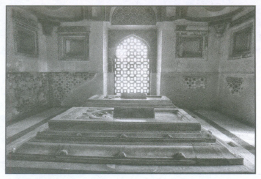
What is shown in this picture? When was it built and where is it located?
2.
Give a brief account of Raziyya
3.
Write a short note on Sher Shah Suri.
4.
Why did the Delhi Sultans build mosques all over the subcontinent?
5.
You are a peasant in Alauddin Khalji's or Muhammad Tughluq's reign and you cannot pay the taxes demanded by Sultan. What will you do?
6.
Do you think the 'Circle of Justice' is an appropriate term to describe the relationship between the king and his subjects?
7.
Read the following extract and answer the question that follow
The "Three Orders", the "Peace of God", Knights and the Crusades
The idea of the 'Three Orders" was first formulated in France in the early 11th century. It divided society into three classes, those who prayed, those who fought and those who tilled the land. This division of society into "Three Orders" was supported by the Church to consolidate its dominant role in society. This helped the emergence of a new warrior group called knights.
The Church patronised this group and used them to propagate their idea of "Peace of God". The attempt was to direct warriors away from conflict amongst themselves and send them instead on a campaign against the Muslims who had captured the city of Jerusalem. This led to a series of campaigns called the crusades. These campaigns in the service of God and the Church completely altered the status of knights. Originally, these knights did not belong to the class of nobles. But by the end of the 11th century in France and a century later in Germany, the humble origins of these warriors were forgotten. By the 12th century, nobles also wanted to be known, as knights.
What do you mean by the idea of the "Three Orders"?
8.
Read the following extract and answer the question that follows
Chieftains and their Fortifications
Ibn Battuta, a 14th-century traveller from Morocco, Africa, explained that chieftains sometimes fortified themselves in mountains, in rocky, uneven and rugged places as well as in bamboo groves. In India the bamboo is not hollow, it is big. Its several parts are so intertwined that even fire cannot affect them and they are on the whole very strong. The chieftains live in these forests which serve them as ramparts, inside which are their cattle and their crops. There is also water for them within, that is, rainwater which collects there. Hence, they cannot be subdued except by powerful armies, who entering these forests, cut down the bamboos with specially prepared instruments. Describe the ways in which the chieftains arranged for their defense.
9.
Describe about the 'Token currency' of Tughluq.
10.
How did the chieftains arrange for their defence?
11.
What were the four stages in the making of a manuscript?
12.
How did the Khaljis and Tughluqs help the people of humble birth? How did it lead to instability in the Sultanate?
13.
Who was Raziyya? Why was she not accepted as a Sultan inspite of being talented?
14.
Why were the Delhi Sultans interested in cutting down forests? Does deforestation occur for the same reasons today?
15.
Which ruler first established his or her capital at Delhi?
1.
Tombs of Shah [ahan and his favourite wife Mumtaz Mahal is shown in the picture. It is located at Taj Mahal built between 1632-1653in Agra, Uttar Pradesh, India
2.
In a brief, Sultan Iltutmish's daughter, Raziyya, became the Sultan in 1236. The chronicler of the age named Minhaj-i Siraj said that she was more able and qualified than all her brothers.
(i) Her brothers were not comfortable having her as ruler.
(ii) The nobles were also not happy at her attempts to rule independently.
(iii) She was removed from the throne in 1240.
3.
Sher Shah Suri (1540-1545) started his career as the Manager of a small territory for his uncle in Bihar and eventually challenged and defeated the Mughal emperor Humayun (1530-1540,1555,1556).
(i)Sher Shah Suri captured Delhi and established his own dynasty.
(ii) The Suri dynasty ruled for only fifteen years (1540- 1555)but it introduced an administration that had borrowed elements from Alauddin Khalji and made them more efficient.
(iii) Sher Shah's administration became the model for Akbar to some extent.
4.
Delhi Sultans built various mosques in different cities. They wanted to project themselves as protectors of Islam and Muslims. Mosques helped in creating a sense of community sharing, common belief and code of conduct. It was important as the Muslims came from variety of backgrounds.
5.
In the condition when I am unable to pay the tax to the state, I will state my request to him for getting concession in the tax. If he denies, I will further ask him to give some relaxation of time so that I can pay tax in coming years in the form of installments.
6.
'Circle of Justice' is an appropriate term to describe the relationship between the king and his subjects, because they were dependent on each other for their requirements.
7.
The broad social orders of the hierarchically conceived society in France is called as "Three Orders". They were divided into people who prayed, those who fought, those who tilled the land, This order was supported by Church to consolidate its dominance over society.
8.
The chieftains arranged multiple forms of defense system against the attacking enemies. A chieftain when attacked used to fortified in mountains, in rocky valleys, uneven and rugged places and in bamboo groves also.
In India the bamboo is strong, even fire cannot affect them as they are intertwined. The chieftains live in these forests which served them as ramparts, inside which there were cattle and crops. They cannot be subdued except by powerful armies. Only specially prepared instruments could cut down the bamboos where the chieftains took shelter.
9.
Tughluq did not control prices of goods. Rather, he used a token currency, made out of cheap metals and not of gold and silver. The token currency was somewhat like present-day paper currency. People of the 14th century did not believe in these coins. They saved their gold and silver coins and paid all their taxes to the state with this token currency. This cheap currency could be counterfeited easily.
10.
The chieftains fortified themselves in long mountains in rocky, uneven and rugged places as well as in bamboo groves. In India, the bamboo is big and it was strong. Even fire could not affect it because its groups were intertwined making them very strong. They kept everything necessary for life such as cattle, crops, water, etc inside the forests. Thus, they were safe and only powerful armies could subdue them.
11.
The four stages in the making of a manuscript are
(i) Preparing the paper.
(ii) Writing the text.
(iii) Melting gold to highlight important words and passages.
(iv) Preparing the binding.
12.
The Khaljis and the Tughluq's raised people of humble birth who were often their clients, to high political positions. They were appointed as generals and governors. However, the slaves and clients were loyal to their masters and patrons but not to their heirs. Heirs were the new rulers, they neglected such appointed man of high posts. This led to conflict between old and new nobility.
13.
Raziyya became Sultan of Delhi Sultanate in 1236. According to Minhaj-i-Siraj, she was more able and qualified than all tier brothers. Many including the nobles did not feel comfortable to share things with her. Those were the days when women were not allowed to enjoy independent identity. This led to her removal in 1240.
14.
The Delhi Sultans interested in cutting down forests to give land to the peasants and carry our agricultural practices. Also, new fortresses and towns were established to protect trade routes and to promote regional trade. They also cleared forests in order to safeguard their frontiers and quick movement of their army.
In today's world, deforestation occurs due to the construction of roads, railways, houses, and industries. So, we can say that deforestation occurs for the same reasons today only the perspective of views has been changed.
15.
Tomara Rajputs were the first rulers who established their capital at Delhi.

7th Standard CBSE Syllabus & Materials
7th Standard CBSE
CBSE 7th Social Science Theme B - New Beginnings : Cities and States - New Sample Question Papers Study Material - QB365 Set A
NEW7th Standard CBSE
CBSE 7th Social Science Theme A - Climates of India - New Sample Question Papers Study Material - QB365 Set A
NEW7th Standard CBSE
CBSE 7th Social Science Theme A - Geographical Diversity of India - New Sample Question Papers Study Material - QB365 Set A
NEW7th Standard CBSE
CBSE 7th Science Earth, Moon and the Sun - New Sample Question Papers Study Material - QB365 Set A



CBSE 7th Standard CBSE Subjects
CBSE Standards




