
 100% FREE ACCESS
7th Standard CBSE Syllabus & Materials
7th Standard CBSE
CBSE 7th Social Science Theme E - Understanding Market - New Sample Question Papers Study Material - QB365 Set A
NEW7th Standard CBSE
CBSE 7th Social Science Theme E - From Barter to Money - New Sample Question Papers Study Material - QB365 Set A
NEW7th Standard CBSE
CBSE 7th Social Science Theme D - The Constitution of India- An Introduction - New Sample Question Papers Study Material - QB365 Set A
NEW7th Standard CBSE
CBSE 7th Social Science Theme D - From the Rulers to the Ruled : Types of Governments - New Sample Question Papers Study Material - QB365 Set A
NEW7th Standard CBSE
CBSE 7th Social Science Theme B - The Age of Reorganisation - New Sample Question Papers Study Material - QB365 Set A
NEW7th Standard CBSE
CBSE 7th Social Science Theme B - The Rise of Empires - New Sample Question Papers Study Material - QB365 Set A

Published on: 06/03/2020
7th Standard Social Science Board Exam Model Question 2019-2020
Download CBSE Class 7th Standard CBSE Social Science question papers, sample papers, important questions, and previous year solved papers in PDF format. Get free study materials, NCERT solutions, and exam preparation resources for Class 7th Standard CBSE Social Science
Questions + Answers key
Take MCQ Social Science Test
1.
In today's world, women are succeeding in every field. Discuss the life of any such women achiever of independent India.
2.
Give a detailed account of growing up in Madhya Pradesh in the 1960s.
3.
Explain the process of water cycle.
4.
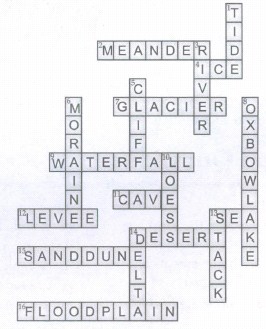
Solve the crossword puzzle with the help of given clues.
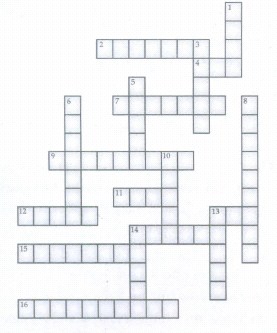
ACROSS
2. Loop like bend of a river.
4. Solid form of water.
7. Moving mass of ice.
9. Sudden descent of water in the bed of a river.
11. Natural cavity on weak rocks formed by action of waves.
12. Embankment on a river that keeps it in its channel.
13. Large body of sea water.
14. Dry area where sand dunes are found.
15. Small hill of sand caused by the action of the wind.
16. Flat plain formed by river deposits during time of flood.
DOWN
1. Rise and fall of water caused by friction of wind on water surface.
3. Flow of water in channel.
5. Steep perpendicular face of rock along sea coast.
6. Debris of boulder and coarse material carried by glacier.
8. Crescent shaped lake formed by meandering river.
10.Fine sand deposited by action of the wind.
13. Isolated mass of rising steep rock near a coastline.
14. Alluvial tracts of land formed by river deposits at the mouth of river.
5.
On the basis of following picture, answer the given questions.
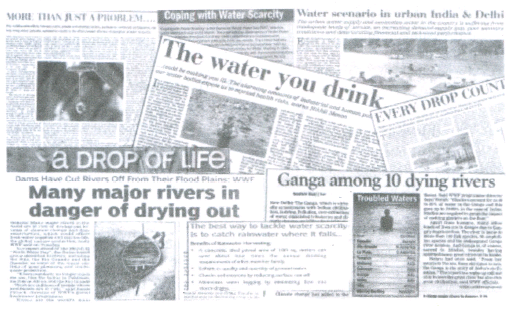
Why is water important for us?
6.
Why king's destroyed temples of others?
7.
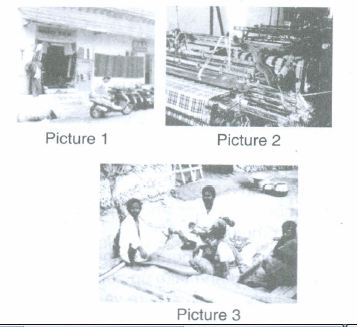
Observe the picture given below and answer the questions that follow
What are the traders doing in the 3rd picture?
8.
What were the results of formation of TMS?
9.
Write a note on weekly markets.
10.
What influence people of the Amazon Basin for their changing pattern of life?
11.
Write elaborately on the Miniature paintings in the Himalayan foothills.
12.
Discuss the role of technology in media.
13.
See the following objects carefully and answer the questions that follow
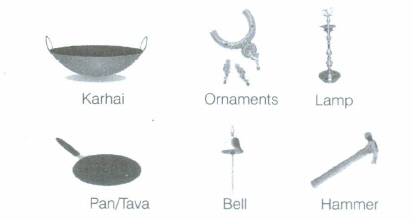
(a) Which minerals most commonly used in the above objects?
(b) Identify some more objects made up of different minerals?
14.
Using the following ads answer the following questions.
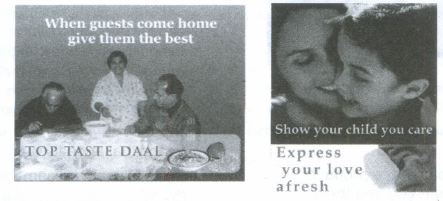
Who is this advertisement talking to and who is it leaving out?
15.
Explain all the major means of transport.
16.
Write a short note on the flora and fauna found in the Ladakh desert.
17.
Discuss the changes made by Kerala Government in the state in 1996.
18.
Observe the following picture as answer the questions that follow
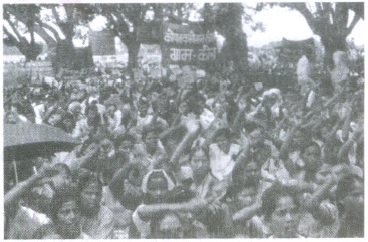
What do you infer from the above picture?
19.
Write a brief note on new religious developments in North India.
20.
How does ecosystem play an important role in the survival of human?
21.
Give an account of grasslands known by different names in different regions.
22.
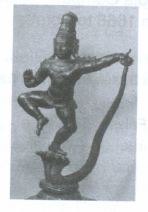
Observe the picture and answer the following questions.
What message does this statue give?
23.
Differentiate between the Prairies grasslands and Velds grasslands.
24.
Discuss Article 15 of Indian Constitution
25.
Write a note on tribes of Gondwana.
26.
How the Sikhs organised state-building in Punjab?
27.
Give an account of the Mughal relations with other rulers? How Shivaji reacted against Aurangzeb?
28.
In spite of many administrative changes, why Muhammad Tughluq's regime were a failure? Explain with examples.
29.
Interpret and compare the two above figures and answer the question Gates are opened and closed during which situation?
30.
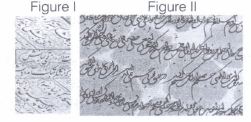
On the basis of the given picture, answer the following questions.
(a) What do the above figures shows?
(b) What are the differences that one can make out from the two given figures?
31.
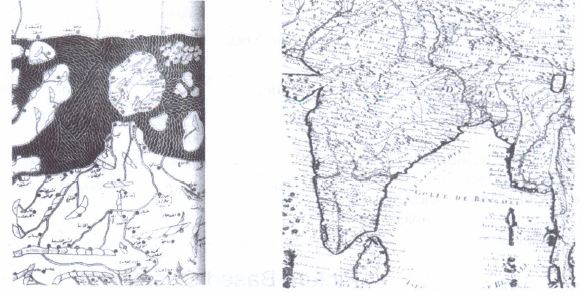
Compare either Map 1 or Map 2 with the present day map of the subcontinent listing as many similarities and differences (page no) as you can find.
32.
What is Khabar Lahriya?
Local magazine
Story book
Local newspaper
None of these
33.
Which one is not a water borne disease?
Diarrhoea
Hepatitis
Worms
Cancer
34.
The mid-day meal programme is helped in increasing the
Attendance
Enrolment
Entertainment
Both (a) and (b)
35.
The head of the State Government is :
Governor
MLA
Chief Minister
Ministers
36.
Who send the manufactured garments to other countries of the world?
Exporter
Importer
Manufacturer
Worker
37.
On 26 December, 2004, the wave moved from earthquake epicentre located in
Andaman and Nicobar island
India
Sumatra
Sri Lanka
38.
Kolkata is located on the river
Orange
Hooghly
Bhagirathi
39.
The direction which the Muslims face during prayer is called:
Khutba
merna
Kharaj
Qibla
40.
Which one is not a classical dance?
Bharatnatyam
Odiss
Bhangra
Kathakali
41.
Kabul and Qandahar were linked to the :
Silk Route
Cape Route
Suez Canal Route
Cotton Route
42.
Baba Guru Nanak born at :
Varanasi
Talwandi
Ajmer
Agra
43.
The TajMahal in Agra was completed in:
1720
1643
1667
1665
44.
According to the 2001 census data women form
48% of the population
58% of the population
84% of the population
38% of the population
45.
Shopkeepers in a weekly market are
large traders
wholesalers
big businessmen
small traders
46.
Granite is an example of
extrusive igneous rocks
intrusive igneous rocks
sedimentary rocks
igneous rocks
47.
Girls in Samoan Islands were given freedom after the age of
nine
five
twelve
fourteen
48.
Which is not a means of communication?
Telephone
Books
Table
49.
Advertising is all about building
brands
products
consumer
All of the above
50.
The ______ or the Tibetan antelope is an endangered species.
Pasmeena goat
Chiru
Sheep
Yak
51.
Rokeya Sakhawat Hossain knew how to read and write
Hindi
English
Urdu
Bangia
52.
Which is not a component of human environment?
Land
Religion
Community
53.
These wind blow constantly throughout the year in particular direction.
permanent winds
local winds
seasonal winds
both (a) and (b)
54.
Mosses and Lichens are found in
Desert Vegetation
Tropical evergreen forest
Tundra vegetation
55.
River Mississippi drains
Canada
Africa
USA
56.
Paiks are
the landlords
clan in Ahom state
the forced labourers of Ahom
clan in Gondwana
57.
What are the three types of earthquake waves?
A,B,C
X,Y,Z
P,S,L
P,Q,R
58.
Maharaja Ranjit Singh established his capital at
Ludhiana
Amritsar
Lahore
Chandigarh
59.
Akbar's religious discussions took place in the
Royal Palace
Mosque
Ibadat Khana
House of the Ulama
60.
Which dynasty ruled China for about 300 years?
Tang
Shang
Xian
Qin
61.
The term 'Hindustan' was used firstly by which of the following?
AI-Idrisi
Minhaj-i-Siraj
Amir Khusrau
Babur
62.
Give an account about the learning scenario in the 19th century.
63.
What is Chiru? Why is it hunted?
64.
How has satellite transformed our life?
65.
Why is less information available about tribes?
66.
What is 'Lost Wax' technique?
67.
How can you say that Mughal rulers adapted regional architectural styles in constructing their buildings? Support it with an example.
68.
Where do you think large farmers would sell their cotton? How is their situation different from Swapna?
69.
Why did the villagers set-up this organisation?
70.
All persons have equal rights to visit any shop in a marketplace'. Do you think this is true of shops with expensive products? Explain with examples.
71.
Read the given below extract and answer the questions that follow
Lake:A Source of Livelihood (A case study)
Binod is a fisherman living in the Matwali Maun village of Bihar. He is a happy man today. With the efforts of the fellow fishermen - Ravindar, Kishore, Rajiv and others, he cleaned the Maun or the ox-bow lake to cultivate different varieties of fish. The local weed (vallineria, hydrilla) that grows in the lake is the food of the fish.
The land around the lake is fertile. He sows crops such as paddy, maize and pulses in these fields. The buffalo is used to plough the land. The community is satisfied. There is enough fish catch from the river - enough fish to eat and enough fish to sell in the market. They have even begun supply to the neighbouring town.
What is community?
72.
Differentiate between waves and tides
73.
Read the information and answer the following question
From the advertisements, you can now see that the two daals are saying different things. 'TopTaste Daal' is appealing to our social tradition of treating guests extremely well. 'Best Taste Daal' is appealing to our concern for our children's health and that they eat things that are good for them. Values such as treating our guests well and ranking sure our children get nutritious food are used by brands to create brand values. These brand values are conveyed through the use of visuals and words to give us an overall image that appeals to us.
What values are claimed by the advertisers?
74.
Find out whether there are traditions of heroes/heroines in your town or village. What are the qualities associated with them? In what ways are these similar to or different from the heroic ideals of the Rajputs?
75.
Can you think of an issue that does not seem important to you because it is never featured in the media?
76.
Were Harmeet and Shonali correct in saying that Harmeet's mother did not work?
77.
What do you mean by a rock cycle?
78.
What factors other-than diseases affect our health?
79.
Give an account on atmosphere
80.
What were the major belief and practices of Sufis?
81.
What are the features of polar region and name the types of wildlife found here?
82.
Who is an MLA? Is it important to be a part of any political party to become an MLA?
83.
Compare the form of inequality that is casteism in rural and urban India.
84.
Explain the major features of the prairies.
85.
Which two gases make the bulk of the atmosphere?
86.
Differentiate between volcano and earthquake
87.
How did the Mughals influence got reduced in Awadh region?
88.
Describe jagirdars and their duties.
89.
Why were the Delhi Sultans interested in cutting down forests? Does deforestation occur for the same reasons today?
90.
What titles were adopted by the kings?
91.
Look at the areas in the interior of the subcontinent on Map 2. Are they asdetailed as those on the coast? Follow the course of the river Ganga and see how it is shown. Why do you think there is a difference in the level of detail and accuracy between the coastal and inland areas in this map?
92.
Can you make up a social advertisement on equality? Youcan do this in small groups.
93.
Mention the important part of an individual's identity. How do we learn acceptable behaviour?
94.
How many people in your neighbourhood use the Internet?
95.
Briefly write about flora and fauna of Velds.
96.
What is the importance of chain of markets in the story of the shirt? Elucidate.
97.
Having read about diarrhoea epidemic in the chapter on State Government can you make a social advertisement on what precautionary steps should be taken to prevent diarrhoea?
98.
Mention which mode of communication you will prefer most in the following situations-
(a) Your grandfather has suddenly fallen ill. How will you inform the doctor?
(b) Your mother wants to sell the old house. How will she spread this news?
(c) You are going to attend the marriage of your cousin for which you will be absent from the school for the next two days. How will you inform the teacher?
(d) Your friend has moved out with his/her family to New York. How will you keep in touch on a daily basis?
99.
Look at the photograph and think about the boy who is being carried down the stairs. Do you think the above law is being implemented in his case? What needs to be done to make the building
more accessible for him? How would his being arried down the stairs affect his dignity as well as his safety
100.
Make a collage to show places of attractions in India. You can divide the class in different groups to show attractions based on mountain landscapes, coastal beaches, wildlife sanctuaries and places of historical importance?
101.
Have you ever seen tribal people? Mention some states where tribal people live in India.
102.
What are Lithospheric plates? Why do they move slowly?
103.
For fun-Identify some more objects made up of different materials
104.
Compare the temple shown here (NCERT Textbook Pg-133) with that in chapter 2.
105.
How did the Sufi masters perform their activities?
106.
Make a list of towns in your district and try to classify these as administrative centre or as temple/pilgrim centres.
107.
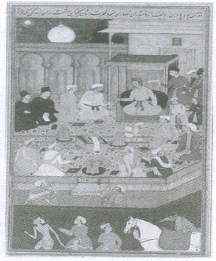
What are the details shown in this miniature? When this picture is prepared?
108.
Did you notice that the names by which languages are known have changed with time?
109.
How TM5 helped the fish workers?
110.
Why are the latest technologies costly?
111.
How is the rainforests of the Amazon Basin rich in fauna?
112.
What is the requirement of conducting Census every 10 years?
113.
Explain the relationship between markets and equality.
114.
Discuss the Costa Rican approach about health.
115.
How have the people of Prairies used technology and resources for their development?
116.
Describe the issues of equality in other democracies.
117.
What are the location settings of Ladakh?
118.
Mention the drawbacks of advertising.
119.
What changes have been brought in Railways?
120.
Write the common features of Awadh, Bengal and Hyderabad.
121.
Discuss various types of forests.
122.
Enlist the major features of the tribal societies.
123.
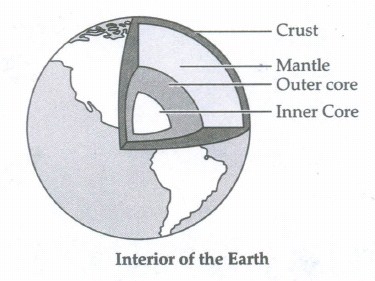
Describe the interior of the earth
124.
What do you know about Rajput tradition of heroism? Write in brief.
125.
How have human beings adapted to the environment to fulfil their needs?
126.
How did Kabul become commercially and politically important from 16th century onwards?
127.
How was Mughal architecture influenced by regional art?
128.
Write a brief note on new religious developments in North India.
129.
Describe the changes which took place between 700 and 1750.
1.
Arundhati Bhattacharya is an Indian banker and the chairperson of State Bank of India, the leading public sector bank of India. Bhattacharya was born in a Bengali family in the city of Kolkata. She spent her childhood in Bhilai. Her father, Prodyut Kumar Mukherjee worked at Bokaro Steel Plant. Her mother, Kalyani Mukherjee was a homeopathy consultant in Bokaro.
She completed her schooling from St. Xavier's School, Bokaro. She studied English Literature at Calcutta's Lady Brabourne College and then at [adavpur University. Bhattacharya joined SBI in September 1977. She is the first woman to lead an India-based Fortune India 500 company. Initially, she joined SBIin 1977 as a Probationary Officer at the age of 22 years
She has held several positions during her 36-year career with the bank including working in foreign exchange,' treasury, retail operations, human resources and investment banking. She introduced a two-year sabbatical leave policy for the bank's female employees to use either for maternity or elder care. On Women's day, she announced free vaccination against cervical cancer to all the bank's female employees.
In 2016, she was named the 25th most powerful woman in the world by Forbes. This is her first time being ranked on the list. In the same year, she was ranked among the FP Top 100 Global Thinkers by Foreign Policy magazine. She was named the 4th most powerful women in Asia Pacific by Fortune. In 2017, India Today magazine ranked her on 19th position in India's 50 most powerful people of 2017 list.
2.
Growing up in Madhya Pradesh in the 1960s:
(i) From class VI onwards boys and girls went to separate schools
(ii) Girls school was designed very differently from the boys school
(a) They had a central courtyard where they played in total seclusion and safety from the outside world.
(b) The boys school had no such courtyard and the playground was a big space attached to the school.
(iii) Every evening after the school, the boys watched as hundreds of school girls crowded the narrow streets as they looked very purposeful.
(iv) The boys used the streets for different things like to stand around idling, to play, to tryout tricks with their bicycles.
(v) The girls always went in groups, perhaps because they also carried fears of being teased or attacked by boys or other bad elements.
(vi) For the girls, the street was simply a place to get straight home.
3.
When water evaporates from land and different water bodies, it becomes water vapour. As the air gets warmer, its capacity to hold the water vapour increases. When the water vapour rises, it starts cooling. The water vapour condenses causing formation of droplets of water. When these droplets of water become too heavy to float in air, then they come down as precipitation in the form of either dew, rain, snow, sleet or hail.
4.
5.
Water is life-line of human. We use water for drinking, cooking, washing and irrigation.
6.
Kings built temples to demonstrate their devotion to God and their power and wealth. It is not surprising that whenever they attacked one another's kingdoms, they often targeted these temples.
The early 9th century Pandyan king Shrimara Shrivallabha invaded Sri Lanka and defeated Sena I. According to a Buddhist monk and chronicler Dhamma Kitti, " he removed all the valuables" ... The statue of the Buddha made entirely of gold in various monasteries were all seized.
Similarly in the early 11th century, the Chola king Rajendra I built a Shiva temple in his capital and filled it with prized statues seized from defeated rulers.
Sultan Mahmud also destroyed Somnath temple, he there by tried to win credit as a great hero of Islam. In middle ages, most of the rulers displayed their political might and military success by attacking and looting the places of worship of defeated rulers.
7.
They then bring back the finished cloth to the traders. Here, they can be seen getting ready to go to the merchant in the town. The trader keeps an account of the yarn given and pays them money for weaving this into cloth.
8.
The fish workers increased their earnings after the TMS took over as
(i) They formed cooperatives which would buy the catch from them at good prices.
(ii) Cooperatives would then arrange transport and sell this catch in markets at fair prices.
(iii) This all led to increases in their earnings by three times.
(iv) The TMS also provided loans for repair and purchasing new nets to fish workers.
TMS has proved that when people's organisations get their rights they become good managers and this has been proved as they managed to earn higher wages and preserved fishes in the reservoir.
9.
A weekly market is known as weekly for the reason that it is held on a particular day of the week. In India, there are thousands of such markets where people go for their daily requirements.
The weekly market has the following features
(i) It does not have a permanent shops.
(ii) Traders establish their shops for a single day and then close them up in the evening. They establish their shops next day somewhere else.
(iii) The things available in these markets are very cheap because the owners themselves manage the shop with the help of their family members.
(iv) They don't have their shops in permanent buildings where they have to pay rent, electricity, fees to the government and wages to their workers.
(v) These markets face competition as there are many shops of same kind. People buy from the shops which give them things at cheaper rates.
10.
Life of the people of the Amazon Basin is slowly changing. In the older days, the heart of the forest could be reached only by navigating the river. In 1970, the Trans Amazon highway made all parts of the rainforest accessible. Aircrafts and helicopters are also used for reaching various places.
The indigenous population was pushed out from the area and forced to settle in new areas where they continued to practice their distinctive way of farming. The developmental activities are leading to the gradual destruction of the biologically diverse rainforests. It is estimated that a large area of the rainforest has been disappearing annually in the Amazon Basin.
11.
Miniatures are painted in brilliant colours and has an important place in historical informations.
(i) A region that attracted miniature paintings was the Himalayan foothills around the modern day state of Himachal Pradesh.
(ii) By the late 17th century, the Himalayan region had developed a bold and intense style of miniature painting called basohli.
(iii) Due to the invasion of Nadir Shah the artists migrated to the hills where they found patrons and thus developed Kangra school of painting in the mid 1Sth century.
(iv) Following the Vaishnavite traditions it used soft colours including cool blues and greens, and a lyrical treatment of themes distinguished Kangra painting from other paintings.
(v) Miniature paintings were carefully preserved in palaces.
12.
Technology is the use of science in industry to invent useful things or to solve problems. Cable television and extensive use of the Internet is a recent phenomenon. Technology used by media is dynamic. Print media and electronic media reach a large number of people through the use of certain technologies. Their name is based on type of technology they use.
The dynamic nature of technology helps media to spread its effect to more people with better quality of sound and images. Technology also contributes in changing the way people think.
13.
(a) Iron
(b) Karhai-lron, Ornaments-Gold, silver, Lamp-Brass, Pan/Iava-Iron, Bell-Brass, Hammer-Iron
14.
These advertisements are talking to the people who can afford them and leaving those categories of people who want to buy them but cannot buy because of limited money they have.
15.
Transport is the means by which people and goods move. In the early days, it took a great deal of time, to travel long distances. The four major means of transport are
(i) Roadways The most commonly used means of transport especially for short distances are roads. They can be metalled (pucca) and unmetalled (kutcha). The plains have a dense network of roads. Roads have also been built in terrains like deserts, forests and even high mountains.
(ii) Railways The railways carry heavy goods and people over long distances quickly and cheaply. The invention of the steam engine and the Industrial Revolution helped in speedy development of rail transport. Diesel and electric engines have largely replaced the steam engines.
(iii) Waterways They are the cheapest for carrying heavy and bulky goods over long distances. They are mainly of two types - inland waterways and sea routes. Navigable rivers and lakes are used as inland waterways. For example, the Ganga-Brahmaputra river system, the Great Lakes in North America and the river Nile in Africa. Sea routes and oceanic routes are mostly used for transporting merchandise and goods from one country to another. These routes are connected with the ports.
(iv) Airways This is the fastest way of transport developed in the early 20th century. It is also the most expensive due to high cost of fuels. Air traffic is adversely affected by bad weather like fog and storms. It is the only mode of transport to reach the most remote and distant areas especially where there are no roads and railways.
16.
Due to high aridity, the vegetation is sparse. There are scanty patches of grasses and shrubs for animals to graze. Groves of willows and .poplars are seen in the valleys.
During the summers, fruit trees such as apples, apricots and walnuts bloom. Several species of birds are sighted in Ladakh. Robins, redstarts, Tibetan snowcock, raven and hoopoe are common. Some of these are migratory birds. The animals of Ladakh are wild goats, wild sheep, yak and special kinds of dogs. The animals are reared to provide for the milk, meat and hides. Yak's milk is used to make cheese and butter. The hair of the sheep and goat is used to make woollens.
17.
Kerala Government has made efforts to provide adequate healthcare to its people. In 1996, the State Government gave its 40% budget to the Panchayats in order to provide better facilities and check the existing ones. Problems such as water supply schemes, specific problems of village were taken up. Proper planning was done for betterment of people. Safe water, food, women's, development and education were provided health centres were improved. Working of schools and anganwadis was ensured. All other problems were checked though some problems are there which have to be addressed.
18.
From the above picture, it is inferred that people have gathered to raise their opinion for
some issue and protest the government. This type of public action is allowed in democratic government.
19.
A New wave of Bhakti movement erupted during the 13th century. This was an age when Islam, Brahmanical Hinduism, Sufism, various strands of Bhakti, the Nath panthis, Siddhas and yogis influenced one another.
The main reason was that the ordinary strata of the society such as craftspersons, peasants, traders, etc showed their interest in listening to these new saints. The notable saints like Kabir and Baba Guru Nanak did not approve the orthodox religions. Tulsidas and Surdas accepted existing beliefs and practices but wanted to make these accessible to all. Tulsidas conceived of God in theform of Rama who wrote Ramacharitmanas in praise of him.
Surdas was an ordent devotee of Krishna. His compositions compiled in the Sursagara, Sursarawali and Sahitya Lahari, express his devotion. Shankaradeva of Assam emphasised devotion to Vishnu and composed poems and plays in Assamese. Besides, Surdas, Dadu Dayal, Ravidas and Mirabai are worth mentioning about their role in Bhakti movement.
20.
Ecosystem is a system formed by the interaction of all living organisms with the physical and chemical factors of the environment in which they live, all linked by transfer of energy and materials.
All plants, animals and human beings depend on their immediate surroundings. This relation between the living organisms and their surroundings form an ecosystem. There could be an ecosystem of large rainforest, grassland, desert, mountain, lake, river, ocean and even small pond. All these components, help in the survival of life.
21.
Grasslands are areas where the vegetation is dominated by grasses and bushes. Grasslands are known by different names in different regions.
Tropical Grasslands
(i) East Africa- Savannah (ii) Brazil- Campos (iii) Venezuela- Llanos
Temperate Grasslands
(i) Argentina- Pampas (ii) North America- Prairie (iii) South Africa- Veld (iv) Central Asia- Steppe (v) Australia- Down
22.
It shows that God only can protect us from dangerous enemy like serpent demon. It implies good wins over evil power. If we have strong determination we can achieve our goal.
23.
| Prairies grasslands | Velds grasslands |
| i) The temperate grasslands of North America are known as the prairies. |
The temperate grasslands of South Africa are called the velds. They are rolling plateaus with varying heights ranging from 600 m to 1100 m. |
| ii) The word Prairie originated from Latin word priata which means meadow. |
The veld name was given by the Dutch settlers before South Africa was colonised by the British. |
| iii) It lies in the Northern Hemisphere. | It lies in the Southern hemisphere. |
| iv) The tributaries of river Mississippi and Saskatchewan drain the region. |
The tributaries of rivers Orange and Limpopo drain the region |
| v) The prairies are bound by the Rocky Mountains in the West and the Great Lakes in the East. |
It is bound by the Drakensberg mountains on the East and the Kalahari desert on the West. |
24.
Article 15 talks about, prohibition of discrimination on grounds of religion, race, caste, sex or place of birth.
(i) The state shall not discriminate against any citizen on grounds only of religion, race, caste, sex place of birth or any of them.
(ii) No citizen shall, on grounds only of religion, race, caste, sex, place of birth or any of them, be subject to any disability, liability, restriction or condition with regard to
(a) access to shops public restaurants, hotels and places of public entertainment.
(b) the use of wells, tanks, bathing ghats, roads and places of public resort maintained wholly or partly out of state funds or dedicated to the use of general public.
25.
The Gonds lived in Gondwana region, a vast forested region of central India. They practised shifting cultivation. The large Gond tribe was further divided into many smaller clans. Each of these clans had its own raja or rai. When Delhi Sultanate was declining of a few large Gond kingdoms began to dominate the smaller Gond chiefs.
Administration of the Gond kingdoms was centralised. The kingdom was divided into garhs. A particular Gond clan controlled each garh. It was further divided into units of 84 villages called chaurasi. The chaurasi was subdivided into barhots which were made up of 12 villages each.
26.
i) During the 17th century the Sikhs paid attention into the state-building in the Punjab state. Several battles were fought by Guru Gobind Singh against the Rajput and Mughal rulers, both before and after the institution of the Khalsa in 1699. After his death, 1708, the Khalsa revolted against the Mughal authority under Banda Bahadur's leadership. The Sikhs declared their sovereign rule by striking coins in the name of Guru Nanak and Guru Gobind Singh and established their own administration between the Sutlej and the Jamuna. Under a number of able leaders in the 18th century, the Sikhs organised themselves into a number of bands called Jathas and later on misls. Their combined forces were known as the grand army (Dal Khalsa).
ii) A system called rakhi was introduced. By the late 18th century, the Sikh territories extended from the Indus to the Jamuna. Maharaja Ranjit Singh reunited the different Sikh groups.
27.
Mughal rulers campaigned constantly against rulers who refused to accept their authority. Many other rulers like Rajputs joined them voluntarily. The Rajputs are a good example of this.
Many of the Rajputs married their daughters into Mughal families and in return they are placed in key positions. But many resisted as well.
The Sisodiya Rajputs refused to accept Mughal authority for a long time.
The careful balance between defeating but not humiliating their opponent kings and chieftains enabled the Mughals to expand their kingdoms. But this attitude was not maintained by all the emperors.
Aurangzeb insulted Shivaji when he came to Agra to accept Mughal authority. The consequence of this insult was that Shivaji declared himself an independent king and resumed his rivalry against the Mughals.
28.
Muhammad Tughluq introduced many significant changes in his administrative system. In spite of all these changes his regime was a failure.
His major administrative failures were
(i) He campaigned into Kashmir but it proved a disastrous campaign. He then gave up plans to attack Transoxiana and disbanded his large army.
(ii) He shifted the residents of the old city to Daulatabad in the South. They resented collectively due to this.
(iii) In order to meet the expense of maintaining a large number of soldiers, levied additional taxes which increased the burden of the common man.
(iv) The famine in the Ganga-Yamuna belt led to widespread rebellion.
(v) People did not trust the token currency that was launched by Sultan. They saved their gold and silver coins and paid all their taxes to the state with the token currency. This cheap currency could also be counterfeited easily.
29.
Gates were opened to irrigate land and closed to store water for future use.
30.
(a) Both the figures show the handwriting of Persian and Arabic languages.
(b) Ist figure is cursive and easy to read, it is called the nastaliq style.
IInd figure is denser and more difficult to understand, it is called as shikaste style.
31.
Differences Map 1 and Map 2 given in the NCERT text book (Map 2) represent two different times
Map 1 was made in 1154 CE by Al-ldrisi, an Arab geographer, the map given here is the map of Indian subcontinent from his larger map of the world.
Map 2 was made by a French cartographer in 1720. Both maps are quite different from each other in mode of presentation and contexts. However, both traced the outlines of the area of Indian subcontinent in their cartography.
Similarities Map 1, South India was at that place where North India is at present and Sri Lanka is the island the top. Name of place were in Arabic. Today's map of India is far ahead of Map 1 and Map 2. It is made to scale and shows clear-cut boundaries and areas.
32.
(c)
Local newspaper
33.
(d)
Cancer
34.
(d)
Both (a) and (b)
35.
(c)
Chief Minister
36.
(a)
Exporter
37.
(c)
Sumatra
38.
(b)
Hooghly
39.
(d)
Qibla
40.
(c)
Bhangra
41.
(a)
Silk Route
42.
(b)
Talwandi
43.
(b)
1643
44.
(a)
48% of the population
45.
(d)
small traders
46.
(b)
intrusive igneous rocks
47.
(d)
fourteen
48.
(c)
Table
49.
(a)
brands
50.
(b)
Chiru
51.
(c)
Urdu
52.
(a)
Land
53.
(a)
permanent winds
54.
(c)
Tundra vegetation
55.
(c)
USA
56.
(c)
the forced labourers of Ahom
57.
(c)
P,S,L
58.
(c)
Lahore
59.
(c)
Ibadat Khana
60.
(a)
Tang
61.
(b)
Minhaj-i-Siraj
62.
In the 19th century, many new ideas about education and learning emerged.
(i) Schools became more common and communities that had never learnt reading and writing started sending their children to school.
(ii) There was a lot of opposition to educating girls even then, many women and men made efforts to open schools for girls.
(iii) Women struggled to learn to read and write.
63.
(i) The Chiru or the Tibetan antelope is an endangered
species.
(ii) It is hunted for its wool known as shahtoosh.
(iii) Shahtoosh is light in weight and extremely warm.
64.
Satellite has transformed our lives in numerous ways, namely-
(i) Satellites have made communication faster.
(ii) Satellites have helped in oil-exploration, survey of forest, underground water mineral wealth, weather-forecast and disaster warning.
(iii) We can send electronic mails through internet, gather worldwide information
(iv) Wireless telephonic communications through cellular phones are the need of day
65.
Tribal people were found in almost every region of the subcontinent. Contemporary historians and travellers give little information about the tribes because the tribal people mostly did not keep written records.
They preserved their customs and oral traditions which were passed on from generation to generation and these were used to write their histories
66.
(i) In this technique, first an image was made of wax which was covered with clay and allowed to dry.
(ii) Then it was heated, and a tiny hole was made in the clay cover. The molten wax was drained out through this hole and molten metal was poured into the clay mould through the hole.
(iii) When the metal cooled and solidified, the clay cover was removed and the image was cleaned and polished.
67.
The creation of large empires brought different regions under their rule helped in the cross-fertilisation of artistic forms and architectural styles. In Bengal, the local rulers had developed a roof that was designed to resemble a thatched hut. The Mughals liked this 'Bangia dome' and used it in their architecture.
In Akbar's capital at Fatehpur Sikri, many of the buildings show the influence of the architectural styles of Gujarat and Malwa.
68.
Large farmers would sell their cotton in markets and that too at higher rates. Their situation is different from Swapna as
She is small farmer.
She has taken loan from the trader.
She promised to sell cotton to the trader
69.
The villagers set-up this organisation in order to fight for the right to catch fish in Tawa reservoir.
70.
No, I think it is true of shops with expensive products as well. Every person had an equal right to visit any shop in a marketplace, even those selling expensive items. For example, Sujata and Kavita had every right to enter the shop selling readymade branded clothes in 'Anzal Mall'. The security grand looked at them as if he wanted to stop them from entering the shop because they appeared poor. Even if they could not afford to buy any cloth from that shop, they had the right to visit it.
71.
The community is living in harmony with nature.
72.
Differences between waves and tides are
| Waves | Tides |
| When the water on the surface of the ocean rises and falls alternately, they are called waves |
The rhythmic rise and fall of ocean water twice in a day is called a tide. |
| During a storm, the winds blowing at very high speed form huge waves. These may cause tremendous destruction | It is high tide when water covers much of the shore by rising to its highest level. It is low tide when water falls to its lowest level and recedes from the shore. |
73.
Values such as treating our guests well and making sure that children get nutritious food are used by brands to create brand values.
74.
Yes, Banda Veer Bairagi.
1. Brave and fearless.
2. Neversurrenderedto Mughals. He was killed by Mughal emperor.
75.
Poor sanitary conditions of the people living below the poverty line.
76.
No, Harmeet and Shonali were not correct in saying that their mother did not work because their mother used to stay at home and do all the household work for which she was not paid. They developed a notion that she did not work.
77.
The process of transformation of the rock from one to another type under certain conditions in a cyclic manner is known as the rock cycle.
78.
Health is not just about diseases.
Other factors that affect our health are
(i) Clean drinking water
(ii) Pollution free environment
(iii) Adequate food to eat
(iv) Hygienic living conditions
(v) Absence of mental strain
79.
The atmosphere is the thin layer of air that surrounds the Earth. The gravitational force of the Earth holds the atmosphere around it. It protects us from harmful rays and scorching heat of the Sun. It consists of a number of gases, dust and water vapour. The changes in the atmosphere produce changes in the weather and climate.
80.
The following were the major beliefs and practices of Sufis
1. The Sufis often rejected the elaborate rituals and codes of behaviour demanded by Muslim religious scholars.
2. They sought union with God much as a lover seeks his beloved with a disregard for the world.
3. Like the saint poets, the Sufis too composed poems expressing their feelings and a rich literature in prose, including anecdotes and fables, developed around them.
4. They believed that heart can be trained to look at the world in a different way. They developed methods like zikr, contemplation, Sarna, ragas, discussion of parables, breath control, under the guidance of a master or pir.
Thus, emerged a Silsilas, a genealogy of Sufi teachers.
81.
The features of polar region and types of wildlife are as
(i) They are extremely cold.
(ii) Growth of natural vegetation is very limited here.
(iii) Only mosses, lichens and very small shrubs grow here during short summer.
(iv) Seal, walrus, reindeer, mink (musk oxen), arctic owl, polar bear, snow foxes are some of the common animals found in this region.
82.
MLA is a Member of Legislative Assembly and is elected by people representing a particular constituency. It is not important for a person to be a part of any political party to become an MLA. The person can contest elections as an independent candidate also.
83.
One of the most common form of inequality in lndia is caste system. In rural India, caste identity is something that one experiences at young age whereas in urban India, one may think that nobody believes in caste system but matrimonial reveal the truth that caste system still continues to be in minds of highly educated urban Indians
84.
The temperate grasslands of North America are known as the prairies. It is a region of flat, gently sloping or hilly land. For the most part, prairies are treeless but. near the low lying plains, flanking river valleys, woodlands can be found.
85.
Nitrogen and Oxygen are the two gases which make the bulk of the atmosphere.
86.
Volcano Molten material erupts suddenly from the vent of Earth's crust.
Earthquake Movements of lithospheric plates causes vibration and that vibration is called earthquake.
87.
Burhan-ul-Mulk tried to reduce Mughal influence in the Awadh region by taking the following steps
(i) He reduced the number of office holders (Jagirdars) appointed by the Mughals.
(ii) He reduced the size of Jagirs and appointed his own loyal servants to vacant positions.
(iii) The accounts of Jagirdars were checked to prevent cheating and the revenues of all districts were re-assessed by officials appointed by the Nawab's court
88.
In Akbar's time, jagirs were carelessly assessed so that their revenues were roughly equal to the salary of the mansabdar. Mansabdars received their salaries as revenue assignments called jagirs. By Aurangzeb' time situation changed and the actual revenue collected was often less than the granted sum. There was also a huge increase in the number of mansabdars which led to a shortage in the number of jagirs.
As a result, many jagirdars tried to extract as much revenue as possible while they had a jagir. It led to the tremendous sufferings of the peasantry.
89.
The Delhi Sultans interested in cutting down forests to give land to the peasants and carry our agricultural practices. Also, new fortresses and towns were established to protect trade routes and to promote regional trade. They also cleared forests in order to safeguard their frontiers and quick movement of their army.
In today's world, deforestation occurs due to the construction of roads, railways, houses, and industries. So, we can say that deforestation occurs for the same reasons today only the perspective of views has been changed.
90.
Many of the new kings adopted high-sounding titles. These titles were Maharaja-Adhiraja meant great king, overlord of kings which Tribhuvana-Chakravartin meaning the lord of the three worlds and so on.
However, they often shared power with their Samantas as well as with association of peasants, traders and Brahmanas.
91.
The interior of the subcontinent in Map 2 is not so detailed as it is on the coast. The course of Ganga river is not correctly shown in the map. Although the cities on the banks of Ganga, e.g. Banaras, Patna, etc are shown.
Yes, there is a difference in the level of detail and accuracy between the coastal and inland areas in this map. At that time, there were voyages along the coasts and the travellers studied coastal areas themselves. They did not go inland. Thus, the details of inland depend upon their estimation, not on their studies. Moreover, maps are used by European sailors and merchants on their voyages. Thus to satisfy their need, cartographer made the maps in this way.
92.
Do yourself.
93.
(i) To be a boy or girl is an important part of one's identity.
(ii) The society teaches us the kind of behaviour acceptable for girls and boys
(iii) We often .grow lip thinking that these things arc exactly the same everywhere.
94.
Most of the people in my neighbourhood use the Internet.
95.
The vegetation cover is sparse, with more of grasses.
Red grass grows in bush velds.
In the high velds acacia and maroola are seen to be growing.
The animals of the velds are primarily lions, leopards, cheetah and kudu.
96.
(i) A chain of markets links the producer of cotton to the buyer of the shirt in the supermarket.
(ii) Buying and selling takes place at every step in the chain.
(iii) Everyone in the chain does not benefit equally from this. The retailer benefits the most from this chain.
97.
Drink safe live safe :
Avoid drinking impure water and keep your life safe. Safety is in our hands.
98.
(a) Through telephone
(b) By advertising in the newspaper, or on the local TV news channel
(c) Sending a leave application to the teacher by post, or by hand personally.
(d) Through e-mail using the Internet.
99.
In this case, the above law is not implemented. To make the building accessible for him, it should have a plain surface so that he can move in or out easily and on his own. Being carried down the stairs shows his dependence which affects his dignity and also his safety because there is a chance of getting hurt if he slips down.
100.
Students can collect photographs of different mountain landscapes, coastal beaches, wildlife sanctuaries and places of historical importance such as Taj Mahal, Red Fort, Qutub Minar, etc., from different magazines and newspapers.
101.
Yes, I have seen tribal people when I went for a visit to Chhattisgarh last year. Some states where tribal people live in India include Chhattisgarh, Odisha, Jharkhand, Madhya Pradesh and some parts of north-eastern states.
102.
The Lithosphere is broken into a number of plates known as the Lithospheric plates. They move very slowly because the molten magma inside the earth moves in a circular way.
103.
Tumbler beaker-Made of Glass.
Table - Made from wood
Utensils - Made from steel.
104.
The structure of temple shown in chapter 2 is pyramidal while the temples shown in here are of spherical shape.
105.
(i) The Sufi masters held their assemblies in their khanqahs or hospices.
(ii) They discussed spiritual matters.
(ill) Devotees of all groups including members of the royalty and nobility, and ordinary people flocked
to these khanqahs.
(iv)They sought the blessings of the saints in solving their worldly problems.
They also simply attended the music and dance sessions
106.
The list of the towns in our district as administrative and pilgrim centres are as follows :
Administrative centre -Agra, Fatehpur Sikri.
Pilgrim/temple centre -Mathura, Vrindavan.
107.
Akbar is holding discussions with learned individuals of different faiths in the Ibadat Khana. This miniature painting is an illustration to the Akbar Nama. This miniature painting was prepared by Nar Singh, CE.1605.
108.
The names of languages which changed over time are as follows
Lahori : Punjabi
Telangani : Telugu
Gujari : Gujarati
Mabari : Tamil
Gauri : Bengali
Hindawi : Hindi
109.
TMS helped the fish workers in following ways:
(i)TMS set up the cooperative.
(ii) These cooperatives would buy the catch from them at a fair price.
(iii)The cooperative would then arrange to transport and sell this in markets where they would get a good price.
(iv) They have now begun to earn three times more than they earned earlier.
(v) The TMS has also began giving the fish workers loans for repairs and for buying of new nets. By managing to earn a higher wage as well as preserving the fish in the reservoir, the TMS has shown that when people's organisation get their rights to livelihood, they can be good managers.
110.
(i) There are different technologies that media use today and these are costly. T.V. studio with cameras, sound recorders, lights, transmission and satellites cost a lot of money.
(ii) News studio or serial production require the services of large number of people like readers, cameraman, actors, production units, etc and their salaries add to the expenses.
(iii) Electronic media also involves money.
(iv) Print media needs offices, machines, people to work on them, people Work related like reporting, getting advertisements, marketing or selling, all this again cost a lot of money.
(v)Moreover, the technology keeps on changing, and the media has to keep pace with that which itself is costly.
111.
The rainforests of the Amazon Basin is rich in fauna:
Birds such as toucans, humming birds, bird of paradise with their brilliantly coloured plumage, oversized bills for eating are found here. These birds also make loud sounds in the forests.
Animals like monkeys, sloth and ant-eating tapirs are found here.
Various species of reptiles and snakes also thrive in these jungles. A large number of Crocodiles, snakes, pythons are found here. Anaconda and boa constrictor are some of the species.
Besides, the basin is home to thousands of species of insects.
Several species of fishes including the flesh eating Piranha fish is also found in the river. This basin is thus extraordinarily rich in the variety of life found there.
112.
Census is held to count the entire population. It also collects details about age group, work areas, standard of living and so on. All this data help the government to plan out the development programmes.
This helps us to know about the percentage of literate population, ratio of men and women, ratio of rural and urban population, economic status of the people, people engaged in different professions etc.
113.
There are two types of sellers in the market, one in the weekly market and other in the shopping complex.
Small trader has little money whereas the other has more money to set up their shops. They earn unequal amounts. The weekly market traders earn little as compared of a regular shop owner in a shopping complex.
Even buyers are also differently placed. There are some who can not afford cheapest of goods and some shop in malls.
Therefore these markets depend on money as buyers or sellers.
114.
Costa Rican approach about Health :
(i) Costa Rica is one of the healthiest countries in South America. The main reason for this is found in the Costa Rican constitution.
(ii) Costa Rica took a very important decision to not have an army. This helped the Costa Rican government to spend the additional money on health, education and other basic needs of the people.
(iii) The Costa Rican government believes that a country has to be healthy for its development.
(iv) It pays a lot of attention to the health of people.
(v) The Costa Rican government provides basic services and amenities like safe drinking water, sanitation, nutrition, and housing to its entire people. Health education is also considered very important and knowledge about health is an essential part of education it all level.
115.
The people of prairies are very hard working. They have successfully harnessed technology to utilise their rich natural resources:
(i) USA and Canada, the most developed countries are located in this region.
(ii) Scientific methods of cultivation and use of tractors, harvesters and combines of both have made North America a surplus food producer. Thus the Prairies are also known as the "Granaries of the world," due to the huge surplus of wheat production.
iii) Dairy farming is another major industry. Dairy farming and extensive agriculture both promote setting up of food processing industries.
(iv) Large mineral deposits mainly coal and iron and a good network of roads, railways and canals in this region have made it the most industrialised region in the world.
116.
Issues of Equality in Other Democracies
(i) India is not the only democratic country in which there is inequality and in which the struggle for equality continues to exist.
(ii) In most democratic countries around the world, the issue of equality continues to be the key issue around which communities struggle. In USA the African-American brought as skives from Africa continue to be largely unequal. This is despite a movement in the late 1950s to push for equal rights for African-American. Prior to this, African-American were treated extremely unequally in the United States. They were denied equality through law.
117.
(i) Ladakh is a cold desert situated in the Great Himalayas, on the eastern side of Jammu and Kashmir.
(ii) It is flanked by the Karakoram Range in the north and the Zanskar mountains in the south.
(iii) Several rivers flow through Ladakh, these rivers form deep valleys and gorges.
(iv) Several glaciers including Gangri glacier are found in Ladakh.
(v) The altitude in Ladakh varies from about 3000m in Kargil to more than 8,000m in the Karakoram
118.
Advertising has following drawbacks :
(i) Advertisements create a wrong belief that branded and packaged products are far better than things that do not come in packets.
(ii) We forget that the quality of a product is not concerned with the packaging that it comes in.
(iii)This shift to packaged products negatively affects the sales of several small businesses.
(iv) Advertising tends to promote a certain lack of respect for the poor. They are not the faces we most often see in advertisements and so we tend to dismiss their lives as worthless.
(v) Advertising appeals personal emotions because the people who cannot afford certain brands feel bad. They feel that they are unable to give their loved ones the best care that branded products appear to offer.
119.
(i) The invention of the steam engine and the Industrial Revolution helped in speedy development of rail transport.
(ii) Diesel and electric engines have largely replaced the steam engines.
(iii) Superfast trains have been introduced to make the journey faster.
(iv) The railway network is well-developed over the plain areas.
(v) Advanced technological skills have enabled laying of railway lines in difficult mountain terrains also.
120.
The three states Awadh, Bengal and Hyderabad had certain common features:
(i) They were all established by the Mughal nobles, They were highly suspicious of some of the administrative system that they had interested in particular, the jagirdari system.
(ii) Their methods of tax collection were different. Rather than relying upon the officers of the state all three regimes contracted with revenue farmers for the collection of revenue.
(iii) All these states had relationship with the bankers and the moneylenders. These people lent money to revenue farmers, received land as security and collected taxes from these lands through their own agents.
121.
Types of forests:
(i) Tropical Evergreen Forests
(ii) Tropical Deciduous Forests
(iii) Temperate Evergreen Forests
(iv) Temperate Deciduous Forests
(v) Mediterranean Vegetation
(vi) Coniferous Forests.
(i) Tropical Evergreen Forests:
These forests are very dense and occur in the regions near the equator and close to the tropics. These regions receive heavy rainfall throughout the year. The trees of these forests do not shed their leaves altogether and thus they remain evergreen. The thick canopies of the closely-spaced trees do not allow the sunlight to penetrate inside the forest even in the day time. Hardwood trees like rosewood, ebony and mahogany are common here.
(ii) Tropical Deciduous Forests:
Tropical deciduous are the monsoon forests found in regions experiencing seasonal changes. Trees shed their leaves in the dry season to conserve water. The hardwood trees found in these forests are sal, teak, neem and shisham. Tigers, lions, elephants, langoors and monkeys are the common animals of these regions.
(iii) Temperate Evergreen Forests:
The temperate evergreen forests are found in the eastern margin of the continents. They comprise both hard and soft wood trees like oak, pine, eucalyptus, etc.
(iv) Temperate Deciduous Forests:
These trees are found in the northeastern part of the USA, China, New Zealand and Chile. They are also found in the coastal regions of Western Europe. They shed their leaves in the dry season. The common trees are oak, ash, beech, etc. Deer, foxes, wolves are common animals found in this region.
(v) Mediterranean Vegetation:
These are mostly found in the areas around the South-West Margins of the continents. Citrus fruits such as oranges, figs, olives and grapes are commonly cultivated here. There is not much wildlife here.
(vi) Coniferous Forests:
These forests are also called Taiga. They are also seen in the higher altitudes. They are tall, softwood evergreen trees. Chir, pine, cedar are the important varieties of trees in these forests. Silver fox, mink, polar bear are the common animals found here.
122.
Major Features of the Tribal Societies:
(i) Members of each tribe were united by kinship bonds.
(ii) Many tribes obtained their livelihood from agriculture.
(iii) Others were hunter-gatherers or herders.
(iv) Some tribes were nomadic and moved from one place to another.
(v) A tribal group controlled land and pastures jointly, and divided these amongst households according to its own rules.
(vi) Many large tribes evolved in different parts of the subcontinent. They usually lived in forests, hills, deserts and places difficult to reach. Sometimes they clashed with the more powerful caste-based societies.
(vii) The tribes retained their freedom and preserved their separate culture.
123.
The earth is made up of several concentric layers with one inside another.
There are three main layers are Crust, Mantle, and Core
(i) Crust: It is the uppermost layer over the earth's surface and thinnest among all layer The continental mass of the crust consisting of silica and alumina, thus it is called sial (si- silica and al-alumina). The oceanic crust consist of silica and magnesium, thus called sima (si-silica, ma-magnesium). It is about 35 km thick on the continental masses and only 5 km thick on the oceans floors.
(ii) Mantle: It is just beneath the crust, with a depth of 2,900kms.
(iii)Core: It is the innermost layer of the earth, mainly made up of nickel and ferrous. The central core has very high temperature and pressure.
124.
Rajputs are closely associated with the culture of Rajasthan.
These cultural traditions were closely linked with the ideals and aspirations of rulers. Rajasthan was ruled by various Rajput families. The name of the Prithviraj is worth mentioned, because he was one of the ablest Rajput ruler.
These rulers cherished the ideal of the hero who fought valiantly, often choosing death on the battlefield rather than face defeat.
Stories about Rajput heroes were recorded in poems and songs, which were recited by specially trained minstrels. These preserved the memories of heroes and were expected to inspire others to follow their example.
Ordinary people were also attracted by these stories which often depicted dramatic situations, and a range of strong emotions -loyalty, friendship, love, valour, and anger.
125.
From the early times human beings have been interacting with the environment and they modified it according to their needs.
Early humans adapted themselves to the natural surroundings. They led a simple life and fulfilled their needs from the nature around them. But their needs kept on increasing. They became varied also. For fulfilling their needs, human beings learnt new ways to change the environment. They learnt to grow crops, domesticate animals and led a settled
life. The wheel was invented. Surplus food was produced. Barter system emerged. Transportation became faster, trade started, commerce developed and information revolution made communication easier and speedy across the world. Industrial revolution made possible and large scale production started.
In the present environment, mind-boggling variety of clothes, games, food items are purchased.
In this way human beings adapted to the environment in order to fulfil their needs
126.
(i) Kabul became commercially and politically important from 16th century onwards because along with Kandahar it was linked to the "Silk Route".
(ii) Trade in horses was mainly carried through this route.
(iii) Camels carried dry fruits, carpets, Silk, dates and fruits from Kabul to the subcontinent.
(iv) Slaves were also brought over here for sale.
127.
The creation of large empires that brought different regions under their rule helped in the cross fertilization of artistic forms and architectural styles. Mughal rulers were skilled in adapting regional architectural styles in the construction of their own buildings. For example, in Bengal, rulers had developed a roof that was designed to resemble a thatched hut.
The Mughals liked this "Bangla dome" so much that they used it in their architecture.
In Akbar's capital at Fatehpur Sikri many of the buildings bear the impact of the architectural styles of Gujarat and Malwa.
The authority of the Mughal rulers waned in the eighteenth century; the architectural styles developed under their patronage were constantly used and adapted by other rulers whenever they tried to establish their own kingdoms.
128.
(i) During the thirteenth century a new wave of the bhakti movement began in North India. This was an age when Islam, Brahmanical Hinduism, Sufism, various strands of bhakti, and the Nathpanths, Siddhas and Yogis influenced one another. Ordinary people like craftspersons, peasants, traders and labourers spread their ideas.
(ii) Kabir and Baba Guru Nanak rejected all orthodox religions. Others like Tulsidas and Surdas accepted existing beliefs and practices but wanted to make these accessible to all. Tulsidas conceived God in the form of Rama. His unique creation Ramcharitmanas, written in Awadhi is an example.
(iii) Surdas was an ardent devotee of Krishna. His compositions, compiled in the Sursagara, Surasaravali and Sahitya Lahari, express his devotion.
(iv) Saints like Dadu Dayal, Ravidas and Mirabai are worth mentioning here. Mirabai was a Rajput princess who married into the royal family of Mewar in the sixteenth century. She became a disciple of Ravidas, a saint from a caste considered "untouchable". She was devoted to Krishna and composed innumerable bhajans expressing her intense devotion.
(v)A unique feature of most of the saints is that their works were composed in regional languages and could be sung.
129.
(i) Throughout the period between 700 and 1750, there was a gradual clearing of forests and expansion of agriculture. This was a change, faster and more complete in some areas as compared to others.
(ii) Changes in their habitat forced many forestdwellers to migrate.
(iii) Other people Regional markets, chieftains, priests, monasteries and temples started to influence them.
(i) They became a part of large and complex societies.
(ii)They were required to pay taxes and offer goods and services to local feudal lords. As a result, various major economic and social differences emerged among the peasants.
(i) Some possessed more productive land.
(ii) Other people kept cattle,
(iii) Yet other people combined artisanal work with agricultural activities during the lean season

7th Standard CBSE Syllabus & Materials
7th Standard CBSE
CBSE 7th Social Science Theme B - New Beginnings : Cities and States - New Sample Question Papers Study Material - QB365 Set A
NEW7th Standard CBSE
CBSE 7th Social Science Theme A - Climates of India - New Sample Question Papers Study Material - QB365 Set A
NEW7th Standard CBSE
CBSE 7th Social Science Theme A - Geographical Diversity of India - New Sample Question Papers Study Material - QB365 Set A
NEW7th Standard CBSE
CBSE 7th Science Earth, Moon and the Sun - New Sample Question Papers Study Material - QB365 Set A



CBSE 7th Standard CBSE Subjects
CBSE Standards




