
 100% FREE ACCESS
10th Standard CBSE Syllabus & Materials
10th Standard CBSE
CBSE 10th Social Science ECO - Globalisation and the Indian Economy - New Model Questions Papers Study Material - QB365 Set A
NEW10th Standard CBSE
CBSE 10th Social Science ECO - Money and Credit - New Model Questions Papers Study Material - QB365 Set A
NEW10th Standard CBSE
CBSE 10th Social Science ECO - Sectors of the Indian Economy - New Model Questions Papers Study Material - QB365 Set A
NEW10th Standard CBSE
CBSE 10th Social Science ECO - Development - New Model Questions Papers Study Material - QB365 Set A
NEW10th Standard CBSE
CBSE 10th Social Science PS - Outcomes of Democracy - New Model Questions Papers Study Material - QB365 Set A
NEW10th Standard CBSE
CBSE 10th Social Science PS - Gender, Religion and Caste - New Model Questions Papers Study Material - QB365 Set A

Published on: 16/09/2019
Periodic Classification of Elements
Download CBSE Class 10th Standard CBSE Science question papers, sample papers, important questions, and previous year solved papers in PDF format. Get free study materials, NCERT solutions, and exam preparation resources for Class 10th Standard CBSE Science
Questions + Answers key
Take MCQ Science Test
1.
An element 'M' has atomic number 12.
(a) Write its electronic configuration.
(b) State the group to which 'M' belongs.
(c) State the group to which 'M' belongs.
(c) Is 'M' a metal or a non-metal?
(d) Write the formula of its oxide.
2.
An element 'X' belongs to 3rd period and group 17 of the periodic table. State its (a) electronic configuration, (b) valency. Justify your answer with reasoning.
3.
An element 'X' has mass number 35 and number of neutrons 18. Write atomic number and electronic configuration of 'X', Also write group number, period number and valency of 'X'.
4.
The atomic numbers of three elements X,Y and Z are 9,11 and 17 respectively. Which two of two these elements will show similar chemical properties? Why?
5.
The electronic configuration of an element 'X' is 2,8,8,2. To which (a) period and (b) group of the modern periodic table does 'X' belong? State its valency. Justify your answer in each case.
6.
(a) Define the following terms:
(i) Valency;
(ii) Atomic size
(b) How do the valency and the atomic size of the elements vary while going from left to right along a period in the modern periodic table?
7.
Compare the radii of two species X and Y. Give reasons for your answer.
(a) X has 12 protons and 12 electrons
(b) Y has 12 protons and 10 electrons
8.
" Hydrogen occupies a unique position in Modern Periodic Table". Justify the statement.
9.
What is the probable formula of the oxide of the Silicon?
10.
Predict the group of an element A if its atomic number is 16.
11.
In the Modern Periodic Table, which are the metals among the first ten elements?
12.
What were the criteria used by Mendeleev in creating his Periodic Table?
13.
Besides gallium, which other elements have since been discovered that were left by Mendeleev in his Periodic Table? (any two)
14.
(a) What property do all elements in the same column of the Periodic Table as boron have in common?
(b) What property do all elements in the same column of the Periodic Table as fluorine have in common?
15.
Nitrogen (atomic number 7) and phosphorus (atomic number 15) belong to group 15 of the Periodic Table. Write the electronic configuration of these two elements. Which of these will be more electronegative? Why?
1.
(a) 2, 8, 2
(b) Group 2
(c) 'M' is a metal
(d) 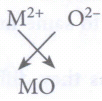
MO is formula of its oxide
2.
(a) X(17) : 2, 8, 7
(b) Valency: 1
It has atomic number 17 and therefore, electronic configuration will be 2, 8, 7. It can gain one electron to become stable. Therefore, its valency is equal to 1. It belongs to third period, as it has three shells. It belongs to group 17 because it has 7 valence electrons.
3.
'X'
Mass Number X = 35
No. of neutrons = 18
Atomic number of X = Mass number - Number of neutrons = 35-18-=17
KLM
Thus, electronic configuration of X - 2, 8, 7
Group number = 17th Period number = 3rd
Valency = 9-7=1
4.
Electronic configuration of X,Y and Z will be:
X(9) : 2,7
Y(11) : 2,8,1
Z(17) : 2,8,7
X and Z will show similar chemical properties due to same number of valence electrons.
5.
(a) It belongs to the 4th period because it has four energy shells and period number of an element is equal to the number of energy shells.
(b) It belongs to 2nd group because it has 2 valence electrons and the group number of an element having up to two valence electrons is equal to the number of valence electrons.
Its valency is '2'. To acquire inert gas configuration 'X' either loses 2 electrons or gains 6 electrons. Since the shorter route is to lose 2 electrons for obtaining inert gas configuration, hence its valency is 2.
6.
(a) (i) Valency : The combining capacity of an element is called its valency.
(ii) Atomic size : The atomic size of an atom is the distance between the centre of the nucleus and outermost electron shell of an isolated atom.
(b) On moving from left to right along a period in the modern periodic table, the valency of elements increases from 1 to 4 and then decreases to zero.
On moving from left to right in a period of the periodic table, the size of the atoms decreases.
7.
Since species X has 12 protons and 12 electrons, it is electrically neutral. Since species Y has 12 protons and 10 electrons, therefore, it has two units of positive charges. The electronic configurations of the two species are
| Species X | Species Y | |||
| K | L | M | K | L |
| 2 | 8 | 2 | 2 | 8 |
Species X has three shells and species Y has two shells. Y is cation of X. So, the the radius of Y is less than X.
8.
Hydrogen occupies a unique position in the modern periodic table because of the following reasons:
(i) Both hydrogen and halogens have similar outer electric configuration. Therefore some of the properties of hydrogen are similar to those of alkali metals and hence it can be placed in group 1 along with alkali metals.
(ii) Both hydrogen and halogens have similar outer electric configuration. Therefore some of the properties of hydrogen are similar to those of halogens and hence it can be placed in group 17 along with halogens.
(iii) In some properties, it differs from both hydrogen and halogens. For examples, the oxide of hydrogen (H 2O) is neutral but the oxides of alkali metals (Na 2O, K2O) are basic while those of halogen (Cl2O7, Br2O5) are acidic.
9.
SiO2
10.
The electronic configuration of the element A is 2, 8, 6. Therefore, it belongs to group 6A.
11.
Lithium, Beryllium, Boron are the metals in Modern Periodic Table among the first ten elements.
12.
The criteria for Mendeleev periodic table was the use of atomic masses. Mendeleev arranged the elements in increasing order of their atomic masses and according to their chemical properties.
13.
(i) Scandium
(ii) Germanium
14.
(a) The properties of all elements in the boron family
(i) All the elements show valency of 3.
(b) The properties of all the elements in halogen family
(i) All the elements possess seven electrons in the valence shell.
15.
(a) Atomic number of Nitrogen is 7 and electronic configuration is 2, 5. Atomic number of Phosphorus is 15 and electronic configuration is 2, 8, 5.
(b) Phosphorus will be more electronegative because phosphorous and nitrogen both are non-metals. Phosphorous is situated in the lower side than Nitrogen. In non-metals, as we go top to bottom the electronegativity is increased.

10th Standard CBSE Syllabus & Materials
10th Standard CBSE
CBSE 10th Social Science PS - Federalism - New Model Questions Papers Study Material - QB365 Set A
NEW10th Standard CBSE
CBSE 10th Social Science PS - Power Sharing - New Model Questions Papers Study Material - QB365 Set A
NEW10th Standard CBSE
CBSE 10th Social Science GEO - Manufacturing Industries - New Model Questions Papers Study Material - QB365 Set A
NEW10th Standard CBSE
CBSE 10th Social Science GEO - Minerals and Energy Resources - New Model Questions Papers Study Material - QB365 Set A



CBSE 10th Standard CBSE Subjects
CBSE Standards





