
 100% FREE ACCESS
10th Standard CBSE Syllabus & Materials
10th Standard CBSE
CBSE 10th Social Science ECO - Globalisation and the Indian Economy - New Model Questions Papers Study Material - QB365 Set A
NEW10th Standard CBSE
CBSE 10th Social Science ECO - Money and Credit - New Model Questions Papers Study Material - QB365 Set A
NEW10th Standard CBSE
CBSE 10th Social Science ECO - Sectors of the Indian Economy - New Model Questions Papers Study Material - QB365 Set A
NEW10th Standard CBSE
CBSE 10th Social Science ECO - Development - New Model Questions Papers Study Material - QB365 Set A
NEW10th Standard CBSE
CBSE 10th Social Science PS - Outcomes of Democracy - New Model Questions Papers Study Material - QB365 Set A
NEW10th Standard CBSE
CBSE 10th Social Science PS - Gender, Religion and Caste - New Model Questions Papers Study Material - QB365 Set A

Published on: 22/05/2021
QB365 Provides the updated CASE Study Questions for Class 10 Maths, and also provide the detail solution for each and every case study questions . Case study questions are latest updated question pattern from NCERT, QB365 will helps to get more marks in Exams
Download CBSE Class 10th Standard CBSE Maths question papers, sample papers, important questions, and previous year solved papers in PDF format. Get free study materials, NCERT solutions, and exam preparation resources for Class 10th Standard CBSE Maths
Questions + Answers key
Take MCQ Maths Test
1.
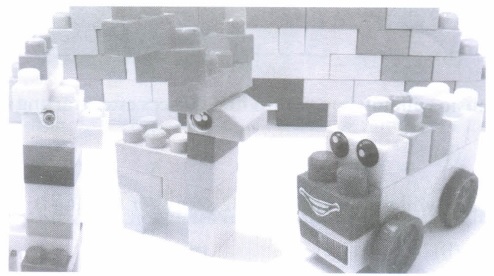
Prateek goes to a toy shop to purchase a building block kit for his son. He found that the kit contains 120 blocks, of which 40 are red, 25 are blue, 30 are green and the rest are yellow. His son picks up a block at random. Find the probability that the block is
(i) of red colour
| (a) 0 | (b) 1 |
| (c) \(\begin{equation} \frac{1}{2} \end{equation}\) | (d) \(\begin{equation} \frac{1}{3} \end{equation}\) |
(ii) not of yellow colour
| (a) \(\begin{equation} \frac{1}{6} \end{equation}\) | (b) \(\begin{equation} \frac{1}{4} \end{equation}\) |
| (c) \(\begin{equation} \frac{19}{24} \end{equation}\) | (d) \(\begin{equation} \frac{19}{25} \end{equation}\) |
(iii) of green colour
| (a) \(\begin{equation} \frac{1}{8} \end{equation}\) | (b) \(\begin{equation} \frac{1}{10} \end{equation}\) |
| (c) \(\begin{equation} \frac{1}{4} \end{equation}\) | (d) \(\begin{equation} \frac{1}{12} \end{equation}\) |
(iv) of yellow colour
| (a) \(\begin{equation} \frac{15}{118} \end{equation}\) | (b) \(\begin{equation} \frac{5}{24} \end{equation}\) |
| (c) \(\begin{equation} \frac{17}{24} \end{equation}\) | (d) \(\begin{equation} \frac{19}{50} \end{equation}\) |
(v) not of blue colour
| (a) \(\begin{equation} \frac{1}{8} \end{equation}\) | (b) \(\begin{equation} \frac{19}{24} \end{equation}\) |
| (c) \(\begin{equation} \frac{19}{31} \end{equation}\) | (d) \(\begin{equation} \frac{16}{55} \end{equation}\) |
2.
Three persons toss 3 coins simultaneously and note the outcomes. Then, they ask few questions to one another. Help them in finding the answers of the following questions.
(i) The probability of getting atmost one tail is
| (a) 0 | (b) 1 |
| (c) \(\begin{equation} \frac{1}{2} \end{equation}\) | (d) \(\begin{equation} \frac{1}{4} \end{equation}\) |
(ii) The probability of getting exactly 1 head is
| (a) \(\begin{equation} \frac{1}{2} \end{equation}\) | (b) \(\begin{equation} \frac{1}{4} \end{equation}\) |
| (c) \(\begin{equation} \frac{1}{8} \end{equation}\) | (d) \(\begin{equation} \frac{3}{8} \end{equation}\) |
(iii) The probability of getting exactly 3 tails is
| (a) 0 | (b) 1 |
| (c) \(\begin{equation} \frac{1}{4} \end{equation}\) | (d) \(\begin{equation} \frac{1}{8} \end{equation}\) |
(iv) The probability of getting atmost 3 heads is
| (a) 0 | (b) 1 |
| (c) \(\begin{equation} \frac{1}{2} \end{equation}\) | (d) \(\begin{equation} \frac{1}{8} \end{equation}\) |
(v) The probability of getting atleast two heads is
| (a) 0 | (b) 1 |
| (c) \(\begin{equation} \frac{1}{2} \end{equation}\) | (d) \(\begin{equation} \frac{1}{4} \end{equation}\) |
3.
In a party, some children decided to play musical chair game. In the game the person playing the music has been advised to stop the music at any time in the interval of 3 mins after he start the music in each turn. On the basis of the given information, answer the following questions.
(i) What is the probability that the music will stop within first 30 sees after starting?
| (a) \(\begin{equation} \frac{1}{6} \end{equation}\) | (b) \(\begin{equation} \frac{1}{5} \end{equation}\) |
| (c) \(\begin{equation} \frac{1}{4} \end{equation}\) | (d) \(\begin{equation} \frac{1}{3} \end{equation}\) |
(ii) The probability that the music will stop within 45 sees after starting is
| (a) \(\begin{equation} \frac{1}{4} \end{equation}\) | (b) \(\begin{equation} \frac{1}{5} \end{equation}\) |
| (c) \(\begin{equation} \frac{1}{6} \end{equation}\) | (d) \(\begin{equation} \frac{1}{8} \end{equation}\) |
(iii) The probability that the music will stop after 2 mins after starting is
| (a) \(\begin{equation} \frac{1}{8} \end{equation}\) | (b) \(\begin{equation} \frac{1}{5} \end{equation}\) |
| (c) \(\begin{equation} \frac{1}{4} \end{equation}\) | (d) \(\begin{equation} \frac{1}{3} \end{equation}\) |
(iv) The probability that the music will not stop within first 60 sees after starting is
| (a) \(\begin{equation} \frac{1}{3} \end{equation}\) | (b) \(\begin{equation} \frac{2}{3} \end{equation}\) |
| (c) \(\begin{equation} \frac{4}{5} \end{equation}\) | (d) \(\begin{equation} \frac{8}{9} \end{equation}\) |
(v) The probability that the music will stop within first 82 sees after starting is
| (a) \(\begin{equation} \frac{11}{30} \end{equation}\) | (b) \(\begin{equation} \frac{41}{90} \end{equation}\) |
| (c) \(\begin{equation} \frac{31}{35} \end{equation}\) | (d) \(\begin{equation} \frac{41}{93} \end{equation}\) |
4.
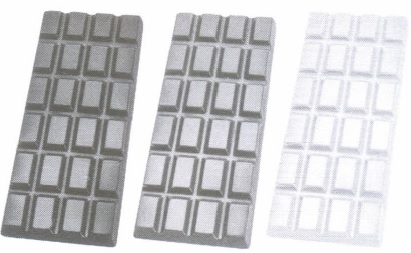
Rohit wants to distribute chocolates in his class on his birthday. The chocolates are of three types: Milk chocolate, White chocolate and Dark chocolate. If the total number of students in the class is 54 and everyone gets a chocolate, then answer the following questions.
(i) If the probability of distributing milk chocolates is 1/3, then the number of milk chocolates Rohit has, is
| (a) 18 | (b) 20 |
| (c) 22 | (d) 30 |
(ii) If the probability of distributing dark chocolates is 4/9, then the number of dark chocolates Rohit has, is
| (a) 18 | (b) 25 |
| (c) 24 | (d) 36 |
(iii) The probability of distributing white chocolates is
| (a) \(\begin{equation} \frac{11}{27} \end{equation}\) | (b)\(\begin{equation} \frac{8}{21} \end{equation}\) |
| (c) \(\begin{equation} \frac{1}{9} \end{equation}\) | (d) \(\begin{equation} \frac{2}{9} \end{equation}\) |
(iv) The probability of distributing both milk and white chocolates is
| (a) \(\begin{equation} \frac{3}{17} \end{equation}\) | (b) \(\begin{equation} \frac{5}{9} \end{equation}\) |
| (c) \(\begin{equation} \frac{1}{3} \end{equation}\) | (d) \(\begin{equation} \frac{1}{27} \end{equation}\) |
(v) The probability of distributing all the chocolates is
| (a) 0 | (b) 1 |
| (c) \(\begin{equation} \frac{1}{2} \end{equation}\) | (d) \(\begin{equation} \frac{3}{4} \end{equation}\) |
5.
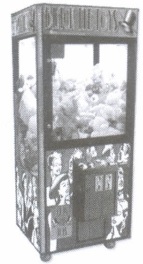
In a play zone, Nishtha is playing claw crane game which consists of 58 teddy bears, 42 pokemons, 36 tigers and 64 monkeys. Nishtha picks a puppet at random. Now, find the probability of getting
(i) a tiger
| (a) \(\begin{equation} \frac{3}{50} \end{equation}\) | (b) \(\begin{equation} \frac{9}{50} \end{equation}\) |
| (c) \(\begin{equation} \frac{1}{25} \end{equation}\) | (d) \(\begin{equation} \frac{27}{50} \end{equation}\) |
(ii) a monkey
| (a) \(\begin{equation} \frac{8}{25} \end{equation}\) | (b) \(\begin{equation} \frac{4}{25} \end{equation}\) |
| (c) \(\begin{equation} \frac{16}{25} \end{equation}\) | (d) \(\begin{equation} \frac{1}{5} \end{equation}\) |
(iii) a teddy bear
| (a) \(\begin{equation} \frac{41}{50} \end{equation}\) | (b) \(\begin{equation} \frac{29}{50} \end{equation}\) |
| (c) \(\begin{equation} \frac{29}{100} \end{equation}\) | (d) \(\begin{equation} \frac{41}{100} \end{equation}\) |
(iv) not a monkey
| (a) \(\begin{equation} \frac{1}{25} \end{equation}\) | (b) \(\begin{equation} \frac{8}{25} \end{equation}\) |
| (c) \(\begin{equation} \frac{13}{25} \end{equation}\) | (d) \(\begin{equation} \frac{17}{25} \end{equation}\) |
(v) not a pokemon
| (a) \(\begin{equation} \frac{27}{100} \end{equation}\) | (b) \(\begin{equation} \frac{43}{100} \end{equation}\) |
| (c) \(\begin{equation} \frac{61}{100} \end{equation}\) | (d) \(\begin{equation} \frac{79}{100} \end{equation}\) |
1.
Total number of blocks in the kit = 120
Number of red blocks = 40
Number of blue blocks = 25
Number of green blocks = 30
Number of yellow blocks = 120 - (40 + 25 + 30)
= 120 - 95 = 25
(i) (d): P(block is red) \(\begin{equation} =\frac{40}{120}=\frac{1}{3} \end{equation}\)
(ii) (c): P(block is not yellow) = 1 - P(block is yellow)
\(\begin{equation} =1-\frac{25}{120}=1-\frac{5}{24}=\frac{19}{24} \end{equation}\)
(iii) (c) : P(block is green) = \(\begin{equation} \frac{30}{120}=\frac{1}{4} \end{equation}\)
(iv) (b) : P(block is yellow) = \(\begin{equation} \frac{5}{24} \end{equation}\)
(v) (b): P(block is not blue) = 1 - P(block is blue)
\(\begin{equation} =1-\frac{25}{120}=1-\frac{5}{24}=\frac{19}{24} \end{equation}\)
2.
Sample space (5) = {HHH, HHT, HTH, HTT, THH, THT, TTH, TTT}
\(\Rightarrow\)n(5) = 8
(i) (c): Let A be the event of getting atmost one tail.
A = {HHH, HHT, HTH, THH}
\(\Rightarrow\)n(A) = 4
Required probability = \(\begin{equation} \frac{4}{8}=\frac{1}{2} \end{equation}\)
(ii) (d): Let B be the event of getting exactly 1 head. B = {HTT, THT, TTH}
\(\Rightarrow\) n(B) = 3
Required probability = \(\begin{equation} \frac{3}{8} \end{equation}\)
(iii) (d) : Let C be the event of getting exactly 3 tails.
C = {TTT} \(\Rightarrow\) n( C) = 1
Required probability = \(\begin{equation} \frac{1}{8} \end{equation}\)\(\begin{equation} \frac{1}{8} \end{equation}\)\(\begin{equation} \frac{1}{8} \end{equation}\)\(\begin{equation} \frac{1}{8} \end{equation}\)
(iv) (b) : Let D be the event of getting atmost 3 heads.
D = {HHH, HHT, HTH, HTT, THH, THT, TTH, TTT}
\(\Rightarrow\)n(D) = 8
Required probability = \(\begin{equation} \frac{8}{8}=1 \end{equation}\)
(v) (c): Let E be the event of getting atleast two heads.
E = {HHT, HTH, THH, HHH}
\(\Rightarrow\)n(E) = 4
Required probability = \(\begin{equation} \frac{n(E)}{n(S)}=\frac{4}{8}=\frac{1}{2} \end{equation}\)
3.
Total time = 3 mins = 3 x 60 sees = 180 secs
(i) (a): Required probability = \(\begin{equation} \frac{30}{180}=\frac{1}{6} \end{equation}\)
(ii) (a): Required probability = \(\begin{equation} \frac{45}{180}=\frac{1}{4} \end{equation}\)
(iii) (d) : P(music will stop within 2 mins) = \(\begin{equation} \frac{120}{180}=\frac{2}{3} \end{equation}\)
P(music will stop after 2 mins) = \(\begin{equation} 1-\frac{2}{3}=\frac{1}{3} \end{equation}\)
(iv) (b) : Required probability = 1 - P(music will stop within first 60 secs)
\(\begin{equation} =1-\frac{60}{180}=1-\frac{1}{3}=\frac{2}{3} \end{equation}\)
(v) (b): Required probability = \(\begin{equation} \frac{82}{180}=\frac{41}{90} \end{equation}\)
4.
Since, every student get one chocolate. So, number of chocolates Rohit has is equal to the number of students in the class.
(i) (a): Let number of milk chocolates Rohit has = x
Probability of distributing milk chocolates = \(\begin{equation} \frac{1}{3} \end{equation}\)
\(\begin{equation} \Rightarrow \frac{x}{54}=\frac{1}{3} \Rightarrow x=\frac{54}{3}=18 \end{equation}\)
(ii) (c): Let number of dark chocolates Rohit has = y
Probability of distributing dark chocolates = \(\begin{equation} \frac{4}{9} \end{equation}\)
\(\begin{equation} \Rightarrow \frac{y}{54}=\frac{4}{9} \Rightarrow y=\frac{4 \times 54}{9}=24 \end{equation}\)
(iii) (d) : Number of white chocolates Rohit has = 54 -(18 + 24) = 12
Required probability = \(\begin{equation} \frac{12}{54}=\frac{2}{9} \end{equation}\)
(iv) (b) : Total number of milk and white chocolates = 18 + 12 = 30
Required probability = \(\begin{equation} \frac{30}{54}=\frac{5}{9} \end{equation}\)
(v) (b): Since all students gets one chocolate. So, total number of chocolates distributed = 54
\(\begin{equation} \text { Required probability }=\frac{54}{54}=1 \end{equation}\)
5.
Total number of puppets in claw crane = 58 + 42 + 36 + 64 = 200
(i) (b): P(picking a tiger) = \(\begin{equation} \frac{36}{200}=\frac{9}{50} \end{equation}\)
(ii) (a): P(picking a monkey) = \(\begin{equation} \frac{64}{200}=\frac{8}{25} \end{equation}\)
(iii) (c) : P(picking a teddy bear) = \(\begin{equation} \frac{58}{200}=\frac{29}{100} \end{equation}\)
(iv) (d) : P(not picking a monkey) = 1 - P(picking a monkey)
\(\begin{equation} =1-\frac{8}{25}=\frac{17}{25} \end{equation}\)
(v) (d): P(picking a pokemon) = \(\begin{equation} \frac{42}{200}=\frac{21}{100} \end{equation}\)
P(not picking a pokemon) = 1 - P(picking a pokemon)
\(\begin{equation} =1-\frac{21}{100}=\frac{79}{100} \end{equation}\)

10th Standard CBSE Syllabus & Materials
10th Standard CBSE
CBSE 10th Social Science PS - Federalism - New Model Questions Papers Study Material - QB365 Set A
NEW10th Standard CBSE
CBSE 10th Social Science PS - Power Sharing - New Model Questions Papers Study Material - QB365 Set A
NEW10th Standard CBSE
CBSE 10th Social Science GEO - Manufacturing Industries - New Model Questions Papers Study Material - QB365 Set A
NEW10th Standard CBSE
CBSE 10th Social Science GEO - Minerals and Energy Resources - New Model Questions Papers Study Material - QB365 Set A



NCERT Books

Syllabus

Exam Pattern

Sample Question Papers

Previous year Question Papers

Important Notes

MCQ Practice test

NCERT Exemplers

Case study Questions

Image Based Questions

Passage based Questions

HOT Questions

Value Based Questions

Model Questions Papers
NCERT ( Book Back ) Questions

Assertion and Reason
Important Questions And Answers

CBSE 10th Standard CBSE Subjects
CBSE Standards



