
 100% FREE ACCESS
10th Standard CBSE Syllabus & Materials
10th Standard CBSE
CBSE 10th Social Science ECO - Globalisation and the Indian Economy - New Model Questions Papers Study Material - QB365 Set A
NEW10th Standard CBSE
CBSE 10th Social Science ECO - Money and Credit - New Model Questions Papers Study Material - QB365 Set A
NEW10th Standard CBSE
CBSE 10th Social Science ECO - Sectors of the Indian Economy - New Model Questions Papers Study Material - QB365 Set A
NEW10th Standard CBSE
CBSE 10th Social Science ECO - Development - New Model Questions Papers Study Material - QB365 Set A
NEW10th Standard CBSE
CBSE 10th Social Science PS - Outcomes of Democracy - New Model Questions Papers Study Material - QB365 Set A
NEW10th Standard CBSE
CBSE 10th Social Science PS - Gender, Religion and Caste - New Model Questions Papers Study Material - QB365 Set A

Published on: 22/05/2021
QB365 Provides the updated CASE Study Questions for Class 10 , and also provide the detail solution for each and every case study questions . Case study questions are latest updated question pattern from NCERT, QB365 will helps to get more marks in Exams
Download CBSE Class 10th Standard CBSE Science question papers, sample papers, important questions, and previous year solved papers in PDF format. Get free study materials, NCERT solutions, and exam preparation resources for Class 10th Standard CBSE Science
Questions + Answers key
Take MCQ Science Test
1.
An organic molecule has the following structure:
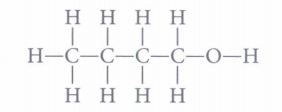
(i) To which homologous series does this molecule belong?
| (a) Aldehydes | (b) Ketones | (c) Alcohols | (d) Alkanes |
(ii) What is the general formula of this homologous series?
| (a) CnH2n+1OH | (b) CnH2n + 2 | (c) C |
(d) CnH2n+1CHO |
(iii) Which is the next member of this series?
| (a) C4H9OH | (b) C3H7OH | (c) C5H11OH | (d) C6H13OH |
(iv) Which is the third member of this series?
| (a) C3H7O H | (b) C4H9OH | (c) C2H5OH | (d) CH3OH |
(v) Which is the second member of this series?
| (a) Ethanol | (b) Methanol | (c) Propanol | (d) Butanol |
2.
A hydrocarbon (P) has the molecular formula C10H22.A hydrocarbon (Q) has two carbon atoms less than (P) and belong to the same homologous series. A hydrocarbon (R) has two carbon atoms more than (P) and belong to the same homologous series.
(i) What is the molecular formula of (Q)?
| (a) C12H26 | (b) C8H16 | (c) C8H18 | (d) C8H14 |
(ii) To which homologous series do the compound (P), (Q) and (R) belong?
| (a) CnH2n | (b) C2H2n- 2 | (c) CnH2n+2 | (d) CnH2n + 1 |
(iii) What is the molecular formula of (R)?
| (a) C12H26 | (b) C12H24 | (c) C12H22 | (d) Cl2H28 |
(iv) Identify the correct statement about compounds (P), (Q) and (R).
| (a) They have same melting and boiling points. | (b) They have same chemical properties. |
| (c) They have different general formula. | (d) They differ by -CH2 unit. |
(v) Compounds (P), (Q) and (R) are
| (a) alkanes | (b) alkenes | (c) alkynes | (d) none of these. |
3.
The table given below shows six organic compounds A, B, C, D, E and F having different molecular formula:
| Organic compound | Molecular formula |
| A | C7H16 |
| B | C8H16 |
| C | C4H6 |
| D | C6H10 |
| E | C5H10 |
| F | C9H20 |
(i) Which of the following compounds belong to same homologous series?
| (a) E and F | (b) B and C | (c) A and B | (c) A and B |
(ii) Which of the following is the member of the same homologous series as E?
| (a) D | (b) A | (c) F | (d) B |
(iii) Identify the correct statements.
| (a) A and F are saturated hydrocarbons while all others are unsaturated hydrocarbons. |
| (b) C and D belong to a homologous series having general formula CnH2n |
| (c) B and E are alkynes. |
| (d) All the compounds have same physical and chemical properties. |
(iv) Compound B is
| (a) an alkane | (b) an alkene | (c) an alkyne |
(d) none of these. |
(v) Compound (F) has a general formula
| (a) CnH2n -2 | (b) CnH2n | (c) CnH2n+4 | (d) CnH2n+2 |
4.

(i) Which of the following compounds belong to same homologous series?
| (a) S and T | (b) T and U | (c) P and U | (d) P and T |
(ii) The functional group of compound (R) is
| (a) alcohol | (b) aldehyde | (c) ketone | (d) carboxylic acid. |
(iii) Compound (T) belongs to homologous series of
| (a) alkynes | (b) alkenes | (c) alkanes | (d) none of these. |
(iv) Which of the 'following compounds is unsaturated hydrocarbon?
| (a) S | (b) Q | (c) U | (d) R |
(v) Which of the following compounds belongs to alkane series?
| (a) P | (b) S | (c) T | (d) U |
5.
Study the table related to three hydrocarbons A, B, C and answer the questions that follow.
| Organic compound | Molecular formula |
| A | C3H5 |
| B | C5H10 |
| C | C4H6 |
(i) A, Band C are classified as hydrocarbons because
| (a) they contain hydrogen | (b) they contain carbon |
| (c) they contain both carbon and hydrogen | (d) none of these. |
(ii) Which of these organic compounds is an alkyne?
| (a) A | (b) B | (c) C | (d) All of these |
(iii) C5H10 belongs to
| (a) CnH2n+2 series | (b) CnH2n series |
| (c) CnH2n-2 series | (d) none of these. |
(iv) Identify the incorrect statement about these three hydrocarbons.
| (a) All have different general formula. | (b) A and B differ by -CH2 unit. |
| (c) C is an alkyne. | (d) B is an alkene. |
(v) General formula for alkane is
| (a) CnH2n | (b) CnH2n+2 | CnH2n-2 | (d) CnHn |
1.
(i) (c) :Alcohol (-OH).
(ii) (a): Cn H2n+1 OH is the general formula of the homologous series of alcohol.
(iii) (c)
(iv) (a)
(v) (a): Ethanol; C2H5OH is the second member of this series.
2.
(i) (c) :Molecular formula of (Q) is CSH1Sas it has two carbon atoms less than (P).
(ii) (c): Compounds (P), (Q) and (R) are alkanes having general formula CnH2n+2.
(iii) (a): Molecular formula of (R) is C12H26 as it has two carbon atoms more than (P)
(iv) (b): Compound (P), (Q) and (R) belong to same homologous series so they have different physical properties but similar chemical properties. They have same general formula CnH2n+2 .They . differ by 2 carbon atoms and 4 hydrogen atoms.
(v) (a)
3.
(i) (d): A and F are alkanes; Band E are alkenes; C and D are alkynes.
(ii) (d): B is an alkene having general formula CnH2n, the homologous series to which E belongs.
(iii) (a) : C and D belong to a homologous series having general formula CnH2n-2 .Band E are alkenes. All the compounds have different physical and chemical properties.
(iv) (b): (B) is alkene.
(v) (d): (F) is an alkane.
4.
(i) (d): (P) and (T) are alkynes.
(ii) (a): Alcohol (-OH).
(iii) (a): (T) is an alkyne having general formula of CnH2n-2·
(iv) (c): (U) is an alkene.
(v) (b)
5.
(i) (c) :A, Band C are classified as hydrocarbons because these compounds are made up of carbon and hydrogen only.
(ii) (c): C is an alkyne.
(iii) (b): C5H10 is an alkene having a general formula CnH2n·
(iv) (b): A and B do not belong to same homologous series. A is an alkane while B is an alkene.
(v) (b)

10th Standard CBSE Syllabus & Materials
10th Standard CBSE
CBSE 10th Social Science PS - Federalism - New Model Questions Papers Study Material - QB365 Set A
NEW10th Standard CBSE
CBSE 10th Social Science PS - Power Sharing - New Model Questions Papers Study Material - QB365 Set A
NEW10th Standard CBSE
CBSE 10th Social Science GEO - Manufacturing Industries - New Model Questions Papers Study Material - QB365 Set A
NEW10th Standard CBSE
CBSE 10th Social Science GEO - Minerals and Energy Resources - New Model Questions Papers Study Material - QB365 Set A



NCERT Books

Syllabus

Exam Pattern

Sample Question Papers

Previous year Question Papers

Important Notes

MCQ Practice test

NCERT Exemplers

Case study Questions

Image Based Questions

Passage based Questions

HOT Questions

Value Based Questions

Model Questions Papers
NCERT ( Book Back ) Questions

Assertion and Reason
Important Questions And Answers

CBSE 10th Standard CBSE Subjects
CBSE Standards



