
 100% FREE ACCESS
10th Standard CBSE Syllabus & Materials
10th Standard CBSE
CBSE 10th Social Science ECO - Globalisation and the Indian Economy - New Model Questions Papers Study Material - QB365 Set A
NEW10th Standard CBSE
CBSE 10th Social Science ECO - Money and Credit - New Model Questions Papers Study Material - QB365 Set A
NEW10th Standard CBSE
CBSE 10th Social Science ECO - Sectors of the Indian Economy - New Model Questions Papers Study Material - QB365 Set A
NEW10th Standard CBSE
CBSE 10th Social Science ECO - Development - New Model Questions Papers Study Material - QB365 Set A
NEW10th Standard CBSE
CBSE 10th Social Science PS - Outcomes of Democracy - New Model Questions Papers Study Material - QB365 Set A
NEW10th Standard CBSE
CBSE 10th Social Science PS - Gender, Religion and Caste - New Model Questions Papers Study Material - QB365 Set A

Published on: 25/05/2021
QB365 Provides the updated NCERT Exemplar Questions for Class
10, and also provide the detail solution for each and every NCERT Exemplar questions. NCERT Exemplar questions are latest updated question pattern from NCERT, QB365 will helps to get more marks in Exams
Download CBSE Class 10th Standard CBSE Science question papers, sample papers, important questions, and previous year solved papers in PDF format. Get free study materials, NCERT solutions, and exam preparation resources for Class 10th Standard CBSE Science
Questions + Answers key
Take MCQ Science Test1.
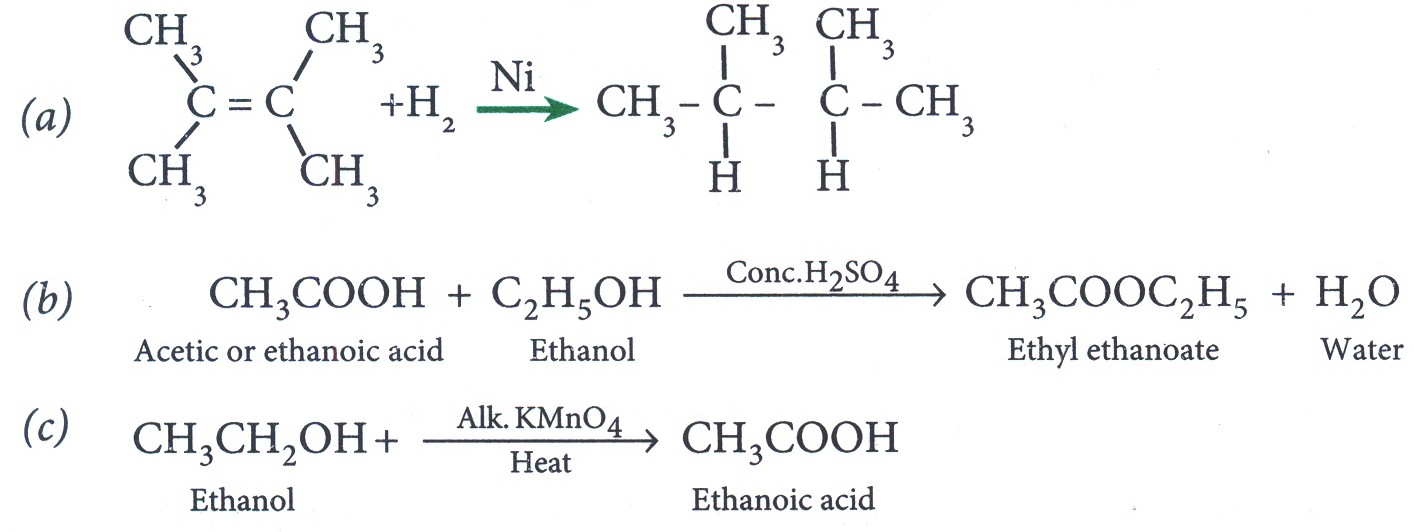
What is the role of metal or reagents written on arrows in the given chemical reactions?
2.
How are power and focal length of a lens related? You are provided with two lenses of focal length 20 cm and 40 cm respectively. Which lens will you use to obtain more convergent light?
3.
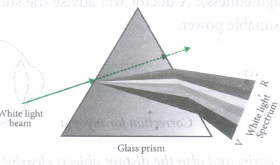
Draw a ray diagram showing through a prism when a narrow beam of white light is incident on one of its refracting surfaces. Also indicate the order of the colours of the spectrum obtained.
4.
(a) " The sex of the children is determined by what they inherit from their father and not their mother." Justify.
(b) Give an example where environmental factors like temperature determines the sex of the offspring.
5.
" Hydrogen occupies a unique position in Modern Periodic Table". Justify the statement.
6.
Is the chromosomes number of zygote, embryonal cells and adult of a particular organism always constant? How is the constancy maintained in these three stages?
7.
Catenation is the ability of an atom to form bonds with other atoms of the same element. it is exhibited by both carbon and silicon. Compare the ability of catenation of the two elements. Give reasons.
8.
A solution of CuSO4 was kept in an iron pot. After few days the iron pot was found to have a number of holes in it. Explain the reason in terms of reactivity. Write the equation of the reaction involved.
9.
What is the function of an earth wire ? Why is its necessary to earth metallic appliances?
10.
A non-metal A is an important constituent of our food and forms two oxides B and C. Oxide B is toxic whereas C causes global warming
(a) Identify A, B and C
(b) To which Group of Periodic Table does a belong?
11.
How do the guard cells regulate opening and closing of stomatal pores?
12.
During extraction of metals, electrolytic refining is used to obtain pure metals.
(a) Which material will be used as anode and cathode for refining of silver metal by this process?
(b) Suggest a suitable electrolyte also.
(c) In this electrolytic cell, where do we get pure silver after passing electric current?
13.
Answer the following:
(a) Which hormone is responsible for the changes noticed in females at puberty?
(b) Dwarfism results due to deficiency of which hormone?
(c) Blood sugar level rises due to deficiency of which hormone?
(d) Iodine is necessary for the synthesis of which hormone?
14.
A milkman adds a very small amount of baking soda to fresh milk.
(i) Why does he shift the pH of the fresh milk from 6 to slightly alkaline?
(ii) Why does this milk take a long time to set as curd?
1.
a) Nickel (Ni) is a catalyst which adsorbs hydrogen molecule on its surface and then with alkenes molecule side by side. The two hydrogen atom then is added to form an addition product.
b) The presence of concentrated sulphuric acid increases the rate of forward reaction by removing water formed during the reaction.
c) Alkaline potassium permanganate act as mild oxidizing agent and so convert ethanol to ethanoic acid.
2.
\(P=\frac { 1 }{ f } \)
For obtaining more convergent light, power of lens must be larger. Therefore, its focal length must be smaller. Therefore, the lens of f = 20 cm will provide more convergent light.
3.
4.
(a) A male individual contains one X chromosome and one Y chromosome. So male produces two different kinds of. gametes. Therefore, male are called heterogametic. A female individual contains two similar X chromosomes. So produces only one kind of gamete. Therefore, female are called homogametic. The sex of the child is determined at the time of fertilization when male and female gametes fuse to form zygote. If a sperm carrying X chromosome fertilizes an egg carrying X chromosome, then the offspring will be a female, because the offspring will have XX chromosomes. If a sperm carrying Y chromosome fertilizes an egg carrying X chromosome, then the offspring will be a male, because the offspring will have XY chromosomes. Thus there is 50% chance of a male child being born and a 50% chance of a female child being born. Thus, it is the sperm which determines the sex of the child.
(b) In some reptiles, the temperature at which the fertilised egg is incubated before hatching plays a role in determining the sex of the offspring. Example: In a turtle, high
incubation temperature leads to female offspring.
5.
Hydrogen occupies a unique position in the modern periodic table because of the following reasons:
(i) Both hydrogen and halogens have similar outer electric configuration. Therefore some of the properties of hydrogen are similar to those of alkali metals and hence it can be placed in group 1 along with alkali metals.
(ii) Both hydrogen and halogens have similar outer electric configuration. Therefore some of the properties of hydrogen are similar to those of halogens and hence it can be placed in group 17 along with halogens.
(iii) In some properties, it differs from both hydrogen and halogens. For examples, the oxide of hydrogen (H 2O) is neutral but the oxides of alkali metals (Na 2O, K2O) are basic while those of halogen (Cl2O7, Br2O5) are acidic.
6.
The answer to the first part of this question is a definite yes. Meiosis is the cell division which happens during gametogenesis, i.e. during gamete formation. This results in number of chromosomes getting halved in gametes. When fertilization happens, the number of chromosomes becomes equal to that in somatic cells. After that, mitosis takes place during rest of the stages of life. And thus, the constancy of chromosomal number is maintained in all the three stages as mentioned in this question.
7.
Both carbon and silicon have similar valence shell electronic configuration that is each has four electrons in the valence shell and hence show the phenomenon of catenation. But carbon being smaller than silicon forms stronger c-C than Si-Si bonds. Thus due to greater strength of C-C over Si-Si bonds, carbon shows catenation to a greater extent than silicon.
8.
Fe is more reactive as compared to Cu. Therefore, Fe displaces Cu from CuSO4 and forms FeSO4.
\(Fe+{ CuSO }_{ 4 }\rightarrow { FeSO }_{ 4 }+Cu\)
9.
The earth wire is connected to a metallic plate buried deep inside the earth. In this way, the metallic body of appliance is connected to the earth, which provides a low resistance conducting path for electric current. Hence, any leakage of current to the metallic body of appliance flows to the earth through the earth wire. The user might not get a severe electric shock on touching such an appliance in case of a fault.
10.
(a) A is carbon, B is carbon monoxide and C is carbon dioxide.
(b) A belongs to Group - 14 of the Periodic Table.
11.
Guard cells control the opening and closing of stomatal pore by change in turgidity. When water enters the guard cells, they become turgid and the stomatal pore opens. On the other hand, when water exits from the guard cells; they become flaccid and the stomatal pore opens.
12.
(a) Anode : Impure silver;
Cathode : Pure silver
(b) Electrolyte : Silver salt, such as AgNO3
(c) We get pure silver at cathode.
13.
(a) Oestrogen
(b) Growth hormone
(c) Insulin
(d) Thyroxine
14.
(i) Alkaline medium does not allow milk to turn sour easily.
(ii) When milk is set to curd, the presence of alkali does not allow it to become acidic easily. Hence, this milk take a longer time to set as a curd.

10th Standard CBSE Syllabus & Materials
10th Standard CBSE
CBSE 10th Social Science PS - Federalism - New Model Questions Papers Study Material - QB365 Set A
NEW10th Standard CBSE
CBSE 10th Social Science PS - Power Sharing - New Model Questions Papers Study Material - QB365 Set A
NEW10th Standard CBSE
CBSE 10th Social Science GEO - Manufacturing Industries - New Model Questions Papers Study Material - QB365 Set A
NEW10th Standard CBSE
CBSE 10th Social Science GEO - Minerals and Energy Resources - New Model Questions Papers Study Material - QB365 Set A



NCERT Books

Syllabus

Exam Pattern

Sample Question Papers

Previous year Question Papers

Important Notes

MCQ Practice test

NCERT Exemplers

Case study Questions

Image Based Questions

Passage based Questions

HOT Questions

Value Based Questions

Model Questions Papers
NCERT ( Book Back ) Questions

Assertion and Reason
Important Questions And Answers

CBSE 10th Standard CBSE Subjects
CBSE Standards




