
 100% FREE ACCESS
10th Standard CBSE Syllabus & Materials
10th Standard CBSE
CBSE 10th Social Science ECO - Globalisation and the Indian Economy - New Model Questions Papers Study Material - QB365 Set A
NEW10th Standard CBSE
CBSE 10th Social Science ECO - Money and Credit - New Model Questions Papers Study Material - QB365 Set A
NEW10th Standard CBSE
CBSE 10th Social Science ECO - Sectors of the Indian Economy - New Model Questions Papers Study Material - QB365 Set A
NEW10th Standard CBSE
CBSE 10th Social Science ECO - Development - New Model Questions Papers Study Material - QB365 Set A
NEW10th Standard CBSE
CBSE 10th Social Science PS - Outcomes of Democracy - New Model Questions Papers Study Material - QB365 Set A
NEW10th Standard CBSE
CBSE 10th Social Science PS - Gender, Religion and Caste - New Model Questions Papers Study Material - QB365 Set A

Published on: 25/05/2021
QB365 Provides the updated NCERT Exemplar Questions for Class
10, and also provide the detail solution for each and every NCERT Exemplar questions. NCERT Exemplar questions are latest updated question pattern from NCERT, QB365 will helps to get more marks in Exams
Download CBSE Class 10th Standard CBSE Science question papers, sample papers, important questions, and previous year solved papers in PDF format. Get free study materials, NCERT solutions, and exam preparation resources for Class 10th Standard CBSE Science
Questions + Answers key
Take MCQ Science Test1.
(i) " A convex lens can form a magnified erect as well as magnified inverted image of an object placed in front of it. " Draw ray diagram to justify this statement stating the position of the object with respect to the lens in each case.
(ii) As object of height 4 cm is placed at a distance of 20 cm from a concave lens of focal length 10 cm. Use lens formula to determine the position of the image formed.
2.
(a) Define focal length of a divergent lens.
(b) A divergent lens of focal length 30 cm forms the image of an object of size 6 cm on the same side as the object at a distance of 15 cm from its optical centre. Use lens formula to determine the distance of the object from the lens and the size of the image formed.
(c) Draw a ray diagram to show the formation of image in the above situation.
3.
Define evolution. How does it occur? Describe how fossils provide us evidences in support of evolution.
4.
All the human races like Africans, Asians, Europeans, Americans and others might have evolved from a common ancestor. Provide a few evidences in support of this view.
5.
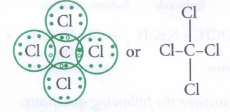
a) Write the formula and draw electron dot structure of carbon tetrachloride?
b) What is saponification? Write the reaction involved in this process.
6.
Explain the phenomenon of electromagnetic induction. Describe an experiment to show that a current is set up in a closed loop when an external magnetic field passing through the loop increases or decreases.
7.
Explain the process of breathing in man.
8.
How will you conclude that the same potential difference exist across three resistors connected in a parallel arrangement to a battery?
9.
A dry pellet of a common base B, when kept in open absorbs moisture and turns sticky. The compound is also a by-product of chlor-alkali process. Identify B. What type of reaction occurs when B is treated with an acidic oxide? Write a balanced chemical equation for one such solution.
10.
Suggest a few useful ways of utilising waste water.
11.
In the context of conservation of natural resources, explain the terms reduce, recycle and reuse. From among the materials that we use in daily life, identify two materials for each category.
12.
Which group of elements could be placed in Mendeleev's Periodic Table without disturbing the original order? Give reason
13.
a) Why is there a need for harnessing non-conventional sources of energy?
b) How can energy be harnessed from the sea in different ways?
14.
Suggest any four activities in daily life which are eco-friendly.
1.
(i) A convex lens can form a magnified erect image when the object is placed between the optical centre and principal focus of the convex lens (i.e. between O and F).
-S.png)
(ii) A convex lens can form a magnified erect image when the object is placed between focus and the centre of curvature (i.e. between F' and 2F).
-S.png)
Object height, h = 4 cm;
Object distance, u = -20 cm
Nature of the lens = concave lens;
Focal length = f = +10 cm
Image distance, v = ?
According to the lens formula,
\(\frac { 1 }{ f } =\frac { 1 }{ v } -\frac { 1 }{ u } \)
\(\Rightarrow \frac { 1 }{ v } =\frac { 1 }{ f } +\frac { 1 }{ u } \)
\(\frac { 1 }{ v } =\frac { 1 }{ +10 } +\frac { 1 }{ -20 } =\frac { 1 }{ 10 } -\frac { 1 }{ 20 } =\frac { 2-1 }{ 20 } =\frac { 1 }{ 20 } \)
∴ v=20cm
The image is formed at a distance of 20 cm from the lens on the opposite side.
2.
(a) (i) The principal focus of a diverging lens is a point on its principal axis from which light rays, originally parallel to the axis appear to diverge after passing through the diverging (concave) lens.
(ii) The distance between pole and principal focus of a diverging lens is called the focal length in the given diagram OF is the focal length.
-S.png)
(b) Divergent lens (Concave lens) Focal length, f = -30 cm
Size of the object, h1 = 6 cm
Image distance, v = -15 cm
Object distance, u = ?
Size of the image, h2 = ?
According to the lens formula,
\(\frac { 1 }{ f } =\frac { 1 }{ v } +\frac { 1 }{ u } \)
\(\frac { 1 }{ -30 } =\frac { -1 }{ -15 } +\frac { 1 }{ u } \)
\(\Rightarrow \frac { 1 }{ u } =\frac { -1 }{ 15 } +\frac { 1 }{ 30 } =\frac { -2+1 }{ 30 } =\frac { -1 }{ 30 } \)
u=-30cm
\(\frac { { h }_{ 2 } }{ { h }_{ 1 } } =\frac { v }{ u } \)
\(\Rightarrow \frac { { h }_{ 2 } }{ 6 } =\frac { -15 }{ -30 } \)
\(\Rightarrow { h }_{ 2 }=\frac { 15 }{ 30 } \times 6=+3cm\)
-S.png)
3.
Evolution is the sequence of gradual changes which take place in the primitive organisms over millions of years in which new species are produced.
(a)It is through the constant process of evolution taking place in the organisms since the origin of life that such an enormous variety of plants and animals have come to exist on this earth at present.
(b)There is an inbuilt tendency to variation during reproduction due to errors in DNA copying and as a result of sexual reproduction.
(c) Fossils are the remains of impressions of dead plants or animals which died millions of
years ago. They study of fossils helps us to know about the evolution of species. Fossils tell us how new species are developed from the old. Fossils provide evidence of evolution by revealing characteristics of past organisms and the changes that have occurred these organisms to give rise to present organisms. Therefore, fossils have an importance in deciding evolutionary relationship.
4.
DNA sequences are used for studying human evolution. There is no biological basis to the idea of human races. All human beings are a single species but there is a great diversity of human forms and features across the earth. The earliest members of human species Homo sapiens are traced from Africa.
The evidences in support are as follows:
1.Common body plan, structure, physiology and metabolism.
2.Constant chromosome number
3. Common genetic blue print
4. Free inter-breeding
5.
\(\underset{Carbon}{C}+\underset{Chlorine}{2Cl_2}\xrightarrow{Heat}\underset{Carbon\ tetrachloridse}{CCl_4}\)
Its electron dot structure and structural formulae are:
b) Saponification - Alkaline hydrolysis of an ester to give the salt of the corresponding
acid and the alcohol is called saponification. It is reverse of esterification reaction.
For example.
\(\underset{Ester}{CH_3COOC_2H_5}+\underset{sodium\ hydroxide}{NaOH}\xrightarrow{Heat}\underset{Sodium\ acetate}{CH_3COONa}+\underset{Ethanol}{CH_3CH_2OH}\)
Dehydration means removal of a molecule of water. When ethanol is heated with
conc. H2SO4 at 443 K, it undergoes dehydration to form ethene.
\(\underset{Ethanol}{CH_3CH_2OH}\xrightarrow{Conc. H_2SO_4,443K}\underset{Ethene}{CH_2=CH_2+H_2O}\)
6.
Electromagnetic Induction: When a conductor is set to move inside a magnetic field or a magnetic field is set to be changing around a conductor, electric current is induced in the conductor. This is just opposite to the exertion of force by a current carrying conductor inside a magnetic field. In other words, when a conductor is brought in relative motion vis-a-vis a magnetic field, a potential difference is induced in it. This is known as electromagnetic induction.
Activity:
- To demonstrate electromagnetic induction Materials Required:
- A galvanometer, coil, bar magnet and some wires.
Procedure:
- The coil is inserted over a hollow tube of cardboard.
- With the help of wires, the two ends of the coil are attached to the galvanometer.
- The north pole of the bar magnet is moved towards the end 'B' of the coil.
- It is observed that the galvanometer needle shows deflection to right.
- When the magnet is moved away from the coil, the galvanometer needle shows deflection towards left.
- When the magnet is in static position, no deflection is seen in galvanometer needle.
- Induction of electric current in the coil is the cause of deflection in galvanometer needle.
- If the magnet is kept stationary and coil is moved, then also the galvanometer needle shows deflection.
Conclusion:
- When the coil and the bar magnet are in relative motion, a current is induced in the coil.
7.
The mechanism of exchange of gases takes place between the blood and body tissues during respiration. The air enters the lungs through nostrils. As the blood passes
through the body tissues, the oxygen present in it diffuses into the cells due to its higher concentration in the blood. A red pigment called haemoglobin in the blood carries the oxygen. This oxygen combines with the digested food to release energy, which takes place in mitochondria of the cells. The carbon dioxide produced during the respiration diffuses into the blood stream from where it is carried to lungs and expelled out. The blood which comes from the lungs has a higher concentration of oxygen but the body tissues have a higher concentration of carbon dioxide. Due to the difference in the concentrations, the exchange of gases between the blood and the body tissues takes place. Thus, in this way the process of gaseous exchange is completed in the human respiratory system. The total area for gaseous exchange provided by 300 million alveoli in 2 IU,ngsis 400-800 square feet.
8.
A number of resistors are said to be connected in parallel if one end of each is connected to one point and the other end is connected to another point so that the potantial difference across each resistor is the same and is equal to the applied potential difference between the two points. If we connect a voltmeter first across R1, then across R2 ad lastly across R3, it will show same voltage.
9.
Sodium hydroxide (NaOH) is a commonly used base and is hygroscopic, that is, it absorbs moisture from the atmosphere and becomes sticky. The acidic oxides react with base to give salt and water. The reaction between NaOH and \(CO_2\) can be given as \(2NaOH+CO_2\rightarrow Na_2CO_3+H_2O\)
10.
(a) recharging the ground water
(b) can be used for irrigation
(c) treated municipal water can be used for washing cars, watering the gardens
(d) certain pollutants in sewage water can be become fertiliser for various crops.
11.
Reduce means to use a material/commodity in lesser quantity, e.g electricity and water. Reduce means a material that is used once is collected and sent back to a manufacturer so that they can make some other useful material from it. e.g., plastic cups and buckets, glass tumbler, paper, metal objects.
Reuse means using a thing over and over again instead of throwing it away. It does not involve the process of recycling either in small or large scale: e.g., used envelopes, plastic carry bags, bottles of jam.
12.
At the time when Mendeleev's gave his periodic table, noble gases such as helium (He), neon (Ne), argon (Ar), krypton (Kr), xenon (Xe) and radon (Rn) were not known. When these gases were discovered much later, these were placed in a new group called the zero group without disturbing the original order.
13.
a) (i) Depletion of fossil fuels. (ii) Increase in population. (iii) Improve the quality of living
b) The energy from the sea or ocean can be obtained in any of the following three forms:
a) Wave energy
b) Tidal energy
c) Ocean thermal energy
a) Wave Energy
The energy from the sea can also b obtained in the form of sea waves When the wind blows on the surface of the sea, the very fast sea waves move on the surface possessing kinetic energy. This energy can be used generate electricity. In order to trap this energy, a wide variety of device need to be installed to turn turbine: and drive generators.
Many experimental ideas wen developed to harness this energy.
These are as follows:
1. Setting up of floating generator: in the sea to trap the sea waves generate electricity.
2. Allowing the sea waves move and down inside large tubes. As the waves move up, the air inside the tubes is compressed and to turn a turbine to generate electricity.
These experimental ideas many years to be installed. Thu: harnessing of sea waves energy would be possible only at those places where sea waves are very strong.
Tidal Energy The tidal waves include low tides and high tides. When the rise of sea water takes place due to gravitational pull of the moon, it is called high tide and when the fall of seawater takes place it is called low tide. The rise and fall of tidal waves takes place twice a During this period, a large movement of water takes place between the high tides and low tides resulting in the production of a very large source o energy.
The tidal energy can be harnessed only by constructing a tidal by constructing a tidal power plant across a narrow opening to the sea. During the high tides, the gates the dam are opened and the sea water is allowed to fall on the turbine t produce electricity. Thus, we can say that kinetic energy of the sea water converted into electrical energy.
During low tides, the gates of the dal are closed due to which the water level in the dam raises possessing potential energy. Now, the gates are opened and the water is allowed to fall back into the sea. This falling water is also used to rotate the turbine to generate electricity.
c) Ocean Thermal Energy
We know that a large area of sea is called ocean. The water at the surface of an ocean gets heated due to the radiation from the sun and reaches a higher temperature than the deeper levels of the ocean. This creates a temperature difference between the water at the surface of the ocean and at deeper levels of the ocean. The solar energy stored in the oceans in the form of heat is called ocean thermal energy. The heat energy produced due to the difference in the temperature Of water On the surface of the ocean and temperature of water deep into ocean. This heat energy produced can be used to produce electricity. Thus, we can define ocean thermal energy as "The heat energy due to the temperature difference between different layers of water in the Ocean' We can convert the ocean thermal energy (OTE) into electricity by ocean thermal energy conversion power plants or OTEC power plants.
The devices which are used to harness the ocean thermal energy are called ocean thermal energy conversion
[OTEC] power plants. To operate ocean thermal energy conversion [OTEC] power plant, the temperature difference between the surface water o ocean and deeper water must be 200( or more. In some ocean thermal energy conversion [OTECI power plants, the warm surface water of the ocean used to boil liquids like ammonia o chlorofluorocarbon (CFC). Then, the high-pressure vapours of the liquid an used to turn the turbine to generate electricity. The colder water from the deeper ocean is pumped up to cool the used up vapours to convert them back into liquid.
14.
(a) Walking and cycling for commute.
(b) Using jute/cloth shopping bag.
(c) using public transport.
(d) Switching off light/fans in unoccupied rooms.

10th Standard CBSE Syllabus & Materials
10th Standard CBSE
CBSE 10th Social Science PS - Federalism - New Model Questions Papers Study Material - QB365 Set A
NEW10th Standard CBSE
CBSE 10th Social Science PS - Power Sharing - New Model Questions Papers Study Material - QB365 Set A
NEW10th Standard CBSE
CBSE 10th Social Science GEO - Manufacturing Industries - New Model Questions Papers Study Material - QB365 Set A
NEW10th Standard CBSE
CBSE 10th Social Science GEO - Minerals and Energy Resources - New Model Questions Papers Study Material - QB365 Set A



NCERT Books

Syllabus

Exam Pattern

Sample Question Papers

Previous year Question Papers

Important Notes

MCQ Practice test

NCERT Exemplers

Case study Questions

Image Based Questions

Passage based Questions

HOT Questions

Value Based Questions

Model Questions Papers
NCERT ( Book Back ) Questions

Assertion and Reason
Important Questions And Answers

CBSE 10th Standard CBSE Subjects
CBSE Standards




