
 100% FREE ACCESS
10th Standard CBSE Syllabus & Materials
10th Standard CBSE
CBSE 10th Social Science ECO - Globalisation and the Indian Economy - New Model Questions Papers Study Material - QB365 Set A
NEW10th Standard CBSE
CBSE 10th Social Science ECO - Money and Credit - New Model Questions Papers Study Material - QB365 Set A
NEW10th Standard CBSE
CBSE 10th Social Science ECO - Sectors of the Indian Economy - New Model Questions Papers Study Material - QB365 Set A
NEW10th Standard CBSE
CBSE 10th Social Science ECO - Development - New Model Questions Papers Study Material - QB365 Set A
NEW10th Standard CBSE
CBSE 10th Social Science PS - Outcomes of Democracy - New Model Questions Papers Study Material - QB365 Set A
NEW10th Standard CBSE
CBSE 10th Social Science PS - Gender, Religion and Caste - New Model Questions Papers Study Material - QB365 Set A

Published on: 25/05/2021
QB365 Provides the updated NCERT Exemplar Questions for Class
10, and also provide the detail solution for each and every NCERT Exemplar questions. NCERT Exemplar questions are latest updated question pattern from NCERT, QB365 will helps to get more marks in Exams
Download CBSE Class 10th Standard CBSE Science question papers, sample papers, important questions, and previous year solved papers in PDF format. Get free study materials, NCERT solutions, and exam preparation resources for Class 10th Standard CBSE Science
Questions + Answers key
Take MCQ Science Test1.
Which among the following are unsaturated hydrocarbons?
(i)
-q.jpg)
(ii)
-q.jpg)
(iii)
-q.jpg)
(iv)
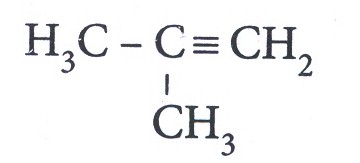
(i) and (iii)
(ii) and (iii)
(ii) and (iv)
(iii) and (iv)
2.
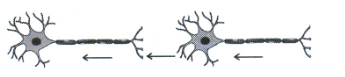
What is the correct direction of flow of electrical impulses?



3.
Two pea plants one with round green seeds (RRyy) and another with wrinkled yellow (rrYY) seeds produce F1 progeny that have round, yellow (RrYy) seeds. When F1 plants are selfed, the F2 progeny will have new combination of characters. Choose the new combination from the following:
(i) Round, yellow
(ii) Round, green
(iii) Wrinkled, yellow
(iv) Wrinkled, green
(i) and (ii)
(i) and (iv)
(ii) and (iii)
(i) and (iii)
4.
Which of the following statement are true for flowers?
(i)Flowers are always bisexual
(ii)They are the sexual reproductive organs
(iii)They are produced in all groups of plants
(iv)After fertilisation they give rise to fruits
(i) and (iv)
(ii) and (iii)
(i) and (iii)
(ii) and (iv)
5.
Which one of the following elements exhibit maximum number of valence electrons?
Na
Al
Si
P
6.
Which of the following statements is not a correct statement about the trends when going from left to right across the periods of periodic Table?
The elements become less metallic in nature.
The number of valence electrons increases.
The atoms lose their electrons more easily.
The oxides become more acidic.
7.
A molecule of ammonia (NH3) has
only single bonds
only double bonds
only triple bonds
two double bonds and one single bond
8.
The phenomenon of electromagnetic induction is
the process of charging a body.
the process of generating magnetic field due to a current passing through a coil.
producing induced current in a coil due to relative motion between a magnet and the coil.
the process of rotating a coil of an electric motor.
9.
The internal (cellular) energy reserve in autotrophs is
Glycogen
Protein
Starch
Fatty acid
10.
Which of the following are not ionic compounds?
(i) KCl (ii) HCl (iii) CCl4 (iv) NaCl
(i) and (ii)
(ii) and (iii)
(iii) and (iv)
(i) and (iii)
11.
Which of the following statements are true about the brain?
(i) The main thinking part of brain is hind brain
(ii) Centres of hearing, smell, memory, sight, etc. are located in forebrain.
(iii) Involuntary actions like salivation, vomiting, blood pressure are controlled by the medulla in the hind brain
(iv) Cerebellum does not control posture and balance of the body
(i) and (ii)
(i), (ii) and (iii)
(ii) and (iii)
(iii) and (iv)
12.
Equal volumes of hydrochloric acid and sodium hydroxide solutions of same concentration are mixed and the pH of the resulting solution is checked with a pH paper. What would be the colour obtained?
Red
Yellow
Yellowish green
Blue
13.
If a few drops of a concentrated acid accidentally spills over the hand of a student, what should be done?
Wash the hand with saline solution
Wash the hand immediately with plenty of water and apply a paste od sodium hydrogen carbonate
After washing with plenty of water apply solution of solution hydroxide on the hand
Neutralise the acid with a strong alkali
14.
An aqueous solution turns red litmus solution blue. Excess addition of which of the following solution would reverse the change?
Baking powder
Lime
Ammonium hydroxide solution
Hydrochloric acid
15.
A solution reacts with crushed egg-shells to give a gas that turns lime-water milky. The solution contains.
NaCl
HCl
LiCl
KCl
1.
(c)
(ii) and (iv)
2.
(c)
3.
(b)
(i) and (iv)
4.
(d)
(ii) and (iv)
5.
(d)
P
6.
(c)
The atoms lose their electrons more easily.
7.
(a)
only single bonds
8.
(c)
producing induced current in a coil due to relative motion between a magnet and the coil.
9.
(c)
Starch
10.
(b)
(ii) and (iii)
11.
(c)
(ii) and (iii)
12.
(c)
Yellowish green
13.
(b)
Wash the hand immediately with plenty of water and apply a paste od sodium hydrogen carbonate
14.
(d)
Hydrochloric acid
15.
(b)
HCl

10th Standard CBSE Syllabus & Materials
10th Standard CBSE
CBSE 10th Social Science PS - Federalism - New Model Questions Papers Study Material - QB365 Set A
NEW10th Standard CBSE
CBSE 10th Social Science PS - Power Sharing - New Model Questions Papers Study Material - QB365 Set A
NEW10th Standard CBSE
CBSE 10th Social Science GEO - Manufacturing Industries - New Model Questions Papers Study Material - QB365 Set A
NEW10th Standard CBSE
CBSE 10th Social Science GEO - Minerals and Energy Resources - New Model Questions Papers Study Material - QB365 Set A



NCERT Books

Syllabus

Exam Pattern

Sample Question Papers

Previous year Question Papers

Important Notes

MCQ Practice test

NCERT Exemplers

Case study Questions

Image Based Questions

Passage based Questions

HOT Questions

Value Based Questions

Model Questions Papers
NCERT ( Book Back ) Questions

Assertion and Reason
Important Questions And Answers

CBSE 10th Standard CBSE Subjects
CBSE Standards




