
 100% FREE ACCESS
11th Standard CBSE Syllabus & Materials
11th Standard CBSE
CBSE 11th Economics PART-A - Presentation of Data - New Sample Question Papers Study Material - QB365 Set A
NEW11th Standard CBSE
CBSE 11th Economics PART-A - Organisation of Data - New Sample Question Papers Study Material - QB365 Set A
NEW11th Standard CBSE
CBSE 11th Economics PART-A - Collection of Data - New Sample Question Papers Study Material - QB365 Set A
NEW11th Standard CBSE
CBSE 11th Economics PART-A - Introduction to Economics and Statistics - New Sample Question Papers Study Material - QB365 Set A
NEW11th Standard CBSE
CBSE 11th Business Studies International Trade Sample Question Papers Study Material - QB365 Set A
NEW11th Standard CBSE
CBSE 11th Business Studies Evolution and Fundamentals of Business Sample Question Papers Study Material - QB365 Set A

Published on: 06/09/2019
Biomolecules
Download CBSE Class 11th Standard CBSE Biology question papers, sample papers, important questions, and previous year solved papers in PDF format. Get free study materials, NCERT solutions, and exam preparation resources for Class 11th Standard CBSE Biology
Questions + Answers key
Take MCQ Biology Test
1.
Identify the lipid molecule that is crystallisable in nature. Also, give the name of the disorder produced by it in the human body.
2.
Bring out the difference between primary and secondary metabolites. Write an example for each of them.
3.
Give any two examples of derived lipids.
4.
Differentiate between homopolysaccharide and heteropolysaccharide?
5.
Bring out the difference between ligases and llyases
6.
Name the polysaccharide which constitutes the exoskeleton of arthropods.
7.
Name one homopolysaccharide and one heteropolysaccharide.
8.
Name two physical factors which can affect the enzyme activity
9.
Name of any two aromatic amino acids.
10.
Nucleotides with more than one phosphate group are called ______.
11.
Find and write down structures of 10 interesting small molecular weight biomolecules. Find if there is any industry which manufactures the compounds by isolation. Find out who are the buyers.
12.
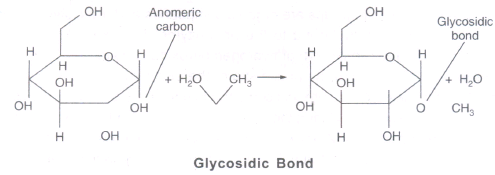
Illustratea glycosidic, peptide and a phosphodiester bond.
13.
(i) Identify the structure shown in figure.
(ii) Write the measurement (distance) of the parts marked (A), (B), (C).
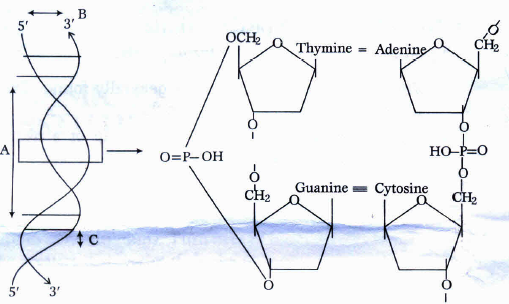
(iii) How many H-bonds are there at the place marked as(6)?
(iv) Which form of DNA is shown in the figure?
(v) Whether B type DNA has left-handed spiral structure or right-handed?
14.
Discuss the types of enzyme cofactors that are required for the efficient activity for enzymes.
15.
Describe the important properties of enzymes.
16.
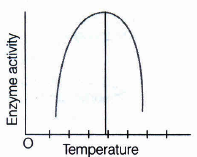
Describe the influence of temperature on enzyme action.
17.
Without metabolism, the living state can not exist Justify.
18.
Differentiate between anabolism and catabolism, along with an example for each.
19.
Find out and make a list of proteins used as therapeutic agents. Find other applications of proteins (e.g., Cosmetics etc.)
1.
Cholesterol is a crystallisable lipid of high molecular weight which possesses 17 carbon nucleus of four fused hydrocarbon rings (cyclopentane perhydrophenanthrene) and a long side chain. Cholesterol is insoluble in water and therefore, when cholesterol level rises in blood, it tends to get deposited in the wall of arteries. This causes arteriosclerosis.
2.
Difference between primary and secondary metabolites are as follows
| Primary metabolites | secondary Metabolites |
| These are the metabolites which have identifiable functions and play a specific role in the metabolism. | These are the metabolites formed during metabolism whose role or exact functions in the tissue are not known. |
| These are important in human metabolic processes. e.g., amino acids, sugars. |
These are useful to human welfare. e.g., alkaloids, flavonoids, essential oils. |
3.
Terpenes, steroids and carotenoids are examples of derived lipids.
4.
| Homopolysaccharide | Heteropolysaccharide |
| They are the complex carbohydrates formed by the polymerisation of one type of monosaccharide units. | They are the complex carbohydrates formed by the polymerisation of more than one type of monosaccharide units. |
| e.g., starch, glycogen and cellulose. | e.g., chitin and agar. |
5.
Difference between ligases and ligases and lyases is given below
| Ligases | Lyases |
|---|---|
|
These are the enzymes which Catalyse the covalent bonding between two subtracts to form a large molecule |
Thes eare the enzymes which catalyse the cleavage of specific covalent bonds in a large molecule to form smaller molecules without the addition of water |
6.
Arthropods have sclerotein protein and polysaccharide called chitin in their exoskeleton.
7.
Homopolysaccharide : Starch
Heteropolysaccharide : Chitin
8.
Temperature and pressure are the two physical factors that affects activity of an enzyme
9.
Tyrosine and tryptophan are the two aromatic amino acids.
10.
Higher nucleotides.
11.
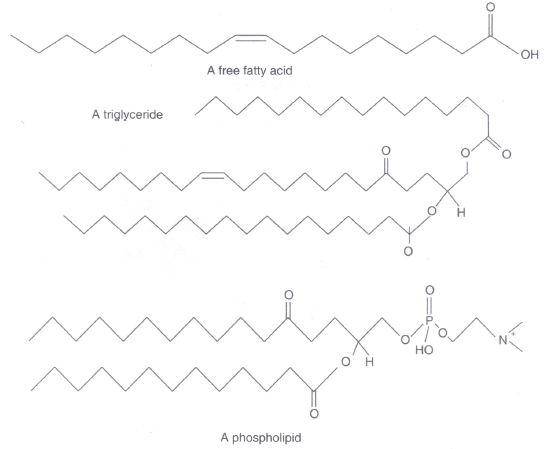
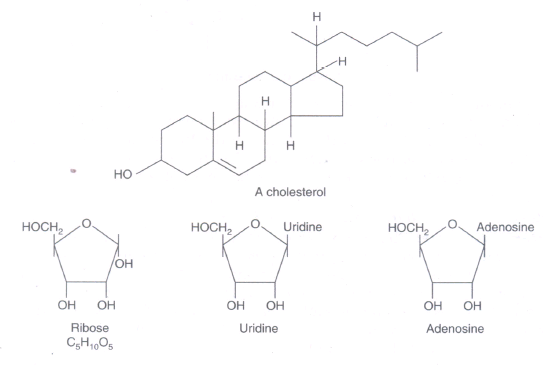
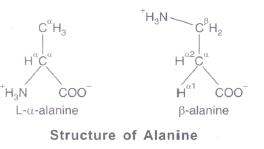
Fat is being manufactured by many companies in pharmaceuticals business as well as in food business. Vitamins come in many combination and are being used as supplementary medicines. Lactose is made by companies manufacturing baby food.
All of us are buyers of fat, protein and lactose.
12.
A glycosidic bond is a certain type of functional group that joins a carbohydrate (sugar) molecule to another group, which mayor may not be another carbohydrate.
A peptide bond (amide bond) is a chemical bond formed between two molecules when the carboxyl group of one molecule reacts with the amine group of the other molecule, thereby releasing a molecule of water (H2O). This is a dehydration 'synthesis reaction (also known as a condensation reaction) and usually occurs between amino acids. The resulting CO-NH bond is called a peptide bond, and the resulting molecule is an amide. The four-atom functional group -C(=O) NH-is called an amide group or (in the context of proteins) a peptide group. Polypeptides and proteins are chains of amino acids held together by peptide bonds, as is the backbone of PNA. Polyamides, such as nylons and aramids, are synthetic molecules (polymers) that possess peptide bonds.
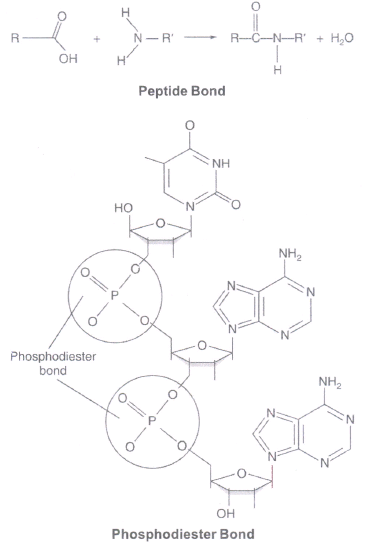
A phosphodiester bond is a group of strong covalent bonds between a phosphate group and two other molecules over two ester bonds. Phosphodiester bonds are central to all life on Earth, as they make up the backbone of the strands of DNA. In DNA and RNA, the phosphodiester bond is the linkage between the 3' carbon atom of one sugar molecule and the 5' carbon of another, deoxyribose in DNAand ribose in RNA.
13.
(i) Double helix model of DNA (Waston-Crick model of DNA).
(ii) (A) 2 nm
(B) 3.4 nm
(C) 0.34 nm.
(iii) The bonds between C and G are three.
(iv) This is B-form of DNA.
(v) B-DNA is right - handed spiral structure.
14.
Cofactors are non-protein molecules that are relatively stable at high temperature consisting of thhree main types i.e inorganic ions, coenzymes and prosthetic groups.
(i) Examples of inorganic ions are calcium ions(activates the enzyme thrombokinase to convert prothrombin into thrombin during thye blood clotting process) and chloride ions(activates salivary amylas to convert starch into maltose)
(ii) Examples of coenzymes are NAD, acetyl coenzyme A ATP and NADP
(iii) Prosthetic groups are molecules that are permanently attached to the enzyme.Examples of prosthetic groups are heam and FAD
15.
Properties of enzymes are as follows:
i) Lowering the activation energy
ii) Lowering the energy of the transition state
iii) Providing an alternative pathway
iv) Reducing the reaction entropy change
v) Increases in temperatures speed up reactions
vi) Unique enzyme for unique substance
vii) Small quantity is enough to facilitate faster reaction.
16.
Enzymes generally function at a narrow range of temperature. The temperature at which the enzyme shows its maximum activity, is called its optimum temperature. The enzyme activity decreases at temperatures below and above the optimum temperature.
At low temperatures, the enzyme is inactive, while at high temperature, the enzyme is denatured and so it loses its activity.
17.
The most important fact of biology systems is that all living organisms exist in a steady-state characterised by the concentration of each of the biomolecule. These biomolecules are in a metabolic flux. Any chemical or physical process moves spontaneously to equilibrium. Thus, the steady state is a non-equilibrium state.
As living organisms work continuously, they cannot afford to reach equilibrium. Hence, the living state is a non-equilibrium steady-state to be able to perform work. This is achieved by energy input. Metabolism provides a mechanism for the production of energy.
Hence, the living state and metabolism are synonymous. Without metabolism, there cannot be a living state.
18.
Difference between anabolism and catabolism are
| Anabolism | Catabolism |
| The metabolic pathways that lead to the synthesis of complex molecules from simpler ones, constitute anabolism. | The metabolic pathways that lead to the formation of simpler molecules from a larger molecule by its breakdown, constitute catabolism |
| These are the biosynthetic pathways. | These are the degradative pathways. |
| Energy is stored in the form of chemical bonds. | Chemical bonds are broken and energy is released. |
| They consume energy, e.g., protein synthesis from amino acids | They release energy e.g., breakdown of glucose into pyruvic acid in glycolysis. |
19.
Some proteins and their functions
| Protein | Function |
| Collagen | Intercellular ground substance in tissue |
| Trypsin | Enzyme |
| Insulin | Hormone |
| Antibody | Fights infectious agents |
| Receptor | Sensory reception (smell, taste, hormone, etc) |
| GLUT-4 | Enables glucose transport into cells |

11th Standard CBSE Syllabus & Materials
11th Standard CBSE
CBSE 11th Business Studies Forms of Business Organisation Sample Question Papers Study Material - QB365 Set A
NEW11th Standard CBSE
CBSE 11th Business Studies Business, Trade and Commerce Sample Question Papers Study Material - QB365 Set A
NEW11th Standard CBSE
CBSE 11th Physics Waves Sample Question Papers Study Material - QB365 Set A
NEW11th Standard CBSE
CBSE 11th Physics Kinetic Theory Sample Question Papers Study Material - QB365 Set A



CBSE 11th Standard CBSE Subjects
CBSE Standards









