
 100% FREE ACCESS
11th Standard CBSE Syllabus & Materials
11th Standard CBSE
CBSE 11th Economics PART-A - Presentation of Data - New Sample Question Papers Study Material - QB365 Set A
NEW11th Standard CBSE
CBSE 11th Economics PART-A - Organisation of Data - New Sample Question Papers Study Material - QB365 Set A
NEW11th Standard CBSE
CBSE 11th Economics PART-A - Collection of Data - New Sample Question Papers Study Material - QB365 Set A
NEW11th Standard CBSE
CBSE 11th Economics PART-A - Introduction to Economics and Statistics - New Sample Question Papers Study Material - QB365 Set A
NEW11th Standard CBSE
CBSE 11th Business Studies International Trade Sample Question Papers Study Material - QB365 Set A
NEW11th Standard CBSE
CBSE 11th Business Studies Evolution and Fundamentals of Business Sample Question Papers Study Material - QB365 Set A

Published on: 10/09/2019
Breathing and Exchange of Gases
Download CBSE Class 11th Standard CBSE Biology question papers, sample papers, important questions, and previous year solved papers in PDF format. Get free study materials, NCERT solutions, and exam preparation resources for Class 11th Standard CBSE Biology
Questions + Answers key
Take MCQ Biology Test
1.
What happens to the respiratory process in a man going up a hill?
2.
Where is carbonic anhydrase found in human body?
3.
What do you understand by forceful expiration?
4.
Differentiate between oxyhaemoglobin and carbaminohaemoglobin
5.
What is the effect of pCO2 on oxygen transport?
6.
How is CO2 transported in human body
7.
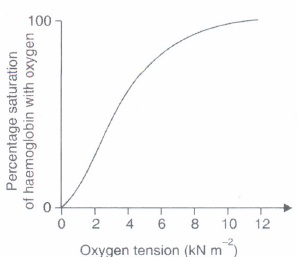
What does the oxygen haemoglobin dissociation curve indicate?
8.
How is negative pressure breathing helpful for mammals?
9.
Give the name of the three major layers of diffusion membrane.
10.
Cigarette smoking causes emphysema.Give reason.
11.
Give the name of some common respiratory disorders
12.
What controls the respiratory rhythm in human beings?
13.
Which of the regulatory centre of respiration can reduce the inspiratory duration when it is stimulated?
14.
Why is it not advisable to sleep in closed rooms warmed with burning of coals continuously?
15.
Explain chemical control of respiratory rhythm
16.
State the route of foul air from the lungs to outside. Also state whether TV increases or decreases during excitement and activity.
17.
A person dies in an accident in which his chest cavity was punctured, but no lung damage was there. Point out the cause of death.
18.
Distinguish between
(a) IRV and ERV
(b) Inspiratory capacity and Expiratory capacity.
(c) Vital capacity and Total lung capacity.
19.
Define oxygen dissociation curve. Can you suggest any reason for its sigmoidal pattern?
20.
What is Tidal volume? Find out the Tidal volume (approximate value) for a healthy human in an hour.
21.
Which centre of the central nervous system is primarily responsible for regulation of respiration?
Pneumotaxic Centre
Chemosensitive Centre
Respiratory Rhythm Centre
Respiratory Control Centre
22.
Which of the following is the correct sum for total lung capacity?
TV+ ERV
RV + TV + IRV
ERV + TV + IRV
RV+ ERV + TV + IRV
23.
What is the residual volume of air in a normal human?
1 to 1.1 litre
1.1 to 1.2 litre
1.2 to 1.3 litre
1.3 to 1.0 litre.
1.
At hills, the pressure of air falls and the person cannot get enough oxygen in the lungs for diffusion into the blood.Due to deficiency of oxygen, the person feels breathlessness, headche, dizziness, nausea, mental fatigue and a bluish colour on the skin, nails and lips.
2.
Carbonic anhydrase is an fastest enzyme known so far. It is found in RBC.
3.
It is the additional volume of air that can be expired forcibly after normal expiration. It is about 1000-1100 mL.
4.
Difference between oxyhaemoglobin and carbaminohaemoglobin are
| Oxyhaemoglobin | Carbaminohaemoglobin |
| It is formed by the combination of oxygen with the Fe2+ part of haemoglobin |
It is formed by the combination of CO2 with the amino group of haemoglobin |
| Its formation occurs on the alveolar surface | Its formation occurs in the tissues. |
5.
Increase in pCO2 tension in blood brings rightward shift of the oxygen-dissociation curve of haemoglobin thereby decreasing the affinity of Hb for O2 .this effect is called Bohr's effect.
It plays a crucial role in enhancing oxygenation of the blood in the lungs and in the release of O2 in the tissues.
6.
CO2 is transported in the human body in the following ways
(i) In dissolved form about 7%
(ii) As bicarbonate ions about 70%
(iii) As carbaminohaemoglobin about 20-25%
7.
The lower part of the curve indicates dissociation of oxygen from haemoglobin while, the upper part of the curve indicate acceptance of oxygen by Hb.
8.
Mammals use negative pressure to suck air in. The diaphragm contracts and move down, the intercostal muscles contract and move up and out. This causes the lungs to expand. The pressure inside the lungs drops.
9.
(i) Thin squamous epithelium of alveoli.
(ii) Endothelium of alveolar capillaries.
(iii) Basement substance in between
10.
Cigarette smoking causes damages to the alveolar walls and reduces elasticity of the lungs, which leads to decreased respiratory surface for exchange of gases.Thus, causing emphysema.
11.
Asthma, emphysema, occupational lung disorders (e.g., silicosis and asbestosis)
12.
The respiratory rhythm is under dual control, i.e. nervous and chemical.
13.
The respiratory process is regulated by certainly specialised cebtres present is hindbrain.Amongst them, pneumotaxis centre is located in the dorsal part of pons varoli of the brain, can reduce the duration of inspiration and thus, alter the respiratory rate.
14.
A person sleeping in such room gets carbon monoxide poisonong.CO combines with Hb more readily than oxygen forming carboxyhaemoglobin.This reduce the amount of free Hb available for carrying O2 .Thus, the tissue is starved of O2 .this is the reason why it is not advisable to sleep in closed rooms warmed with coals
15.
Large number of chemoreceptors are located in the carotid bodies (lie bilaterally in the bifurcations of the common carotid arteries).
Their afferent nerve fibers pass through glossophatyngeal cranial nerve and thus to dorsal respiratory area of the medulla oblongta, sizeable number of chemoreceptors are also located in the aortic bodies (which lie along the arch of aorta)
Their afferent nerve fibres pass through the vagus cranial nerve and thus, to dorsal respiratory group of neurons
16.
The foul air follows the route given below
Alveoli\(\rightarrow \)Alveolar ducts\(\rightarrow \)Bronchioles\(\rightarrow \)Bronchi\(\rightarrow \)Trachea\(\rightarrow \)Larynx\(\rightarrow \)Glottis\(\rightarrow \)Pharynx\(\rightarrow \)Internal nares\(\rightarrow \)Nasal chambers\(\rightarrow \)External nares\(\rightarrow \)Atmosphere.
The tidal volume increases 4-10 times during excitment and activity.
17.
The movement of air into and out of the lungs is carried out by creating a pressure gradient between the lungs and the atmosphere. The pressure within the lungs is less than the atmospheric pressure so, there is a negative pressure in the lungs with respect to atmospheric pressure. The puncture in the chest affects this pressure gradient maintained by the lungs and thus, may cause cessation of breathing
18.
Part (a): IRV vs ERV
| Inspiratory Reserve Volume(IRV) | Expiratory Reserve Volume (ERV) |
| 1. The maximum volume of air that can be inhaled after normal inspiration is called inspiratory reserve volume. | 1. The maximum volume of air that can be forcefully exhaled after normal expiration is called expiratory reserve volume. |
| 2. The IRV of the human lungs is about 2500 - 3500 mL. | 2. The ERV of the human lungs is about 1000-1100 mL. |
Part (b): Inspiratory Capacity vs Expiratory Capacity
| Inspiratory capacity (IC) | Expiratory capacity (EC) |
| 1. It is the volume air that can be inhaled after normal expiration. | 1. It is the volume of air that can be exhaled after a normal inspiration. |
| 2. It includes tidal volume and inspiratory reserve volume | 2. It includes the tidal volume along with the expiratory reserve volume |
| 3. IC = TV + IRV | 3. EC = TV + ERV |
Part (c): Vital capacity vs Total lung capacity
| Vital capacity (VC) | Total lung capacity (TLC) |
| 1. It is the maximum volume of air that can be exhaled after maximum inspiration. | 1. It is the maximum volume of air in the lungs after maximum inspiration. |
| 2. IC + ERV = VC = 4000 mL in humans. | 2. TLC = IC + ERV + RV = 5000-6000 mL in humans. |
19.
Oxygen dissociation curve shows the relationship between percentage saturation of haemoglobin with oxygen and partial pressure of oxygen. Each haemoglobin can bind with 4 molecules of oxygen at the most. The first molecule of oxygen binds with he most difficulty. But each subsequent moleculeases the binding of nest oxygen molecule. This results in graph rising rapidly. When all the 4 oxygen molecules bind, no further binding is possible. The graph plateaus at this stage. This explains the sigmoid curve.
20.
Tidal volume is the volume of air inspired or expired during normal respiration. It is about 6000 to 8000 mL of air per minute.
The hourly tidal volume for a healthy human can be calculated as:
Tidal volume = 6000 to 8000 mL/minute
Tidal volume in an hour = 6000 to 8000 mL × (60 min)
= 3.6 × 10⁵ mL to 4.8 × 10⁵ mL
Therefore, the hourly tidal volume for a healthy human is approximately 3.6 × 10⁵ mL to 4.8 × 10⁵ mL.
21.
(c)
Respiratory Rhythm Centre
22.
(d)
RV+ ERV + TV + IRV
23.
(b)
1.1 to 1.2 litre

11th Standard CBSE Syllabus & Materials
11th Standard CBSE
CBSE 11th Business Studies Forms of Business Organisation Sample Question Papers Study Material - QB365 Set A
NEW11th Standard CBSE
CBSE 11th Business Studies Business, Trade and Commerce Sample Question Papers Study Material - QB365 Set A
NEW11th Standard CBSE
CBSE 11th Physics Waves Sample Question Papers Study Material - QB365 Set A
NEW11th Standard CBSE
CBSE 11th Physics Kinetic Theory Sample Question Papers Study Material - QB365 Set A



CBSE 11th Standard CBSE Subjects
CBSE Standards









