
 100% FREE ACCESS
11th Standard CBSE Syllabus & Materials
11th Standard CBSE
CBSE 11th Economics PART-A - Presentation of Data - New Sample Question Papers Study Material - QB365 Set A
NEW11th Standard CBSE
CBSE 11th Economics PART-A - Organisation of Data - New Sample Question Papers Study Material - QB365 Set A
NEW11th Standard CBSE
CBSE 11th Economics PART-A - Collection of Data - New Sample Question Papers Study Material - QB365 Set A
NEW11th Standard CBSE
CBSE 11th Economics PART-A - Introduction to Economics and Statistics - New Sample Question Papers Study Material - QB365 Set A
NEW11th Standard CBSE
CBSE 11th Business Studies International Trade Sample Question Papers Study Material - QB365 Set A
NEW11th Standard CBSE
CBSE 11th Business Studies Evolution and Fundamentals of Business Sample Question Papers Study Material - QB365 Set A

Published on: 27/09/2019
Organic Chemistry: Some Basic Principles and Techniques
Download CBSE Class 11th Standard CBSE Chemistry question papers, sample papers, important questions, and previous year solved papers in PDF format. Get free study materials, NCERT solutions, and exam preparation resources for Class 11th Standard CBSE Chemistry
Questions + Answers key
Take MCQ Chemistry Test
1.
(i) Arrange the following carbocation in increasing order of their stability.
(CH3)2 \(\overset { \oplus }{ CH } \) , CH3CH2+, (CH3)3C+ , \(\overset { + }{ { CH }_{ 3 } } \)
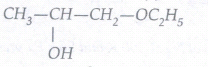
(ii) Write the IUPAC name of following compound.
2.
0.25 g of an organic compound gave 38 cm3 of N2 at 300 K and 96 k Pa pressure. Calculate % of Nin the sample.
3.
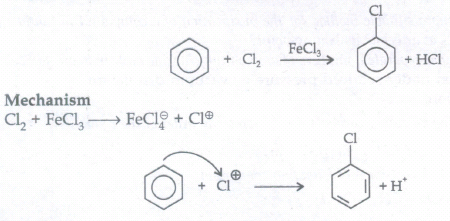
What are electrophiles? Explain elecirophile substitution reaction with the help of example.
4.
How will you detect the presence of nitrogen and sulphur in Lassaigne's extract?
5.
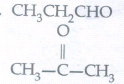
Write all structural isomers of molecular formula C3H6O.
6.
Give a brief description of the principles of the following techniques taking an example in each case: Distillation.
7.
Identify the reagents shown in bold in the following equations as nucleophiles or electrophiles:
(a) CH3COOH + HO– → CH3COO– +H2O
(b) CH3COCH3+ \(\overset{-}CN\) → (CH3)2C(CN)(OH)
(c) C6H6 + CH3\(\overset{+}CO\) → C6H5COCH3
8.
Consider structure I to VII and answer the following questions (i) and (ii).
I. \({ CH }_{ 3 }-{ CH }_{ 2 }-{ CH }_{ 2 }-{ CH }_{ 2 }-{ OH }\)
II.
\({ CH }_{ 3 }-{ CH }_{ 2 }-{ CH }-{ CH }_{ 3 }\\ \quad \quad \quad \quad \quad \quad \quad |\\ \quad \quad \quad \quad \quad \quad \quad { OH }\)
III.
\({ \quad \quad \quad \quad CH }_{ 3 }\\ \quad \quad \quad \quad |\\ { { CH }_{ 3 } }-{ C }-{ CH }_{ 3 }\\ \quad \quad \quad \quad |\\ \quad \quad \quad \quad { OH }\)
IV.
\({ CH }_{ 3 }-{ CH }-{ CH_{ 2 } }-{ OH }\\ \quad \quad \quad \quad |\\ \quad \quad \quad \quad { CH }_{ 3 }\)
V. \({ CH }_{ 2 }-{ CH }_{ 2 }-{ O }-{ CH }_{ 2 }-{ CH }_{ 3 }\)
VI.
\({ CH }_{ 2 }-{ O }-{ CH }_{ 2 }-{ CH }_{ 2 }-{ CH }_{ 3 }\)
VII.
\({ CH }_{ 3 }-{ O }-{ CH }-{ CH }_{ 3 }\\ \quad \quad \quad \quad \quad \quad |\\ \quad \quad \quad \quad \quad \quad { CH }_{ 3 }\)
Identify the pairs of compounds that represent chain isomerism.
1.
(i) \( \overset { \oplus }{ { CH }_{ 3 } } \) < CH3\({ CH }_{ 2 }^{ \oplus }\) < (CH3)2\(\overset { \oplus }{ CH } \) < (CH3)3\(\overset { \oplus }{ C } \)
(ii) l-Ethoxypropan-2-ol
2.
V1 = 38 cm3
V2 =?
P1 = 96 k Pa
P2 = 101.3 Pa.
T1 = 300 K T2 = 273 K
\(V_2=\frac{96\times 38\times 273}{300\times 101.3}\)
\(\frac{995904}{30390}=32.77\ cm^3\)
\(\% of\ N=\frac{28}{22400}\times\frac{100\times V_2}{W}\)
\(=\frac{1}{8}\times \frac{V_2}{W}=\frac{1}{8}\times \frac{32.77}{0.25}=16.38\%\)
3.
A reagent which can accept an electron pair in a reaction is called an electrophile.
Examples are, H+, Cl+, NO2 + R3C+, \({ RN }_{ 2 }^{ \oplus }\)
4.
If freshly prepared FeSO4 and then dil. H2SO4 is added to Lassaigne's extract, a blue-green colouration confirms the nitrogen.
5.
6.
Distillation: The operation of distillation is employed for the purification of liquids from non-volatile impurities. The impure liquid is boiled in a flask and the vapours so formed are collected and condensed to give back pure liquid in another vessel. Simple organic liquids such as benzene toluene, xylene etc. can be purified.
7.
Electrophiles are electron-deficient species and can receive an electron pair. On the other hand, nucleophiles are electron-rich species and can donate their electrons.

Here, HO– acts as a nucleophile as it is an electron-rich species, i.e., it is a nucleus-seeking species.

Here, –CN acts as a nucleophile as it is an electron-rich species, i.e., it is a nucleus-seeking species.

Here, CH3\(\overset{+}CO\) acts as an electrophile as it is an electron-deficient species.
8.
I and III, I and IV, II and III and II and IV represent chain isomerism.
a) \({ CH }_{ 3 }CO{ CH }_{ 3 }\)
b) \(H-CH={ CH }_{ 2 }\).

11th Standard CBSE Syllabus & Materials
11th Standard CBSE
CBSE 11th Business Studies Forms of Business Organisation Sample Question Papers Study Material - QB365 Set A
NEW11th Standard CBSE
CBSE 11th Business Studies Business, Trade and Commerce Sample Question Papers Study Material - QB365 Set A
NEW11th Standard CBSE
CBSE 11th Physics Waves Sample Question Papers Study Material - QB365 Set A
NEW11th Standard CBSE
CBSE 11th Physics Kinetic Theory Sample Question Papers Study Material - QB365 Set A



CBSE 11th Standard CBSE Subjects
CBSE Standards









