
 100% FREE ACCESS
11th Standard CBSE Syllabus & Materials
11th Standard CBSE
CBSE 11th Economics PART-A - Presentation of Data - New Sample Question Papers Study Material - QB365 Set A
NEW11th Standard CBSE
CBSE 11th Economics PART-A - Organisation of Data - New Sample Question Papers Study Material - QB365 Set A
NEW11th Standard CBSE
CBSE 11th Economics PART-A - Collection of Data - New Sample Question Papers Study Material - QB365 Set A
NEW11th Standard CBSE
CBSE 11th Economics PART-A - Introduction to Economics and Statistics - New Sample Question Papers Study Material - QB365 Set A
NEW11th Standard CBSE
CBSE 11th Business Studies International Trade Sample Question Papers Study Material - QB365 Set A
NEW11th Standard CBSE
CBSE 11th Business Studies Evolution and Fundamentals of Business Sample Question Papers Study Material - QB365 Set A

Published on: 07/09/2019
Organic Chemistry: Some Basic Principles and Techniques
Download CBSE Class 11th Standard CBSE Chemistry question papers, sample papers, important questions, and previous year solved papers in PDF format. Get free study materials, NCERT solutions, and exam preparation resources for Class 11th Standard CBSE Chemistry
Questions + Answers key
Take MCQ Chemistry Test
1.
What is meant by delocalization?
2.
How many σ and π bonds are present in each of the following molecules?
(a) HC≡CCH=CHCH3
(b) CH2=C=CHCH3
3.
Which of the following represents the correct IUPAC name for the compounds concerned ?
(a) 2,2-Dimethylpentane or 2-Dimethylpentane
(b) 2,4,7-Trimethyloctane or 2,5,7-Trimethyloctane
(c) 2-Chloro-4-methylpentane or 4-Chloro-2-methylpentane
(d) But-3-yn-1-ol or But-4-ol-1-yne.
4.
What are primary and secondary suffixes as applied to IUPAC nomenclature?
5.
Give condensed and bond line structural formulas and identify the functional group(s) present, if any, for :
(a) 2,2,4-Trimethylpentane
(b) 2-Hydroxy-1,2,3-propanetricarboxylic acid
(c) Hexanedial
6.
During estimation of nitrogen present in an organic compound by Kjeldahl’s method, the ammonia evolved from 0.5 g of the compound in Kjeldahl’s estimation of nitrogen, neutralized 10 mL of 1 M H 2SO4 .Find out the percentage of nitrogen in the compound.
7.
Write down the formula of the first four members of each homologous series beginning with the following compounds.
(i) \({ CH }_{ 2 }={ CH }_{ 2 }\)
(ii) \(HCOOH\)
(iii) \({ CH }_{ 3 }CO{ CH }_{ 3 }\)
(iv) \({ CH }_{ 3 }OH\)
(v) \(HC\equiv CH\)
8.
Write structural formula for all the isomeric amines with molecular formula C4H11 N.
9.
0.50 g of an organic compound was Kjeldahlished. The ammonia evolved was passed in 50cm3 of 1N H2SO4 . The residual acid required 60 cm3 of N/2 NaOH solution. Calculate the percentage of nitrogen in the compound.
10.
Explain the terms inductive and electromeric effects. Which electron displacement effect explain the following correct orders of acidity of the carboxylic acids?
(a) Cl3CCOOH > Cl2CHCOOH > ClCH2COOH
(b) CH3CH2COOH > (CH3)2CHCOOH > (CH3)3C.COOH
11.
The reaction: CH3CH2I + KOH (aq) \(\rightarrow\)CH3CH2OH + KI is classified as :________.
electrophilic substitution
nucleophilic substitution
elimination
addition
12.
In the organic compound CH2=CH-CH2-CH2-C\(\equiv \)CH, the pair of hydridised orbitals involved in the formation of: C2 - C3 bond is _____.
sp - sp2
sp - sp3
Sp2 - Sp3
sp3 - sp3
1.
Delocalisation means that pairs of bonding electrons extend over three or more atoms and belong to the whole molecule. Delocalisation \(\pi \) orbital are much larger than the localized \(\pi \) orbital and are therefore more stable.
2.
(a) σC – C: 4; σC–H : 6; πC=C :1; π C≡C:2
(b) σC – C: 3; σC–H: 6; πC=C: 2.
3.
(a) 2,2-dimethylpentane (because for the two alkyl groups on the same carbon, its locant is repeated twice)
(b) 2,4,7-trimethyloctane (because 2, 4, 7-locant set is lower than 2, 5, 7).
(c) 2-chloro-4-methylpentane (Alphabetical order of substituents)
(d) But-3-yn-1-ol (because of lower locant for the principal functional group, i.e. alcohol).
4.
The primary suffix indicates whether the carbon chain is saturated or unsaturated while the secondary suffix indicates the functional group present in the molecule.
5.
(a) 2, 2, 4-trimethylpentane
Condensed formula: (CH3)2CHCH2C (CH3)3
Bond line formula:
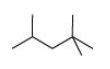
(b) 2-hydroxy-1, 2, 3-propanetricarboxylic acid
Condensed Formula: (COOH)CH2C(OH) (COOH)CH2(COOH)
Bond line formula:
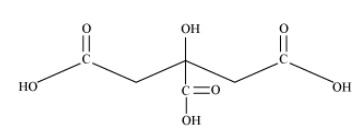
The functional groups present in the given compound are carboxylic acid (-COOH) and alcoholic (-OH) groups.
(c) Hexanedial Condensed Formula: (CHO) (CH2)4 (CHO)
Bond line Formula:

The functional group present in the given compound is aldehyde (-CHO).
6.
1 M of 10 mL H2SO4=1M of 20 mL NH3
1000 mL of 1M ammonia contains 14 g nitrogen 20 mL of 1M ammonia contains \(=\frac{14 \times 12}{1000} g\) nitrogen
Percentage of nitrogen \(=\frac{14 \times 20 \times 100}{1000 \times 0.5} = 56.0\%\)
7.
(i) \({ CH }_{ 2 }={ CH }_{ 2 },CH_{ 3 }CH={ CH }_{ 2 },CH_{ 3 }{ CH }_{ 2 }CH={ CH }_{ 2 },CH_{ 3 }{ CH }_{ 2 }{ CH }_{ 2 }CH={ CH }_{ 2 }\)
(ii) \(HCOOH,{ CH }_{ 3 }COOH,{ CH }_{ 3 }{ CH }_{ 2 }COOH,{ CH }_{ 3 }{ CH }_{ 2 }{ CH }_{ 2 }COOH\)
(iii) \({ CH }_{ 3 }CO{ CH }_{ 3 },{ CH }_{ 3 }{ CH }_{ 2 }CO{ CH }_{ 3 },{ CH }_{ 3 }{ CH }_{ 2 }{ CH }_{ 2 }CO{ CH }_{ 3 },{ CH }_{ 3 }{ CH }_{ 2 }{ CH }_{ 2 }{ CH }_{ 2 }CO{ CH }_{ 3 }\)
(iv) \({ CH }_{ 3 }OH,{ CH }_{ 3 }{ CH }_{ 2 }OH,{ CH }_{ 3 }{ CH }_{ 2 }{ CH }_{ 2 }OH,{ CH }_{ 3 }{ CH }_{ 2 }{ CH }_{ 2 }{ CH }_{ 2 }OH\)
(v) \(\\ HC\equiv CH,{ CH }_{ 3 }C\equiv CH,{ CH }_{ 3 }{ CH }_{ 2 }C\equiv CH,{ CH }_{ 3 }{ CH }_{ 2 }{ CH }_{ 2 }\equiv CH\)
8.
(i) \({ CH }_{ 3 }-{ CH }_{ 2 }-{ CH }_{ 2 }-{ CH }_{ 2 }-{ NH }_{ 2 }\)
(ii)
\({ CH }_{ 3 }-{ CH }_{ 2 }-{ CH }-{ CH }_{ 3 }\\ \quad \quad \quad \quad \quad \quad \quad |\\ \quad \quad \quad \quad \quad \quad \quad { NH }_{ 2 }\)
(iii)
\({ CH }_{ 3 }-{ CH }-{ CH_{ 2 } }-{ NH }_{ 2 }\\ \quad \quad \quad \quad |\\ \quad \quad \quad \quad { CH }_{ 3 }\)
(iv)
\({ \quad \quad \quad \quad CH }_{ 3 }\\ \quad \quad \quad \quad |\\ { { CH }_{ 3 } }-{ C }-{ NH }_{ 2 }\\ \quad \quad \quad \quad |\\ \quad \quad \quad \quad { CH }_{ 3 }\)
(v)
\({ CH }_{ 3 }-{ CH }_{ 2 }-{ CH }_{ 2 }-{ NH }-{ CH }_{ 3 }\)
(vi)
\({ CH }_{ 3 }-{ CH }-{ NH }-{ CH }_{ 3 }\\ \quad \quad \quad \quad |\\ \quad \quad \quad \quad { CH }_{ 3 }\)
(vii)
\({ CH }_{ 3 }-{ CH }_{ 2 }-{ NH }-{ CH }_{ 2 }-{ CH }_{ 3 }\)
(viii)
\({ CH }_{ 3 }-{ CH }_{ 2 }-{ N }-{ CH }_{ 3 }\\ \quad \quad \quad \quad \quad \quad \quad |\\ \quad \quad \quad \quad \quad \quad \quad { CH }_{ 3 }\)
9.
Step I. Calculation of volume of unused acid
Volume of NaOH solution required = 60 cm3
Normality of NaOH solution = 1/2 N
Normality of H2SO4 solution = l/N
Volume of unused acid can be calculated by applying normality equation
\(\underbrace { N_{ 1 }{ V }_{ 1 } }_{ Acid } =\underbrace { { N }_{ 1 }{ V }_{ 1 } }_{ Base } \)
\(1\times V=\frac{1}{2}\times 60=30cm^3\)
Step II. Calculation of volume of acid used
Volume of acid added = 50 cm3
Volume of unused acid = 30 cm3
Volume of acid used = (50 - 30) = 20 cm3
Step III. Calculation of percentage of nitrogen
Mass of compound = 0.50 g
Volume of acid used = 20 cm3
Normality of acid used = 1N
Percentage of N =\(\frac{1.4\times Volume\ of\ acid\ used\times Normality\ of\ acid\ used}{Mass\ of\ the\ compound}\)
\(=\frac{1.4\times20\times1}{0.50}=56\%\)
10.
Inductive Effect: The inductive effect refers to the polarity produced in a molecule as a result of higher electronegativity of one atom compared to another. Atoms or groups which lose electron towards a carbon atom are said to have + I Effect.
Those atoms or groups which draw electron away from a carbon atom are said to have -I Effect.
Common examples of -I effect are:
NO2, F, Cl, Br, I, OH etc.
Examples of +1 effect are (Electron releasing)
(CH3)2C-, (CH3)2CH-, CH3CH2-, CH3- etc.
Electromeric effect: The electromeric effect refers to the polarity produced in a multiple bonded compound as it is approached by a reagent.
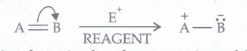
The atom A has lost its share in the electron pair and B has gained this share. As a result A acquires a positive charge and B a negative charge. It is a temporary effect and takes place only in the presence of a reagent.
(a) -I-effect as shown below:
As the number of halogen atoms decreases, the overall -1- effect decreases and the acid strength decreases accordingly.

(b) +I-effect as shown below:
As the number of alkyl groups increases, the +I-effect increases and the acid strength decreases accordingly.

11.
(b)
nucleophilic substitution
12.
(c)
Sp2 - Sp3

11th Standard CBSE Syllabus & Materials
11th Standard CBSE
CBSE 11th Business Studies Forms of Business Organisation Sample Question Papers Study Material - QB365 Set A
NEW11th Standard CBSE
CBSE 11th Business Studies Business, Trade and Commerce Sample Question Papers Study Material - QB365 Set A
NEW11th Standard CBSE
CBSE 11th Physics Waves Sample Question Papers Study Material - QB365 Set A
NEW11th Standard CBSE
CBSE 11th Physics Kinetic Theory Sample Question Papers Study Material - QB365 Set A



CBSE 11th Standard CBSE Subjects
CBSE Standards









