
 100% FREE ACCESS
11th Standard CBSE Syllabus & Materials
11th Standard CBSE
CBSE 11th Economics PART-A - Presentation of Data - New Sample Question Papers Study Material - QB365 Set A
NEW11th Standard CBSE
CBSE 11th Economics PART-A - Organisation of Data - New Sample Question Papers Study Material - QB365 Set A
NEW11th Standard CBSE
CBSE 11th Economics PART-A - Collection of Data - New Sample Question Papers Study Material - QB365 Set A
NEW11th Standard CBSE
CBSE 11th Economics PART-A - Introduction to Economics and Statistics - New Sample Question Papers Study Material - QB365 Set A
NEW11th Standard CBSE
CBSE 11th Business Studies International Trade Sample Question Papers Study Material - QB365 Set A
NEW11th Standard CBSE
CBSE 11th Business Studies Evolution and Fundamentals of Business Sample Question Papers Study Material - QB365 Set A

Published on: 24/09/2019
Cell: The Unit of Life
Download CBSE Class 11th Standard CBSE Biology question papers, sample papers, important questions, and previous year solved papers in PDF format. Get free study materials, NCERT solutions, and exam preparation resources for Class 11th Standard CBSE Biology
Questions + Answers key
Take MCQ Biology Test
1.
What is the benefit of cell walls, in plant cells?
2.
Give a brief description of ribosomes.
3.
Describe passive transport, osmosis and active transport in plasma membrane.
4.
Both lysosomes and vacuoles are endomembrane structures, yet they differ in terms of their functions. Comment.
5.
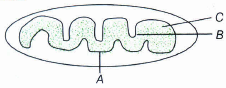
Fill in the blanks at A, B, and C as shown in diagram
6.
In what respect the mitochondria and plastids resemble the bacteria.
7.
State the chief functions of mitochondria.
8.
The lysosomal enzyme does not destroy the cell's own cytoplasm.why?
9.
Give the biochemical composition of the plasma membrane.How are lipid molecules arranged in the membrane?
10.
What are plasmids? Describe their role in bacteria.
1.
Cell wall is stronger and less impervious than plasma membrane. Cell wall provides greater mechanical strength to plants. Since plants have to withstand vagaries of nature and they are not mobile to run for safety, so they need a stronger structure. Cell wall also prevents entry of undesirable matters in cell and facilitates exchange of materials among cells.
2.
Ribosomes are the granular structures first observed under the electron microscope as dense particles by George Palade (1953). They are composed of ribonucleic acid (RNA)and proteins and are not surrounded by any membrane. The eukaryotic ribosomes are 80S while the prokaryotic ribosomes are 70S. Here 'S' stands for the sedimentation coefficient; it indirectly is a measure of density and size. Both 70S and 80S ribosomes are composed of two subunits.
3.
Passive Transport. The plasma membrane is selectively permeable to some molecules present on either side of it. Many molecules can move briefly across the membrane without any requirement of energy and this is called the passive transport.
Osmosis. Neutral solutes may move across the membrane by the process of simple diffusion along the concentration gradient, i.e., from higher concentration to the lower. Water may also move across this membrane from higher to lower concentration. Movement of water by diffusion is called osmosis.
Active Transport. As the polar molecules cannot pass through the nonpolar lipid bilayer, they require a carrier protein of the membrane to facilitate their transport across the membrane. A few ions or molecules are transported across the membrane against their concentration gradient, i.e., from lower to the higher concentration. Such a transport is an energy-dependent process, in which ATP is utilised and is called active transport, e.g., Na+/K+ Pump.
4.
Lysosome and vacuoles perform different functions in cells. Lysosome digests foreign materials and waste products. Vacuoles maintain tonocity of the plant cell and are important for excretion in bactria. Both of them function in coordination Whenever a foreign material comes inside the cell it is surrounded by a membrane to form vacuole. Even dead cell substances are surrounded by vacuoles. After sometime digestive enzymes are inserted into them and they become lysosomes. Even in amoeba, the engulfed food is first surrounded by membrane to make vacuoles and then the addition of enzyme converts the vacuole to lysosome. As their coordination is one of the important aspects of their function so they are kept under endomebrane system.
5.
A - Inner membrane,
B - Crista,
C - Matrix.
6.
Mitochondria and plastids are known as semi-autonomous organelles. They have their own genetic material i.e. DNA. They have their own matrix containing 70S type of ribosomes. That's why they resemble the bacteria.
7.
Mitochondria perform the following major functions
(i) Mitochondria are the main site of aerobic respiration, where respiratory substrates are completely oxidised to carbon dioxide and water. The energy liberated in the process is utilised in the synthesis of energy-rich molecules ATP.
(ii) They have a group of enzymes that carry out elongation of fatty acids of adding acetyl Co-A and subsequently reducing the keto-acid and produced
(iii) The matrix of mitochondria has enzymes thge synthesis of fatty acids.
8.
The lysosomal enzyme does not destroy its own cytoplasm, because of the following reasons
(i) The enzymes are separated from the cytoplasm by the lysosomal membrane.
(ii) The enzymes have the capability of recognishing and digest only foreign matter.
(iii) The lysosomal enzymes usually work in the acidic medium of pH less than 7 and the medium is more than 7 i.e. around 7.4 or more.
9.
(i) The plasma membrane is composed of proteins, lipids (phospho glycerides) and some carbohydrales.
(ii) The lipids are arranged in a bilayer within the membrane, with their polar head towards the out of surfaces and the hydrophopic tails towards the centre of the membrane.
10.
(a). Plasmids are the small, circular, extra-chromosomal (or extra genomic) DNA in the prokaryotic cells.
(b). They confer certain unique features like resistance to antibiotics, sex factors, etc.

11th Standard CBSE Syllabus & Materials
11th Standard CBSE
CBSE 11th Business Studies Forms of Business Organisation Sample Question Papers Study Material - QB365 Set A
NEW11th Standard CBSE
CBSE 11th Business Studies Business, Trade and Commerce Sample Question Papers Study Material - QB365 Set A
NEW11th Standard CBSE
CBSE 11th Physics Waves Sample Question Papers Study Material - QB365 Set A
NEW11th Standard CBSE
CBSE 11th Physics Kinetic Theory Sample Question Papers Study Material - QB365 Set A



CBSE 11th Standard CBSE Subjects
CBSE Standards









