
 100% FREE ACCESS
11th Standard CBSE Syllabus & Materials
11th Standard CBSE
CBSE 11th Economics PART-A - Presentation of Data - New Sample Question Papers Study Material - QB365 Set A
NEW11th Standard CBSE
CBSE 11th Economics PART-A - Organisation of Data - New Sample Question Papers Study Material - QB365 Set A
NEW11th Standard CBSE
CBSE 11th Economics PART-A - Collection of Data - New Sample Question Papers Study Material - QB365 Set A
NEW11th Standard CBSE
CBSE 11th Economics PART-A - Introduction to Economics and Statistics - New Sample Question Papers Study Material - QB365 Set A
NEW11th Standard CBSE
CBSE 11th Business Studies International Trade Sample Question Papers Study Material - QB365 Set A
NEW11th Standard CBSE
CBSE 11th Business Studies Evolution and Fundamentals of Business Sample Question Papers Study Material - QB365 Set A

Published on: 29/05/2021
QB365 Provides the HOT Question Papers for Class 11 Biology, and also provide the detail solution for each and every HOT Questions. HOT Questions will help to get more idea about question pattern in every exams and also will help to get more marks in Exams
Download CBSE Class 11th Standard CBSE Biology question papers, sample papers, important questions, and previous year solved papers in PDF format. Get free study materials, NCERT solutions, and exam preparation resources for Class 11th Standard CBSE Biology
Questions + Answers key
Take MCQ Biology Test1.
Hypothalamus is a super master endocrine gland. Elaborate.
2.
Explain the following by giving scientific reasons
(i) Hypothalamus and pituitary function as an integrated and coordinated system.
(ii) Body growth is greatly accelerated at puberty in males.
3.
Give answer for the following.
(i) Female pelvis is larger and has a broader front than male pelvis. Why?
(ii) Name the different curves of vertebral column.
(iii) What is a seasmoid bone? Name it.
(iv) Which bones have become modified to form ear ossicles?
4.
As a result of intestinal disease, parts of the alimentary canal are sometimes surgically removed. Discuss the effect of this removal on lifestyle and digestive function.
(i) Stomach
(ii) Colon
5.
Is there a species or region specific type of plastids? How does one distinguish one from the other?
6.
Explain the following in terms of mycorrhizal association.
(i) Growth promotion
(ii) Antimicrobial substance
(iii) Nourishment
(iv) Adverse environment
(v) Absorption of water
7.
Name the following
(i) A poisonous mushroom having white spores
(ii) Edible Basidiomycetes
(iii) Fungus used in brewing industry
(iv) It is searched by trained pets
(v) Root-like, cards-like hyphal masses having a distinct growing point.
(vi) Non-motile meiospores develop in Basidiomycetes
(vii) Compact groups of hyphae produced to overcome unfavourable conditions.
8.
What is Tidal volume? Find out the Tidal volume (approximate value) for a healthy human in an hour.
9.
Hydroponics have been shown to be a successful technique for growing of plants, yet most of the crops are still grown on land. Why?
10.
Explain why a pair of homologous chromosomes is genetically different, but a pair of sister chromatids is genetically identical before crossing over in meiosis.
11.
What is the concept of metabolism? What are the metabolic basis for living?
12.
Write the description of gynoecium in various plants.
13.
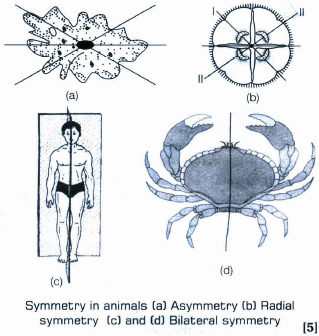
Diagrammatically show the types of symmetry in animals.
14.
Why is Ginkgo Biloba called a living fossil? Explain how is it useful for horticulturists. What are its important features? Why horticulturists prefer to grow only male plants?
15.
What role does vascular plants play in keeping the earth green? Which features help them to dominate the earth?
16.
In which organisms heterocyst is present? Mention two features of heterocysts. Which features make it suitable for nitrogen-fixation?
17.
(i) Why does the interior of bacterial cell appear simple and granular?
(ii) Which components make cell envelope of bacterial cell?
(iii) What gives gummy or sticky trait to bacterial cells and if it is not essential for survival, what are its functions?
18.
Biological classification is a dynamic and ever-evolving phenomenon which keeps changing with our understanding of life forms. Justify the statements by taking any two examples.
19.
A student of taxonomy was puzzled when told by his professor to look for a key to identify a plant. He went to his friend to clarify what key the professor was referring to? What would the friend explain to him?
20.
Some of the properties of tissues are not the properties of constituents of its cells. Give three examples to support the statement.
1.
Hypothalamus regulates a wide spectrum of body functions. It contains several groups of neurosecretory cells called nuclei, which produce hormones. These hormones regulate the synthesis and secretion of pituitary hormones. However, the hormones produced by hypothalamus are of two types, the releasing hormones (which stimulate secretion of pituitary hormones) and the inhibiting hormones (which inhibit secretions of pituitary hormones)
The hormones reach the pituitary gland through a portal circulatory system and regulate the functions of the anterior pituitary. The posterior pituitary is under the direct regulation of hypothalamus. The oxytocin and vasopressin are the two hormones synthesised by hypothalamus that are transported to posterior pituitary.
2.
(i) The hypothalamus and pituitary function as an integrated and coordinated system because both of them are connected at the base of the brain. They interact to each other in two ways
(a) By the hypophyseal portal system, which is a system of blood vessels that connects part of hypothalamus to the anterior lobe of pituitary gland. Hypothalamus secretes hormones into this portal system and the hormones act on the anterior pituitary, triggering the synthesis/ secretion of pituitary hormone.
(b)The other is that they have direct anatomical connection between the hypothalamus and the posterior lobe of pituitary (posterior pituitary is actually are extension of hypothalamus). Thus, it is said that hormones released through posterior pituitary are actually released from the hypothalamus.
(ii) Puberty is the phenomenon of physical changes by which child's body matures into an adult male, capable of sexual reproduction to enable fertilisation. It is initiated by the hormonal signals from the brain to the gonads, i.e., testes in a male. In response to the signals, gonads produce hormones that in turn stimulates libido and the growth, function and transformation of the brain, muscles, blood, hair, sexual organs, etc. An androgen called as testosterone in males, functions as principal sex hormone, producing all changes in male related to growth and development at puberty.
3.
(i) Femalepelvis is larger and has a broader front. This is an adaptation for childbirth.
(ii) Vertebral column forms four curves, i.e., cervical, thoracic, lumbar and sacral located in the neck, thorax, abdomen and pelvis, respectively.
(iii) A bone embedded within a tendon is called a seasmoid bone,s patella which cover the knee ventrally.
(iv) Articular bone of lower jaw modifies to be malleus. Quadrate bone of upper jaw becomes incus and hyomandibular gets modified to become stapes.
4.
(i) Removal of stomach, which is the main organ for digestion of protein, leads to a change in the patient's diet. It is the stomach where proteins are first broken down into polypeptides by pepsin in gastric juice before they can be acted up on by pancreatic enzymes and intestinal enzymes. The patient must lower down the in take of protein in his diet. Animal meat especially red meat, which is rich in proteins must be avoided.
(ii) Removal of the colon, which is responsible for absorption of water from undigested food, results in loss of water (dehydration) in patient. The patient needs to drink plenty of fluids to replace water loss. In most cases, where the whole colon is removed, a surgical procedure is done to attach the small intestine to the rectum to allow for recta elimination of liquid stools. A small pouch is created in the lower abdomen to collect the stool. The patient has to learn to regulate his bowel movements.
5.
Plastids are both region or species specific. These are as follows
(i) Proplastids These are colourless, rounded but amoeboid plastid precursors, found in meristematic and newly formed cells of plants. It has a double membrane envelope that surrounds a colourless matrix, containing DNA, ribosomes and reserve food. A few vesicles and lamellae also occur in the matrix.
(ii) Leucoplasts These are colourless plastids that occur in nop-green plant cells commonly near the nucleus. They are as follows
(a) Amyloplasts These leucoplasts store starch, e.g., tuber of potato, grain of rice and wheat.
(b) Elaioplasts These store fats, e.g., rose.
(c) Aleuroplasts They are protein storing plastids, e.g., castor endosperm.
(iii) Chromoplasts These are non-photosynthetic coloured plastids which synthesise and store carotenoid pigments. They appear, orange, red or yellow in colour. These mostly occur in ripe fruits (tomato and chillies) carrot roots, etc.
(iv) Chloroplasts These are photosynthetic plastids, which are green in colour and found in the leaves of all green plants. They have lamellae organised in the form of grana.
6.
(i) Growth promotion Fungus produces growth promoting hormones. In the absence of this association, Pinus and Betula show stunted growth despite providing all types of nutrients.
(ii) Antimicrobial substance Fungus protects the root from parasitic fungi and harmful bacteria by secreting antimicrobial substances.
(iii) Nourishment In orchids, the fungus absorbs nourishment from outside transports it over to the germinating seed.
(iv) Adverse environment Allows plants to grow in mineral deficient soil, saline soil, unfavourable pH and temperature.
(v) Absorption of water Fungal association increases water availability to the root.
7.
(i) Toadstools
(ii) Mushrooms and young puffballs
(iii) Brewer's yeast (Saccharomyces cerevisiae)
(iv) Truffles (tuber-like underground fungus)
(v) Rhizomorphs perennate during periods of scarcity of food and water.
(vi) Basidiospores (develop exogenously)
(vii) Sclerotia under favourable conditions each one forms a new mycelium
8.
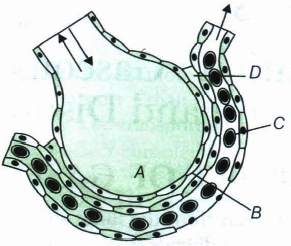
Tidal volume is the volume of air inspired or expired during normal respiration. It is about 6000 to 8000 mL of air per minute.
The hourly tidal volume for a healthy human can be calculated as:
Tidal volume = 6000 to 8000 mL/minute
Tidal volume in an hour = 6000 to 8000 mL × (60 min)
= 3.6 × 10⁵ mL to 4.8 × 10⁵ mL
Therefore, the hourly tidal volume for a healthy human is approximately 3.6 × 10⁵ mL to 4.8 × 10⁵ mL.
9.
The technique of growing plants in a nutrient solution is known as hydroponics.
This method requires purified water and mineral nutrient salts. After a series of experiments, in which the roots of the plants were immersed in nutrient solutions and an element was added/ removed or given in varied concentrations, a mineral solution suitable for the plant growth was obtained.
By this method, essential elements were identified and their deficiency symptoms discovered. Hydroponics has been successfully employed as a technique for the commercial production of vegetables such as tomato, seedless cucumber and lettuce.
Yet, most of the crops are still grown on land because the nutrient solutions must be adequately aerated to obtain the optimum growth in hydroponis. Moreover, the minerals must be continuously added in the solution. No, such activity is required in the soil.
10.
A pair of homologous chromosomes is genetically different because in a set of homologous chromosomes, one of the chromosomes belongs to the male parent and the other comes from the female parent. Therefore, one of a pair will contain paternal genes and the other will contain maternal genes. However, a pair of sister chromatids are formed from the replication of DNA during the 'S' phase of interphase. DNA replication ensures that the DNA content is doubled with identical genes being copied from the original DNA. Therefore, there is no genetic variation because there is no exchange of genetic material sister chromatids.
If crossing over occurs, then it would be possible for some genes to be exchanged between the chromatids of homologous chromosomes that have chiasmata, thus leading to genetic variation.
11.
The continuous process of breakdown and synthesis of biomolecules through chemical reactions occurring in the living cells is called metabolism.
(i) Each of the metabolic reaction results in a transformation of biomolecules.
(ii) Most of these metabolic reactions do not occur in isolation but are always linked with some other reactions.
(iii) In these reactions, the metabolisms are converted into another metabolite in a series of linked reactions called metabolic pathways.
(iv) Each metabolite has a define rate and direction during the flow through a metabolic pathways called the dynamic state.
In living systems, metabolism involves two following types of pathways
(i) The anabolic pathways is called biosynthetic pathway. It leads to a more complex structure from a simpler structure, e.g., the pathway involving the conversion of acetic acid into cholesterol. These pathways consume energy.
(ii) The catabolic pathways leads to simpler structure from a complex structure, e.g., the pathways involving conversion of glucose into lactic acid in our skeletal muscles. This pathway leads to the release of energy, e.g., energy is liberated when glucose is degrated to lactic acid in our skeletal muscles.
12.
The description of gynoecium in various plants.
(i) Carples Monocarpellary /bi carpellary/ tricarpellary/tetracarpellary /multi-capillary
(ii) Cohestion Apocarpous/Syncarpous
(iii) Overy Superior/semi-inferior/inferior.
(iv) Placentation Marginal/axile/parietal/basal/free-central/superficial.
(v) Style Terminal/lateral/gynobasic/stylopodium
(vi) Stigma number,shape-simpe,lobed,capitate,branched.
13.
Types of symmetry in animals
14.
Horticulturists are interested in Ginkgo as it has natural immunity to several plant diseases.
Important features are as follow
i)The plant is a tall tree of upto 30 m height.
ii) Leaves - shaped.
iii) Leaves have furcate venation.
iv) Dwarf shoots of female plant bear distinct megasporangiate structures.
v) Endosperm of roasted seed is edible
Horticulturists prefer to grow only male plants,as female plant give unpleasant smell.
15.
The vascular plants dominate earth and make the planet green everywhere.The features which enable this quality to happen are
(i) Strong roots capable of penetrating deep into the soil.
(ii) Development of waterproof layer on aerial surfaces especially the leaves to reduce transpiration.
(iii) Presence of strong, woody mechanical tissue to provide mechanical support to aerial parts and allow them to rise to a great height.
(iv) Vascular tissues are present for long distance transport of substances.
16.
(i) Heterocysts are present in some cyanobacteria. It is a large-sized, pale coloured, thick-walled cell which occurs in terminal, intercalary or lateral position in filamentous cyanobacteria,.e.g., Nostoc.
(ii) Features of cyanobacteria are
(a) Mucilage sheath is present.
(b) Thylakoids lack phycobilins. Therefore, photosynthesis is absent, but cyclic photophosphorylation occurs.
(c) Heterocyst is dependent for its nourishment on adjacent vegetative cells.
The thick wall is impermeable to oxygen, but permeable to nitrogen. It has enzyme nitrogenase which is specialised to perform nitrogen-fixation
17.
(i) The interior of bacterial cell seems simple and granular because the membrane bound organelles are not present in it.
(ii) Mucilage, cell wall and plasma membrane are together called cell envelope.
(iii) Mucilage or glycocalyx gives gummy or sticky trait to cells.
Though it is not essential for bacterial survival, glycocalyx has several functions such as
(a) Protection from desiccation and toxins.
(b) Preventing host phagocytes to get attached to the bacterium.
(c) Holdings cells together.
(d) Storing chemicals for virulence.
18.
Biological classification keeps with our understanding of life forms, Initially, new characters were taken by Aristotle, Theophrastus, John Ray and Linnaeus. Linnaeus divided plants on the basis of sex organs only.
As more and more knowledge gathered for delimitation of taxa, the ways for natural system of classification became clear.
This can be understood by following examples :
(i) Two kingdom classification was replaced by three kingdom classification when Haeckel (1866) proposed the kingdom of Protista.
(ii) It was converted into four-kingdom classification by Copeland when he proposed the kingdom-Monera.
(iii) Whittaker in 1969 proposed five kingdom classification
(iv) As the information about biochemistry of archaebacteria gathered, Carl Woese in 1990 raised another kingdom - Archaea.
19.
The key for identification of plants is a taxonomic key. It is an important taxonomic aid. Key can be defined as a set of alternate characters arranged in such a manner that by selection and elimination one can quickly find out the name of an organism.
Depending upon the category, a key may be class key, order key, family key, genus key and species key.
Taxonomic keys can be of two types
(i) Indented or Yoked key
(ii) Bracketed key
Indented key provides a sequence of two or more alternate characters from which selection and elimination are carried out. In bracketed key, the alternate characters are given numbers in brackets. e.g., take three genera of family-Ranunculaceae to explain this.
(i) Ranunculus Leaves alternate or radical, flowers not subtended by involucre, carpels ovuled, fruit achene.
(ii) Clematis Leaves opposite, compound petal absent, sepals 4, carpels with one ovule and fruits achenes.
(iii) Nigella Flowers regular, carpels united at base, many ovules, fruit follicles.
20.
A living thing has multiple levels of organisation. Each lavel of organisation has its own properties, which are not found in its constituents.
Examples of three tissues supporting the statements are
(i) Cardiac Muscle Tissue : It is contractile tissue present only in heart. Cell junctions fuse the plasma membrane of cardiac muscle cells and make them stick together. When one cell receives a signal to contract. It means a single cell cannot contract, while there are some fusion points, which allow the cells to contract as a unit.
(ii) Blood : It is a fluid connective tissue. The individual components of blood, i.e., RBCs, WBCs and platelets have different properties but as a unit they make the blood, a tissue serving many functions.
(iii) Bone : It is a hard connective tissue that forms the framework of the body. The individual cells inside the bone do not have this property.

11th Standard CBSE Syllabus & Materials
11th Standard CBSE
CBSE 11th Business Studies Forms of Business Organisation Sample Question Papers Study Material - QB365 Set A
NEW11th Standard CBSE
CBSE 11th Business Studies Business, Trade and Commerce Sample Question Papers Study Material - QB365 Set A
NEW11th Standard CBSE
CBSE 11th Physics Waves Sample Question Papers Study Material - QB365 Set A
NEW11th Standard CBSE
CBSE 11th Physics Kinetic Theory Sample Question Papers Study Material - QB365 Set A



NCERT Books

Syllabus

Exam Pattern

Sample Question Papers

Previous year Question Papers

Important Notes

MCQ Practice test

NCERT Exemplers

Case study Questions

Image Based Questions

Passage based Questions

HOT Questions

Value Based Questions

Model Questions Papers
NCERT ( Book Back ) Questions

Assertion and Reason
Important Questions And Answers

CBSE 11th Standard CBSE Subjects
CBSE Standards








