
 100% FREE ACCESS
11th Standard CBSE Syllabus & Materials
11th Standard CBSE
CBSE 11th Economics PART-A - Presentation of Data - New Sample Question Papers Study Material - QB365 Set A
NEW11th Standard CBSE
CBSE 11th Economics PART-A - Organisation of Data - New Sample Question Papers Study Material - QB365 Set A
NEW11th Standard CBSE
CBSE 11th Economics PART-A - Collection of Data - New Sample Question Papers Study Material - QB365 Set A
NEW11th Standard CBSE
CBSE 11th Economics PART-A - Introduction to Economics and Statistics - New Sample Question Papers Study Material - QB365 Set A
NEW11th Standard CBSE
CBSE 11th Business Studies International Trade Sample Question Papers Study Material - QB365 Set A
NEW11th Standard CBSE
CBSE 11th Business Studies Evolution and Fundamentals of Business Sample Question Papers Study Material - QB365 Set A

Published on: 27/05/2021
QB365 Provides the NCERT Exemplar Question Papers for Class 11 Biology , and also provide the detail solution for each and every ncert exemplar papers. Ncert Exemplar papers will help to get more idea about question pattern in every exams and also will help to get more marks in Exams
Download CBSE Class 11th Standard CBSE Biology question papers, sample papers, important questions, and previous year solved papers in PDF format. Get free study materials, NCERT solutions, and exam preparation resources for Class 11th Standard CBSE Biology
Questions + Answers key
Take MCQ Biology Test1.
How does a gap junction facilitate intercellular communication?
2.
Which of the two adrenocortical layers, zona glomerulosa and zona reticularis lies outside enveloping the other?
3.
What is the difference between the matrix of bone and cartilage?
4.
What is the excretory antennary glands are found as an excretory organ?
5.
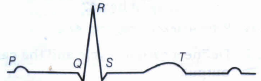
Given below is the diagrammatic representation of a standard ECG. Label its different peaks.
6.
Growth is one of the fundamental characteristics of all living organisms. Do unicellular organisms also grow? If so, what are the parameters?
7.
Succulents are known to keep their stomata closed during the day to check the rate of transpiration.How do they meet their photosynthetic CO2 requirements?
8.
Give the name of the chemicals, which are released at the synapyic junction.
9.
Write the name of any one amino acid, sugar nucleotide and fatty acid.
10.
Name two type of cells which lack a nucleus.
11.
What does'S' refer to, in 70 Sand 80 S ribosomes?
12.
Name the different cells junctions found in tissues.
13.
The cross section of a plant material showed the following features when viewed under the microscope
(a) Vascular bundles were radially arranged
(b) Four xylem starnds with exarch condition of protoxylem . To which organ should it be assigned?
14.
Give an example of animal which exhibits alternation of generation.
15.
Are chemosynthetic bacteria autotrophic or heterotrophic?
16.
Define metabolism.
17.
The cells of this tissue are living and show angular wall thickenings. They provide mechanical support. The tissue is______.
xylem
sclerenchyma
collenchyma
epidermis
18.
Holdfast, stipe and frond constitute the plant body in case of ______.
Rhodophyyceae
Chlorophyceae
Phaeophyceae
All of these
19.
The term systematics refers to______.
identification and classification of plants and animals.
nomenclature and identification of plants and animals.
diversity of kinds of organisms and their relationship.
different kinds of organisms and their classification
20.
Give the name of the enzymes involved in the breakdown of nucleotides into sugars and bases?
21.
Trypsinogen is an inactive enzyme of pancreatic juice.An enzyme, enterokinase activates it.Which tissue/cells secrete this enzyme?How is it activated?
22.
Name the plant that accumulates silicon.
23.
A farmer adds Azotobacter culture to soil before sowing maize. Which mineral element is being replenished?
24.
A flowering plant is planted in an earthen pot and irrigated, Urea is added to make the plant grow faster, but after some time the plant dies. This may be due to which factor?
25.
Passive transport across a membrane, when two protein molecules move in opposite direction and independent of each other, is called as
1.
A gap junction facilitates the cells to communicate with each other by connecting the cytoplasm of the adjacent cells.
2.
Zona glomerulosa (outer layer) envelops zona reticularis (inner layer) from the outside.
3.
The matrix of the bone is hard due to calcium salts, whereas, the cartilage has slightly pliable matrix due to chondroitin salts.
4.
Uric acid
5.
The representation of a standard ECG diagram

6.
Yes,unicellular organisms also grow. Their cell size increases upto a certain fixed dimension only and then they divide. Their growth and reproduction is synchrosed. i.e. it goes hand in hand.
7.
Succulents (water-storing) plants such as cacti, fix CO2 into organic compound (malic acid) using PEP carboxylase at night when the stomata are open.
8.
Neurotransmitters are the chemicals which are present at sybnaptic junctions.
9.
Alanine is an amino acid, adenylic acid is a nucleotide and linolenic acid is a fatty acid.
10.
RBCs of humans and sieve cells of vascular plants.
11.
'S' or Svedberg unit, refers to the sedimentation coefficient.
12.
(i) Gap Junction
(ii) Tight Junction
(iii) Adhering Junction
13.
The cross section of the plant is of dicot root as it shows the presence of radial arrangement of vascular bundles and the four xylem strands with exarch condition of protoxylem.
14.
Obellia,shows alternation if asexual and sexual phases in its life cycle.
15.
Chemosynthetic bacteria are autotrophs because they are able to synthesise their food from inorganic raw material with the help of energy obtained from chemical reaction.
16.
The sum total of all chemical reactions occurring in an organism due to specific interactions amongst different types of molecules within the cells, is called metabolism.
17.
The collenchyma is a simple permanent tissue, which provides mechanical support
18.
The lamina of Phaeophyceae members large sized body with differentiation of holdfast, stipe and lamina.
19.
Systematics refers to study of diversity of kinds of organisms and their relationship.
20.
()
Nucleosidases break nucleotides into sugar and bases.
21.
()
The cells of duodenum secrete enzyme enterokinase.It is activated by food in the duodenum.
22.
()
Equisetum(Horsetails)
23.
()
Nitrogen
24.
()
As urea content makes the soil hypertonic in nature, therefore, the plant dies due to exosmosis
25.
()
Antiport transport

11th Standard CBSE Syllabus & Materials
11th Standard CBSE
CBSE 11th Business Studies Forms of Business Organisation Sample Question Papers Study Material - QB365 Set A
NEW11th Standard CBSE
CBSE 11th Business Studies Business, Trade and Commerce Sample Question Papers Study Material - QB365 Set A
NEW11th Standard CBSE
CBSE 11th Physics Waves Sample Question Papers Study Material - QB365 Set A
NEW11th Standard CBSE
CBSE 11th Physics Kinetic Theory Sample Question Papers Study Material - QB365 Set A



NCERT Books

Syllabus

Exam Pattern

Sample Question Papers

Previous year Question Papers

Important Notes

MCQ Practice test

NCERT Exemplers

Case study Questions

Image Based Questions

Passage based Questions

HOT Questions

Value Based Questions

Model Questions Papers
NCERT ( Book Back ) Questions

Assertion and Reason
Important Questions And Answers

CBSE 11th Standard CBSE Subjects
CBSE Standards








