
 100% FREE ACCESS
11th Standard CBSE Syllabus & Materials
11th Standard CBSE
CBSE 11th Economics PART-A - Presentation of Data - New Sample Question Papers Study Material - QB365 Set A
NEW11th Standard CBSE
CBSE 11th Economics PART-A - Organisation of Data - New Sample Question Papers Study Material - QB365 Set A
NEW11th Standard CBSE
CBSE 11th Economics PART-A - Collection of Data - New Sample Question Papers Study Material - QB365 Set A
NEW11th Standard CBSE
CBSE 11th Economics PART-A - Introduction to Economics and Statistics - New Sample Question Papers Study Material - QB365 Set A
NEW11th Standard CBSE
CBSE 11th Business Studies International Trade Sample Question Papers Study Material - QB365 Set A
NEW11th Standard CBSE
CBSE 11th Business Studies Evolution and Fundamentals of Business Sample Question Papers Study Material - QB365 Set A

Published on: 26/05/2021
QB365 Provides the updated NCERT Exemplar Questions for Class
11, and also provide the detail solution for each and every NCERT
Exemplar questions. NCERT Exemplar questions are latest updated
question pattern from NCERT, QB365 will helps to get more marks in Exams
Download CBSE Class 11th Standard CBSE Chemistry question papers, sample papers, important questions, and previous year solved papers in PDF format. Get free study materials, NCERT solutions, and exam preparation resources for Class 11th Standard CBSE Chemistry
Questions + Answers key
Take MCQ Chemistry Test
1.
Do you expect the carbon hydride of type CnH2n + 2 to act as 'Lewis' acid or base? Justify your answer.
2.
Why do you alkenes prefer to undergo electrophilic addition reaction while arenes prefer electrophilic substitution reactions? Explain.
3.
When aqueous solution of borax is acidified with hydrochloric acid, a white crystalline solid is formed which is soapy to touch. Is this solid acidic or basic in nature? Explain.
4.
Basic principle of hydrogen economy is transporation and storage of energy in the form of liquid or gaseous hydrogen.Which property of hydrogen may be usefuk for this chemical equation if required.
5.
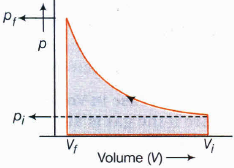
How will you calculate the work done on an ideal gas in a compression, when change in pressure is carried out in infinite steps?
6.
Name the energy which arises due to motion of atoms or molecules in a body. How is this energy affected when the temperature is increased?
7.
The unpaired electrons in Al and Si are present in 3p orbital. Which electrons will experience more effective nuclear charge from the nucleus ?
8.
A hydrogen atom has only one electron, so mutual repulsion between electrons is absent. However, in multielectron atom mutual repulsion between the electrons is significant.
How does this affect the energy of an electron in the orbitals of the same principle quantum number in a multielectron atom?
9.
The reactant which is entirely consumed in reaction is known as limiting reagent. In the reaction 2A + 4B \(\Rightarrow\) 3C + 4D, when 5 moles of A react with 6 moles of B, then calculate the amount of C formed?
1.
Carbon hydrides of the type Cn H2n + 2 are electron precise hydrides. Because they have atom with exact number of electrons to form covalent bonds.
Thus, they do not behave as Lewis acid or base. Since they have no tendency to accept or lose electrons.
2.
Alkenes are rich source of loosely held \(\pi \) electrons, due to which they show electrophilic addition reaction. Electrophilic addition reactions of alkenes are accompanied by large energy changes so these are energetically favourable than that of Electrophilic substitution reactions.
In special conditions alkenes also undergo free radical substitution reactions.
In arenes during electrophilic addition reactions aromatic character of benzene ring is destroyed while during electrophilic substitution reactions of areans are enegetically more favourable than that of electrophilic addition reaction.
That's why alkenes prefer to undergo electrophilic addition reaction while arenes prefer electrophilic substitution reactions.
3.
When an aqueous solution of borax is acidified with HCl, boric acid is formed.
\(Na_{ 2 }\underset { Borax }{ B4 } O_{ 7 }+2HCl+5H_{ 2 }O\rightarrow 2NaCl+4H_{ 3 }\underset { Boric \ acid }{ BO_{ 3 } } \)
Boric acid is a white crystalline solid. It is soapy to touch because of its planar layered structure. Boric acid is a weak monobasic acid. It is not a protonic acid but acts as a Lewis acid by accepting electrons from a hydroxyl ion.
\(B(OH)_{ 3 }+2HOH\rightarrow [B(OH)_{ 4 }]^{ - }+H_{ 3 }O^{ + }\)
4.
Hydrogen is a gas at room temperature. Because of it occupying large volume, it is difficult to transport it either by rail or by road. However, by cooling and applying high pressure, gaseous \({ H }_{ 2 }\) can be converted into liquid \({ H }_{ 2 }\)which has much smaller volume and hence, can be transported easily. Thus, the basic property of hydrogen which is useful for hydrogen economy is that it can be converted into a liquid by cooling under high pressure.
5.
When compression is carried out in infinite steps with change in pressure, it is a reversible process. Work done on the gas is represented by the shaded area.
6.
The energy which arises due to motion of atoms or molecules in a body is known as thermal energy.It is a measure of average kinetic energy of the particles.It increases with increases with increase in temperature.
7.
Nuclear charge is defined as the net positive charge experienced by an electron in a multielectron atom. The higher the atomic number, the higher is the nuclear charge. Silicon has 14 protons while aluminium has 13 protons. Hence, silicon has a larger nuclear charge of (+14) than aluminium, which has a nuclear charge of (+13). Thus, the electrons in the 3p orbital of silicon will experience a more effective nuclear charge than aluminium.
\({ 13 }^{ Al }={ 1s }^{ 2 },{ 2s }^{ 2 },{ 2p }^{ 6 },{ 3s }^{ 2 },{ 3p }^{ 1 }\)
\({ 14 }^{ Si }={ 1s }^{ 2 },{ 2s }^{ 2 },{ 2p }^{ 6 },{ 3s }^{ 2 },{ 3p }^{ 2 }\)
8.
In a hydrogen atom, the energy of an electron is determined by the value of n and in a multielectron atom, it is determined by n + 1. hence, for a given principal quantum, electrons of s,p,d and f-orbitals have different energy (for,p,d and f = 0,1,2 and 3 respectively).
9.
\(2A+4B\longrightarrow 3C+4D\)
According to the given reaction, 2 moles of A rect with 4 moles of B.
Hence, 5 moles of A will react with 10 moles of
\(b\left( \frac { 5\times 4 }{ 2 } =10moles \right) \)
Limiting reagent decide the amount of product produced. According to the reaction, 4 moles of B produces 3 moles of C.
6 moles of B will produce\(\frac { 3\times 6 }{ 4 } =4.5\) moles of C.

11th Standard CBSE Syllabus & Materials
11th Standard CBSE
CBSE 11th Business Studies Forms of Business Organisation Sample Question Papers Study Material - QB365 Set A
NEW11th Standard CBSE
CBSE 11th Business Studies Business, Trade and Commerce Sample Question Papers Study Material - QB365 Set A
NEW11th Standard CBSE
CBSE 11th Physics Waves Sample Question Papers Study Material - QB365 Set A
NEW11th Standard CBSE
CBSE 11th Physics Kinetic Theory Sample Question Papers Study Material - QB365 Set A



NCERT Books

Syllabus

Exam Pattern

Sample Question Papers

Previous year Question Papers

Important Notes

MCQ Practice test

NCERT Exemplers

Case study Questions

Image Based Questions

Passage based Questions

HOT Questions

Value Based Questions

Model Questions Papers
NCERT ( Book Back ) Questions

Assertion and Reason
Important Questions And Answers

CBSE 11th Standard CBSE Subjects
CBSE Standards







