
 100% FREE ACCESS
11th Standard CBSE Syllabus & Materials
11th Standard CBSE
CBSE 11th Economics PART-A - Presentation of Data - New Sample Question Papers Study Material - QB365 Set A
NEW11th Standard CBSE
CBSE 11th Economics PART-A - Organisation of Data - New Sample Question Papers Study Material - QB365 Set A
NEW11th Standard CBSE
CBSE 11th Economics PART-A - Collection of Data - New Sample Question Papers Study Material - QB365 Set A
NEW11th Standard CBSE
CBSE 11th Economics PART-A - Introduction to Economics and Statistics - New Sample Question Papers Study Material - QB365 Set A
NEW11th Standard CBSE
CBSE 11th Business Studies International Trade Sample Question Papers Study Material - QB365 Set A
NEW11th Standard CBSE
CBSE 11th Business Studies Evolution and Fundamentals of Business Sample Question Papers Study Material - QB365 Set A

Published on: 27/05/2021
QB365 Provides the updated NCERT Exemplar Questions for Class
11, and also provide the detail solution for each and every NCERT
Exemplar questions. NCERT Exemplar questions are latest updated
question pattern from NCERT, QB365 will helps to get more marks in Exams
Download CBSE Class 11th Standard CBSE Chemistry question papers, sample papers, important questions, and previous year solved papers in PDF format. Get free study materials, NCERT solutions, and exam preparation resources for Class 11th Standard CBSE Chemistry
Questions + Answers key
Take MCQ Chemistry Test
1.
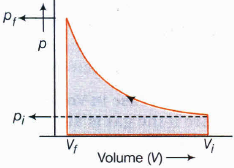
How will you calculate the work done on an ideal gas in a compression, when change in pressure is carried out in infinite steps?
2.
Standard molar enthalpy of formation, \({ \Delta }_{ f }{ H }^{ o }\) is just a special case of enthalpy of reaction, \({ \Delta }_{ r }{ H }^{ o }\). Is the \({ \Delta }_{ f }{ H }^{ o }\) for the following reaction same as \({ \Delta }_{ f }{ H }^{ o }\) ? Give reason for your answer.
CaO(s) + CO2(g)\(\longrightarrow \)CaCO3(s);
\({ \Delta }_{ f }{ H }^{ o }=-178.3 \ kJ \ { mol }^{ -1 }\)
3.
The value of \({ \Delta }_{ f }{ H }^{ \Theta }\) for NH3 is -91.8 kJ mol-1. Calculate enthalpy change for the following reaction.
\(2{ NH }_{ 3 } \ (g)\longrightarrow { N }_{ 2 }(g) \ + \ { 3H }_{ 2 }(g)\)
4.
Although heat is path function but heats absorbed by the system under certain specific conditions is independent of path. what are those conditions? Explain when pressure remains constant.
5.
Although heat is path function but heats absorbed by the system under certain specific conditions is independent of path. what are those conditions? Explain when volume remains constant.
1.
When compression is carried out in infinite steps with change in pressure, it is a reversible process. Work done on the gas is represented by the shaded area.
2.
The standard enthalpy change for the formation of one mole of a compound from its elements in their most stable states (reference states) is called standard molar enthalpy of formation, \({ \Delta }_{ f }{ H }^{ o }\) .
\(Ca(s)+C(s)+\frac { 3 }{ 2 } { O }_{ 2 }(g)\longrightarrow Ca{ CO }_{ 3 }(s);{ \Delta }_{ f }{ H }^{ o }\)
This reaction is different from the given reaction.
Hence, \({ \Delta }_{ r }{ H }^{ o }\neq { \Delta }_{ f }{ H }^{ o }\)
3.
Given, \(\frac { 1 }{ 2 } { N }_{ 2 }(g)+{ \frac { 3 }{ 2 } }{ H }_{ 2 }(g)\longrightarrow { NH }_{ 3 }(g);\)
\({ \Delta }_{ f }{ H }^{ \Theta }=-91.8 \ kJ \ { mol }^{ -1 }\)
(\({ \Delta }_{ f }{ H }^{ \Theta }\) means enthalpy of formation of 1 mole of NH3)
\(\therefore\) Enthalpy change for the formation of 2 moles of NH3
\({ N }_{ 2 }(g)+{ 3H }_{ 2 }(g)\rightarrow { 2NH }_{ 3 }(g);\)
\({ \Delta }_{ f }{ H }^{ \Theta }=2\times -91.8=-183.6 \ kJ \ { mol }^{ -1 }\)
And for the reverse reaction. \(2{ NH }_{ 3 }(g)\longrightarrow { N }_{ 2 }(g)+{ 3H }_{ 2 }(g);{ \Delta }_{ f }{ H }^{ \Theta }=+183.6 \ kJ \ { mol }^{ -1 }\) Hence, the value of \({ \Delta }_{ f }{ H }^{ \Theta }\) for NH3 is +183.6 kJ mol-1
4.
At constant pressure \(q_{ p }=\triangle U+p\triangle V.\)
But \(\triangle U+p\triangle V=\triangle H\).
\(\therefore \ q_{ p }=\triangle H\). As \(\triangle H\) is a state function, therefore, \(q_{ p }\) is a state function.
5.
At Constant volume By first law of thermodynamics, \(\triangle U=q+W \ or \ q=\triangle U-W.\)But \(W=-p\triangle V.\) Hence, \(q=\triangle U+p\triangle V.\) But as volume remains constant, \(\triangle V=0\) .
\(\therefore qV=\triangle U\). But \(\triangle U\) is state function. Hence, \(q_{ v }\) is state function.

11th Standard CBSE Syllabus & Materials
11th Standard CBSE
CBSE 11th Business Studies Forms of Business Organisation Sample Question Papers Study Material - QB365 Set A
NEW11th Standard CBSE
CBSE 11th Business Studies Business, Trade and Commerce Sample Question Papers Study Material - QB365 Set A
NEW11th Standard CBSE
CBSE 11th Physics Waves Sample Question Papers Study Material - QB365 Set A
NEW11th Standard CBSE
CBSE 11th Physics Kinetic Theory Sample Question Papers Study Material - QB365 Set A



NCERT Books

Syllabus

Exam Pattern

Sample Question Papers

Previous year Question Papers

Important Notes

MCQ Practice test

NCERT Exemplers

Case study Questions

Image Based Questions

Passage based Questions

HOT Questions

Value Based Questions

Model Questions Papers
NCERT ( Book Back ) Questions

Assertion and Reason
Important Questions And Answers

CBSE 11th Standard CBSE Subjects
CBSE Standards







