
 100% FREE ACCESS
11th Standard CBSE Syllabus & Materials
11th Standard CBSE
CBSE 11th Economics PART-A - Presentation of Data - New Sample Question Papers Study Material - QB365 Set A
NEW11th Standard CBSE
CBSE 11th Economics PART-A - Organisation of Data - New Sample Question Papers Study Material - QB365 Set A
NEW11th Standard CBSE
CBSE 11th Economics PART-A - Collection of Data - New Sample Question Papers Study Material - QB365 Set A
NEW11th Standard CBSE
CBSE 11th Economics PART-A - Introduction to Economics and Statistics - New Sample Question Papers Study Material - QB365 Set A
NEW11th Standard CBSE
CBSE 11th Business Studies International Trade Sample Question Papers Study Material - QB365 Set A
NEW11th Standard CBSE
CBSE 11th Business Studies Evolution and Fundamentals of Business Sample Question Papers Study Material - QB365 Set A

Published on: 26/05/2021
QB365 Provides the updated NCERT Examplar Questions for Class 11 Maths, and also provide the detail solution for each and every ncert examplar questions , QB365 will give all kind of study materials will help to get more marks
Download CBSE Class 11th Standard CBSE Mathematics question papers, sample papers, important questions, and previous year solved papers in PDF format. Get free study materials, NCERT solutions, and exam preparation resources for Class 11th Standard CBSE Mathematics
Questions + Answers key
Take MCQ Mathematics Test
1.
Find the value of \([1+cos{\pi\over 8}][1+cos{3\pi\over 8}][1+cos{5\pi\over 8}][1+cos{{7\pi\over8}}]\)
2.
Find the angle in degrees and radians between minutes hand and hour hand of a clock at 7 : 20.
3.
Draw the Venn diagrams to illustrate the following relationship among sets, E, M and U, where E is the set of students studying English in a school, M is the set of students studying Mathematics in the same school, U is the set of all students in that school.
There is no student who studies both Mathematics and English.
4.
If A and B are mutually exclusive events, such that P(A)=0.35 and P(B)=0.45, then find P(A\(\cap \)B)
5.
If A and B are mutually exclusive events, such that P(A)=0.35 and P(B)=0.45, then find P(A\(\cup \)B)
6.
Find the equation of the lines passing through the point (1,0) and at a distance \(\frac { \sqrt { 3 } }{ 2 } \) from the origin.
7.
If a1, a2, a3, ....,an are in AP, where ai > 0 for all i, Show that \(\frac { 1 }{ \sqrt { { a }_{ 1 } } +\sqrt { { a }_{ 2 } } } \) + \(\frac { 1 }{ \sqrt { { a }_{ 2 } } +\sqrt { { a }_{ 3 } } } \) + .....+ \(\frac { 1 }{ \sqrt { { a }_{ n-1 } } +\sqrt { { a }_{ n } } } \) = \(\frac { n-1 }{ \sqrt { { a }_{ 1 } } +\sqrt { { a }_{ n } } } \)
8.
Find the term independent of x in the expansion of (1+x+2x3)\(\left( \frac { 3 }{ 2 } x^{ 2 }-\frac { 1 }{ 3x } \right) ^{ 9 }\)
9.
Show that 24n+4 - 15n - 16, where n\(\in\) N, is divisible by 225.
10.
Using the digits 1,2,3,4,5,6,7,a number of different digit is formed . Find how many numbers are formed ? Further , Find how many of these are
(i) exactly divisible by 2 ?
(ii) exactly divisible by 25 ?
(iii) exactly divisible by 4 ?
11.
Find the number of arrangements of the letters of the word 'INDEPENDENCE' . In how many of these arrangements
(i) do the words start with P?
(ii) do all the vowels always occur together?
(iii) do all the vowels never occur together ?
(iv) do the words begin with I and end in P?
12.
A student has to answer 10 questiion choosing atleast 4 from each part A and B . If there are 6 question in part A and 7 question from part B, in how many ways can the student choose 10 queations?
13.
How many automobile lincene plates can be made, if each plate contains two different letters followed by three different digits?
14.
Find the number of combinations , whwn some or all of n objects are taken at a time.
15.
Solve for \(x,\frac { |x-2|-1 }{ |x-2|-2 } \le 0\)
16.
Solve for \(x,|x+1|+|x|>3\)
17.
Solve \(1\le |x-2|\le 3\).
18.
If z1 =\(\sqrt { 3 } +i\sqrt { 3 } \) and \({ z }_{ 2 }=\sqrt { 3 } +i\) then find the quadrant in which \((\frac { { z }_{ 1 } }{ { z }_{ 2 } } )\) lies.
19.
If \({ \left( \frac { 1+i }{ 1-i } \right) }^{ 3 }-{ \left( \frac { 1-i }{ 1+i } \right) }^{ 3 }=x+iy\), then find (x,y).
20.
Find the value of the expression
\({ cos }^{ 4 }\frac { \pi }{ 8 } +{ cos }^{ 4 }\frac { 3\pi }{ 8 } +{ cos }^{ 4 }\frac { 5\pi }{ 8 } +{ cos }^{ 4 }\frac { 7\pi }{ 8 } .\)
21.
Find the simplified form of \(f(x)=|x-2|+|2+x|,\quad if-3\le x\le 3.\)
22.
One of the four persons John, Rita, Aslam or Gurpreet will be promoted next month.Consequently, the sample space consists of four elementary outcomes S={Johnpromoted, Rita promoted, Gurpreet promoted} You are told that the chances of John's promotion is same as that of Gurpreet, Rita's Chances of promotion are twice as likely as Johns.Aslam's chances are four times that of John.
Determine P(John promoted) P(Rita promoted); P(Aslam promoted)
P(Gurpreet promoted)
23.
A team of medical students doing their internship have to assist during surgeries at a city hospital.The probabilities of surgeries rated as very complex,routine,simple rated as very complex,complex,complex, routine,simple or very simple respectively 0.15,0.20,0.31,0.26 and 0.08.Find the probabilities that a particular surgery will be rated
routine or simple
24.
A team of medical students doing their internship have to assist during surgeries at a city hospital.The probabilities of surgeries rated as very complex,routine,simple rated as very complex,complex,complex, routine,simple or very simple respectively 0.15,0.20,0.31,0.26 and 0.08.Find the probabilities that a particular surgery will be rated
routine or complex
25.
A team of medical students doing their internship have to assist during surgeries at a city hospital.The probabilities of surgeries rated as very complex,routine,simple rated as very complex,complex,complex, routine,simple or very simple respectively 0.15,0.20,0.31,0.26 and 0.08.Find the probabilities that a particular surgery will be rated
neither very complex nor very simple
1.
\(1\over8\)
2.
\([{100^o,{5\pi\over9}}]\)
3.
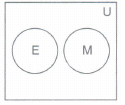
4.
We have, A and B are mutually exclusive events. Also, it is given that P(A)=0.35 and P(B)=0.45
P(A\(\cap \)B) = 0
5.
We have, A and B are mutually exclusive events. Also, it is given that P(A)=0.35 and P(B)=0.45
P(A\(\cup \)B)=P(A)+P(B)=0.35+0.45=0.8
6.
Here, y - 0 = m(x - 1) \(\Rightarrow \) y - mx + m = 0
Since, the distance from origin is \(\frac { \sqrt { 3 } }{ 2 } \).
Then, \(\frac { \sqrt { 3 } }{ 2 } =\frac { \left| 0-0+m \right| }{ \sqrt { 1+{ m }^{ 2 } } } \)
Ans. \(\sqrt { 3x } -y-\sqrt { 3 } =0\) and \(\sqrt { 3x } +y-\sqrt { 3 } =0\)
7.
a2 - a1 = a3 - a2 =....= an - an-1 = d (say)
If a2 - a1 = d, then \(\left( \sqrt { { a }_{ 2 } } \right) ^{ 2 }\) - \(\left( \sqrt { { a }_{ 1 } } \right) ^{ 2 }\) = d
\(\Longrightarrow \)\(\left( \sqrt { { a }_{ 2 } } -\sqrt { { a }_{ 1 } } \right) \) \(\left( \sqrt { { a }_{ 2 } } +\sqrt { { a }_{ 1 } } \right) \) = d
\(\Longrightarrow \) \(\frac { 1 }{ \sqrt { { a }_{ 1 }+\sqrt { { a }_{ 2 } } } } \) = \(\frac { \sqrt { { a }_{ 2 }-{ a }_{ 1 } } }{ d } \)
On adding, we get
\(\frac { 1 }{ \sqrt { { a }_{ 1 }+\sqrt { { a }_{ 2 } } } } \) + \(\frac { 1 }{ \sqrt { { a }_{ 2 } } +\sqrt { { a }_{ 3 } } } \) + .....+ \(\frac { 1 }{ \sqrt { { a }_{ n-1 } } +\sqrt { { a }_{ n } } } \)
= \(\frac { 1 }{ d } \) [\(\sqrt { { a }_{ 2 } } \) - \(\sqrt { { a }_{ 1 } } \) + \(\sqrt { { a }_{ 3 } } \) -\(\sqrt { { a }_{ 2 } } \) +...+ \(\sqrt { { a }_{ n } } \) - \(\sqrt { { a }_{ n-1 } } \) ]
= \(\frac { 1 }{ d } \) [\(\sqrt { { a }_{ n } } \) - \(\sqrt { { a }_{ 1 } } \) ].......(i)
Also, an - a1 = (n - 1) d
\(\Longrightarrow \) \(\left( \sqrt { { a }_{ n } } \right) ^{ 2 }\) - \(\left( \sqrt { { a }_{ 1 } } \right) ^{ 2 }\)= (n - 1) d
\(\Longrightarrow \) \(\sqrt { { a }_{ n } } \) - \(\sqrt { { a }_{ 1 } } \) = \(\frac { (n-1)d }{ \sqrt { { a }_{ n }+\sqrt { { a }_{ 1 } } } } \)
8.
General term in \(\left( \frac { 3 }{ 2 } x^{ 2 }-\frac { 1 }{ 3x } \right) ^{ 9 }\)
\(T_{ r+1 }={ ^{ 9 }C }_{ r }\left( \frac { 3 }{ 2 } \right) ^{ 9-r }\left( -\frac { 1 }{ 3 } \right) ^{ r }x^{ 18-3r }\)
So, general form in the expansion of
\((1+x+{ 2x }^{ 3 })\left( \frac { 3 }{ 2 } x^{ 2 }-\frac { 1 }{ 3x } \right) ^{ 9 }\)
\(={ ^{ 9 }C }_{ r }\left( \frac { 3 }{ 2 } \right) ^{ 9-r }\left( -\frac { 1 }{ 3 } \right) ^{ r }x^{ 18-3r }+{ ^{ 9 }C }_{ r }\left( \frac { 3 }{ 2 } \right) ^{ 9-r }\left( -\frac { 1 }{ 3 } \right) ^{ r }x^{ 19-3r }+2{ ^{ 9 }C }_{ r }\left( \frac { 3 }{ 2 } \right) ^{ 9-r }\left( -\frac { 1 }{ 3 } \right) ^{ r }x^{ 21-3r }\)
For the term independent of x
18-3r=0, 19-3r=0 and 21-3r=0
\(\Rightarrow \ r=6,\quad \frac { 19 }{ 3 } and\quad 7\)
Thus, posible value of r are 6 and 7
Term independent of x
\(={ ^{ 9 }C }_{ r }\left( \frac { 3 }{ 2 } \right) ^{ 9-6 }\left( -\frac { 1 }{ 3 } \right) ^{ 6 }+2.^{ 9 }C_{ 7 }\left( \frac { 3 }{ 2 } \right) ^{ 9-7 }\left( -\frac { 1 }{ 3 } \right) ^{ 7 }\)
\(=\frac { 84 }{ 8 } .\frac { 1 }{ 3^{ 3 } } -\frac { 36 }{ 4 } .\frac { 2 }{ 3^{ 5 } } =\frac { 17 }{ 54 } \)
9.
24n+4 - 15n - 16 = (2)4n+1 - 15(n+1) - 1
= 16n+1 - 15(n+1) - 1
= (1+15)n+1 - 15(n+1) - 1
={n+1C0 + n+1C1 (15) + n+1C2 (15)2 + n+1C3 (15)3 +........+ n+1Cn+1 (15)n+1} - 15(n+1) - 1
= 1 + 15n+1 + n+1C1 (15) + n+1C2 (15)2 + n+1C3 (15)3 +........+ n+1Cn+1 (15)n+1} - 15(n+1) - 1
= 225 {n+1C2 + n+1C3 (15) +....+ n+1Cn+1 (15)n+1}
= 225 \(\times \) a natural number.
10.
Number of four different digits formed = 7C4
(i) Even number should be in unit's place and remaining any there digits, any different number can be placed.
\(\therefore \)Total number of ways = 6P4 x 3C1
(ii) Any four digit number is divisible by 25, if last two digits should be divisible by 25 i.e. 25,75.
(iii) Any number is divisible by 4, if last two digits is divisible by 4 i.e. last digits can be 12, 16, 24, 32, 36, 52, 56, 54, 72, 76
\(\therefore \) Total number of ways = 5P2 x 10C1
\(\therefore \)Total number of ways = 5P2 x 2C1
(iv) Total number of words = \(\frac { 10 }{ 3!\times 2!\times 4! } \)
11.
The letters in the word INDEPENDENCE are (I,N,N,N,D,D,E,E,E,E,P,C).
\(\therefore \) Total number of arrangement = \(\frac { 12! }{ 3!\times 2!\times 4! } \)
(i) Total numbr of words start with P =\(\frac { 11! }{ 3!\times 2!\times 4! } \)
(ii) Total numbr of words , when all the vowels occur together =\(\frac { 8!\times 5! }{ 3!\times 2!\times 4! } \) [consider all vowels at one unit]
(iii)Total number of ways = Total arrangements-Number of arrangements when vowels occurs together =\(\frac { 8!\times 5! }{ 3!\times 2!\times 4! } \)-\(\frac { 8!\times 5! }{ 3!\times 2!\times 4! } \)
12.
Number of ways = 6C4 x 7C6+ 6C5x 7C5+ 6C6x 7C4
13.
In automobile licence plates, two different letters can be arranging im 26P2ways and three next different digits can be arranging in 10P3 ways.
\(\therefore \) Total number of ways = 26P2 x 10P3
= 26 x 25 x10 x 9 x 8 = 468000
14.
Required number of ways= nC1 +nC2+....+nCn
=nC0 +nC1 +nC2+....+nCn-nC0=2n-1
15.
(0, 1] \(\cup \) [3, 4)
16.
Firstly, put \(x+1=0\) and \(x=0\Longrightarrow x=-1\) and \(x=0\)
\(\therefore \) \(x=-1\), 0 are critical points. So, we will consider three intervals (-\(\infty \), -1), [-1, 0), [0, \(\infty \))
Ans. (-\(\infty \), -2) \(\cup \) (1, \(\infty \) )
17.
Write the given inequalities as \(|x-2|\ge 1\) and \(|x-2|\le 3\) Solve each inequality separately and then take the intersection of their solution sets
Ans. [-1, 1] \(\cup \) [3, 5]
18.
We have, z1 =\(\sqrt { 3 } +i\sqrt { 3 } \) and \({ z }_{ 2 }=\sqrt { 3 } +i\)
\(\frac { { z }_{ 1 } }{ { z }_{ 2 } } =\frac { \sqrt { 3 } (1+i) }{ \sqrt { 3 } +i } =\frac { \sqrt { 3 } (1+i) }{ (\sqrt { 3 } +i) } x \frac { \sqrt { 3 } -i }{ \sqrt { 3 } -i }\)
\( [by\quad rationalising\quad the\quad denominator]\)
\(=\frac { \sqrt { 3 } (1+i)(\sqrt { 3 } -i) }{ (\sqrt { 3 } { ) }^{ 2 }-(i)^{ 2 } } \quad[({ z }_{ 1 }+{ z }_{ 2 })({ z }_{ 1 }-{ z }_{ 2 })={ z }_{ 1 }^{ 2 }-{ z }_{ 2 }^{ 2 }]\)
\(=\frac { \sqrt { 3 } (\sqrt { 3 } -i+i\sqrt { 3 } -{ i }^{ 2 } }{ 3-{ i }^{ 2\\ } } \)
\(=\frac { \sqrt { 3 } (\sqrt { 3 } +i(\sqrt { 3 } -1)+1) }{ 3+1 } \quad [\because { i }^{ 2 }=-1]\)
\(=\frac { \sqrt { 3 } }{ 4 } ((\sqrt { 3 } +1+i(\sqrt { 3 } -1))\)
\(=\frac { \sqrt { 3 } (\sqrt { 3 } +1) }{ 4 } +\frac { i\sqrt { 3 } (\sqrt { 3 } -1) }{ 4 } \)
which is represented by a point in first quadrant.
19.
Consider, \(\frac { 1+i }{ 1-i } =\frac { 1+i }{ 1-i } \times \frac { 1+i }{ 1+i } \)
[by rationalising the denominator]
\(=\frac { { \left( 1+i \right) }^{ 2 } }{ 1-{ i }^{ 2 } } =\frac { 1+{ i }^{ 2 }+2i }{ 1+1 }\)
\(\Rightarrow \ \frac { 1+i }{ 1-i } =\frac { 1-1+2i }{ 2 } =i\quad \left[ \because \ { i }^{ 2 }=-1 \right] ...(i)\)
\( Now,\ \frac { 1-i }{ 1+i } =\frac { 1 }{ \left( \frac { 1+i }{ 1-i } \right) } =\frac { 1 }{ i } \)
\(=\frac { 1 }{ i } \times \frac { i }{ i } =\frac { i }{ { i }^{ 2 } } =\frac { i }{ (-1) } =-i\quad \left[ \because \ { i }^{ 2 }=-1 \right] ...(ii)\)
\(Hence,\ { \left( \frac { 1+i }{ 1-i } \right) }^{ 3 }-{ \left( \frac { 1-i }{ 1+i } \right) }^{ 3 }={ i }^{ 3 }-{ \left( -i \right) }^{ 3 }\)
\(={ i }^{ 3 }+{ i }^{ 3 }=2{ i }^{ 3 }=2(-i)=0-2i\ \left[ \because \ { i }^{ 3 }=-i \right] \)
\(\therefore \ x+iy=0-2i\)
On comparing real and imaginary parts on both sides, we get x=0 and y=-2
\(\therefore \) (x,y) = (0,-2)
20.
\(cos^{ 4 }\frac { \pi }{ 8 } +cos^{ 4 }\frac { 3\pi }{ 8 } +cos^{ 4 }\frac { 5\pi }{ 8 } +cos^{ 4 }\frac { 7\pi }{ 8 } \)
\(=cos^{ 4 }\frac { \pi }{ 8 } +cos^{ 4 }\frac { 3\pi }{ 8 } +cos^{ 4 }\left( \pi -\frac { 3\pi }{ 8 } \right) +cos^{ 4 }\left( \pi -\frac { \pi }{ 8 } \right) \)
\(= cos^{ 4 }\frac { \pi }{ 8 } +cos^{ 4 }\frac { 3\pi }{ 8 } +cos^{ 4 }\frac { \pi }{ 8 } \)
\(= 2\left[ cos^{ 4 }\frac { \pi }{ 8 } +cos^{ 4 }\frac { 3\pi }{ 8 } \right] =2\left[ cos^{ 4 }\frac { \pi }{ 8 } +cos^{ 4 }\left( \frac { \pi }{ 2 } -\frac { \pi }{ 8 } \right) \right] \)
\( =2-\left( sin\frac { 2\pi }{ 8 } \right) ^{ 2 }=\frac { 3 }{ 2 } \)
21.
\(f(x)=\begin{cases} 2x\quad 2\le x\le 3 \\ 4,\quad -2\le x<2 \\ -2x,\quad -3\le x<-2 \end{cases}\)
22.
P(John promoted)= \(\frac { 1 }{ 8 } \);P(Rita promoted)=\(\frac { 1 }{ 4 } \)
P(Aslam promoted)=\(\frac { 1 }{ 2 } \);P(Gurpreet promoted)=\(\frac { 1 }{ 8 } \)
23.
0.57
24.
0.51
25.
0.77

11th Standard CBSE Syllabus & Materials
11th Standard CBSE
CBSE 11th Business Studies Forms of Business Organisation Sample Question Papers Study Material - QB365 Set A
NEW11th Standard CBSE
CBSE 11th Business Studies Business, Trade and Commerce Sample Question Papers Study Material - QB365 Set A
NEW11th Standard CBSE
CBSE 11th Physics Waves Sample Question Papers Study Material - QB365 Set A
NEW11th Standard CBSE
CBSE 11th Physics Kinetic Theory Sample Question Papers Study Material - QB365 Set A



NCERT Books

Syllabus

Exam Pattern

Sample Question Papers

Previous year Question Papers

Important Notes

MCQ Practice test

NCERT Exemplers

Case study Questions

Image Based Questions

Passage based Questions

HOT Questions

Value Based Questions

Model Questions Papers
NCERT ( Book Back ) Questions

Assertion and Reason
Important Questions And Answers

CBSE 11th Standard CBSE Subjects
CBSE Standards







