
 100% FREE ACCESS
7th Standard CBSE Syllabus & Materials
7th Standard CBSE
CBSE 7th Social Science Theme E - Understanding Market - New Sample Question Papers Study Material - QB365 Set A
NEW7th Standard CBSE
CBSE 7th Social Science Theme E - From Barter to Money - New Sample Question Papers Study Material - QB365 Set A
NEW7th Standard CBSE
CBSE 7th Social Science Theme D - The Constitution of India- An Introduction - New Sample Question Papers Study Material - QB365 Set A
NEW7th Standard CBSE
CBSE 7th Social Science Theme D - From the Rulers to the Ruled : Types of Governments - New Sample Question Papers Study Material - QB365 Set A
NEW7th Standard CBSE
CBSE 7th Social Science Theme B - The Age of Reorganisation - New Sample Question Papers Study Material - QB365 Set A
NEW7th Standard CBSE
CBSE 7th Social Science Theme B - The Rise of Empires - New Sample Question Papers Study Material - QB365 Set A

Published on: 31/10/2025
Download CBSE Class 7th Standard CBSE Mathematics question papers, sample papers, important questions, and previous year solved papers in PDF format. Get free study materials, NCERT solutions, and exam preparation resources for Class 7th Standard CBSE Mathematics
Questions + Answers key
Take MCQ Mathematics Test
1.
By using laws of exponents and simplify: \(\frac { { a }^{ 4 }\times { a }^{ -2 }\times { b }^{ 4 } }{ { b }^{ 2 }\times { a }^{ 8 }\times { a }^{ -6 } } \)
2.
What will be the result, if -y2 + X2 + 6xy is subtracted from 4x2 + y2 - xy and added to 9x2 - 3y2 - xy?
3.
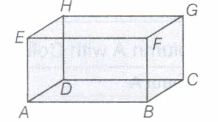
How many vertices does a cuboid have?
4.
From a circular card sheet of radius 14 cm, two circles of radius 3.5 cm and a rectangle of length 3 cm and breadth 1 cm are removed. (as shown in the adjoining figure). Find the area of the remaining sheet. (Take \(\pi=\frac{22}{7}\) )

5.
Find the whole quantity, if 12% of it is Rs1080
6.
The following double bar graph represents test matches results summary for cricket team of country X against different countries
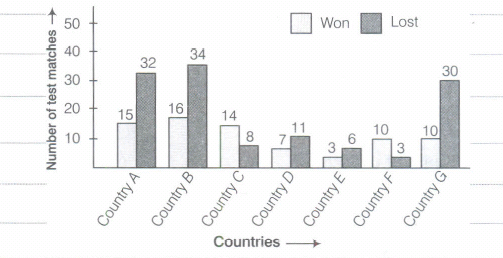
Which country has managed maximum wins against country X?
7.
What is that number one-third of which added to 5 gives 8?
8.
Complete the following statements.
(i) Two line segments are congruent, if .
(ii) Among two congruent angles, one has a measure of 70°, the measure of the other angle is ......
(iii) When we write ㄥA = ㄥB, we actually mean .........
9.
Below are given the measures of certain sides and angles of triangles. Identify those which cannot be constructed and say why you cannot construct them. Construct rest of the triangles.
Triangle Given measurements
1. \(\Delta\)ABC m\(\angle\)A = 85°; m\(\angle\)B = 115°; AB = 5 cm
2. \(\Delta\)PQR m\(\angle\)Q = 30°; m\(\angle\)R= 60°; QR = 4.7 cm.
3. \(\Delta\)ABC m\(\angle\)A = 70°; m\(\angle\)B = 50°; AC = 3 cm
4. \(\Delta\)LMN m\(\angle\)L = 60°; m\(\angle\)N= 120°; LM = 5 cm
5. \(\Delta\)ABC BC = 2 cm; AB = 4 cm; AC = 2 cm
6. \(\Delta\)PQR PQ = 3.5 cm; QR = 4 cm; PR = 3.5 cm.
7. \(\Delta\)XYZ XY = 3 cm; YZ = 4 cm; XZ = 5 cm
8. \(\Delta\)DEF DE = 4.5 cm; EF = 5.5 cm; DF = 4 cm
10.
What should be subtracted from x3 - 4x2 + 5x - 6 to get X2 - 2x + 1?
11.
A wall of a room is of dimensions 5 m x 4m. lt has a window of dimensions 1.5 m x 1 m and a door of dimensions 2.25 m x 1 m. Find the area of the wall, which is to be painted.
12.
Five numbers a, b, c. d, and e are in the ratio 2: 3: 5: 8: 9 and their sum is 162. Find the average of all these numbers.
13.
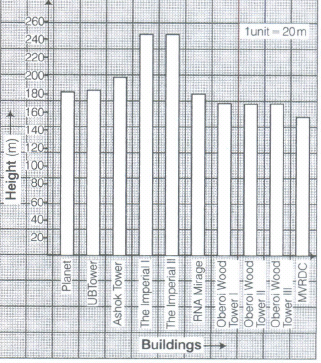
Below is a list of 10 tallest buildings in India. This list ranks buildings in India that stand at least 150 m (492 ft) tall, based on standard height measurement. This includes spires and architectural details but does not include antenna marks. Following data is given as per the available information till 2009. Since, new buildings are always under construction, go online to check new taller buildings. Use the information given in the table about skyscrapers to answer the following questions:
| Name | City | Height | Floors | Years |
|---|---|---|---|---|
| Planet | Mumbai | 181m | 51 | 2009 |
| UB Tower | Bengaluru | 184m | 20 | 2006 |
| Ashok Towers | Mumbai | 193m | 49 | 2009 |
| The Imperial i | Mumbai | 249m | 60 | 2009 |
| The Imperial II | Mumbai | 249m | 60 | 2009 |
| RNA Mirage | Mumbai | 180m | 40 | 2009 |
| Oberoi Woods Tower I | Mumbai | 170m | 40 | 2009 |
| Oberoi Woods Tower II | Mumbai | 170m | 40 | 2009 |
| Oberoi Woods Tower III | Mumbai | 170m | 40 | 2009 |
| MVRDC | Mumbai | 156m | 35 | 2002 |
(a) Find the height of each storey of the three tallest buildings and write them in the following table:
| Buildings | Height | Number of storeys | Height of each storey |
|---|---|---|---|
(b) The average height of one storey for the buildings given in (a) is........
(c) Which city in this list has the largest percentage of skyscrapers? What is the percentage?
(d) What is the range of data?
(e) Find the median of the data.
(f) Draw a bar graph for given data.
14.
A man travelled two-fifth of his journey by train, one-third by bus, one-fourth by car and the remaining 3 km on foot. What is the length of his total journey?
15.
How many vertices does a cube have?
8
6
4
2
16.
What is the coefficient of y2 in the expression 2x2y - 10xy2 + 5y2?
5-10x
5
- 10 x
None of these
17.
The circumference of a circle of diameter d is
\(\pi\)d
2\(\pi\)d
\(\frac { 1 }{ 2 } \)\(\pi\)d
\(\pi\)d2
18.
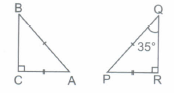
If \(\triangle ABC\cong \triangle PQR\) then the value of \(\angle \)A is:
350
550
900
450
19.
The mean of 1, 4, 1, 2, 0, 1, 5, 4, 2, 2 is:
11
2.2
2
5
20.
For an!, two non-zero rational numbers x and y, x5 \(\div\) y5 is equal to :
(x \(\div\) y)1
(x \(\div\) y)0
(x \(\div\) y)5
(x \(\div\) y)10
21.
A bicycle is purchased for Rs.1800 and is sold at a profit of 12%. Its selling price is :
Rs.1584
Rs.2016
Rs.1788
Rs.1812
22.
The degree of the polynomial x3y - 2xy4 + 5 is
5
4
3
2
23.
Which of the following equations can be formed starting with x = 0?
2x + 1 = -1
\(\frac{x}{2}+5=7\)
3x - 1 = -1
3x - 1 = 1
24.
Which of the following sets of triangles could be the lengths of the sides of a right angled triangle?
3 cm, 4 cm, 6 cm
9 cm, 16 cm, 26 cm
1.5 cm, 3.6 cm, 3.9 cm
7 cm, 24 cm, 26 cm
25.
Solve the equation. \(\frac { 3p }{ 4 } =6\)
26.
Find the area of the circles whose radius are 21 cm.
27.
In an equilateral MBC, if \(\triangle\)ABC = 5 cm. Find the perimeter of \(\triangle\)ABC.
28.
Write the reciprocal of the following rational numbers. \(-\frac { 7 }{ 11 } \)
29.
3500 is given at 7% p.a. rate of interest. Find the interest which will be received at the end of two years
30.
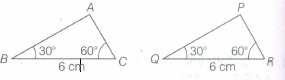
In the following figures, measures of same part are indicated. By applying ASA congruence rule. State which pairs of triangles are congruent.
31.
What is the exponent of (-11)5 ?
32.
What is the type of each angle of an equilateral triangle?
33.
What is the range of first ten whole numbers?
34.
When can we say that two squares are congruent?
35.
Sum of 3x2-1 and -x2+ 1is
36.
\(({2\over 3})^5\)is expressed in exponential form as____________
37.
If the three sides of a triangle are respectively equal to the three sides of another triangle, the two triangles are congruent. This is called the __________congruence of triangles
38.
In right triangle, the measure of one of the acute angles is 65°. The measure of the other acute angle is____________.
39.
If 3-\(\frac{1}{x}\)=4, then x=_________________.
40.
Ratio of the circumference of a circle to its diameter is denoted by symbol ....................
1.
b2
2.
12x2 - y2 - 8xy
3.
The total number of vertices in a cuboid is equal to 8.
4.
Given, radius of circular card sheet = 14 cm
\(\therefore\) Area of circular card sheet = \(\pi\) x (Radius)2
= \(\frac{22}{7}\times (14)^2=\frac{22}{7}\times 14\times 14\) = 616 cm2
Area of circle of radius 3.5 cm = \(\frac{22}{7}\times\) (3.5)2
= \(\frac{22}{7}\times 3.5\times 3.5=\frac{269.5}{7}\) = 38.5 cm2
\(\therefore\) Area of two circles = 2 x 38.5 = 77 cm2
Now, length of rectangle, L= 3 cm
and breadth of rectangle, b = 1cm
\(\therefore\) Area of the rectangle = Length X Breadth = 3 x 1 = 3 cm2
Now, area of remaining sheet = Area of circular card sheet - (Area of two circles + Area of rectangle)
= 616 - (77 + 3) = 616 - 80 = 536 cm2
Hence, the area of remaining card sheet is 536 cm2.
5.
Let the whole quantity be Rs x
\(\therefore\) 12% of \(x=Rs1080 \Rightarrow {12\over100}\times x=1080\)
\( \Rightarrow x ={1080\times100\over12}=90\times100=9000\)
Hence, the whole quantity is Rs. 9000.
6.
Country B
7.
Let the number be x.
Then, one-third of x = \(\frac{x}{3}\)
According to the question,
One-third of number added to 5 gives 8,
i.e, \(\frac{x}{3}+5=8\)
Now, transposing (+5) from LHS to RHS, we get
\(\frac{x}{3}=8-5\quad \Rightarrow \frac{x}{3}=3\)
Again, multiplying both sides by 3, we get
\(\frac{x}{3}\times 3=3\times 3\quad \Rightarrow x=9\)
Hence, the required number is 9.
8.
(i) Two line segments are congruent, if they have same length.
(ii) Among two congruent angles, one has a measure of 70°, i.ie measure of the other angle is 70°.
(iii) When we write ㄥA = ㄥB, we actually mean mㄥA = mㄥB.
9.
1. m \(\angle \) A + m \(\angle \) B = 85° + 115° = 200° > 180°
This is not possible since the sum of the measures of the three angles of a triangle is 180°. As such, the sum of the two angles of a triangle cannot exceed 180°. Hence, \(\Delta\) ABC cannot be constructed.
2. Steps of Construction
1. Draw QR of length 4.7 cm.
2. At Q, draw a ray QX making an angle of 30° with QR.
3. At R, draw a ray RY making an angle of 60° with RQ.
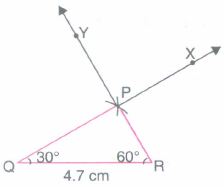
4. Mark the point of intersection of the two rays as P.
\(\Delta\) PQR is now completed.
3. Steps of Construction
By angle-sum property of a triangle,
m\(\angle\) A + m \(\angle\) B + m \(\angle\) C = 180°
\(\Rightarrow\) 70° + 50° + \(\angle\) C = 180°
\(\Rightarrow\) 120° + \(\angle\)C = 180°
\(\Rightarrow\) \(\angle\)C = 180° - 120°
\(\Rightarrow\) \(\angle\)C = 60°
1. Draw AC of length 3 cm.
2. At A, draw a ray AX making an angle of 70° with AC.
3. At C, draw a ray CY making an angle of 60° with CA.
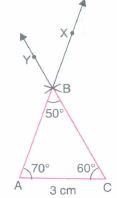
4. Mark the point of intersection of two rays at B.
\(\Delta\) ABC is now completed
4. m\(\angle\)L + m \(\angle\) N
= 60° + 120° = 180° = 180°
This is not possible since the sum of the measures of the three angles of a triangle is 180°. As such, the sum of the two angles of a triangle cannot be equal to 180°.
Hence, \(\Delta\) LMN cannot be constructed.
5. We have,
AC + BC = 2 cm + 2 cm = 4 cm = AB
This is not possible since the sum of the lengths of any two sides of a triangle is greater than the length of the third side. As such, the sum of the lengths of two sides of a triangle cannot be equal to the length of the third side. Hence, \(\Delta\) ABC cannot be constructed.
6. Steps of Construction
1. Draw a line segment QR of length 4 cm.
2. With Q as centre, draw an arc of radius 3.5 cm.
3. With R as centre, draw an arc of radius 3.5 cm.
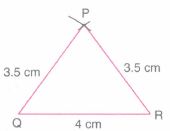
4. Mark the point of intersection of arcs as P.
5. Join PQ and PR.
\(\Delta\) PQR is now ready.
7. Steps of Construction
1. Draw a line segment YZ of length 4 cm.
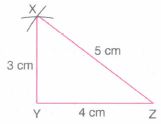
2. With Y as centre, draw an arc of radius 3 cm
3. With Z as centre, draw an arc of radius 5 cm.
4. Mark the point of intersection of arcs as X.
5. Join XY and XZ.
\(\Delta\) XYZ is now ready.
8. Steps of Construction
1. Draw a line segment EF of length 5.5 cm.
2. With E as centre, draw an arc of radius 4.5 cm.
3. With F as centre, draw an art of radius 4 cm
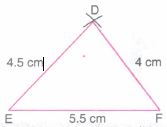
4. Mark the point of intersection of two arcs as D.
5. Join DE and DF.
\(\Delta\) DEF is now ready.
10.
x3 - 5x2 + 7x - 7
11.
A wall of a room is of dimensions 5 m x 4 m.
Length of the room = 5 m
Breadth of the room = 4 m
\(\therefore\) Area of the room = 5 x 4= 20 m2
Length of the window = 1.5 m
Breadth of the window = 1 m
\(\therefore\) Area of the window = 1.5 x 1 = 1.5 m2
Length of the door = 2.25 m
Breadth of the door = 1 m
\(\therefore\) Area of the door = 2.25 x 1 = 2.25 m2
The area of the wall to be painted = Area of the room - Area of the window - Area of the door
= 20 - 1.5 - 2.25
= 20 - 3.75 = 16.25 m2.
12.
32.4
13.
(a) Clearly, Imperial I, Imperial II and Ashok Towers are three tallest buildings.
| Buildings | Height | Number of storeys | Height if each storey |
|---|---|---|---|
| Imperial I | 249m | 60 | 249/60 = 4.15 |
| Imperial I | 249m | 60 | 249/60= 4.15 |
| Ashok Towers | 193 m | 49 | 193/49 = 3.94 |
(b) Average height of each storey of the buildings given in (a)
= \(\frac { sum\quad of\quad heights\quad of\quad each\quad storey\quad of\quad three\quad tallest\quad buildings }{ 3 } \)
= \(\frac { 4.15+4.15+3.94 }{ 3 } =\frac { 12.24 }{ 3 } =4.08\)
(c) We can clearly see from the data, Mumbai has maximum number of skyscrapers from the list given. It has 9 skyscrapers out of the list of 10 buildings given.
Required percentage = \(\frac { 9 }{ 10 } \times 100=90%\)%
(d) Range of data = Maximum height - Minimum height
= 249 - 156 = 93
(e) Arranging the data in ascending order, we get 156,170,170,170,180,181,184,193,249,249 Since, there are ten observations, median will be the mean of 5th and 6th observations.
\(\therefore\) Median = \(\frac { 180+181 }{ 2 } =180.5\)
(f) A bar graph is shown below
14.
Let his total journey length be x km.
\(\therefore\) Travelled by train = \(\frac{2}{5}x,\) travelled by bus = \(\frac{1}{3}x\) and travelled by car = \(\frac{1}{4}x\)
\(\therefore\) Total journey travelled by train, bus and car
= \(\frac{2}{5}x+\frac{1}{3}x+\frac{1}{4}x\)
= \(\frac{12\times 2x+20\times x+15\times x }{60}\)
= \(\frac{24x+20x+15x}{60}=\frac{59x}{60}\)
\(\therefore\) Remaining = \(\frac{x}{1}-\frac{59x}{60}=\frac{60x-59x}{60}=\frac{x}{60}\)
According to the question, remaining journey is 3 km.
\(\therefore \quad \frac{x}{60}=3\Rightarrow x=3\times60=180\)
Hence, the length of his total journey is 180 km.
15.
(a)
8
16.
(a)
5-10x
17.
(a)
\(\pi\)d
18.
(b)
550
19.
(b)
2.2
20.
(c)
(x \(\div\) y)5
21.
(b)
Rs.2016
22.
(a)
5
23.
(c)
3x - 1 = -1
24.
(c)
1.5 cm, 3.6 cm, 3.9 cm
25.
We have, \(\frac { 3p }{ 4 } =6\)
\(\Rightarrow \quad \frac { 3p }{ 4 } \times \frac { 4 }{ 3 } =6\times \frac { 4 }{ 3 } \)
\(\Rightarrow \quad p=2\times 7=8\)
So, p = 8 is the solution of the given equation.
26.
Given, radius = 21 cm
\(\therefore\) Area of a circle = \(\pi\)r2 = \(\pi\)(21)2 = \(\frac{22}{7}\) x 21 x 21
= 22 x 3 x 21 = 1386 cm2.
27.
15 cm
28.
\(-\frac { 11 }{ 7 } \)
29.
Given, Principal, P = Rs 3500; Rate of interest, R = 7 %;
Time, T= 2yr
\(\therefore Interest,I={P\times R\times T\over100}={3500\times7\times2\over100}=35\times7\times2\)
=70x7=Rs490
Hence, interest received at the end of two years will be Rs 490
30.
In ΔABC and ΔPQR, we have
BC = 6 cm and QR = 6 cm, so BC = QR
B = 30° and ㄥQ = 30°, so ㄥB = ㄥQ
ㄥC = 60° and ㄥR = 60°, so ㄥC = ㄥR
Hence, two angles and one side are equal in ΔABC and ΔPOR. So, ΔABC ≅ ΔPOR by ASA congruent rule.
31.
()
5
32.
()
acute angle
33.
()
9
34.
()
When they have equal sides.
35.
()
2x2
36.
()
\({2\over 3} \times{2\over 3} \times{2\over 3} \times{2\over 3} \times{2\over 3} \)
37.
()
SSS
38.
()
25°
39.
()
-1
40.
()
\(\pi\)

7th Standard CBSE Syllabus & Materials
7th Standard CBSE
CBSE 7th Social Science Theme B - New Beginnings : Cities and States - New Sample Question Papers Study Material - QB365 Set A
NEW7th Standard CBSE
CBSE 7th Social Science Theme A - Climates of India - New Sample Question Papers Study Material - QB365 Set A
NEW7th Standard CBSE
CBSE 7th Social Science Theme A - Geographical Diversity of India - New Sample Question Papers Study Material - QB365 Set A
NEW7th Standard CBSE
CBSE 7th Science Earth, Moon and the Sun - New Sample Question Papers Study Material - QB365 Set A



NCERT Books

Syllabus

Exam Pattern

Sample Question Papers

Previous year Question Papers

Important Notes

MCQ Practice test

NCERT Exemplers

Case study Questions

Image Based Questions

Passage based Questions

HOT Questions

Value Based Questions

Model Questions Papers
NCERT ( Book Back ) Questions

Assertion and Reason
Important Questions And Answers

CBSE 7th Standard CBSE Subjects
CBSE Standards


