
 100% FREE ACCESS
7th Standard CBSE Syllabus & Materials
7th Standard CBSE
CBSE 7th Social Science Theme E - Understanding Market - New Sample Question Papers Study Material - QB365 Set A
NEW7th Standard CBSE
CBSE 7th Social Science Theme E - From Barter to Money - New Sample Question Papers Study Material - QB365 Set A
NEW7th Standard CBSE
CBSE 7th Social Science Theme D - The Constitution of India- An Introduction - New Sample Question Papers Study Material - QB365 Set A
NEW7th Standard CBSE
CBSE 7th Social Science Theme D - From the Rulers to the Ruled : Types of Governments - New Sample Question Papers Study Material - QB365 Set A
NEW7th Standard CBSE
CBSE 7th Social Science Theme B - The Age of Reorganisation - New Sample Question Papers Study Material - QB365 Set A
NEW7th Standard CBSE
CBSE 7th Social Science Theme B - The Rise of Empires - New Sample Question Papers Study Material - QB365 Set A

Published on: 31/10/2025
Download CBSE Class 7th Standard CBSE Mathematics question papers, sample papers, important questions, and previous year solved papers in PDF format. Get free study materials, NCERT solutions, and exam preparation resources for Class 7th Standard CBSE Mathematics
Questions + Answers key
Take MCQ Mathematics Test
1.
Subtract the following expressions: x4 + 3x3 y3 + 5y4 from 2x4 - x3 y3 + 7y4
2.
A line segment AB = 6 cm, if a perpendicular bisector constructed on it. Find the length of two parts.
3.
Simplify combining like terms. 5x2y - 5x2 + 3yx2 - 3y2 +x2 - y2 + 8xy2 - 3y2
4.
Find the area of each of the following parallelogram.
.png)
5.
The dimensions of a lawn are in the ratio 4: 1 and its area is 2500 m2. What is the length of the lawn?
6.
Simplify and express the result in standard from \(\left( -\frac { 2 }{ 5 } +\frac { 1 }{ 2 } \right) +\left( \frac { 1 }{ 3 } -\frac { 5 }{ 2 } \right) \)
7.
Find the value of \(12\frac { 6 }{ 9 }\div \frac { 1 }{ 18 } \times \frac { 1 }{ 2 } \)
8.
Find the values of the following polynomials at a = - 2 and b = 3. a3 + 3a2b + 3ab2 + b3
9.
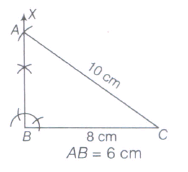
Constuct a right angled triangle at B, such that BC = 8 cm and AC = 10 cm. Measure AB.
10.
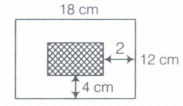
In the following figure, find the area of shaded portion.
11.
What should be added to X2 + xy + y2 to obtain 2x2 + 3xy?
12.
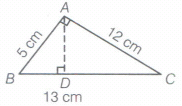
\(\Delta\) ABC is right angled at A (in the given figure). AD is perpendicular to BC. If AB = 5 cm, BC = 13 cm and AC = 12 cm. Find the area of \(\Delta\)ABC. Also, find the length of AD.
13.
Simplify \(\left( 1-\frac { 1 }{ 2 } \right) \div \left( 1+\frac { 1 }{ 2 } \right) \)
14.
1 km2 = _______ m2.
15.
The degree of the expression 6x4 - 3x2y + 4x is___________ . [3/4]
16.
\((\frac{-3}{5}\times\frac{3}{5})\)=___________________.
17.
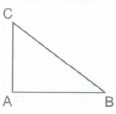
Hypotenuse of \(\triangle\)ABC is__________.
18.
The distance around a circle is its ........................
19.
In x4, 4 is called the..............
20.
If a wire in the shape of a square is rebent into a rectangle, then the __________ of both shapes remain same, but ___________ may vary.
21.
If AB = 6 cm and BC = 6 cm are given, then this type of triangle is called_______.
22.
\(4\frac { 4 }{ 5 } \div \frac { 24 }{ 5 } +8\frac { 1 }{ 4 } =\)__________
23.
\(\frac { 3 }{ 4 } \times \left( \frac { -2 }{ 3 } \right) =\) ___________
24.
If A = 2 + 4x + 8x2,B = -3-5x +x2 ,C= 1 + 3x-7x2, find A + B + C.
25.
The floor of a building is covered with 2760 tiles. Each of the tiles is in the shape of a parallelogram of altitude 3 em and base 4.5 cm. Find the cost of polishing the tiles at the rate of Rs 20 per m2.
1.
X4 - 4X3y3 + 2y4
2.
Given, line segment AB = 6 cm. If perpendicular bisector constructeg on AB. Then, the length of equal parts will be \(\frac{6}{2}=3\) cm.
∴ Perpendicular bisector divide the line in two equal parts.
3.
We have, 5x2y - 5x2 + 3yx2 - 3y2 +x2 - y2 + 8xy2 - 3y2
= 5x2y + 3yx2 - 5x2 + x2 - x2 - 3y2 -y2 - 3y2 + 8xy [rearranging terms]
= x2y (5+3) + x2 (-5 + 1) +y2 (-3 -1 -3) + 8xy2
= 8x2y - 4x2 - 7y2 + 8xy
4.
Given, base of a parallelogram = 5 cm
and height of a parallelogram = 4.8 cm
\(\therefore\) Area of a parallelogram = Base x Height
= 5 x 4.8 = 24 cm2.
5.
100 m.
6.
\(\frac { -3 }{ 65 } \)
7.
114
8.
1
9.
10.
\(\therefore\) Breadth of outer figure = 12 cm
Breadth of inner figure = 12 - 4 - 4 = 4 cm
Length of outer figure = 18 cm
Length of inner figure = 18 - 4 = 14 cm
So, area of inner rectangular figure
= 14 x 4 = 56 cm2.
11.
Here, if we add an expression to x2 + xy + Y2, then we get sum 2x2 + 3xy. So if, we subtract x2 + xy+ y2 from 2x2 + 3xy, then we will get the expression.
\(\therefore\) Required expression = (2x2 + 3xy) - (x2 +xy +y2)
\(2x^2+3xy\\\ \ x^2+xy+y^2\\-\ \ -\ \ \ \ \ -\\\\\_\_\_\_\_\_\_\_\_\_\_\_\\\ \ x^2+2xy-y^2\\\_\_\_\_\_\_\_\_\_\_\_\_\)
Hence, x2+2xy-y2 should be added to x2+xy+y2 to obtain 2x2+3xy.
12.
Given, \(\Delta\)ABC is right angled at A, AB = 5 cm, BC = 13 cm and AC = 12 cm.
On taking AC as base and AB as height, we get
Area of \(\Delta\)ABC = \(\frac{1}{2}\times\) Base x Height
= \(\frac{1}{2}\times\) 12 x 5 = \(\frac{1}{2}\times\) 60 = 30 cm2.
Also, AD is perpendicular to BC.
On taking BC as base and AD as height, we get
Area of \(\Delta\)ABC = \(\frac{1}{2}\times\) BC x AD
\(\Rightarrow\) \(\frac{1}{2}\times\) BC x AD = 30
\(\Rightarrow\) \(\frac{1}{2}\times\) 13 x AD = 30
\(\therefore\) AD = \(\frac{30\times 2}{13}=\frac{60}{13}=4\frac{8}{13}\) cm.
Hence, the length of AD is \(4\frac{8}{13}\) cm.
13.
\(\frac { 1 }{ 3 } \)
14.
()
1000000
15.
()
4
16.
()
\((\frac{-9}{25})\)
17.
()
\(\overline{BC}\)
18.
()
circumference
19.
()
exponent
20.
()
Perimeter, area
21.
()
isosceles triangle
22.
\(4\frac { 4 }{ 5 } \div \frac { 24 }{ 5 } +8\frac { 1 }{ 4 } =\frac { (5\times 4)+4 }{ 5 } \div \frac { 24 }{ 5 } +\frac { (8\times 4)+1 }{ 4 } \)
\(\frac { 24 }{ 5 } \div \frac { 24 }{ 5 } +\frac { 33 }{ 4 } \)
Since , the reciprocal of \(\frac { 24 }{ 5 } \) is \(\frac { 5 }{ 24 } \)
\(\\ \therefore \quad \frac { 24 }{ 5 } \times \frac { 5 }{ 24 } +\frac { 33 }{ 4 } =1+\frac { 33 }{ 4 } =\frac { 37 }{ 4 } \)
23.
\(\frac { 3 }{ 4 } \times \left( \frac { -2 }{ 3 } \right) =\frac { 3\times (-2) }{ 4\times (3) } =\frac { -6 }{ 12 } =\)\(-\frac { 1 }{ 2 } \)
24.
A = 2 + 4x + 8x2
B = -3-5x + x2
C = 1 + 3x-7x2
A+B+C=?
A + B + C = (2 + 4x + 8x2) + (- 3 - 5x + x2)+ (1 + 3x-7x2)
= 2 + 4x + 8x2 - 3 - 5x + x2 + 1 + 3x -7x2
= x2(8 + 1 - 7) + x( 4 - 5 + 3) + 2 - 3 + 1
=2x2+2x+0
=2x2+2x
= 2x(x + 1).
25.
Area of one tile (parallelogram shape)
= base x height
= 3 x 4.5
= 13.5 cm2
Area of such 2760 tiles = 2760 x 13.5
= 37,260 cm2
= 3.726 m2
Cost of polishing = 3.726 x 20
= Rs. 74.52.

7th Standard CBSE Syllabus & Materials
7th Standard CBSE
CBSE 7th Social Science Theme B - New Beginnings : Cities and States - New Sample Question Papers Study Material - QB365 Set A
NEW7th Standard CBSE
CBSE 7th Social Science Theme A - Climates of India - New Sample Question Papers Study Material - QB365 Set A
NEW7th Standard CBSE
CBSE 7th Social Science Theme A - Geographical Diversity of India - New Sample Question Papers Study Material - QB365 Set A
NEW7th Standard CBSE
CBSE 7th Science Earth, Moon and the Sun - New Sample Question Papers Study Material - QB365 Set A



NCERT Books

Syllabus

Exam Pattern

Sample Question Papers

Previous year Question Papers

Important Notes

MCQ Practice test

NCERT Exemplers

Case study Questions

Image Based Questions

Passage based Questions

HOT Questions

Value Based Questions

Model Questions Papers
NCERT ( Book Back ) Questions

Assertion and Reason
Important Questions And Answers

CBSE 7th Standard CBSE Subjects
CBSE Standards


