
 100% FREE ACCESS
7th Standard CBSE Syllabus & Materials
7th Standard CBSE
CBSE 7th Social Science Theme E - Understanding Market - New Sample Question Papers Study Material - QB365 Set A
NEW7th Standard CBSE
CBSE 7th Social Science Theme E - From Barter to Money - New Sample Question Papers Study Material - QB365 Set A
NEW7th Standard CBSE
CBSE 7th Social Science Theme D - The Constitution of India- An Introduction - New Sample Question Papers Study Material - QB365 Set A
NEW7th Standard CBSE
CBSE 7th Social Science Theme D - From the Rulers to the Ruled : Types of Governments - New Sample Question Papers Study Material - QB365 Set A
NEW7th Standard CBSE
CBSE 7th Social Science Theme B - The Age of Reorganisation - New Sample Question Papers Study Material - QB365 Set A
NEW7th Standard CBSE
CBSE 7th Social Science Theme B - The Rise of Empires - New Sample Question Papers Study Material - QB365 Set A

Published on: 31/10/2025
Download CBSE Class 7th Standard CBSE Science question papers, sample papers, important questions, and previous year solved papers in PDF format. Get free study materials, NCERT solutions, and exam preparation resources for Class 7th Standard CBSE Science
Questions + Answers key
Take MCQ Science Test
1.
Given below is a sequence of steps in the processing of wool. Which are the missing step? Add them.
Shearing, .... sorting ......, ......,......
2.
You must be familiar with the following nursery rhymes.
(i) 'Baa Baa! Baa Baa! Black sheep, have you any wool.'
(ii) 'Mary had a little lamb, whose fleece was white as snow.'
Which parts of the black sheep have wool?
3.
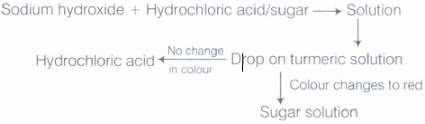
Three liquids are given to you. One is hydrochloric acid, another is sodium hydroxide and third is a sugar solution. How will you identify them? You have only turmeric indicator.
4.
Explain why
(a) an antacid tablet is taken when you suffer from acidity?
(b) calamine solution is applied on the skin when an ant bites?
(c) Is factory waste neutralised before disposing it into the water bodies?
5.
Is the distilled water acidic/basic/neutral? How would you verify it?
6.
State differences between acids and bases.
7.
Yak hair are not used to make woollen fabric.
8.
Silkworms are caterpillars of silk moth.
9.
Calamine can be used to treat ant's sting.
10.
Common salt dissolved in water turns blue litmus red.
11.
Nitric acid turns red litmus to blue.
12.
Where the wool is obtained from?
13.
Write a caption for each of the figures given as Figure (A-D).
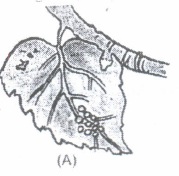
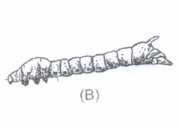
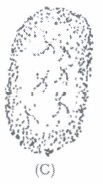
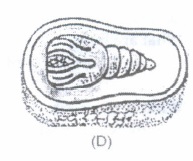
14.
What are caterpillars?
15.
In the life history of silk moth as Egg ⟶ Larva (or caterpillar) ⟶ Pupa ⟶ Silk moth which actually makes the silk fibre?
16.
Name two gaseous pollutants which are responsible for acid rain.
17.
Name the salt formed when hydrochloric acid reacts with sodium hydroxide solution (a base).
18.
Why does a turmeric stain on white shirt is turned to red when it is washed with soap?
19.
What name is given to those substances which do not change the colour of either red or blue litmus paper?
20.
Kashmiri goat
21.
Sheep
22.
Milk of magnesia
23.
Sodium hydroxide
24.
Silk fibre is obtained from
fleece of sheep
cotton ball
cocoon
shiny jute stalk
25.
Burrs are the :
Wool obtained from the camel
Wool obtained from the goat
Small fluffy fibres in wool
Pupa
26.
The medicine used for treating indigestion is:
Antibiotic
Anti-acid
Antacid
Analgesic
27.
Lactic acid is found in
Apple
Curd
Tea
Vinegar
28.
Stomach secretes:
HCl
H2SO4
CH3COOH
NaOH
29.
Sting of an ant contains
Vinegar
Common salt
Formic acid
Milk of magnesia
30.
Common salt is
Acidic
Basic
Neutral
None of these
31.
Reeling of silk is
a process of making silk reels
spinning of silk fibres
weaving of silk cloth
the process of taking silk threads from cocoon
32.
The rearing of silkworms for obtaining silk is called
cocoon
silk
sericulture
silviculture
33.
The silkworm is (i) a caterpillar, (ii) a larva.
(i)
(ii)
Both (i) and (ii)
Neither (i) nor (ii)
34.
Give a brief account of wool manufacturing.
35.
Neha went to the market with her mother to buy a silk saree for her grandmother. The shopkeeper was showing sarees of different varieties of silk but her mother wanted to take only a pure silk saree and not an artificial one. Neha was confused that how to distinguish between a pure silk and an artificial silk saree. But her mother helped her in selecting a pure silk saree for her grandmother and she was quite elated about that.
Now, answer the following questions:
(a) How her mother distinguished between pure silk saree and an artificial silk saree?
(b) Is the pure silk saree more costly than an artificial one?
(c) What values are shown by Neha's mother?
36.
The name of the base found in limewater is ____________.
37.
All acids have a _____________taste
38.
Acid + Metal⟶ Salt +_____________.
39.
Silk is a _______ conductor of heat.
40.
A ______ is a long continuous thread.
41.
What is the meant by selective breeding?
42.
What are indicators?
1.
(i) Shearing
(ii) Scouring,
(iii) Sorting
(iv) Fibre spinning,
(v) Dyeing
(vi) Rolling intp the yarn
2.
The black sheep in the poem seems to have wool on almost all the parts as it in the poem, it offers wool enough to fill three bags full.
3.
We will put a drop each of hydrochloric acid, sodium hydroxide and sugar solution on the turmeric indicator. The liquid which changes the colour of turmeric indicator to red is basic in nature that is sodium hydroxide. Now, we will put a drop of sodium hydroxide on a drop of each of the other two liquids separately.
After that, we will put the drops of their mixtures on turmeric indicator. The drop which will change the colour of the turmeric indicator to red contains sugar solution.
This is because the mixture of base and the neutral solution is basic in nature. On the other hand, the drop which will not change the colour of turmeric indicator contains hydrochloric acid because hydrochloric acid reacts with sodium hydroxide forms a neutral solution.
4.
(a) We take an antacid tablet such as milk of magnesia to neutralises the excessive acid released in the stomach.
(b) When an ant bites, it injects the formic acid into the skin. The effect of acid can be neutralised by applying calamine solution that contains zinc carbonate.
(c) The factory wastes contain acids if they are allowed to flow into the water bodies, the acid will kill fishes and other organisms. The factory wastes are thus neutralised by adding basic substances.
5.
Distilled water is neither acidic nor basic. When we test its nature through litmus paper strips, we have found neither red nor blue changes in colour which verifies its neutral nature.
6.
Differences between acids and bases are as follows:
| Acids | Bases |
| They are sour in taste | They are bitter in taste |
| They turn blue litmus to red | They turn red litmus to blue |
| They are not soapy to touch | They are soapy to touch |
| They are soluble in water | They may or may not be soluble in water |
| They are corrosive in nature | They are not corrosive in nature. |
7.
(b)
8.
(a)
9.
(a)
10.
(b)
11.
(b)
12.
13.
(A) Eggs of silk moth on mulberry leaves
(B) Silkworm
(C) Cocoon
(D) Cocoon with developing moth.
14.
The larva hatched from the eggs of silk moth are known as caterpillar.
15.
The larva (or caterpillar) of a silk moth makes the silk fibre.
16.
Two gaseous pollutants are nitrogen dioxide (NO2) and sulphur dioxide (SO2).
17.
When hydrochloric acid reacts with sodium hydroxide solution, then sodium chloride salt is formed.
18.
Turmeric stain on white shirt is turned to red when it is washed with soap because the soap solution is basic in nature.
19.
The solutions or substances which do not change the colour of either red or blue litmus paper are neutral.
20.
()
Pashmina
21.
()
Wool
22.
()
Changes red litmus blue
23.
()
Soap
24.
(c)
cocoon
25.
(c)
Small fluffy fibres in wool
26.
(c)
Antacid
27.
(b)
Curd
28.
(a)
HCl
29.
(c)
Formic acid
30.
(c)
Neutral
31.
(d)
the process of taking silk threads from cocoon
32.
(c)
sericulture
33.
(c)
Both (i) and (ii)
34.
The wool is obtained from the hair of sheep in the following steps:
Step I-Shearing: The fleece of the sheep along with a thin layer of skin is removed from its body. Machines similar to those used by barbers are used to shave off hair. Usually, hair removed during the hot weather.
Step II-Scouring: The sheared skin with hair is thoroughly washed in tanks to remove grease, dust and dirt.
Step III-Sorting: The hairy skin is sent to a factory where hair of different textures are separated or sorted.
Step IV-The small fluffy fibres, called burrs are picked out from the hair. The fibres are scoured again and again and dried.
Step V-Fibres can be dyed in various colours.
Step VI-The fibres are straightened, combed and rolled into yarn. The long fibres are made into wool for sweaters and the shorter fibres are spun and woven into woollen clothes.
35.
(a) Neha's mother took a thread of natural silk fabric and another thread of artificial silk fabric and burn them separately. The thread which burns giving a smell of burning hair will be natural silk (or pure silk). The thread which burns giving a smell a burning paper will be an artificial silk.
(b) Yes, pure silk saree is more costly than an artificial one.
(c) Neha's mother is intelligent and knowledgeable.
36.
()
calcium hydroxide
37.
()
sour
38.
()
hydrogen
39.
()
poor
40.
()
yarn
41.
()
The process of selecting parents for obtaining special characters in their offspring such as soft hair in sheep is term as selective breeding.
42.
()
Indicators are the substances that are used to test the acidity or basicity of a substance

7th Standard CBSE Syllabus & Materials
7th Standard CBSE
CBSE 7th Social Science Theme B - New Beginnings : Cities and States - New Sample Question Papers Study Material - QB365 Set A
NEW7th Standard CBSE
CBSE 7th Social Science Theme A - Climates of India - New Sample Question Papers Study Material - QB365 Set A
NEW7th Standard CBSE
CBSE 7th Social Science Theme A - Geographical Diversity of India - New Sample Question Papers Study Material - QB365 Set A
NEW7th Standard CBSE
CBSE 7th Science Earth, Moon and the Sun - New Sample Question Papers Study Material - QB365 Set A



NCERT Books

Syllabus

Exam Pattern

Sample Question Papers

Previous year Question Papers

Important Notes

MCQ Practice test

NCERT Exemplers

Case study Questions

Image Based Questions

Passage based Questions

HOT Questions

Value Based Questions

Model Questions Papers
NCERT ( Book Back ) Questions

Assertion and Reason
Important Questions And Answers

CBSE 7th Standard CBSE Subjects
CBSE Standards


