
 100% FREE ACCESS
7th Standard CBSE Syllabus & Materials
7th Standard CBSE
CBSE 7th Social Science Theme E - Understanding Market - New Sample Question Papers Study Material - QB365 Set A
NEW7th Standard CBSE
CBSE 7th Social Science Theme E - From Barter to Money - New Sample Question Papers Study Material - QB365 Set A
NEW7th Standard CBSE
CBSE 7th Social Science Theme D - The Constitution of India- An Introduction - New Sample Question Papers Study Material - QB365 Set A
NEW7th Standard CBSE
CBSE 7th Social Science Theme D - From the Rulers to the Ruled : Types of Governments - New Sample Question Papers Study Material - QB365 Set A
NEW7th Standard CBSE
CBSE 7th Social Science Theme B - The Age of Reorganisation - New Sample Question Papers Study Material - QB365 Set A
NEW7th Standard CBSE
CBSE 7th Social Science Theme B - The Rise of Empires - New Sample Question Papers Study Material - QB365 Set A

Published on: 31/10/2025
Download CBSE Class 7th Standard CBSE Science question papers, sample papers, important questions, and previous year solved papers in PDF format. Get free study materials, NCERT solutions, and exam preparation resources for Class 7th Standard CBSE Science
Questions + Answers key
Take MCQ Science Test
1.
If cells are placed side by side. Then, how are the terminals of the cells connected?
2.
Why do we cover plug pinholes which are within the reach of children with cellotape or a plastic cover when not in use?
3.
An electrician is carrying out some repairs in your house. He wants to replace a fuse by a piece of wire. Would you agree? Give reasons for your response.
4.
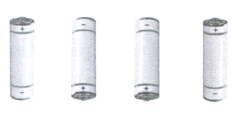
Figure shows four cells fixed on a board. Draw lines to indicate how will you connect their terminals with wires to make a battery of four cells.
5.
Electric fuse is based on the magnetic effect of electric current.
6.
The element of an electric iron is made of tungsten.
7.
MCB works on the magnetic effect of current.
8.
A car battery is just one big cell.
9.
To make a battery of two cells, the negative terminal of one cell is connected to the negative terminal of the other cell.
10.
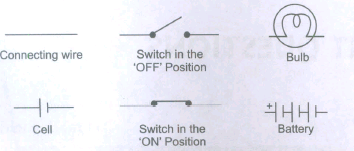
Draw in your notebook the symbols to represent the following components of electrical circuits : connecting wires, switch in the 'OFF' position, bulb, cell, switch in the 'ON' position and battery.
11.
We should not touch the lighted bulb. Explain, why.
12.
If the current through the coil stops flowing. Will the coil remain an electromagnet?
13.
Name some electric appliances where the heating effect of the electric current is used.
14.
Last Sunday, Pulpit was playing videotape in his room. While playing, the electricity of his house went off due to which he could not able to see anything around him. Then anyhow, he managed to get his mobile in his hand and with the help of its light, he went outside of his room to check if there was any problem in the electric circuit board of his house.
At the same time, his father suggested him to maintain the distance from the circuit board and decided to call some electrician to check the problem.
(a) Explain, what happens when live wire and neutral wire touches each other directly?
(b) State the values here showed by Pulkit's father.
15.
One day, Pinki was ironing the clothes in her room. After half an iron of ironing, the light went off and Pinki went outside to the lobby of her house to check it there was any problem in the household circuit. At the same time, she listened the voice of her 4 years old daughter from the same room where she was ironing the clothes. Her daughter was about to touch the hot electric iron but at the same moment, Pinki entered in the room and pushed her daughter back from that place.
(a) On which effect of electric current, does the electric iron works?
(b) Mention the values showed by Pinki here.
16.
The coil of wire contained in heater is known as
circuit
component
spring
element
17.
A battery is a combination of
only single cell
only two cells
two or more cells
None of the above
18.
Which of the following precautions need not be taken while using electric gadgets/ appliances/circuit?
We should never touch a lighted electric bulb connected to the mains
We should never do experiment with the electric supply from the mains or a generator or an inverter
We should never use just any wire or strip of metal in place of a fuse
We should never turn the switch in ON position
19.
If the number of turns in the coil of an electromagnet is more, the strength of the electromagnet will be
lesser
greater
double
same
20.
Choose the statement which is not correct in the case of an electric fuse.
Fuses are inserted in electric circuits of all buildings
There is a maximum limit on the current which can safely flow through the electric circuits
There is a minimum limit on the current which can safely flow in the electric circuits
If a proper fuse is inserted in a circuit it will below off if current exceeds the safe limit
21.
The core of an electromagnet is made from____________.
22.
A combination of two or more cells is called a_____________.
23.
In an electric circuit, a fuse is a___________to prevent possible fire.
24.
An electric cell produces electricity from the____________in it.
25.
Our body is a_____________of electricity.
26.
A material used for making electromagnet
27.
A material which does not allow the electric current to pass
28.
A material used for making filament of a bulb
29.
An alloy used as a material of fuse wire
30.
A magnetic device used for finding geographic directions
1.
If cells are placed side by side, then with the help of some connecting wires, the positive terminal of one cell is connected to the negative terminal of other to produce a combined power of all cells which can be called a battery.
2.
We do cover plug pinholes which are within the reach of children with cellotape or plastic cover to avoid electric shocks. If unconsciously, a child puts his finger in the electric socket, the shock may be fatal.
3.
No, we should not agree for replacing a fuse by a piece of wire.
As we know that fuse wire is made up of special material which can be melt on passing high amount of current or during any short circuit. If it is replaced by some other wire, melting of fuse may not take place on short circuiting or excessive current flow and it may cause fire.
4.
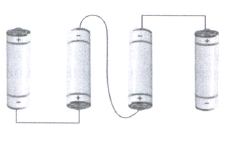
To connect all the cells, we should join negative terminal of one cell to positive terminal of other.
5.
(b)
6.
(b)
7.
(a)
8.
(b)
9.
(b)
10.
11.
The lighted bulb connected to main supply should not be touched by our hand directly, as a lighted bulb can be very hot and can burn our hand as well.
12.
When the current through the coil stops flowing, the coil does not remain an electromagnet.
13.
Some of the electric appliances where the heating effect of the electric current is used are electric heater, geyser, micro-oven, room heater, boiler, etc.
14.
(a) When live and neutral wire touches each other directly then it leads to short circuit in which the large amount of current flows through the household wiring and this large current may heat the wires to a dangerously high temperature and a fire may be started.
(b) Pulkit's father seems very sensible in taking the decisions and he showed a very great concern towards his son.
15.
(a) The electric iron works on the basis of heating effect of electric current.
(b) The values showed by Pinki here is a great concern and love towards her own 4 years old daughter.
16.
(d)
element
17.
(c)
two or more cells
18.
(b)
We should never do experiment with the electric supply from the mains or a generator or an inverter
19.
(b)
greater
20.
(c)
There is a minimum limit on the current which can safely flow in the electric circuits
21.
()
iron
22.
()
battery
23.
()
safety device
24.
()
chemicals stored
25.
()
good conductor
26.
()
Soft iron
27.
()
Wax
28.
()
Tungsten
29.
()
Cartridge fuse
30.
()
Electromagnet

7th Standard CBSE Syllabus & Materials
7th Standard CBSE
CBSE 7th Social Science Theme B - New Beginnings : Cities and States - New Sample Question Papers Study Material - QB365 Set A
NEW7th Standard CBSE
CBSE 7th Social Science Theme A - Climates of India - New Sample Question Papers Study Material - QB365 Set A
NEW7th Standard CBSE
CBSE 7th Social Science Theme A - Geographical Diversity of India - New Sample Question Papers Study Material - QB365 Set A
NEW7th Standard CBSE
CBSE 7th Science Earth, Moon and the Sun - New Sample Question Papers Study Material - QB365 Set A



NCERT Books

Syllabus

Exam Pattern

Sample Question Papers

Previous year Question Papers

Important Notes

MCQ Practice test

NCERT Exemplers

Case study Questions

Image Based Questions

Passage based Questions

HOT Questions

Value Based Questions

Model Questions Papers
NCERT ( Book Back ) Questions

Assertion and Reason
Important Questions And Answers

CBSE 7th Standard CBSE Subjects
CBSE Standards


