
 100% FREE ACCESS
7th Standard CBSE Syllabus & Materials
7th Standard CBSE
CBSE 7th Social Science Theme E - Understanding Market - New Sample Question Papers Study Material - QB365 Set A
NEW7th Standard CBSE
CBSE 7th Social Science Theme E - From Barter to Money - New Sample Question Papers Study Material - QB365 Set A
NEW7th Standard CBSE
CBSE 7th Social Science Theme D - The Constitution of India- An Introduction - New Sample Question Papers Study Material - QB365 Set A
NEW7th Standard CBSE
CBSE 7th Social Science Theme D - From the Rulers to the Ruled : Types of Governments - New Sample Question Papers Study Material - QB365 Set A
NEW7th Standard CBSE
CBSE 7th Social Science Theme B - The Age of Reorganisation - New Sample Question Papers Study Material - QB365 Set A
NEW7th Standard CBSE
CBSE 7th Social Science Theme B - The Rise of Empires - New Sample Question Papers Study Material - QB365 Set A

Published on: 31/10/2025
Download CBSE Class 7th Standard CBSE Science question papers, sample papers, important questions, and previous year solved papers in PDF format. Get free study materials, NCERT solutions, and exam preparation resources for Class 7th Standard CBSE Science
Questions + Answers key
Take MCQ Science Test
1.
There are three animals named A, B and C. Among them A can stay on land as well as in water. When it stays at land is respire through lungs but when it goes into water, it respires through its moist skin. Animal B has specific organs to respire in the water which is not found in any other water animal. While animal C is a water animal which respires through nostrils and lungs. Now give the name of animal A, B and C.
2.
Explain in brief the main functions of the structural and functional unit of kidney in excretory system.
3.
What will happen if there are no platelets in the blood?
4.
Why is an electric fuse required in all electrical appliance?
5.
A part from stomata another structure is used by plants to respire. Name that structure.
6.
Floor of chest cavity refers to which organ of respiration?
7.
Measuring of heartbeats is a significant step during health checkups. Name the instrument used for the same.
8.
The coil of wire contained in heater is known as
circuit
component
spring
element
9.
Which of the following characteristic is most suitable material for making the care of an electromagnet?
Brass
Aluminium
Iron
Steel
10.
Which of the following precautions need not be taken while using electric gadgets/ appliances/circuit?
We should never touch a lighted electric bulb connected to the mains
We should never do experiment with the electric supply from the mains or a generator or an inverter
We should never use just any wire or strip of metal in place of a fuse
We should never turn the switch in ON position
11.
During the process of exhalation, the ribs move
down and inwards
up and inwards
down and outwards
up and outwards
12.
Sometimes when we do heavy exercise, anaerobic respiration takes place in our muscle cells. What is produced during this process?
Alcohol and lactic acid
Alcohol and CO2
Lactic acid and CO2
Lactic acid only
13.
Transport of water in plants takes place through
xylem
vascular bundle
phloem
None of these
14.
In which of the following parts of human body are sweat glands absent?
Scalp
Armpits
Lips
Palms
15.
The muscular tube through which stored urine is passed out of the body is called
kidney
ureter
urethra
urinary bladder
16.
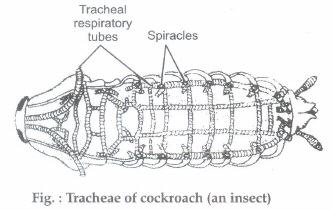
Explain the respirating system in cockroach
17.
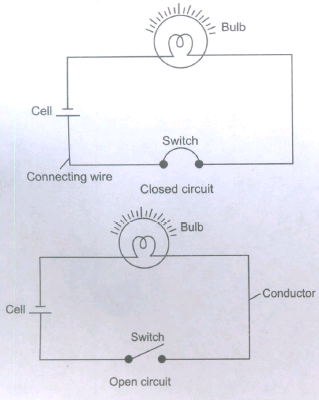
What do you understand by electric circuit? Write its components
18.
What is blood?
(a) Write any two function of blood.
(b) Name the various component of blood.
1.
Animal A can live on land as well as in water and can respire through lungs as well as moist skin. The animal is frog.
Animal B lives in water and respires through a specific organ called gills. These are found in the tadpoles besides fishes.
The animal B is a fish. Animal C is also an aquatic animal which lives in sea water and respires through nostrils and lungs not by the gills. The animal is whale.
2.
Kidney is the major excretory organ which consists of thousands of tiny filters called nephrons.
The major functions of nephron are
(i) To filter blood at high pressure which helps in the separation of nitrogenous waste such as urea from the blood.
(ii) It helps in selective re-absorption of some substances (from the initial filtrate which is filtered at a very high pressure). These substances include glucose, amino acid, salts and a major amount of water.
3.
The blood clot is formed due to the presence of the cells called platelets in the blood. If there were no platelets in the blood, then bleeding caused by a cut from an injury would not stop. This may cause loss of too much blood from the body of a person leading to death.
4.
Electric fuse is required in all electrical appliances to prevent damage from excessive current flow and during short circuit.
5.
Lenticels
6.
Diaphragm is known as the floor of chest cavity
7.
Stethoscope.
8.
(d)
element
9.
(c)
Iron
10.
(b)
We should never do experiment with the electric supply from the mains or a generator or an inverter
11.
(a)
down and inwards
12.
(d)
Lactic acid only
13.
(a)
xylem
14.
(c)
Lips
15.
(c)
urethra
16.
A cockroach has small opening on the side of its body. These openings are called spiracles. Insects have a network or air tubes called tracheae for gas exchange, oxygen rich air rushes through spiracles into the tracheal tubes, diffuses into the body tissues and reaches every cell of the body. Similarly carbon dioxide from the cells goes into the tracheal tubes and moves out through spiracles. These air tubes or tracheae are found only in insects
17.
Electric circuit: The path along which an electric current can flow is called electric circuit. The components of an electric circuit are
(i) The cell or battery-The source of electrical energy,
(ii) The connecting wires or conductors,
(iii) The bulb-that uses the current,
(iv) Switch-to close or open the circuit.
The simplified circuit diagram is given below with components and their symbols:
18.
Blood is a fluid which flows in blood vessels.
(a) Functions of blood :
(i) It transports digested food from small intestine to all parts of the body.
(ii) It carries oxygen from lungs to cell.
(b) Components of blood:
(i) Fluid: Plasma
(ii) Cells: RBC,WBC, Platelets.

7th Standard CBSE Syllabus & Materials
7th Standard CBSE
CBSE 7th Social Science Theme B - New Beginnings : Cities and States - New Sample Question Papers Study Material - QB365 Set A
NEW7th Standard CBSE
CBSE 7th Social Science Theme A - Climates of India - New Sample Question Papers Study Material - QB365 Set A
NEW7th Standard CBSE
CBSE 7th Social Science Theme A - Geographical Diversity of India - New Sample Question Papers Study Material - QB365 Set A
NEW7th Standard CBSE
CBSE 7th Science Earth, Moon and the Sun - New Sample Question Papers Study Material - QB365 Set A



NCERT Books

Syllabus

Exam Pattern

Sample Question Papers

Previous year Question Papers

Important Notes

MCQ Practice test

NCERT Exemplers

Case study Questions

Image Based Questions

Passage based Questions

HOT Questions

Value Based Questions

Model Questions Papers
NCERT ( Book Back ) Questions

Assertion and Reason
Important Questions And Answers

CBSE 7th Standard CBSE Subjects
CBSE Standards


