
 100% FREE ACCESS
7th Standard CBSE Syllabus & Materials
7th Standard CBSE
CBSE 7th Social Science Theme E - Understanding Market - New Sample Question Papers Study Material - QB365 Set A
NEW7th Standard CBSE
CBSE 7th Social Science Theme E - From Barter to Money - New Sample Question Papers Study Material - QB365 Set A
NEW7th Standard CBSE
CBSE 7th Social Science Theme D - The Constitution of India- An Introduction - New Sample Question Papers Study Material - QB365 Set A
NEW7th Standard CBSE
CBSE 7th Social Science Theme D - From the Rulers to the Ruled : Types of Governments - New Sample Question Papers Study Material - QB365 Set A
NEW7th Standard CBSE
CBSE 7th Social Science Theme B - The Age of Reorganisation - New Sample Question Papers Study Material - QB365 Set A
NEW7th Standard CBSE
CBSE 7th Social Science Theme B - The Rise of Empires - New Sample Question Papers Study Material - QB365 Set A

Published on: 31/10/2025
Download CBSE Class 7th Standard CBSE Science question papers, sample papers, important questions, and previous year solved papers in PDF format. Get free study materials, NCERT solutions, and exam preparation resources for Class 7th Standard CBSE Science
Questions + Answers key
Take MCQ Science Test
1.
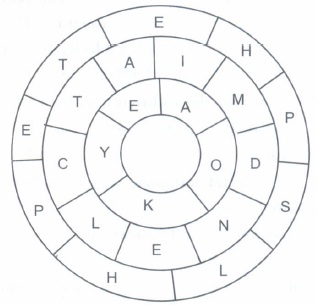
Figure shows three rings of circles with letters in them. Some of these letters in each ring can form the name of one wool yielding animal. Find the names of these animals.
2.
What is carding of wool? How is woollen yarn obtained from the carded wool?
3.
Why caterpillars need to shed their skin when they grow bigger but humans do not? Do you have any idea?
4.
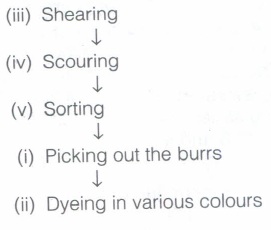
Various steps involved to obtain wool from fleece are given here.
(i) Picking out the burrs
(ii) Dyeing in various colours
(iii) Shearing
(iv) Scouring
(v) Sorting
Write the above steps in the correct sequence in which they are carried out.
5.
Given below is a sequence of steps in the processing of wool. Which are the missing step? Add them.
Shearing, .... sorting ......, ......,......
6.
Some words related with silk are jumbled up. Write them in their correct form.
(a) TURECULRISE
(b) WILSMORK
(c) BELMURRY
(d) RING LEE
7.
How is silk thread obtained from cocoon?
8.
Boojho is wondering why it hurts when someone pulls his hair but not when he goes for a haircut?
9.
In the life history of silk moth as Egg ⟶ Larva (or caterpillar) ⟶ Pupa ⟶ Silk moth which actually makes the silk fibre?
10.
How do the hair of certain animals help in keeping their bodies warm?
11.
Complete the paragraph related to the history of silk moth by filling in the blanks.
The_______(a)________silk moth lays_______(b)__________, from which hatch _______(c)_______called_______(d)_________or________(e)_______.They grow in size and when caterpillar is ready to enter the next stage of its life history called ________(f)_______, it first weaves a covering to hold itself, which is known as________(g)_________..
12.
Give a brief account of wool manufacturing.
13.
Ajay's father works in a wool industry. In his line of work, he does the job of sorting the fleece of sheep into fibres of different qualities. Ajay noticed that his father and other workers who were doing the similar kind of jobs faced a number of health problems. Ajay discussed this problem with his friends and he came to know that his father is getting health problems due to the nature of his work. Ajay is worried about his father's health. He advised his father to take care of their health and told him about the occupational hazards.
Now answer the following questions.
(a) What do you mean by occupational hazard?
(b) Name the disease that workers may at risk.
(c) What values are shown by Ajay?
14.
The term sericulture is used for
culture of bacteria
rearing of silkworm
making silk fabric from silk yarn
production of sarees
15.
Silk fibre is obtained from
fleece of sheep
cotton ball
cocoon
shiny jute stalk
16.
Paheli wanted to buy a gift made of animal fibre obtained without killing the animal. Which of the following would be the right gift for her to buy?
Woollen shawl
Silk scarf
Animal fur cap
Leather jacket
17.
Which of the following is not a type of silk?
Mulberry silk
Tassar silk
Mooga silk
Moth silk
18.
Burrs are the :
Wool obtained from the camel
Wool obtained from the goat
Small fluffy fibres in wool
Pupa
19.
Which one of the following is not a variety of silk?
Nali
Tassar
Mooga
Drganza
20.
Which of the following is not a breed of sheep?
Lohi
Nali
Mooga
Bakharwal
21.
The general process that takes place at a sheep shearing shed is
removal of fleece
separating hair of different textures
washing of sheep fibre to remove grease
rolling of sheep fibre into yarn
22.
Selective breeding is a process of
selecting the offsprings with desired properties
selecting the parents with desired properties
selecting an area for breeding
selecting fine hair for good quality wool
23.
The rearing of silkworms for obtaining silk is called
cocoon
silk
sericulture
silviculture
1.
Yak, camel and Sheep.
2.
The wool fibres are dried and then disentangled. They are then combed and straightened by a cardinal machine. This is called carding.
In the cardinal machine, the disentangled woollen fibres are passed between a pair of rotating cylinders covered with a material called carding cloth, which contains fine, pliable wire teeth. The wool emerges from the rollers in the form of thin wire called web.
3.
The caterpillar eats day and night the leaves of mulberry tree and grows big in size whereas its skin does not increase in size, shape or length.
During the feeding period, a silkworm sleeps four times (24 h each time) at intervals of six days. While Sleeping, its skin cracks and on awakening, the worm leaves the old skin and comes out in a new one. So, it sheds skin and this phenomenon is called moulting. After the final moulting begins, the last feeding period (of about ten days) after which the worm grows to its full size.
4.
Correct sequence is
5.
(i) Shearing
(ii) Scouring,
(iii) Sorting
(iv) Fibre spinning,
(v) Dyeing
(vi) Rolling intp the yarn
6.
(a) Sericulture
(b) Silkworm
(c) Mulberry
(d) Reeling
7.
A pile of cocoons is used for obtaining silk fibres. The cocoons are kept under the sun or boiled or exposed to steam! the silk fibres separate out. The silk fibres from many cocoons are brought together to form a single silk thread. This is called reeling of illk
8.
When someone pulls our hair, it hurts because it's root is connected to the skin which has sensation. But, during haircut the tip of the hair is cut which is dead and does not have any sensation. So hair-cut
does not hurt.
9.
The larva (or caterpillar) of a silk moth makes the silk fibre.
10.
Hair traps a lot of air which is a poor conductor of heat resulting their body warm.
11.
(a) female
(b) eggs
(c)larvae
(d) caterpillars
(e) silkworms
(f) pupa
(g) cocoon
12.
The wool is obtained from the hair of sheep in the following steps:
Step I-Shearing: The fleece of the sheep along with a thin layer of skin is removed from its body. Machines similar to those used by barbers are used to shave off hair. Usually, hair removed during the hot weather.
Step II-Scouring: The sheared skin with hair is thoroughly washed in tanks to remove grease, dust and dirt.
Step III-Sorting: The hairy skin is sent to a factory where hair of different textures are separated or sorted.
Step IV-The small fluffy fibres, called burrs are picked out from the hair. The fibres are scoured again and again and dried.
Step V-Fibres can be dyed in various colours.
Step VI-The fibres are straightened, combed and rolled into yarn. The long fibres are made into wool for sweaters and the shorter fibres are spun and woven into woollen clothes.
13.
(a) The risks faced by people working in any industry due to the nature of their work are called occupational hazards.
(b) The people who do the job of sorting, sometimes, get infected by the bacteria called anthrax which cause a deadly blood disease called sorter's disease.
(c) Ajay is very caring, intelligent and sensible boy.
14.
(b)
rearing of silkworm
15.
(c)
cocoon
16.
(a)
Woollen shawl
17.
(d)
Moth silk
18.
(c)
Small fluffy fibres in wool
19.
(a)
Nali
20.
(c)
Mooga
21.
(a)
removal of fleece
22.
(b)
selecting the parents with desired properties
23.
(c)
sericulture

7th Standard CBSE Syllabus & Materials
7th Standard CBSE
CBSE 7th Social Science Theme B - New Beginnings : Cities and States - New Sample Question Papers Study Material - QB365 Set A
NEW7th Standard CBSE
CBSE 7th Social Science Theme A - Climates of India - New Sample Question Papers Study Material - QB365 Set A
NEW7th Standard CBSE
CBSE 7th Social Science Theme A - Geographical Diversity of India - New Sample Question Papers Study Material - QB365 Set A
NEW7th Standard CBSE
CBSE 7th Science Earth, Moon and the Sun - New Sample Question Papers Study Material - QB365 Set A



NCERT Books

Syllabus

Exam Pattern

Sample Question Papers

Previous year Question Papers

Important Notes

MCQ Practice test

NCERT Exemplers

Case study Questions

Image Based Questions

Passage based Questions

HOT Questions

Value Based Questions

Model Questions Papers
NCERT ( Book Back ) Questions

Assertion and Reason
Important Questions And Answers

CBSE 7th Standard CBSE Subjects
CBSE Standards


