
 100% FREE ACCESS
7th Standard CBSE Syllabus & Materials
7th Standard CBSE
CBSE 7th Social Science Theme E - Understanding Market - New Sample Question Papers Study Material - QB365 Set A
NEW7th Standard CBSE
CBSE 7th Social Science Theme E - From Barter to Money - New Sample Question Papers Study Material - QB365 Set A
NEW7th Standard CBSE
CBSE 7th Social Science Theme D - The Constitution of India- An Introduction - New Sample Question Papers Study Material - QB365 Set A
NEW7th Standard CBSE
CBSE 7th Social Science Theme D - From the Rulers to the Ruled : Types of Governments - New Sample Question Papers Study Material - QB365 Set A
NEW7th Standard CBSE
CBSE 7th Social Science Theme B - The Age of Reorganisation - New Sample Question Papers Study Material - QB365 Set A
NEW7th Standard CBSE
CBSE 7th Social Science Theme B - The Rise of Empires - New Sample Question Papers Study Material - QB365 Set A

Published on: 31/10/2025
Download CBSE Class 7th Standard CBSE Science question papers, sample papers, important questions, and previous year solved papers in PDF format. Get free study materials, NCERT solutions, and exam preparation resources for Class 7th Standard CBSE Science
Questions + Answers key
Take MCQ Science Test
1.
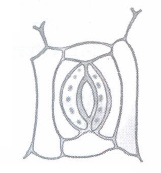
Observe the given figure and label the following terms given in the box. Stomatal opening, guard cell
2.
Autotrophs and heterotrophs are two different organisms with distinct modes of nutrition state. How are they different from each other?
3.
Sunlight, Chlorophyll, carbon dioxide, water and minerals are raw materials essential for photosynthesis. Do you know where they are available? Fill in the blanks with the appropriate raw materials.
(a) Available in the plant: __________
(b) Available in the soil: ___________
(c) Available in the air: __________
(d) Available during day: __________
4.
Different modes of nutrition has been observed in plants. What are they? Give example of each.
5.
Give a brief description of the process of synthesis of food in green plants.
6.
How would you test the presence of starch in leaves?
7.
Why do organisms need to take food?
8.
Unscramble the following terms related to modes of nutrition:
(i) RASPAEIT,(ii) ROPEHYSTAp, (iii) TOROPHAUT, (iv) SIBIOMSIS.
9.
What are stomata? Write their functions.
10.
Classify the following into autotrophs and heterotrophs:
(a) Green plants (b) Fungus (c) Human (d) Algae
11.
A unique feature in leaves allows them to prepare the food while other parts of plants cannot. Write the possible reason for this.
12.
What do you understand by nutrition?
13.
Which parts of the plant are called food factories of the plant?
14.
What is the function of guard cells of stomata?
15.
The tiny openings present on the leaf surface. What are they called?
16.
In the absence of which of the following will photosynthesis not occur in leaves?
Guard cells
Chlorophyll
Vacuole
Spacebetween cells
17.
During photosynthesis:
Carbon dioxide is released
Oxygen is released
Nitrogen is released
None of these
18.
The raw materials for photosynthesis are:
Oxygen and water
Carbon dioxide and water
Water, carbon dioxide, chlorophyll and solar energy
Nitrogen and water
1.
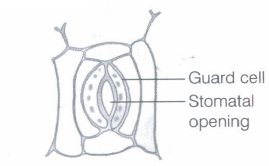
Labelled figure is given below:
2.
The difference between autotrophs and heterotrophs are as follows
| Autotrophs | Heterotrophs |
|---|---|
| They can prepare their own food. | They cannot prepare their own food. |
| Autotrophs take simple inorganic substances and change it into complex organic food, e.g. green plants. | They take in complex food and breakdown it into simple compounds, e.g. all animals, fungi and non-green plants. |
3.
(a) Available in the plant: chlorophyll
(b) Available in the soil: water, minerals
(c) Available in the air: carbon dioxide
(d) Available during day: sunlight
4.
Plants show two major modes of nutrition, i.e.
(i) Autotrophs are those which can synthesise their own food.
(ii) Heterotrophs are those which are dependent on other plants and animals for their food.
They are of following types:
(a) Parasites, e.g. Cuscuta
(b) Saprotrophs, e.g. fungi
5.
Plants prepare their own food by the process of photosynthesis. Leaves of the plants have green pigment called chlorophyll, which helps them to capture the energy of the sunlight. The plants synthesise their food from carbon dioxide and water in the presence of sunlight. This process is called photosynthesis. The reaction for the process of photosynthesis can be shown as follows:

During photosynthesis, food is synthesised and oxygen is released in the process.
6.
The presence of starch, a carbohydrate in leaves can be tested by iodine test. Iodine turns starch solution into blue-black colour. Pour few drops of dilute iodine solution on a boiled leaf. The leaf becomes blue-black in colour which proves the presence of starch in it.
7.
The organisms need to take food to build their bodies, to grow, to repair damaged part of their bodies and to obtain the energy to carry out life processes. Food provide resistance to fight against diseases and protection from different infections.
8.
(i) PARASITE, (ii) SAPROPHYTE, (iii) AUTOTROPH, (iv) SYMBIOSYS
9.
The tiny pores present on the surface of the leaves are called stomata. They help in the exchange of the gases and to release excess of water by transpiration.
10.
Autoprophs: (a) Green plants, (b) Algae
Heterotrophs: (a) Fungus, (b) Human.
11.
Leaves contain chlorophyll which is essential for food preparation and is absent in other parts of plant.
12.
The process of utilising nutrients like carbohydrates, proteins, fats, etc., to generate energy is called nutrition.
13.
Leaves are referred to as food factories of plants. This is because, leaves synthesise food by the process of photosynthesies.
14.
Guard cells help in controlling the opening and closing of stomata for gaseous exchange.
15.
Stomata are the tiny pores present on the surface of leaves through which gaseous exchange takes place in plants.
16.
(b)
Chlorophyll
17.
(c)
Nitrogen is released
18.
(c)
Water, carbon dioxide, chlorophyll and solar energy

7th Standard CBSE Syllabus & Materials
7th Standard CBSE
CBSE 7th Social Science Theme B - New Beginnings : Cities and States - New Sample Question Papers Study Material - QB365 Set A
NEW7th Standard CBSE
CBSE 7th Social Science Theme A - Climates of India - New Sample Question Papers Study Material - QB365 Set A
NEW7th Standard CBSE
CBSE 7th Social Science Theme A - Geographical Diversity of India - New Sample Question Papers Study Material - QB365 Set A
NEW7th Standard CBSE
CBSE 7th Science Earth, Moon and the Sun - New Sample Question Papers Study Material - QB365 Set A



NCERT Books

Syllabus

Exam Pattern

Sample Question Papers

Previous year Question Papers

Important Notes

MCQ Practice test

NCERT Exemplers

Case study Questions

Image Based Questions

Passage based Questions

HOT Questions

Value Based Questions

Model Questions Papers
NCERT ( Book Back ) Questions

Assertion and Reason
Important Questions And Answers

CBSE 7th Standard CBSE Subjects
CBSE Standards


