
 100% FREE ACCESS
7th Standard CBSE Syllabus & Materials
7th Standard CBSE
CBSE 7th Social Science Theme E - Understanding Market - New Sample Question Papers Study Material - QB365 Set A
NEW7th Standard CBSE
CBSE 7th Social Science Theme E - From Barter to Money - New Sample Question Papers Study Material - QB365 Set A
NEW7th Standard CBSE
CBSE 7th Social Science Theme D - The Constitution of India- An Introduction - New Sample Question Papers Study Material - QB365 Set A
NEW7th Standard CBSE
CBSE 7th Social Science Theme D - From the Rulers to the Ruled : Types of Governments - New Sample Question Papers Study Material - QB365 Set A
NEW7th Standard CBSE
CBSE 7th Social Science Theme B - The Age of Reorganisation - New Sample Question Papers Study Material - QB365 Set A
NEW7th Standard CBSE
CBSE 7th Social Science Theme B - The Rise of Empires - New Sample Question Papers Study Material - QB365 Set A

Published on: 31/10/2025
Download CBSE Class 7th Standard CBSE Science question papers, sample papers, important questions, and previous year solved papers in PDF format. Get free study materials, NCERT solutions, and exam preparation resources for Class 7th Standard CBSE Science
Questions + Answers key
Take MCQ Science Test
1.
Plants prepare their food by a process called photosynthesis. Can we call photosynthesis is a chemical change? Explain.
2.
Explain why rusting of iron objects is faster in coastal areas than in deserts.
3.
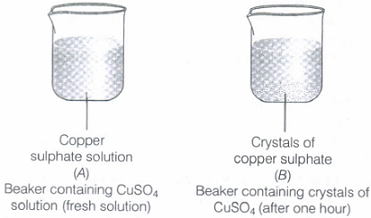
Describe how crystals of copper sulphate are prepared.
4.
When a candle burns, both physical and chemical changes take place. Identify these changes. Give another example of the familiar process in which both the chemical and physical changes take place.
5.
When baking soda is mixed with lemon juice, bubbles are formed with the evolution of a gas. What type of change is it? Explain.
6.
Within our bodies, food is digested due to chemical reaction.
7.
Cooking of rice is a physical change.
8.
Iron and rust are the same substances.
9.
Iron pipes coated with zinc do not get rusted easily.
10.
Formation of manure from leaves is a physical change.
11.
Cutting a log of wood into pieces is a chemical change.
12.
A reversible change is a__________ change
13.
Oxygen and _____________are must for rusting
14.
Two methods by which rusting of iron can be prevented are __________ and ___________
15.
The chemical name of baking soda is _________
16.
When carbon dioxide is passed through lime water, it turns milky due to the formation of _________
17.
Which gas is called natural shield against the radiation? Explain, how?
18.
What do you consider explosion of cracker a chemical change?
19.
We should eat freshly cut apple. Why?
20.
What is the nature of magnesium oxide solution?
21.
How can you say that ripening of a fruit is a chemical change?
22.
Name the gas which turns lime water milky.
23.
What kind of change is shown by tearing of paper?
24.
If you leave a piece of iron in the open for a few days, it acquires a film of brownish substance, called rust.
(a) Do you think rust is different from iron?
(b) Can you change rust back into iron by some simple method?
(c) Do you think the formation of rust on iron is a chemical change?
(d) Give two other examples of a similar type of change.
25.
What is the formula of rust?
Fe3O4
Fe2O3
FeO
None of these
26.
Which one is a physical change?
Melting of ice
Melting of wax
Formation of steam from water
All of these
27.
Which method is used to prevent rusting?
Galvanisation
Crystallisation
Sedimentation
None of these
28.
Paheli's mother made a concentrated sugar syrup by dissolving sugar in hot water. On cooling, crystals of sugar got separated. This indicates a
physical change that can be reversed
chemical change that can be reversed
physical change that cannot be reversed
chemical change that cannot be reversed
29.
Galvanisation is a process used to prevent the rusting of which of the following?
Iron
Zinc
Aluminium
Copper
30.
Iron pillar near the Qutub Minar in Delhi is famous for the following facts. Which of these facts is responsible for its long stability?
It is more than 7 m high
It weighs about 6000 kg
It was built more than 1600 years ago
It has not rusted after such a long period
31.
Which of the following are true when milk changes into curd?
(i) Its state is changed from liquid to semi-solid.
(ii) It changes colour.
(iii) It Changes taste.
(iv) The change cannot be reversed.
Choose the correct option.
(i) and (ii)
(ii) and (iii)
(i), (iii) and (iv)
(i) to (iv)
32.
A chemical change may involve
change in colour only
change in temperature only
evolution of gas only
All of the above
33.
Which one of the following is a chemical change?
Twinkling of stars
Cooking of vegetables
Cutting of fruits
Boiling of water
34.
Which of the following is a physical change?
Rusting of iron
Combustion of magnesium ribbon
Burning of candle
Melting of wax
35.
Chemical change
36.
Water to steam
37.
Depositing a layer of zinc on iron
38.
Large crystals
39.
Does the colour of the tip of the blade change?
40.
Do you see any droplet of water there?
41.
Does the water become solid ice once again?
42.
Did you recover chalk from the dust?
1.
During photosynthesis, the plants intake carbon dioxide and water in the presence of chlorophyll and sunlight to form two new substances, i.e. glucose (food) and oxygen gas. So, photosynthesis is a chemical change.
2.
We know that for rusting, the presence of both oxygen and water (water vapours) is essential.
Thus, in coastal areas, the air contains high moisture which means more humid environment and rusting becomes faster.
Whereas in deserts, moisture in air is less, hence rusting of iron is very slow there.
3.
Crystals of copper sulphate are prepared in the following manner:
(i) Take a cup full of water in a beaker.
(ii) Add a few drops of dilute sulphuric acid.
[Caution Never add water to the acid as the acid may splash on you].
(iii) Heat the water.
(iv) When it starts boiling, add copper sulphate powder slowly with constant stirring.
(v) Continue adding copper sulphate powder till no more powder can be dissolved.
(vi) Filter the solution.
(vii) Allow it to cool.
(viii) Do not disturb the solution, when it is cooling.
(ix) Look at the solution after some time and wait till it changes into crystals.
4.
Physical Changes in burning candle On heating, candle's wax melts, it is a physical change. Since it again turns into solid wax on cooling hence, the change is reversible.
Chemical changes in burning candle The wax near to flame burns and gives new substances like carbon dioxide, carbon soot. water vapours, heat and light.
Cooking of food, boiling of eggs are examples of both physical and chemical changes. In both cases, the physical appearance of the substances change and new substances are formed.
5.
When baking soda (sodium bicarbonate) is mixed with lemon juice (citric acid), a chemical change occurs. In this reaction, new substances like carbon dioxide is formed and heat is evolved. This change is irreversible. It is a chemical change.
Sodium bicarbonate (NaHCO3)+ Citric acid \(\longrightarrow\) Sodium citrate + Carbon dioxide\(\uparrow\) + Water + Heat
6.
(a)
7.
(b)
8.
(b)
9.
(a)
10.
(b)
11.
(b)
12.
()
physical
13.
()
water (Moisture)
14.
()
galvanisation, painting
15.
()
sodium hydrogen carbonate
16.
()
calcium carbonate
17.
Ozone layer is called natural shield against radiations. It protects us from the harmful ultraviolet radiations which come from the sun. Ozone absorbs these radiations and breaks down to oxygen. If ultraviolet radiations come on earth then they can cause harm to us and other life forms.
18.
When a cracker explodes, heat, light and smoke comes out due to the formation of new substances. Thus, it is a chemical change.
19.
We should eat freshly cut apple because if we leave the apple after cutting, it starts turn to brownish due to the oxidation of the essential nutrients present in it and its food value decreases.
20.
Magnesium oxide is basic in nature because it turns red litmus solution to blue.
21.
Ripening of a fruit is a chemical change because after ripening, a new product with different properties is formed.
22.
Carbon dioxide gas (CO2) turns lime water milky.
23.
Tearing of paper is a physical change although, it cannot be reversed.
24.
(a) Yes, rust is iron oxide (Fe2O3). Thus, rust and iron are not the same substance.
(b) No, rusting of iron is a chemical change because in this reaction, a new substance, rust (iron oxide) is formed. It cannot be reversed by any method.
(c) Yes, rusting of iron is a chemical change. During the rusting of iron, it combines with the oxygen in the presence of water (moisture) to form a new compound 'iron oxide'. This iron oxide is a rust.
Iron + Oxygen + Water \(\longrightarrow\) Iron oxide
(From damp air) (Rust)
It is a permanent change which cannot be reversed back. So, rusting of iron is a chemical change.
(d) Two other examples are
(i) Setting of curd from milk.
(ii) Burning of magnesium ribbon to form magnesium oxide.
25.
(b)
Fe2O3
26.
(d)
All of these
27.
28.
(a)
physical change that can be reversed
29.
(a)
Iron
30.
(d)
It has not rusted after such a long period
31.
(c)
(i), (iii) and (iv)
32.
(d)
All of the above
33.
(b)
Cooking of vegetables
34.
(d)
Melting of wax
35.
()
Spoilage of food
36.
()
Endothermic Change
37.
()
Galvanisation
38.
()
Sugar candy (mishri)
39.
()
Yes, it turns red.
40.
()
Yes, droplets of water appear there.
41.
()
Yes
42.
()
No

7th Standard CBSE Syllabus & Materials
7th Standard CBSE
CBSE 7th Social Science Theme B - New Beginnings : Cities and States - New Sample Question Papers Study Material - QB365 Set A
NEW7th Standard CBSE
CBSE 7th Social Science Theme A - Climates of India - New Sample Question Papers Study Material - QB365 Set A
NEW7th Standard CBSE
CBSE 7th Social Science Theme A - Geographical Diversity of India - New Sample Question Papers Study Material - QB365 Set A
NEW7th Standard CBSE
CBSE 7th Science Earth, Moon and the Sun - New Sample Question Papers Study Material - QB365 Set A



NCERT Books

Syllabus

Exam Pattern

Sample Question Papers

Previous year Question Papers

Important Notes

MCQ Practice test

NCERT Exemplers

Case study Questions

Image Based Questions

Passage based Questions

HOT Questions

Value Based Questions

Model Questions Papers
NCERT ( Book Back ) Questions

Assertion and Reason
Important Questions And Answers

CBSE 7th Standard CBSE Subjects
CBSE Standards


