
 100% FREE ACCESS
7th Standard CBSE Syllabus & Materials
7th Standard CBSE
CBSE 7th Social Science Theme E - Understanding Market - New Sample Question Papers Study Material - QB365 Set A
NEW7th Standard CBSE
CBSE 7th Social Science Theme E - From Barter to Money - New Sample Question Papers Study Material - QB365 Set A
NEW7th Standard CBSE
CBSE 7th Social Science Theme D - The Constitution of India- An Introduction - New Sample Question Papers Study Material - QB365 Set A
NEW7th Standard CBSE
CBSE 7th Social Science Theme D - From the Rulers to the Ruled : Types of Governments - New Sample Question Papers Study Material - QB365 Set A
NEW7th Standard CBSE
CBSE 7th Social Science Theme B - The Age of Reorganisation - New Sample Question Papers Study Material - QB365 Set A
NEW7th Standard CBSE
CBSE 7th Social Science Theme B - The Rise of Empires - New Sample Question Papers Study Material - QB365 Set A

Published on: 31/10/2025
Download CBSE Class 7th Standard CBSE Science question papers, sample papers, important questions, and previous year solved papers in PDF format. Get free study materials, NCERT solutions, and exam preparation resources for Class 7th Standard CBSE Science
Questions + Answers key
Take MCQ Science Test
1.
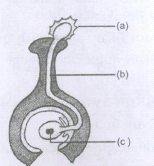
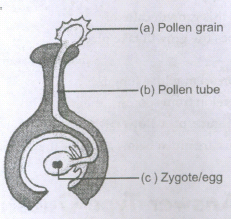
In the diagram, label the parts marked (a), (b) and (c).
2.
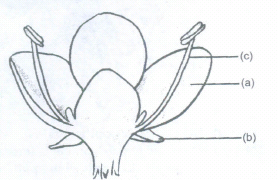
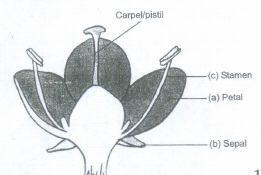
In the diagram of a bisexual flower, draw the missing part and label the parts marked (a), (b) and (c). Also label the missing part that you draw.
3.
Describe the various ways in which the seeds are dispersed.
4.
Draw a diagram of pistil to show pollen grain, pollen tube, ovary and ovule.
5.
Describe the events taking place in a flower after pollination till fertilization.
6.
What are the various modes of dispersal of fruit and seeds? Give examples.
7.
How do the plants like sugarcane, potato and rose reproduce when they cannot produce seeds?
8.
How does male gamete present in pollen grain reaches female gamete present in ovule?
9.
Collect some flower of different plants like papaya, rose, mustard, lady's finger, Petunia, cucumber, corn, pea, etc. Group them under following heads.
(a) Which of these plants have unisexual flowers?
(b) Which of these plants have bisexual flower?
(c) What is the other name of unisexual and bisexual flower?
10.
Describe the different methods of asexual reproduction. Give examples.
11.
Pollination refers to the:
transfer to pollen from anther to ovary
transfer of male gametes from anther to stigma
transfer of pollen from anther to stigma
transfer of pollen from another to ovule
12.
Seed dispersal helps the plant to:
Prevent over crowding
Avoid competition
Invade new habitats
All of these
13.
Pollination is transfer of pollen grains from:
Anther to ovary
Anther to style
Anther to stigma
All of these
14.
Which is not a part of pistil?
Stigma
Style
Filament
Ovary
15.
The 'eye' of the potato plant is what?
The root is to any plant
The bud is to a flower
The bud is to Bryophyl/um leaf
The anther is to stamen
16.
Bryophyllum can reproduce by its
stem
leaves
roots
flower
17.
A spore-producing plant is
rose
bread mould
potato
ginger
18.
Mature ovary forms the
seed
stamen
pistil
fruit
19.
The process of fusion of the male and the female gametes is called
fertilisation
pollination
reproduction
seed formation
20.
The reproductive part of a plant is the
leaf
stem
root
flower
21.
Name the various agents of pollination and give differences between self and cross-pollination.
22.
Name some fruit bearing plants. Now make a table and describe the method of seed dispersal in these fruits as well as the part which helps in the seed dispersal.
23.
Explain the process of reproduction in plants, involving the fusion of cells from male and female parts of a flower.
24.
In the figure of a flower given below, label the parts whose functions are given below and give their names.
(a) The part which contains pollen grains.
(b) The part where the female gamete is formed.
(c) The female reproductive part, where pollen grains germinate.
(d) The colourful part of flower which attracts insects.
.png)
1.
2.
3.
Following are the ways in which the seeds are dispersed:
(i) Some light seeds like that of madar, which are hairy, dry and small are carried away by the wind to different places.
(ii) Spiny seeds and fruits like that of xanthium and urena, stick to the clothes of passers by and animals. These seeds are carried away by these agents to different places.
(iii) In some plants having heavy seeds like that of coconut, water acts as the dispersing agents.
(iv) Some seeds are dispersed with the fruit burst like in case of balsam and castor.
4.
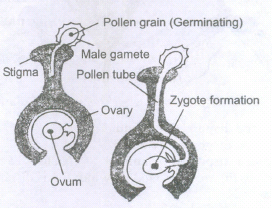
5.
As soon as the pollen grain falls on the stigma, it starts germinating and forms a pollen tube. This pollen tube passes through style and reaches the ovary. The pollen tube contains male gamete which are released and one of them fuse with the egg to form zygote.
6.
Seeds and fruits are dispersed by any of the following means :
1.Wind
2.Water
3.Animals
4. Bursting of fruit with jerk.
5. Seed dispersed by wind are light having wings or tuft of hair. e.g., maple, calotropis.
6. Seeds dispersed by water have fibrous covering which allows them to float in the water, e.g., coconut.
7. Seeds dispersed by animals have hook, with the help of these hooks they get attached to the hair of animals and get dispersed. e.g. xanthium.
8.Fruits of Balsam and Castor when dry burst with jerk and help in dispersal of seeds.
7.
Sugarcane and rose are propagated by stem cutting that is a method of vegetative propagation, in which stem is capable of growing into a mature independent plants that are identical to their parents.
Potato is an underground modified stem having bud called eyes, which sprout and develop into a new identical plant.
Thus, the plants which cannot produce seeds can be propagated vegetatively with the help of vegetative parts such as stem, roots, buds and leaves.
8.
After pollination, the pollen grains fall on the surface of stigma and germinate to form a long tube, reaching the ovules inside the ovary, the egg or female gamete is present in the ovule.
The outer surface of pollen grains rupture and male gametes are released to fuse with egg.
9.
(a) Unisexual flowers are papaya, cucumber, corn.
(b) Bisexual flowers are rose, mustard, lady's finger, Petunia, pea.
(c) Unisexual flowers are also called as incomplete flower while bisexual flowers are called hermaphrodite or complete flowers.
10.
Different methods of asexual reproduction are:
(i) Fragmentation Parent body divides into distinct pieces or fragments, each of which grows into new individuals, e.g. Spirogyra (an alga).
(ii) Budding A small part of parent body grows out as a bud, which detaches and becomes a new individual. Sometimes, a chain of buds is also formed, e.g. yeast, corals, sponges, etc.
(iii) Spore formation Parent plant develops and releases thousands of tiny, spherical and unicellular asexual spores, which are protected by a cell wall. When these spores find favourable environment, they grow into identical new plants, e.q. mosses, ferns, bread moulds, etc.
(iv) Vegetative propagation Many plants like cacti, potato, rose, sugarcane, etc., reproduce by this method. New plants are produced from vegetative parts of mother plant such as roots, stem, buds and leaves.
11.
(c)
transfer of pollen from anther to stigma
12.
(d)
All of these
13.
(c)
Anther to stigma
14.
(c)
Filament
15.
(b)
The bud is to a flower
16.
Bryophylum can reproduce by its leaves.
17.
A spore-producing plant is bread mould.
18.
Mature ovary forms the fruit.
19.
The process of fusion of the male and the female gametes is called fertilisation.
20.
The reproductive part of a plant is the flower.
21.
Agent of pollination:
(i) Wind
(ii) Water
(iii) Animal i.e., insect, bird etc.
| Self-pollination | Cross-pollination |
| Transfer of pollen grain to stigma of same flower or any other flower growing on same plant. | Transfer of pollen grain from one flower to another flower of same species growing on another plants. |
22.
The method of seed dispersal in the fruits and the parts which help in the seed dispersal:
| Name of fruits bearing plants | Agents through which seeds are dispersed | Parts or seeds which helps in dispersal |
| Drumstick | Air/wind | Winged seeds |
| Sunflower | Wind | Hairy seeds |
| Gokhru | Animal | Spines and Hooks |
| Coconut | Water | Fibrous coating |
| Lotus | Water | Thalamus float in water |
| Poppy | Explosion | Pericarp bursts |
| Grass | Wind | minute, light weighted seeds |
23.
When the reproduction in an organism includes two types of gametes, i.e male and female from two different parents, it is called sexual reproduction, The sexual reproduction takes place by the fusion of male and female gametes by the process called fertilisation to form zygote.
.png)
Sexual reproduction (fertilisation) in plants The different steps that take place during sexual reproduction in plants are
(i) The pollens are deposited on stigma and begin to germinate.
(ii) Pollen tube containing male gametes reaches to the ovary of flower.
(iii) The tip of the pollen tubes gets dissolved and male gametes comes out of the pollen tube.
(iv) Inside the ovary male gametes fuse with the female gamete or egg present in the ovule.
(v) The fusion of both the gametes will result into a fertilised egg cell which is also called as zygote.
24.
The various parts of a flower whose functions are mentioned above are labelled as follows:
.png)

7th Standard CBSE Syllabus & Materials
7th Standard CBSE
CBSE 7th Social Science Theme B - New Beginnings : Cities and States - New Sample Question Papers Study Material - QB365 Set A
NEW7th Standard CBSE
CBSE 7th Social Science Theme A - Climates of India - New Sample Question Papers Study Material - QB365 Set A
NEW7th Standard CBSE
CBSE 7th Social Science Theme A - Geographical Diversity of India - New Sample Question Papers Study Material - QB365 Set A
NEW7th Standard CBSE
CBSE 7th Science Earth, Moon and the Sun - New Sample Question Papers Study Material - QB365 Set A



NCERT Books

Syllabus

Exam Pattern

Sample Question Papers

Previous year Question Papers

Important Notes

MCQ Practice test

NCERT Exemplers

Case study Questions

Image Based Questions

Passage based Questions

HOT Questions

Value Based Questions

Model Questions Papers
NCERT ( Book Back ) Questions

Assertion and Reason
Important Questions And Answers

CBSE 7th Standard CBSE Subjects
CBSE Standards


