
 100% FREE ACCESS
7th Standard CBSE Syllabus & Materials
7th Standard CBSE
CBSE 7th Social Science Theme E - Understanding Market - New Sample Question Papers Study Material - QB365 Set A
NEW7th Standard CBSE
CBSE 7th Social Science Theme E - From Barter to Money - New Sample Question Papers Study Material - QB365 Set A
NEW7th Standard CBSE
CBSE 7th Social Science Theme D - The Constitution of India- An Introduction - New Sample Question Papers Study Material - QB365 Set A
NEW7th Standard CBSE
CBSE 7th Social Science Theme D - From the Rulers to the Ruled : Types of Governments - New Sample Question Papers Study Material - QB365 Set A
NEW7th Standard CBSE
CBSE 7th Social Science Theme B - The Age of Reorganisation - New Sample Question Papers Study Material - QB365 Set A
NEW7th Standard CBSE
CBSE 7th Social Science Theme B - The Rise of Empires - New Sample Question Papers Study Material - QB365 Set A

Published on: 31/10/2025
Download CBSE Class 7th Standard CBSE Science question papers, sample papers, important questions, and previous year solved papers in PDF format. Get free study materials, NCERT solutions, and exam preparation resources for Class 7th Standard CBSE Science
Questions + Answers key
Take MCQ Science Test
1.
Seeds of grams are dispersed by________.
2.
The fruits are ripened_________.
3.
Buds in the potato are also called_________.
4.
The _______ is the male reproductive part of flower while _________ is the female reproductive part of a flower.
5.
The fusion of male and female gametes is termed as ___________.
6.
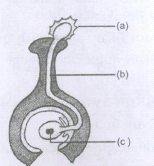
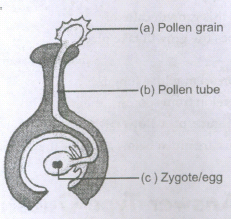
In the diagram, label the parts marked (a), (b) and (c).
7.
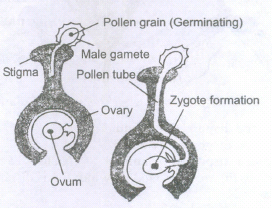
Draw a diagram of pistil to show pollen grain, pollen tube, ovary and ovule.
8.
What is seed dispersal? What will happen if all the seeds of a plant were to fall at a same place and grow?
9.
What is a bud? Which organism reproduces by budding? Given the diagrammatic representation of budding in a plant.
10.
How does the process of fertilisation take place in flowers?
11.
The female gamete of a flowering plant is present in which part?
Ovules
Buds
Pollen
Anther
12.
The mode of vegetative reproduction where scion and stock are used is called
budding
grafting
cutting
layering
13.
The fusion of male and female gametes is called
ovulation
population
pollination
fertilisation
14.
The 'eye' of the potato plant is what?
The root is to any plant
The bud is to a flower
The bud is to Bryophyl/um leaf
The anther is to stamen
15.
A spore-producing plant is
rose
bread mould
potato
ginger
16.
What is vegetative propagation?
17.
How do the pollen grain of a unisexual flower reaches the pistil of another flower?
18.
Write the male and female reproductive parts present on the flowers.
19.
Boojho had the following parts of a rose plant-a leaf, roots, a branch, a flower, a bud and pollen grains. Which of them can be used to grow a new rose plant?
20.
If the filament of Spirogyra is broken into fragments. What will you observe?
21.
(a) What is the asexual reproduction? Name any two method of asexual reproduction with one example each.
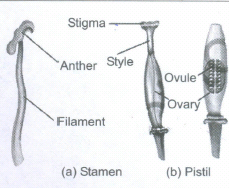
(b) Sketch the reproductive parts of a flower.
22.
Name some fruit bearing plants. Now make a table and describe the method of seed dispersal in these fruits as well as the part which helps in the seed dispersal.
23.
Boojho wants to know why flowers are generally so colourful and fragrant. Is it to attract insects?
24.
Coconut is a large and heavy fruit. How is it adapted for dispersal by water?
25.
What are eyes in potato?
26.
Name the structure which carries the male gamete to the ovule.
27.
How rose or champa are propagated?
1.
()
air
2.
()
ovary
3.
()
eyes
4.
()
stamen, pistil
5.
()
fertilisation
6.
7.
8.
Plant produces large number of seeds. When these seeds fall down they start growing. The process by which the seeds are scattered to different place (far and wide from their parents) is called seed dispersal.
The seeds and fruits are dispersed away through various agencies like air, water and animals. Sometimes dispersal takes place by the explosion or bursting of fruits. If all the seeds of a plant were to fall at the same place and grow, there will be a severe competition for sunlight, water, mineral and space. As a result, the survival for the plants will be difficult and the plants who survive will not grow into a healthy plant.
9.
Buds are small bulb-like projections of yeast cell.
These are asexual reproducing bodies of yeast. Diagrammatic representation of budding in yeast
10.
The steps involved in the process of fertilisation are
(i) After pollination, pollen grains start growing into a pollen tube on the stigma passing through pistil.
(ii) The tube extends through the style and reaches to the ovules.
(iii) The pollen tube carries the male gametes called pollen grains.
(iv) Male gametes fuse with the egg (female gamete) present inside ovule and forms a zygote. This process is called fertilisation.
(v) Later zygote develops into an embryo and ovules develop into a seed.
(vi) Thus, seed carries an embryo with stored food and is covered by a hard protective covering called seed coat.
11.
(a)
Ovules
12.
(b)
grafting
13.
(d)
fertilisation
14.
(b)
The bud is to a flower
15.
A spore-producing plant is bread mould.
16.
The mode of asexual reproduction in which new plants are produced from roots, sterns, leaves and buds of parent plant is called vegetative propagation.
17.
The pollen grain is carried to the pistil by pollinating agents. The pollinating agent can be wind, water, air or insect as per adaptation of the flower.
18.
The male reproductive part is stamen and the female reproductive part is pistil.
19.
Branch can be used to grow a new rose plant. As, rose reproduces by vegetative propagation, i.e. stem cutting method.
20.
If the filament of Spirogyra are broken into fragments, then each fragment will develop into a new plant.
21.
(a) Asexual reproduction is a type of reproduction in plants in which new plants are obtained from old ones without the production of seeds.
Two methods of asexual reproduction:
Vegetative Production, Spore Formation, Budding, Fragmentation (any two).
(b) Reproductive Parts of Flower:
22.
The method of seed dispersal in the fruits and the parts which help in the seed dispersal:
| Name of fruits bearing plants | Agents through which seeds are dispersed | Parts or seeds which helps in dispersal |
| Drumstick | Air/wind | Winged seeds |
| Sunflower | Wind | Hairy seeds |
| Gokhru | Animal | Spines and Hooks |
| Coconut | Water | Fibrous coating |
| Lotus | Water | Thalamus float in water |
| Poppy | Explosion | Pericarp bursts |
| Grass | Wind | minute, light weighted seeds |
23.
()
Yes.
24.
()
Coconut fruit has spongy fibres, which helps to float in water.
25.
()
The vegetative buds in potato are called eyes.
26.
()
Pollen tube
27.
()
By stem cutting.

7th Standard CBSE Syllabus & Materials
7th Standard CBSE
CBSE 7th Social Science Theme B - New Beginnings : Cities and States - New Sample Question Papers Study Material - QB365 Set A
NEW7th Standard CBSE
CBSE 7th Social Science Theme A - Climates of India - New Sample Question Papers Study Material - QB365 Set A
NEW7th Standard CBSE
CBSE 7th Social Science Theme A - Geographical Diversity of India - New Sample Question Papers Study Material - QB365 Set A
NEW7th Standard CBSE
CBSE 7th Science Earth, Moon and the Sun - New Sample Question Papers Study Material - QB365 Set A



NCERT Books

Syllabus

Exam Pattern

Sample Question Papers

Previous year Question Papers

Important Notes

MCQ Practice test

NCERT Exemplers

Case study Questions

Image Based Questions

Passage based Questions

HOT Questions

Value Based Questions

Model Questions Papers
NCERT ( Book Back ) Questions

Assertion and Reason
Important Questions And Answers

CBSE 7th Standard CBSE Subjects
CBSE Standards


